You are using an out of date browser. It may not display this or other websites correctly.
You should upgrade or use an alternative browser.
You should upgrade or use an alternative browser.
New install pressure tank on temporary mobile home -need advice please
- Thread starter MTGreen
- Start date
- Views: 10296
More options
Who Replied?
/ New install pressure tank on temporary mobile home -need advice please
#21

Valveman
Platinum Member
I am also about as old fashioned as you can get. 50+ years ago I was installing the largest galvanized tanks I could get on my truck and just testing those new fangled captive air tanks (bladder/diaphragm tanks). But even though they were suppose to be physically much smaller, I would use two of them because it just didn't seem right. 40+ years ago I quit installing galvanized tanks and switched primarily to a single large diaphragm tank. However, nothing really solved the cycling problem. The old galvanized tanks had problems maintaining a proper air charge. The diaphragms in the new fangled tanks would break from going up and down with each pump cycle. Adding more or larger tanks was really the only option, and that just slightly postponed pump system failures.I like the idea of your cycle stop valve, but I'm still old fashioned enough that I like large pressure tanks.
I also like pits next to wells if the ground conditions can accommodate it and it sounds like the OP's does very well.
The OSHA definition of confined spaces that many people are concerned with is a gross over regulated and pushed issue.
A normal water well with no entrained methane or H2S will not have issues with a pit type tank and control setup.
I actually like your drawing in the previous post (#19) but with all the components located in a pit next to the well and with a much larger pressure tank.
One advantage of a pit or pump house next to the well is the ease of adding yard or barn hydrants in the future. As well as having the ability to have power at that location. Nothing like have 30 amps of 240 volt power to use for the well and power outlets.
If you had a lightly used system that didn't cycle much you thought I was a great pump man. But if you had a 50HP on a golf course or a large house/yard system you were frequently mad at me, because I couldn't put on a large enough pressure tank to keep your pump from failing often.
To solve this problem I studied and installed many VFD's systems, only to have customers even more angry because of even more problems and expense. 30+ years ago I started using Cycle Stop Valves with large diaphragm tanks, which solved the VFD and the cycling problems. But I was also testing CSV's with medium size tanks. 20+ years ago I stopped recommending large tanks with CSV's, in favor of medium size tanks. But I was testing CSV's with small tanks. 10+ years ago I stopped recommending even medium size tanks with a CSV, in favor of small tanks. I didn't come by that decision easily.
Now I realize that when using a Cycle Stop Valve to solve the cycling problems, the size of the pressure tank is almost a moot point. All those larger tanks I used for all those years because I was old fashioned and just didn't trust it, was a total waste of space and money. I certainly understand why you think a big pressure tank is important. I hope you can see why I am absolutely sure a large tank is not important at all.
As a matter of fact, once you really understand how a Cycle Stop Valve works, the larger tank has many disadvantages besides just cost and space. The smaller pressure tank gives you strong constant pressure much sooner, which is what I consider advantageous.

CliffordK
Veteran Member
- Joined
- Mar 8, 2013
- Messages
- 2,438
- Location
- Eugene, Oregon
- Tractor
- Toro D200, Ford 1715, International 884,
Are you doing this project this winter, or next spring/summer?
Your weather in Montana is probably colder than we have here. Mom has her pressure tank in the garage, perhaps 50 to 100 feet from the well. It has worked well for many years. She has a thermostat set at about 32 to 34 degrees connected to a space heater next to the pressure tank. You don't have to keep it very hot.
One option is if you want to build something like a detached garage or workshop. Build the detached garage next spring and put your tank in the new garage. Then build the house later.
When I was younger, a neighbor built their garage with complete (but small) living quarters in a loft above the garage. Then lived in that for a couple of years while they built their main house.
Somebody mentioned rust. There are fiberglass pressure tanks, although all the switches and electrical components are still water sensitive.
Your weather in Montana is probably colder than we have here. Mom has her pressure tank in the garage, perhaps 50 to 100 feet from the well. It has worked well for many years. She has a thermostat set at about 32 to 34 degrees connected to a space heater next to the pressure tank. You don't have to keep it very hot.
One option is if you want to build something like a detached garage or workshop. Build the detached garage next spring and put your tank in the new garage. Then build the house later.
When I was younger, a neighbor built their garage with complete (but small) living quarters in a loft above the garage. Then lived in that for a couple of years while they built their main house.
Somebody mentioned rust. There are fiberglass pressure tanks, although all the switches and electrical components are still water sensitive.
OP

MTGreen
Platinum Member
- Joined
- Oct 12, 2022
- Messages
- 999
- Location
- Montana, USA
- Tractor
- Deere 5220, Ford 1720, Deere Progator 2030
I'm doing it right now in our unseasonably warm winter.Are you doing this project this winter, or next spring/summer?
Your weather in Montana is probably colder than we have here. Mom has her pressure tank in the garage, perhaps 50 to 100 feet from the well. It has worked well for many years. She has a thermostat set at about 32 to 34 degrees connected to a space heater next to the pressure tank. You don't have to keep it very hot.
One option is if you want to build something like a detached garage or workshop. Build the detached garage next spring and put your tank in the new garage. Then build the house later.
When I was younger, a neighbor built their garage with complete (but small) living quarters in a loft above the garage. Then lived in that for a couple of years while they built their main house.
Somebody mentioned rust. There are fiberglass pressure tanks, although all the switches and electrical components are still water sensitive.
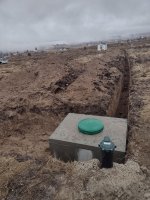
The 500gal tank (pit) is supposed to be installed by Friday.
I'm in western Montana west of the continental divide so it's warmer than the rest of the state, and we really haven't had much snow so far. We're supposed to get a foot dropped this weekend.
The local folks tell me 6' down in a pit is enough to keep from freezing as long as the pit is covered. The tank is going to be covered with a couple feet of dirt around the manhole riser so I think it will keep from freezing without an issue.

ponytug
Super Member
Sounds like you are making great progress!
It doesn't hurt to put a layer of 2" rigid foam on top as you backfill it. That will dramatically reduce the heat flow.
It is basically code in Sweden...
All the best,
Peter
It doesn't hurt to put a layer of 2" rigid foam on top as you backfill it. That will dramatically reduce the heat flow.
It is basically code in Sweden...
All the best,
Peter
Last edited:
Any thoughts on what could be wrong? I filled my fresh water tank on my 2018 ikss a couple times this week to the point water was coming out and both times the sensor says "Low". I know that it is taking the full 60 gallons because it took a long time to fill and the water pressure from the hose was great. Could it be a bad sensor? Thanks in advance for your replies.Hello all,
Hoping to get some advice on a pressure tank setup.
Well is 160' deep with an in-well 3/4hp 5gpm pump and pitless adapter installed 6' beneath grade with electric and poly stubouts.
Pad is located downhill of the well about 270 horizontal feet away.
Initially need to plumb in a small mobile home (400 sqft) which will transition to a house with a full foundation/crawlspace later on. Trench/line comes up under the mobile location and in the middle of the future crawlspace.
Frost line is about 48" here.
I'm looking at a 6' trench and the electric and poly stubouts from the well.
I've got 1" 250psi poly tubing, 10/3 NM-B wire, and 1 1/4 schedule 40 conduit.
I need to plumb in a pressure tank that will work with the mobile. I will buy a real tank later to install in the crawl space.
Internet shows small pressure tank under mobile with heavy insulation and some kind of heating device (tape or heat lamp setup) maison anamour-I have concerns about the heating device failing/freezing.
I'm also seeing tanks designed for burying which seem to be a bit more expensive.
I need some advice on a simple setup with the knowledge that it needs to be reliable but only needs to last 2 winters at most
-how big?
-where to install?
-if I do a buried tank do I install at house or at well if well is uphill of tank?
-what kind of insulation/heater/etc.?
-do I need a check valve outside of the well itself?
Thanks much for any feedback
Valveman
Platinum Member
Be glad to help but don't understand the problem. Maybe post some pictures and start a new thread of your own.Any thoughts on what could be wrong? I filled my fresh water tank on my 2018 ikss a couple times this week to the point water was coming out and both times the sensor says "Low". I know that it is taking the full 60 gallons because it took a long time to fill and the water pressure from the hose was great. Could it be a bad sensor? Thanks in advance for your replies.
OP
MTGreen
Platinum Member
- Joined
- Oct 12, 2022
- Messages
- 999
- Location
- Montana, USA
- Tractor
- Deere 5220, Ford 1720, Deere Progator 2030
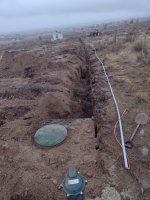
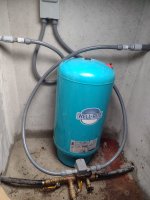
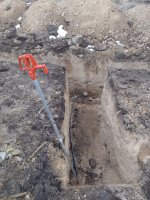
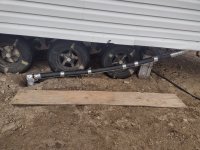
So here we are almost complete -just needs the last 2 foot of trench filled in. Works great and will transition nicely to the house. The well pit lid will be insulated
Attachments
Valveman
Platinum Member
Looks great, except is it missing the Cycle Stop Valve. Still plenty of room on the inlet side of that tank to add a CSV1A when you decide you want good strong constant pressure and for the pump and tank to last longer. Just need to cut the poly pipe back about 4".So here we are almost complete -just needs the last 2 foot of trench filled in. Works great and will transition nicely to the house. The well pit lid will be insulated
OP
MTGreen
Platinum Member
- Joined
- Oct 12, 2022
- Messages
- 999
- Location
- Montana, USA
- Tractor
- Deere 5220, Ford 1720, Deere Progator 2030
I made several saw cuts in the bottom of the tank/pit and it is leveled on a bed of gravel. I was assuming that water would get in regardless of what I did and wanted to provide drainageMake sure the holes are well plugged, there will be water in there.
OP
MTGreen
Platinum Member
- Joined
- Oct 12, 2022
- Messages
- 999
- Location
- Montana, USA
- Tractor
- Deere 5220, Ford 1720, Deere Progator 2030
Thanks, I will consider it if I have a problem ongoing. Right now I seem to have pretty steady flow and pressure. I think the static pressure of the 30ish ft vertical drop over the 250 foot run helps with that.Looks great, except is it missing the Cycle Stop Valve. Still plenty of room on the inlet side of that tank to add a CSV1A when you decide you want good strong constant pressure and for the pump and tank to last longer. Just need to cut the poly pipe back about 4".
View attachment 850883
OP
MTGreen
Platinum Member
- Joined
- Oct 12, 2022
- Messages
- 999
- Location
- Montana, USA
- Tractor
- Deere 5220, Ford 1720, Deere Progator 2030
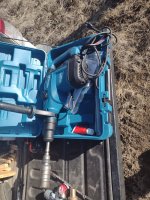
Never had a need for making multiple 2" holes through 4" of concrete before, so had to purchase a new tool for the project.
This is the cheapest Harbor Freight hammer drill that accepts the SDS Max size bits for $200 -the 2" coring bit added another $140. I was quite pleased with it and can also be used without the rotary drill function as a light duty jackhammer. I would definitely classify this as an "HF tool that doesn't suck"
This is the cheapest Harbor Freight hammer drill that accepts the SDS Max size bits for $200 -the 2" coring bit added another $140. I was quite pleased with it and can also be used without the rotary drill function as a light duty jackhammer. I would definitely classify this as an "HF tool that doesn't suck"
Attachments
Valveman
Platinum Member
30' of drop adds 13 PSI to what the pump is doing. That gives you better pressure but not constant pressure. Just turn on a shower or a sprinkler and go watch the pressure switch and gauge. The pump will come on at 40 and run for a minute to fill the tank to 60 before it shuts off. Then it will be off for maybe 2 minutes before the pressure drops to 40 and the pump is started again. It is kind of like watching water boil as the pump running 1 minute and off 2 minutes seems like a long time. But when you figure there are 1440 minutes in a day, a cycle every 3 minutes adds up quickly to make the pump turn on and off 480 times a day. Leave the sprinkler or shower running all day with a Cycle Stop Valve and the pump only cycles once for the entire day. That makes a big difference in how long the pump and tank will last, and gives strong constant pressure as a beneficial side effect.Thanks, I will consider it if I have a problem ongoing. Right now I seem to have pretty steady flow and pressure. I think the static pressure of the 30ish ft vertical drop over the 250 foot run helps with that.

bdhsfz6
Elite Member
- Joined
- Apr 11, 2015
- Messages
- 3,543
- Location
- Northeastern Pennsylvania
- Tractor
- Kubota MX5800 HST & L6060 HSTC Formerly L6060 HST B7100 HST, L2550, L3010 HST, L3430 HST
It sounds like you already made a decision but FWIW, I had the exact same situation when I built my house.
I ran the power & poly water lines from the well to a plastic garden shed which I set on a pallet by the temporary trailer next to the new house foundation.
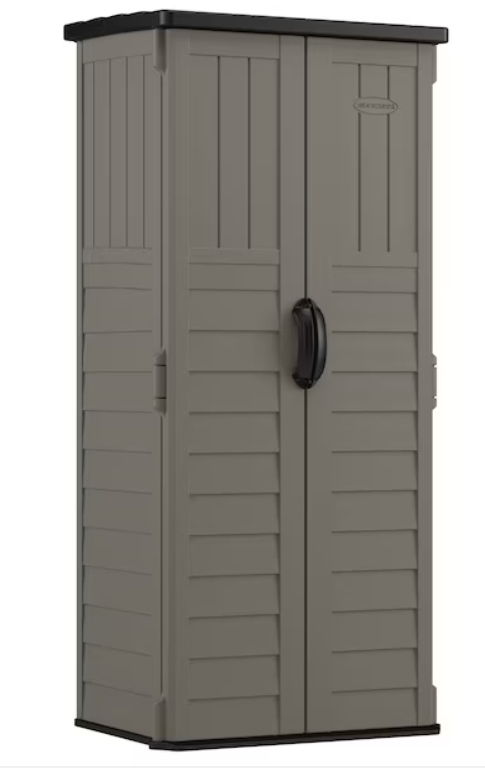
To save money, I bought the full size pressure tank I planned to use in the house. I wrapped heat tape around it, put it in the shed and filled the vacant space around the tank with fiberglass insulation. It worked fine for two seasons while I completed the house
When I was ready to move into the house, I took the tank from the shed and installed it in the new house. I'm still using the shed next to the garage to hold my garden tools. I even reused the fiberglass insulation in my workshop. Nothing wasted.
I ran the power & poly water lines from the well to a plastic garden shed which I set on a pallet by the temporary trailer next to the new house foundation.
To save money, I bought the full size pressure tank I planned to use in the house. I wrapped heat tape around it, put it in the shed and filled the vacant space around the tank with fiberglass insulation. It worked fine for two seasons while I completed the house
When I was ready to move into the house, I took the tank from the shed and installed it in the new house. I'm still using the shed next to the garage to hold my garden tools. I even reused the fiberglass insulation in my workshop. Nothing wasted.

Carl_NH
Elite Member
- Joined
- Apr 5, 2002
- Messages
- 3,992
- Location
- Coastal NH
- Tractor
- 01 Kubota B21TLB, 2010 Ferris 52" ZTR, Cub Cadet 1811, Gravely Super8
So here we are almost complete -just needs the last 2 foot of trench filled in. Works great and will transition nicely to the house. The well pit lid will be insulated
If appears you could raise the tank off the floor a few inches with bricks or a concrete pad under the tank - maybe 3" or so without redoing the piping. Also adding a 6-8" length of 1/4" brass to raise the pressure switch would be a good idea in case of water.
From experience - we had the pressure relief valve go after 8 years and sprayed water for a few hours before catching it, and made a mess - I raised the switch after that incident.
OP
MTGreen
Platinum Member
- Joined
- Oct 12, 2022
- Messages
- 999
- Location
- Montana, USA
- Tractor
- Deere 5220, Ford 1720, Deere Progator 2030
I'm not real clear on how that would work with the pump only cycling once per day when the water is on/off all day for toilets/shower/sink/etc. even with a larger pressure tank?30' of drop adds 13 PSI to what the pump is doing. That gives you better pressure but not constant pressure. Just turn on a shower or a sprinkler and go watch the pressure switch and gauge. The pump will come on at 40 and run for a minute to fill the tank to 60 before it shuts off. Then it will be off for maybe 2 minutes before the pressure drops to 40 and the pump is started again. It is kind of like watching water boil as the pump running 1 minute and off 2 minutes seems like a long time. But when you figure there are 1440 minutes in a day, a cycle every 3 minutes adds up quickly to make the pump turn on and off 480 times a day. Leave the sprinkler or shower running all day with a Cycle Stop Valve and the pump only cycles once for the entire day. That makes a big difference in how long the pump and tank will last, and gives strong constant pressure as a beneficial side effect.
ponytug
Super Member
@MTGreen Nice job!
I like the suggestions from @Carl_NH.
I think that they sound like great "ounce of prevention" suggestions. In my (limited) experience, "if it can go wrong it will go wrong". I would have put foam on the vault roof before covering it with soil, but that's me, so I will be interested to see how the temperature holds in the vault. I would insulate the pipes and pump control switch, as they would freeze before the tank.
I am sure that your pressure control system will be fine and I wouldn't sweat it. We have used similar systems my entire life with no issues.
Just curious: Why the paint stripes on the tires?
All the best,
Peter
I like the suggestions from @Carl_NH.
I think that they sound like great "ounce of prevention" suggestions. In my (limited) experience, "if it can go wrong it will go wrong". I would have put foam on the vault roof before covering it with soil, but that's me, so I will be interested to see how the temperature holds in the vault. I would insulate the pipes and pump control switch, as they would freeze before the tank.
I am sure that your pressure control system will be fine and I wouldn't sweat it. We have used similar systems my entire life with no issues.
Just curious: Why the paint stripes on the tires?
All the best,
Peter
OP
MTGreen
Platinum Member
- Joined
- Oct 12, 2022
- Messages
- 999
- Location
- Montana, USA
- Tractor
- Deere 5220, Ford 1720, Deere Progator 2030
Thanks!@MTGreen Nice job!
I like the suggestions from @Carl_NH.
I think that they sound like great "ounce of prevention" suggestions. In my (limited) experience, "if it can go wrong it will go wrong". I would have put foam on the vault roof before covering it with soil, but that's me, so I will be interested to see how the temperature holds in the vault. I would insulate the pipes and pump control switch, as they would freeze before the tank.
I am sure that your pressure control system will be fine and I wouldn't sweat it. We have used similar systems my entire life with no issues.
Just curious: Why the paint stripes on the tires?
All the best,
Peter
I don't have much room on top between the tank and ground level -I might only be able to put about 6" of dirt without mounding it.
Insulating the pipes/manifold/switch is a good idea and I've already got the right size insulation.
Trailer was purchased with the marks on the tires and I have no idea what it was for -doesn't really look like paint though -looks more like crusted clay dirt marks
ponytug
Super Member
Got it!Thanks!
I don't have much room on top between the tank and ground level -I might only be able to put about 6" of dirt without mounding it.
Insulating the pipes/manifold/switch is a good idea and I've already got the right size insulation.
Trailer was purchased with the marks on the tires and I have no idea what it was for -doesn't really look like paint though -looks more like crusted clay dirt marks
If the soil thickness is only 6" on top of soil, that cuts both ways. It would be an easy fix later, if the need arises.
Good luck on the build! The photos make the area seem as if your neighbors aren't all that far away.
All the best,
Peter



