oldtimer 66
Platinum Member
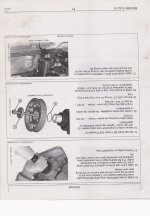
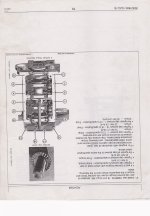
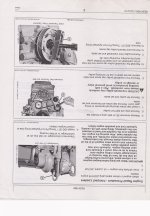

Thanks bud. I'm a mechanic/equipment manager at a golf course . We use this tractor for pulling a rough mower. TractoR Has about 4000 hours and gets used every day in the summer. Thanks for pictures of instructions that will help. Currently waiting on the bushings for the front trunion and oil pan trunion. What's the best way to get those bushings out? I was thinking I could cut them hopefully. Thanks for all your helpLooks like you have a nice shop there. How many hrs on the tractor? The reason I ask is the front tires look worn out. The only thing I was hesitant about when I reinstalled the FEC was getting the governor linkage aligned correctly. The writeup calls to use two alignment pins/ bolts? to align the FEC. I had extra bolts because the kit contains new. I cut the heads off and and used them as alignment pins, at 2 places opposite each other around the crank bore area.
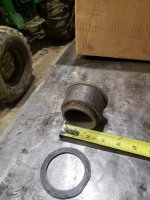
I cut them out part way then chiseled and pryed and or I used a ball burr bit. I am have trouble remembering. They are tricky to put in. The OD is smooth from the laminations applied to the die, the ID is rough. When I said they were reinforced nylon 66 that was wrong. They must be some type of reinforced fiberglass/ urethane mixture molded in a sleeve. I took some emery and hand dressed the od's of the trunnion spindles because of the wavy surface. I might have lightly hand filed the surfaces also. My tractor only had 1000 hrs when I did this repair. Your tractor has 4000 hrs so I imagine those trunnion spindles will be much more wavy. I put the trunnion assembly together dry. If you put in lubrication/ grease that will only attract dirt and debris and wear the bushings trunnion spindles faster. The picture shows what I used to install the large oil pan bushing. It is a 2.0 pipe union, just the male part. I couldn't get the pipe out so I just cut it off. The 2.0" male union fit the large oil pan bushing and the its lip fit the end of the bushing perfectly. A work of caution, I tried to install the large bushing without the male union and I destroyed the first bushing. I froze the bushing but it only went in half way and by that time the end of the bushing was mushroomed/ fibers everywhere from just tapping lightly on the end. So I used the male union part with the second bushing and I put both of them together in the freezer/ refrigerator type over night. No problem the next day but you need to work fast. I don't have the picture, let's call it a tool , for the smaller bushing. I don't remember exactly what I used to install that bushing but the process was the same. Tool and bushing together in the freezer. I think I saw a lathe at your shop. It may come in handy to make one or both of these tools and or get a 2.0" pipe union for one of the tools. The picture shows the original large thrust washer. Dims. Thk. X 2.25" ID X 2.90" OD. At the JD dealer there were several thrust washer part numbers listed and they were all different, but I purchased them all. I don't remember which ones I used. What surprised me was the pricing of these bushings. Relatively cheap at that time, $10/$11 for a John Deere part. Un heard of today. If the thrust washer OD is larger than the ID of the bushing make sure you install the thrust washer first. Measure the length of the bushings and don't drive them deep into the hole. You want the bushings to cover as much of the trunnion spindles as possible. Don't forget the steel washer/ lateral adjustment/ behind the thrust washer on the small trunnion spindle. Have at it.
View attachment 790418
Thanks for all your help. I printed out the instructions today. What's funny is I actually called the john deere dealer asking about these instructions and they had no clue and couldn't find it. I would've thought should've came with the engine gasket kit. Also the kit I got didn't come with new oil pan bolts like it states in the instructions. I have about 20 bolts left in the kit that i have no clue whete they go. I'm guessing there for a different oil pan and not the cast iron pan that i have. I spent about a hour or more getting the old trunnion bushings out and had fiberglass everywhere. Hopefully the new bushings will be here Monday just have to find a union like you got to install.I cut them out part way then chiseled and pryed and or I used a ball burr bit. I am have trouble remembering. They are tricky to put in. The OD is smooth from the laminations applied to the die, the ID is rough. When I said they were reinforced nylon 66 that was wrong. They must be some type of reinforced fiberglass/ urethane mixture molded in a sleeve. I took some emery and hand dressed the od's of the trunnion spindles because of the wavy surface. I might have lightly hand filed the surfaces also. My tractor only had 1000 hrs when I did this repair. Your tractor has 4000 hrs so I imagine those trunnion spindles will be much more wavy. I put the trunnion assembly together dry. If you put in lubrication/ grease that will only attract dirt and debris and wear the bushings trunnion spindles faster. The picture shows what I used to install the large oil pan bushing. It is a 2.0 pipe union, just the male part. I couldn't get the pipe out so I just cut it off. The 2.0" male union fit the large oil pan bushing and the its lip fit the end of the bushing perfectly. A work of caution, I tried to install the large bushing without the male union and I destroyed the first bushing. I froze the bushing but it only went in half way and by that time the end of the bushing was mushroomed/ fibers everywhere from just tapping lightly on the end. So I used the male union part with the second bushing and I put both of them together in the freezer/ refrigerator type over night. No problem the next day but you need to work fast. I don't have the picture, let's call it a tool , for the smaller bushing. I don't remember exactly what I used to install that bushing but the process was the same. Tool and bushing together in the freezer. I think I saw a lathe at your shop. It may come in handy to make one or both of these tools and or get a 2.0" pipe union for one of the tools. The picture shows the original large thrust washer. Dims. Thk. X 2.25" ID X 2.90" OD. At the JD dealer there were several thrust washer part numbers listed and they were all different, but I purchased them all. I don't remember which ones I used. What surprised me was the pricing of these bushings. Relatively cheap at that time, $10/$11 for a John Deere part. Un heard of today. If the thrust washer OD is larger than the ID of the bushing make sure you install the thrust washer first. Measure the length of the bushings and don't drive them deep into the hole. You want the bushings to cover as much of the trunnion spindles as possible. Don't forget the steel washer/ lateral adjustment/ behind the thrust washer on the small trunnion spindle. Have at it.
View attachment 790418
Im little confused about measuring for the Lshaped gasket and shim calculating the gap. Says to bolt cover without gasket and measure through fan mount. So Im guessing if the gap is more 2.85mm the shim needs installed? It also has a minimum 1.85mm. Thinking I'm just going leave that shim outI cut them out part way then chiseled and pryed and or I used a ball burr bit. I am have trouble remembering. They are tricky to put in. The OD is smooth from the laminations applied to the die, the ID is rough. When I said they were reinforced nylon 66 that was wrong. They must be some type of reinforced fiberglass/ urethane mixture molded in a sleeve. I took some emery and hand dressed the od's of the trunnion spindles because of the wavy surface. I might have lightly hand filed the surfaces also. My tractor only had 1000 hrs when I did this repair. Your tractor has 4000 hrs so I imagine those trunnion spindles will be much more wavy. I put the trunnion assembly together dry. If you put in lubrication/ grease that will only attract dirt and debris and wear the bushings trunnion spindles faster. The picture shows what I used to install the large oil pan bushing. It is a 2.0 pipe union, just the male part. I couldn't get the pipe out so I just cut it off. The 2.0" male union fit the large oil pan bushing and the its lip fit the end of the bushing perfectly. A work of caution, I tried to install the large bushing without the male union and I destroyed the first bushing. I froze the bushing but it only went in half way and by that time the end of the bushing was mushroomed/ fibers everywhere from just tapping lightly on the end. So I used the male union part with the second bushing and I put both of them together in the freezer/ refrigerator type over night. No problem the next day but you need to work fast. I don't have the picture, let's call it a tool , for the smaller bushing. I don't remember exactly what I used to install that bushing but the process was the same. Tool and bushing together in the freezer. I think I saw a lathe at your shop. It may come in handy to make one or both of these tools and or get a 2.0" pipe union for one of the tools. The picture shows the original large thrust washer. Dims. Thk. X 2.25" ID X 2.90" OD. At the JD dealer there were several thrust washer part numbers listed and they were all different, but I purchased them all. I don't remember which ones I used. What surprised me was the pricing of these bushings. Relatively cheap at that time, $10/$11 for a John Deere part. Un heard of today. If the thrust washer OD is larger than the ID of the bushing make sure you install the thrust washer first. Measure the length of the bushings and don't drive them deep into the hole. You want the bushings to cover as much of the trunnion spindles as possible. Don't forget the steel washer/ lateral adjustment/ behind the thrust washer on the small trunnion spindle. Have at it.
View attachment 790418
Thanks. Hopefully by today I will have this thing back together. I will keep you updated. Thanks for all your help.I just remembered, the oil pan bolts in the kit are for the stamped steel oil pan. The engine has other application where the cast oil pan is not required/ no spindle support.
GBW and Brad5541, I wanted to get some more pictures to you. The problem area on the forward end cover that leaked was around the road course formed gasket near the water inlet. This gasket is the connection between the FEC and the cylinder head and that is where JD has you do some mickey mouse measuring and apply the brass shim. I think when my tractor was still under warranty the dealer replaced the upper radiator hose 2 times thinking that this was the problem. That is not the problem unless you have coolant erosion now on the cylinder head in the sealing area. The factory dimension are still valid. The major problem with this design is that they made the FEC out of aluminum and the engine block and cylinder head out of cast iron. On a temperature cycle the is a difference of about .020" plus that frets this connection between the FEC and the cylinder head causing the leak. I think it also erodes the other sealing surfaces at the water pump internally and around the oil pump area internally. Notice the rough as cast surface and JD expected this surface to seal with there mickey mouse formed nitrile? gasket. The groove is rough cast along with the eyebrow along the inside and outside of the groove. This area should have been machined at the factory. To remedy this finish problem I hand filed this eyebrow area smooth around the groove. I did not use a speed lock disk and or any power tool. I just wanted to keep the area flat with a good finish. This hand filing needs to be done but just to clean up with minimum metal removed. I think one of the pictures shows this surface after filing but I am not sure and I don't remember taking a finish picture of this area only the as cast surface. I am still going to look for that alignment tool but I don't think I ordered it. Also depending upon how you disconnected the throttle you may need to access the ECM to reset the engine idle. Its set according to voltage/ like .5 to .7 volts. But if you need that info I think I can send it.
View attachment 790027View attachment 790028View attachment 790029View attachment 790030View attachment 790031View attachment 790032
So I have a 2009 4320 with the same coolant leak. Does the John Deere tech manual adequately cover the procedure to disassemble the tractor to fix the leak.GBW and Brad5541, I wanted to get some more pictures to you. The problem area on the forward end cover that leaked was around the road course formed gasket near the water inlet. This gasket is the connection between the FEC and the cylinder head and that is where JD has you do some mickey mouse measuring and apply the brass shim. I think when my tractor was still under warranty the dealer replaced the upper radiator hose 2 times thinking that this was the problem. That is not the problem unless you have coolant erosion now on the cylinder head in the sealing area. The factory dimension are still valid. The major problem with this design is that they made the FEC out of aluminum and the engine block and cylinder head out of cast iron. On a temperature cycle the is a difference of about .020" plus that frets this connection between the FEC and the cylinder head causing the leak. I think it also erodes the other sealing surfaces at the water pump internally and around the oil pump area internally. Notice the rough as cast surface and JD expected this surface to seal with there mickey mouse formed nitrile? gasket. The groove is rough cast along with the eyebrow along the inside and outside of the groove. This area should have been machined at the factory. To remedy this finish problem I hand filed this eyebrow area smooth around the groove. I did not use a speed lock disk and or any power tool. I just wanted to keep the area flat with a good finish. This hand filing needs to be done but just to clean up with minimum metal removed. I think one of the pictures shows this surface after filing but I am not sure and I don't remember taking a finish picture of this area only the as cast surface. I am still going to look for that alignment tool but I don't think I ordered it. Also depending upon how you disconnected the throttle you may need to access the ECM to reset the engine idle. Its set according to voltage/ like .5 to .7 volts. But if you need that info I think I can send it.
View attachment 790027View attachment 790028View attachment 790029View attachment 790030View attachment 790031View attachment 790032
Did you have to pull the radiator and what tech manual do you have. I have the same coolant leak also.Thanks for this. I just ordered a new fan belt and tensioner today. I have everything disabled off the timing cover so tomorrow morning I will be pulling the front axle and oil pan. Another question after reading the service manual and it states I need alignment tool part jdg1660 for installing the timing gear cover? Is this needed?
I also have a 4320 that leaks from the front cover. I believe when they assembled the motor they used RTV instead of a gasket. I think I will try your fix before I take it to a dealer. It is an extensive job to fix it and I wouldn’t doubt that the dealer would just use RTV again.I think I may have recently had this issue on my 2005 model 4120. I noted that the coolant level was approx 1/2 gallon low a couple months ago and I topped it off then. About a week ago, the high temp alert came on and again it was about 1/2 gallon low on coolant.
I had last changed the coolant 14 months prior, using JD coolant at the recommended water mix ratio. Not having the time to pull the front axle and the oil pan, or spare $6 k around to do the job “properly” at the dealer (I assume that would be the approximate cost of the job now since everything has doubled in cost since Covid), I opted to pour a $ 16 bottle of K-seal into the radiator.
It’s only been a few days, but I’ve been working that tractor pretty hard getting ground ready for and planting corn. So far the $16 fix is working. It says on the bottle that stuff makes a “permanent fix”. Time will tell I guess. The coolant level is holding after about 10 operating hours.
View attachment 873023
View attachment 873024
What year is yours ? It sounds like the dealer “fix” has been to replace the sealant with a gasket. It sounds like once that’s done, there hasn’t been any reoccurrences. Only trouble is coming up with the $ 6k to cover the 20 hours of dealer time to do the work. It sounds like lots were covered under warranty. They did come and get my tractor, to do something on it when it was less than a year old, but I’m not sure what that was.I also have a 4320 that leaks from the front cover. I believe when they assembled the motor they used RTV instead of a gasket. I think I will try your fix before I take it to a dealer. It is an extensive job to fix it and I wouldn’t doubt that the dealer would just use RTV again.
Mine is a 2009 4320. Mine doesn’t leak as bad as yours yet but I am afraid it will get worse. It leaks a couple ounces a week. There was another thread on here with another guy who had the same issue and he actually fixed it himself by disassembling the tractor. It was quite extensive. You have to remove the radiator, the front axle assembly and then you have to drop the oil pan before you can remove the front cover. I thought about trying it myself but I don’t know. The guy had pictures also.What year is yours ? It sounds like the dealer “fix” has been to replace the sealant with a gasket. It sounds like once that’s done, there hasn’t been any reoccurrences. Only trouble is coming up with the $ 6k to cover the 20 hours of dealer time to do the work. It sounds like lots were covered under warranty. They did come and get my tractor, to do something on it when it was less than a year old, but I’m not sure what that was.
I’m not certain the K-seal will make a permanent fix however it has some pretty good reviews on-line, and sounds like it is particularly effective on leaking gaskets. It also has no known “bad” effects like plugging up thermostats, etc.
How often have you been refilling your cooling system and how much have you usually had to add ?
I’ve known about this issue for many years but only experienced it over the last few months on my 2005 model 4120 tractor. I’ve changed my coolant several times over the years, to try and minimize the chances of trouble. I’m hoping the K-seal really is a permanent fix.
I’ve had decent luck with at least one other “magic chemical” fix, that being “Slime” in my lawnmower and field car tires.
I’m guessing the coolant leak problem didn’t show up on my tractor for 19 years because it was one of the early ones made back when the casting patterns were relatively new. Later ones probably had issues with porosity and non-uniform wall thickness, after those patterns wore down a little. Also, mine is the base model at 43 engine hp. The “tuned up” others: 4320, 4520, and 4720 likely run hotter and at higher pressure.
One thing we will never see is a tractor mechanic or dealer recommending a “chemical” fix. I guess you can’t blame them for that, because they need to earn a living too.
Mine hadn’t leaked any until about a month ago. I just checked it tonight and the K-seal is definitely holding so far. I haven’t really got into the heavy usage yet this year for that tractor though. I bush-hog about 30 acres with it, usually in the hottest part of the summer. That will be a good test for it.Mine is a 2009 4320. Mine doesn’t leak as bad as yours yet but I am afraid it will get worse. It leaks a couple ounces a week. There was another thread on here with another guy who had the same issue and he actually fixed it himself by disassembling the tractor. It was quite extensive. You have to remove the radiator, the front axle assembly and then you have to drop the oil pan before you can remove the front cover. I thought about trying it myself but I don’t know. The guy had pictures also.
Probably to save money and/or time but more likely somebody just didn’t know no better. Happens everyday, old knowledgeable folks retire and those that replace them are lacking know-how. Not taking into account the fact that different materials (in this case iron and aluminum) have different thermal expansion coefficients is a classic “rookie mistake”.Well I hope your fix works. I just don’t understand why they didn’t use a gasket. It makes no sense at all.



