AC lineset install, braze or solder?

   / AC lineset install, braze or solder? #1  

QueBota

Gold Member
Joined
Jul 12, 2004
Messages
469
Location
People's Republik of Maryland
Tractor
B2910
Hope this isn't a Ford v Chevy thing. Interested to hear TBN opinion, lots of good mechanics here .
Thanks,
Q
 
   / AC lineset install, braze or solder? #2  
silver solder...
 
   / AC lineset install, braze or solder?
  • Thread Starter
#3  
Thanks I've brazed and soldered but never on AC linset, all my buddies have different theories on method and technique.
Picked up 3 ton heat pump at local distributor below their cost. My son's a HVAC tech but mostly works on oil fired furances, boilers and water heaters. He can handle the control systems I need to plumb and wire it.
Thanks,
Q
 
   / AC lineset install, braze or solder? #4  
silver solder, allways
 
   / AC lineset install, braze or solder? #5  
I vote anything with at least 6% silver. Preferably Harris or Weldcote #15 or similar brand. It's an HVAC go to. No flux needed copper to copper. If you want to go high silver, 45 or 56%. 56 has a lower melting temp and both need flux. I suggest the Black flux as it doesn't burn as easy. Good Luck !
 
   / AC lineset install, braze or solder? #6  
For what you're doing on a light residential system with low vibration I would suggest Harris staybrite 8. It has a shear strength over 10,000 psi is easy to use, Inexpensive compared to silver, Can be done with a MAPP gas torch and does not require inert gas flush while brazing like silver and phos rod do. I have many systems that were installed in the mid 90's with staybrite that are still in service with no issues.
If it was a commercial system with large piping and high resonance I would certainly go with silvaloy or phos but for residential it's absolutely fine.
 
   / AC lineset install, braze or solder? #7  
Commercial and gasses should be brazed. For residential it's acceptable to use silver solder.
 
   / AC lineset install, braze or solder? #8  
From an old time refrigeration fitter. I always lean to brazing unless surrounding stuff is temp critical, then 90-10 soft solder or the silver bearing soft solder. Stay away from Phos-Copper as it takes too much heat. It is simply Copper and phosphorus labeled as BCUP 1 & 2. It is a brand name but commonly used. Copper to copper the BCUP series 3-7 are the silver bearing alloys that work copper to copper w/o flux, brand name Sil-Phos. Dissimilar metals you have to use the BAG series minimum 45% silver and flux. Proper flux is one made for silver solder applications. All but soft solder need to have a nitrogen purge through the lines tom prevent copper oxide from forming inside the pipe. It is a hard black residue that raises havoc with compressor bearings and plugs small orifices or capillary metering devices.

I worked on refrigeration piping from 1/4" up to 6" copper. Still have the tools and refrigerant handler permit. Getting ready to install a mini-split for my daughter as soon as the virus program is lifted.

Ron
 
   / AC lineset install, braze or solder? #9  
Do you have all of the equipment necessary to leak check, vacuum, and charge the unit? There痴 more to it than brazing the lineset.
 
   / AC lineset install, braze or solder? #10  
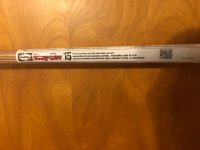
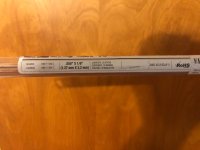
IMG_5498.JPGIMG_5499.JPG

For residential solder 15 is kinda industry standard.

I wouldn’t suggest installing a system if you never have before without some guidance first. Best case the system works perfectly and efficiently for 25-30 years, most likely the system sky rockets utility bills or fails prematurely and has to be replaced again in under 5 years.

PM me and I can tell you the procedure, I’m not gonna post it publicly.

But you will need silver solder, torches, nitrogen tank with regulator, pipe bender, vacuum pump and micron gauge etc. Just to name a few tools.
 
   / AC lineset install, braze or solder?
  • Thread Starter
#11  
Thanks everyone, lots of info. Have all tools, materials and ability to install system. I'm pretty good, my son works as a HVAC field tech, he is their fuel oil specilist, boilers, furnaces and water heaters, he does service heat pumps, AC units and mini splits. I work there part time, you wouldn't believe some of the clowns that are field service techs here, too many callbacks.

Topic came up typical father son argument over best way to install our lineset. I prefer StayBrite 8 and MAPP Turbo Torch with good size tip, he wants to braze with air acetylene and silphos. Most guys i know lean toward brazing.

Everything's installed, just need to join pipes. Project delayed temp due to weekend jobs and rain/wind here.

Good to hear TBN opinions, lots of good mechanics here, always sound advice.
Thanks,
Q
 
   / AC lineset install, braze or solder? #12  
Thanks everyone, lots of info. Have all tools, materials and ability to install system. I'm pretty good, my son works as a HVAC field tech, he is their fuel oil specilist, boilers, furnaces and water heaters, he does service heat pumps, AC units and mini splits. I work there part time, you wouldn't believe some of the clowns that are field service techs here, too many callbacks.

Topic came up typical father son argument over best way to install our lineset. I prefer StayBrite 8 and MAPP Turbo Torch with good size tip, he wants to braze with air acetylene and silphos. Most guys i know lean toward brazing.

Everything's installed, just need to join pipes. Project delayed temp due to weekend jobs and rain/wind here.

Good to hear TBN opinions, lots of good mechanics here, always sound advice.
Thanks,
Q

Stay-Brite is one of my favorite solders. ( I used to work for JW Harris ) Either phos or 8 would be suitable. Staybrite can be easier to work with due to super low melt temp and slightly higher re-melt. I think most HVAC guys are brought up on 15 and they tend to stay with it.
 
   / AC lineset install, braze or solder? #13  
The only thing with staybrite 8 is it melts and flows quickly especially on the liquid line so you need to be careful not to over solder and let it migrate into the pipe creating a restriction or unwanted expansion device. I suggest a couple test joints before you solder the main piping.
 
   / AC lineset install, braze or solder? #14  
I am such of a tight-wad I have to screw my pants on but I believe spending $2 wisely is often better than saving $1 foolishly. I recommend doing all the bending and fit up then having a pro to braze the joints. It take's practice to make leak proof joints in refrigeration lines without doing damage. When I supervised property maintenance,over a period of months I trained newbies to braze refrigeration line by first having them soft solder water lines with air-acetylene torch. After they could do it well,I had them use oxy-acety to make same joints using same solder. When they mastered that,they joined water lines with alloys suitable for refrigeration. About the worst that can happen with water is having leaks if it isn't done right. On refrigeration lines it's desiriable to take least amount of time possible to avoid doing damage. It's risky for experienced techs to use air-acty or mapp and asking for trouble when amateurs do it.
Here's a rhetorical question that prove's hireing pros some times save's money in the long run. In you profession,is it cheaper to do the job for customers from the onset or is it sually cheaper to straighten it out after customers "fixed it first"?
“first, do no harm”
 
   / AC lineset install, braze or solder? #15  
I am such of a tight-wad I have to screw my pants on but I believe spending $2 wisely is often better than saving $1 foolishly. I recommend doing all the bending and fit up then having a pro to braze the joints. It take's practice to make leak proof joints in refrigeration lines without doing damage. When I supervised property maintenance,over a period of months I trained newbies to braze refrigeration line by first having them soft solder water lines with air-acetylene torch. After they could do it well,I had them use oxy-acety to make same joints using same solder. When they mastered that,they joined water lines with alloys suitable for refrigeration. About the worst that can happen with water is having leaks if it isn't done right. On refrigeration lines it's desiriable to take least amount of time possible to avoid doing damage. It's risky for experienced techs to use air-acty or mapp and asking for trouble when amateurs do it.
Here's a rhetorical question that prove's hireing pros some times save's money in the long run. In you profession,is it cheaper to do the job for customers from the onset or is it sually cheaper to straighten it out after customers "fixed it first"?
“first, do no harm”

As a former Pro: I still retain those skills but as you said it takes practice and experience to be able to do even a passable job. Refrigerant leaks where water would not and it works at a lot higher pressures (molecule size). The old adage is "rework costs 3 times as much as it did new. As a foreman in the trade; if a fitter has more than the occasional leak in a system it was "down the road dude". Same with overheating the joints when brazing, especially silver bearing alloys; excess heat changes the composition of the alloy and can lead to failures especially exposed to vibration. Over heating soft solder joints burns the flux and results in incomplete solder flow into the joint. Acid fluxes used on water cannot be used on refrigeration as you do not want the residue in the system at all.

Ron
 
   / AC lineset install, braze or solder? #16  
Why is this a question? Braze is the best and strongest and that's what one would want on this application.
Solder joints do fail.

Common Reasons for Solder Joint Failure

1. Poor solder joint design
There are various types of solder joints to choose from when soldering electronic connections. The purpose and location of the solder joint should be taken into consideration when choosing the solder joint type. Applying the wrong solder joint type might cause it to fail later.
Other design features such as component mirroring, board mounting conditions and housing attachments can create constraints and board strains when executed poorly.
2. Poor-quality soldering
Soldering is a process that requires extensive knowledge and skill. Using the wrong equipment, materials or techniques (or using the correct ones improperly) may result in a bad solder joint.
3. Low-quality solder materials
Solder joints that are made with low-quality materials are not as sustainable as those made with higher-quality materials. Material defects will increase stress and might lead to fracturing.
4. Unintended stresses from polymeric materials
Materials used for potting, coating and staking have various thermal and mechanical properties. These properties can have a negative effect on solder joint reliability by creating complex loading conditions. In a dip-coated assembly, for example, the coating will pass underneath ball grid arrays (BGAs) and quad-flat no-leads (QFNs). During thermal cycling, the coating will expand and may result in the component being lifted off the board. This will add tensile stresses to the solder joints.
5. Tensile fracture
Solder joint fractures can occur as a result of short-term stress overloading. This is often observed in units that have been mishandled or misprocessed. Incidents that might lead to tensile fractures include mechanical shock that occurs when the unit is accidentally dropped or when excessive force is used while fitting the unit. In these circumstances, the solder joints are subjected to high shear stresses that may result in them being ripped away from the board.
6. Creep failure
Creep failure refers to failures caused by long-term permanent mechanical loading. This may cause solder joints to deteriorate over time and will eventually lead to failure. The potential for this type of failure is increased in higher temperatures. Creep fractures can also occur in assemblies that were not efficiently supported during soldering. When the board is then forced flat to be screwed into place, excessive stress is applied to the solder joints. This may lead to cracking.
7. Fatigue failure
The application of cyclical stresses may result in fatigue failure. This is primarily caused by temperature deviations or excursions or conflicting temperatures between the CTEs of the solder joints and the application board. This can be caused by switching devices on in warmer temperatures and off in cooler temperatures, direct sunlight exposure, or being moved to a different climate.
8. Corrosion
Tensile fractures and fatigue fractures can accelerate corrosion processes, but there are a variety of other circumstances that could lead to corrosion in solder joints:
Atmospheric or environmental corrosion
This type of corrosion occurs in solder joints that function in the air or are immersed in gases or liquids.
Galvanic corrosion
This refers to corrosion that occurs when unrelated metals that are in contact with one another are exposed to moisture.
Voltage-assisted corrosion
This refers to corrosion that is accelerated by an electric potential applied to or across the solder joint. This type of corrosion can cause byproduct material to build up between metals, resulting in a short-circuit.
9. Solder balls
This is a popular soldering defect that typically occurs with reflow or wave soldering. It shows up as a tiny sphere of solder that attaches itself to a resist, conductor, or laminate surface. The balls could be a byproduct of various factors, like unorganized solder paste printing, rough board design, or poor reflow temperature settings.
10. Inadequate wetting
Solder joints that aren稚 completely wetted are weak and may fail to develop a strong connection with the board. Generally, the solder would get 100% wetting with both the pin and pad, leaving no wide spaces or gaps. Inadequate wetting usually results from the designer痴 forgetfulness as they may forget to apply heat to the pin and pad. However, it could also be the result of a dirty board. The way to avoid this is to evenly heat the pin and pad and clean the PCB thoroughly.
11. Solder-starved joint
As indicated by its name, a solder-starved joint doesn稚 contain enough solder to create a connection. It痴 mostly because the lead was inadequately heated, causing a poor electrical connection. However, there痴 a slight possibility that this joint may still work. With that said, the joint is going to eventually fail as cracks weaken the joint over time. Adding more solder and reheating the joint is the best way to prevent failure.
Solder joints do and will fail. If you don稚 have the bandwidth to deal with soldering issues, you can always work with a reliable PCBA manufacturer that specializes in high-integrity solder joints. Contact us today to learn how EMS Solutions can help you avoid solder joint issues.
 
   / AC lineset install, braze or solder?
  • Thread Starter
#17  
Thanks folks, great input, lots of practical mechanics on TBN.

Waiting on Stay Brite 8 from local trade counter, had to order, aprrox 3-5 days. Went to PU order, was standard StayBrite and incorrect flux, they're going to reorder per counter manager.

He checked computer, they haven't sold a roll of Stay Brite 8 in 4 years (large R. E. Michel shop near Baltimore).

Going to test braze a few joints with SilPhos and solder some Stay Brite 8 as well for comparison.

Will report back when solder arrives.

Thanks,
Q
 
   / AC lineset install, braze or solder?
  • Thread Starter
#18  
Update:

StayBrite 8 and flux arrived. Did some testing SilPhos an air acetylene torch and SB8 and MAPP gas Turbo Torch, 3/4" copper pipe, unions and elbows. Both methods work well, appreciate the low heat and no purge requirement for SB8. Will post more details later regarding pros/cons, we decided on SB8 with Harris liquid flux recommended for SB8.

All joints cleaned, tweaked for tight fit, minimal flux, male only, and soldered no issues. Forgot how nice SB8 flows and draws, nice clean joins, some prettier than others.

Pressure test with Nitrogen 250 psi to 400 psi in 25 psi increments, no leaks at 400 psi for 1 hour test.

Vacuum down to 105 microns after 55 minutes, minimal decay after shutting pump off.

Release refrig, wait 24 hours, static pressures look good, run unit, pressures look good, 38°F ecoil, 70°F and 50% RH indoor, 50°F avg vent temp. Seems to run OK.

Further checking with digital gauge set indicated expected ecoil temp/pressure with slightly lower superheat than expected.

Unit has heat pump function which uses accumulator. Ran briefly in heat mode, high side close to 300 psi.

Initial thoughts, testing on sub optimal day. Low heat/moisture load across the ecoil. It had been in the rainy 50's previous few days, dry cold front came through, dropped dew point into the 40's with daytime temp barely low 70s next day a couple hours before testing, outside unit sits in shaded northern exposure location. Interior temp 74°F 50% RH. Unit pulled interior temp down to 70°F in approx 1.5 hours.

Minimal condensate on ecoil. Metering device is TXV. Refrigerant R410A

Also last page of manual indicates unit ships with larger charge of refrigerant than previous. Was previously enough for 25' lineset and "3 ton" ecoil, which is this units configuration, system may be a bit overcharged.

Posting from iPhone4, it's a struggle. I'll clean this up and get gauge readings from my son when I get home from work this evening.

To warm outside for heatpump, too cool and dry inside for AC?

Need better testing conditions.

Thanks,
Q
 
Last edited:
   / AC lineset install, braze or solder?
  • Thread Starter
#19  
Quick update - Ran unit over last weekend in heat pump mode, mid to low 30°Fs overnight. Inside coil 105°F range, approx 350 psi, average vent temp low 90°Fs, outside unit pressure avg 110 psi, approx 36°F. Tested switchover to propane backup and back, works as expected.

Knock on wood, so far so good. AC weather coming this weekend, temps mid 80°Fs and dew points in the mid 60°Fs. Not peak summer temps here of low to mid 90°F with dew points mid 60°Fs to upper 70°Fs but warm and humid enough for AC test.

Thanks,
Q
 
   / AC lineset install, braze or solder?
  • Thread Starter
#20  
Have had good AC test weather, unit runs fine, all numbers good. Need to enhance air return system for enhanced performance, theyre are some "dead" areas in the house where air tends to stagnate, need to get that warm air back to the air handler. Airflow seems to be a major component for good performance. Lots of young guys that work for the company Im at part time grab a refrig tank and gauge set before they even evaluate the situation.

All in all not to bad, learned a bunch and saved some money. First time I was ever "lead man" on complete Heat Pump R&R. 16 SEER, 3 ton Heat Pump AC, 10 year compressor, new ecoil and air handler. Aprrox $3K installed, not counting 12oz helpers and grill material, lowest quote I received was for $5,995 and highest was $10K and change. Good Deal? Like my dad used to say Time will Tell.
 

Marketplace Items

CATERPILLAR CB-224C DOUBLE DRUM ROLLER (A52707)
CATERPILLAR...
2013 FORD F-350 FLATBED (A58214)
2013 FORD F-350...
2024 JCB 35Z (A60462)
2014 Chevrolet Silverado 1500 High Country 4x4 Crew Cab Pickup Truck (A56858)
2014 Chevrolet...
2016 Doyle 10T Tender (A56435)
2016 Doyle 10T...
UNKNOWN  20 FLATBED GOOSENECK (A58216)
UNKNOWN 20...
 
Top