
You are using an out of date browser. It may not display this or other websites correctly.
You should upgrade or use an alternative browser.
You should upgrade or use an alternative browser.
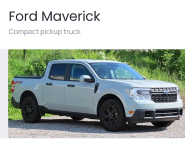
Anyone else ordered or got a Ford Maverick?
- Thread starter RalphVa
- Start date
- Views: 7630
More options
Who Replied?
/ Anyone else ordered or got a Ford Maverick?
#21

5030
Rest in Peace
- Joined
- Feb 21, 2003
- Messages
- 28,967
- Location
- SE Michigan in the middle of nowhere
- Tractor
- Kubota M9000 HDCC3 M9000 HDC
Being machines, they all will have issues.
2manyrocks
Super Member
- Joined
- Jul 28, 2007
- Messages
- 9,517
Ford made the panther platform vehicles for something like 20+ years. Several problems got addressed. At least you could know what problems to expect (snap ring on 4th gear OD, etc.) and what it would cost to repair. With the new Maverick hybrid, all this remains to be determined. Hybrid drive train has advantages, but also has added complexity.
I doubt these are an improvement over the little 4 cylinder Mazdas, Toyotas, and Nissans of the late 1980s before they messed around and make them bloated.
Instead of bringing back names, I wish they'd bring back the actual vehicles that made sense and had proven reliability.
I doubt these are an improvement over the little 4 cylinder Mazdas, Toyotas, and Nissans of the late 1980s before they messed around and make them bloated.
Instead of bringing back names, I wish they'd bring back the actual vehicles that made sense and had proven reliability.

check
Elite Member
- Joined
- Sep 26, 2008
- Messages
- 4,164
- Tractor
- 2009 Kubota BX25
My former girlfriend had one of those back in the 80s. You could see the ground through the floorboards which were totally rusted out, but the thing ran like a charm!I had a '71 for a while? Could never resolve it's electrical issue where it would just randomly engage the starter while going down the road.

Oaktree
Super Member
Wow, that's the first time I've heard of a tacoma being described as "too big". Stepson has one (I think his is a '12), barely enough legroom for me to fit in it, maybe 40?" bed not big enough to be useful for much of anything.We've a 2005 Tacoma that is still fine and a 2016 Mazda3. I can no longer drive the 3 because of close placement of brake and clutch: severe neuropathy. Can still drive the Tacoma. Neither of us like the Tacoma: too damn big. We liked the 1997 that we had.
Let's be real, most if not all 70s vehicles were barely tolerable. That decade wasn't exactly the high point of automotive excellence. The old Maverick wasn't too bad, it was the next generation of the Falcon. Attractive styling.Interesting how Ford recycles a name of a car that, at the height of the 70's fuel crisis, was barely tolerable and always reminded me of a Chevy Vega. However, if I ever find a good condition V-8 powered Maverick I will do my best to find a place in the garage for it.
Yeah, between the first year blues of any new/redesigned vehicle, you have to wonder what corners were cut to reach the price point they're being sold at too.I considered ordering one when they first came out and orders were still open, but was hesitant to order one in the first year of production before they work out the unexpected kinks. I was and still am concerned about having to eventually replace the hybrid battery packs not knowing if they will be available or what they will cost in the future. I think the safer option would be to go with the gas engine, but even then, I would want to check further on the reliability of the new model with that engine.
Meh. Never had much use for any of those 80s vintage Japanese trucks. Too small, woefully underpowered and they all rusted like a brillo pad. Pretty rare to see one more than a couple years old with the original bed, fenders were the next to go. Considered them little more than toy trucks.I doubt these are an improvement over the little 4 cylinder Mazdas, Toyotas, and Nissans of the late 1980s before they messed around and make them bloated.
Other than Maverick what else? I'm not counting when a discontinued model is brought back as the same body style (ie-Bronco or Ranger).Ford has a bad habit of recycling names it seems.
check
Elite Member
- Joined
- Sep 26, 2008
- Messages
- 4,164
- Tractor
- 2009 Kubota BX25
The Ford F150 has been a great truck for me. I am on my sixth one. my current one is a 2016 XLT with the XTr option and it is a super crew with four-wheel-drive. That is pretty much what I get every time, and with new prices I am planning on driving this one into the ground. so far so good, and the only rest has been to the transmission cooler lines, which I just got replaced. With new brakes and all the fluids done I am good for quite a while now.
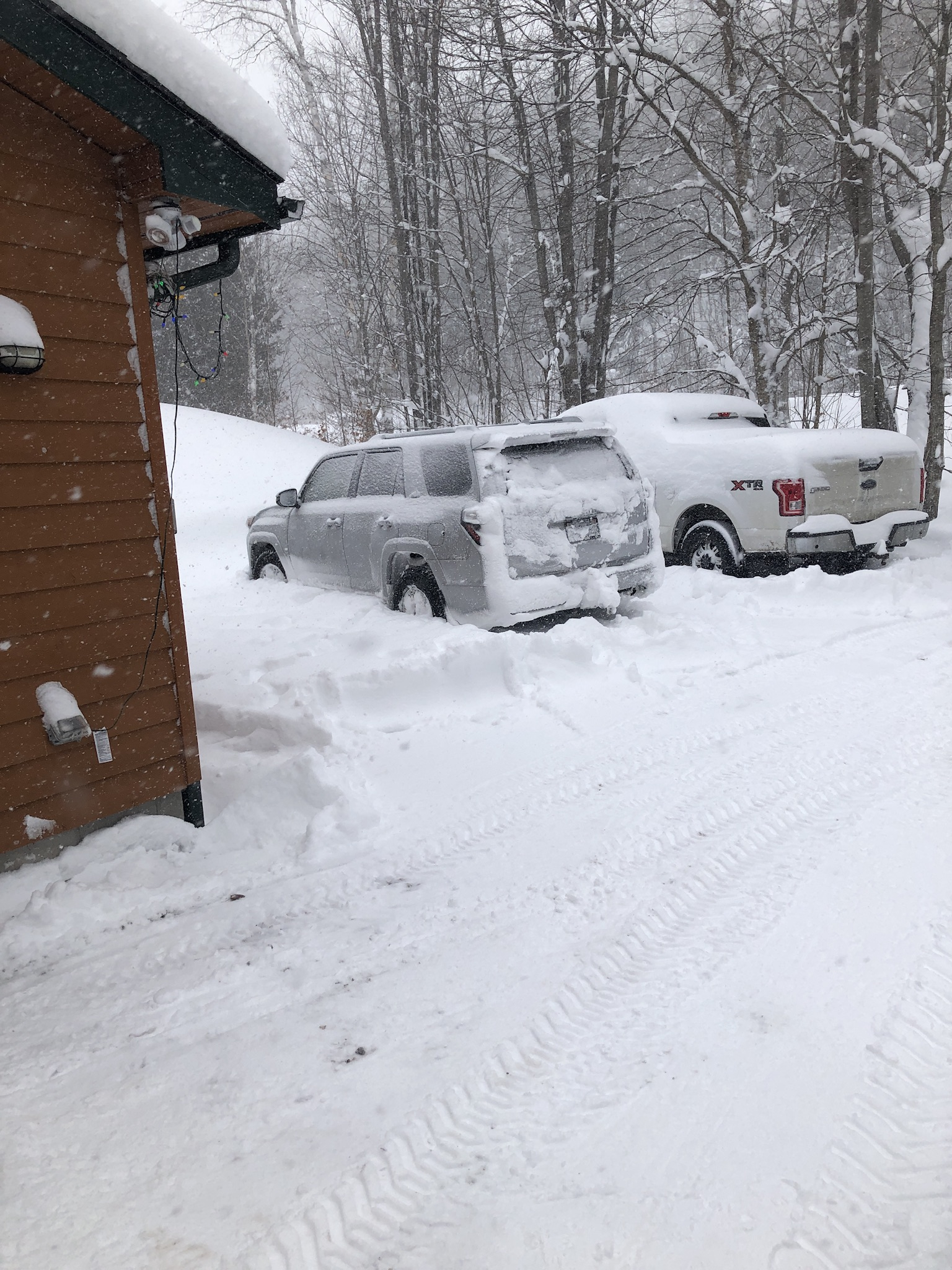
Sorry, this is the only picture of it I have right now, sitting next to the wife’s 4Runner. guess why we always buy 4WD?
Sorry, this is the only picture of it I have right now, sitting next to the wife’s 4Runner. guess why we always buy 4WD?
Attachments
Straightgrain3016
Silver Member
Whatever the choice; I cannot imagine buying another vehicle that doesn't have 4W disk brakes.
2manyrocks
Super Member
- Joined
- Jul 28, 2007
- Messages
- 9,517
I still own a 1992 Mazda B2200 standard cab with a 5 spd and 4 cylinder engine. No body rust at all, but the rear step bumper is rusted out. It's a car like driving truck with a smooth shifting transmission. Easy to drive in traffic and park about anywhere. About 8 bags of concrete is my limit for what I would haul in the bed. 4x8 plywood will fit in the bed if I let it hang over the tailgate. It has been very trouble free. I don't consider it underpowered. If I have something big or heavy to haul, I use my 3/4 ton.
Where my B2200 sorts of falls down is it will carry the driver and one passenger, but there's no room for groceries or luggage in the cab. Parts availability is also becoming an issue.
It seems to me that the design of the Maverick with the 4 door cab solves the passenger/groceries/luggage problem. The size works for many who need something more than a car, but don't quite need a full size truck. The bed apparently will carry 4x8 plywood. The pricing is more affordable than the bigger trucks. It checks a lot of boxes, and that's why Ford can't make them fast enough to fill the orders.
All that being said, I wonder how the CVT will hold up when someone like me decides to haul 8 bags of cement or tow their small camper or boat with it weekend after weekend. I also wonder how the frameless design will work out in these use cases.
Where my B2200 sorts of falls down is it will carry the driver and one passenger, but there's no room for groceries or luggage in the cab. Parts availability is also becoming an issue.
It seems to me that the design of the Maverick with the 4 door cab solves the passenger/groceries/luggage problem. The size works for many who need something more than a car, but don't quite need a full size truck. The bed apparently will carry 4x8 plywood. The pricing is more affordable than the bigger trucks. It checks a lot of boxes, and that's why Ford can't make them fast enough to fill the orders.
All that being said, I wonder how the CVT will hold up when someone like me decides to haul 8 bags of cement or tow their small camper or boat with it weekend after weekend. I also wonder how the frameless design will work out in these use cases.

kenmbz
Super Star Member
- Joined
- May 8, 2019
- Messages
- 10,954
- Location
- S.E. PA
- Tractor
- Massey Ferguson GC1720/JD x360/Echo CS-490/CS-620
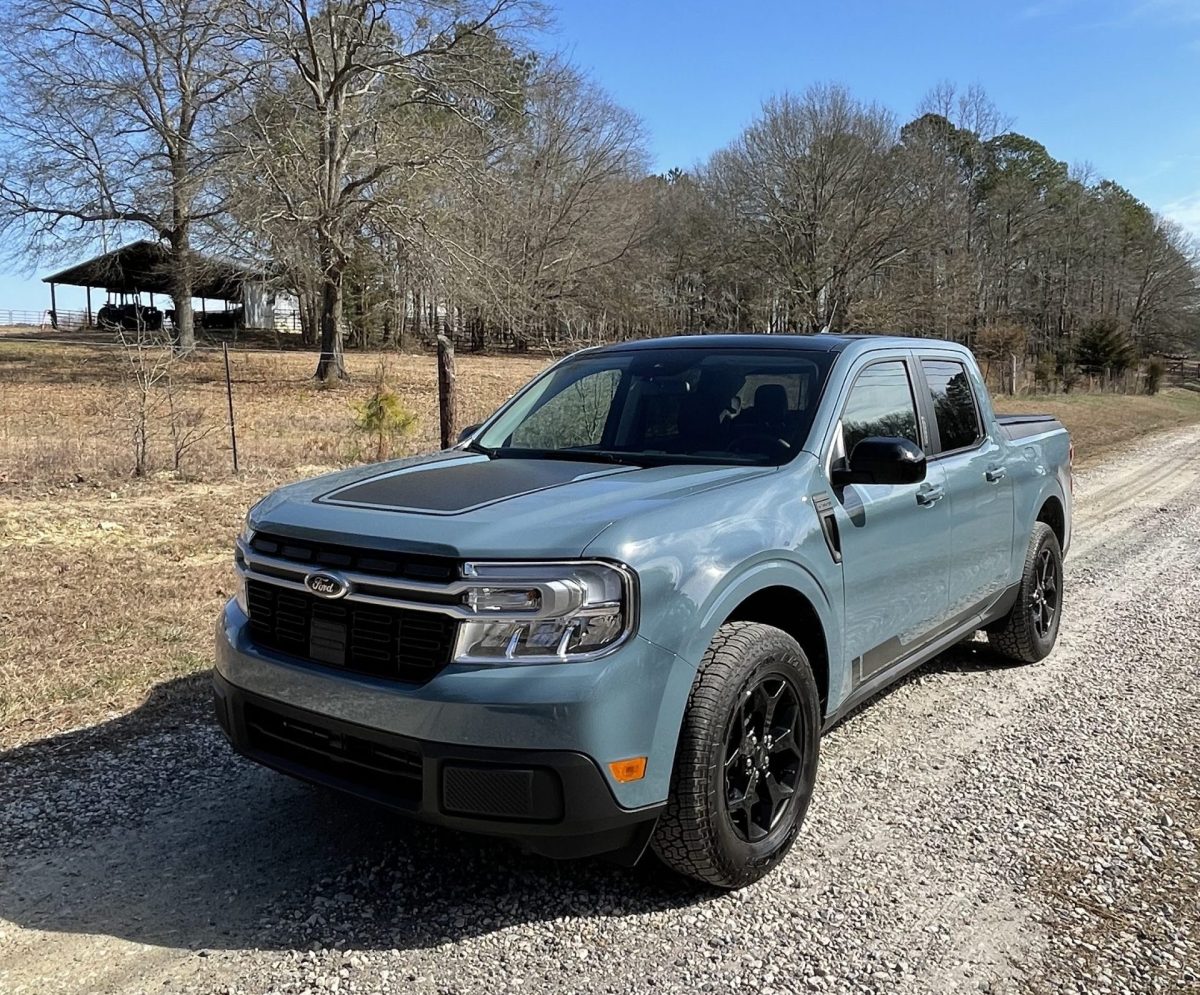
Looks like the Maverick is having issues with the paint, both items washing off (like decals) and thin paint.
 www.motorbiscuit.com
Problem Alert: 2022 Ford Maverick Graphics Are Washing Away
The 2022 Ford Maverick might need new decals. Multiple owners are reporting that their Ford Maverick decals are washing off.
www.motorbiscuit.com

ruffdog
Super Star Member
- Joined
- Dec 31, 2011
- Messages
- 12,505
- Location
- cowville, banana republic
- Tractor
- Bobcat Toolcat 5610G, Deere X744, Cub Cadet IH 982
Maxing out a 2 wheel drive Maverick with logs.

NoTrespassing
Elite Member
That's what I thought until my Mazda3 ate the rear pads in 50K miles. The front pads are still about 50%. I asked my local trusted mechanic about it and he said it's not unusual on many of the small late model cars to eat rear brake pads these days. He actually claimed he'd take rear drums over discs.Whatever the choice; I cannot imagine buying another vehicle that doesn't have 4W disk brakes.
ruffdog
Super Star Member
- Joined
- Dec 31, 2011
- Messages
- 12,505
- Location
- cowville, banana republic
- Tractor
- Bobcat Toolcat 5610G, Deere X744, Cub Cadet IH 982
Swept area of rear drums is way more than the dinky rear disk brakes.That's what I thought until my Mazda3 ate the rear pads in 50K miles. The front pads are still about 50%. I asked my local trusted mechanic about it and he said it's not unusual on many of the small late model cars to eat rear brake pads these days. He actually claimed he'd take rear drums over discs.
ruffdog
Super Star Member
- Joined
- Dec 31, 2011
- Messages
- 12,505
- Location
- cowville, banana republic
- Tractor
- Bobcat Toolcat 5610G, Deere X744, Cub Cadet IH 982
Differences between the cheaper hybrid and an optioned out Maverick:
Oaktree
Super Member
That's what I thought until my Mazda3 ate the rear pads in 50K miles. The front pads are still about 50%. I asked my local trusted mechanic about it and he said it's not unusual on many of the small late model cars to eat rear brake pads these days. He actually claimed he'd take rear drums over discs.
Curiously, what's the reasoning behind drums in the rear on some vehicles? Is it just a cost saving move or is there science behind it?Swept area of rear drums is way more than the dinky rear disk brakes.
NoTrespassing
Elite Member
I was always under the impression disc brakes were more efficient and most of the stopping power comes from the front wheels. My mechanic commented that the rear discs get covered in more grime/dirt etc. and could contribute to increased wear.Curiously, what's the reasoning behind drums in the rear on some vehicles? Is it just a cost saving move or is there science behind it?

M59
Platinum Member
- Joined
- Oct 27, 2014
- Messages
- 567
- Location
- Fairview NC
- Tractor
- Kubota M59 TLB/ Mahindra Max 24 TLB/ KX-080-5
Oaktree,
Rear drums vs disk brakes. The front brakes do 90+ percent of the braking work so the choice of rear drum vs disk is largely one of additional performance in braking vs component/ assembly cost. Drum brakes are dirt cheap to build and assemble. Disk brakes on all 4 wheels are associated with "better" performance by general public.
The average and even the above average driver is not going to use and is probably incapable of using the increased braking performance associated with rear disc brakes.
Rear drums vs disk brakes. The front brakes do 90+ percent of the braking work so the choice of rear drum vs disk is largely one of additional performance in braking vs component/ assembly cost. Drum brakes are dirt cheap to build and assemble. Disk brakes on all 4 wheels are associated with "better" performance by general public.
The average and even the above average driver is not going to use and is probably incapable of using the increased braking performance associated with rear disc brakes.

sd455dan
Super Member
- Joined
- Oct 23, 2012
- Messages
- 6,338
- Location
- North Idaho
- Tractor
- Rhino 554, Ford 550 TLB (JD X500, MTD, Gilson riding mowers) Ford 3000-Sold
yeah don't forget the wonderful ride quality either.Wow, that's the first time I've heard of a tacoma being described as "too big". Stepson has one (I think his is a '12), barely enough legroom for me to fit in it, maybe 40?" bed not big enough to be useful for much of anything.
Let's be real, most if not all 70s vehicles were barely tolerable. That decade wasn't exactly the high point of automotive excellence. The old Maverick wasn't too bad, it was the next generation of the Falcon. Attractive styling.
Yeah, between the first year blues of any new/redesigned vehicle, you have to wonder what corners were cut to reach the price point they're being sold at too.
Meh. Never had much use for any of those 80s vintage Japanese trucks. Too small, woefully underpowered and they all rusted like a brillo pad. Pretty rare to see one more than a couple years old with the original bed, fenders were the next to go. Considered them little more than toy trucks.
Other than Maverick what else? I'm not counting when a discontinued model is brought back as the same body style (ie-Bronco or Ranger).
One of my friends was a Datsun/ Nissan salesman back in the mid 80's.
We went four wheeling in my 77 Jeep Honcho and were about to get into the rough stuff. He instinctively put his arm up and braced it against the ceiling.
J10 fully articulated through the rough and sucked up the bumps. He said I just cant believe this Jeep soaked up all of that.
If this had been one of the brand new Nissan 4x4's I sell, we both would have needed neck braces after having our heads beaten in by the roof.
A few months later his dad bought a lightly used J10 as well.
Really like the new Maverick Ford has a winner along with the Tremor
Last edited:
Oaktree
Super Member
Yeah, kind of what I figured. Brake design for a truck must be a lot more complicated than a car/SUV due to the front/rear weight imbalance (not to mention loaded vs empty differences).Oaktree,
Rear drums vs disk brakes. The front brakes do 90+ percent of the braking work so the choice of rear drum vs disk is largely one of additional performance in braking vs component/ assembly cost. Drum brakes are dirt cheap to build and assemble. Disk brakes on all 4 wheels are associated with "better" performance by general public.
The average and even the above average driver is not going to use and is probably incapable of using the increased braking performance associated with rear disc brakes.
GM put discs on their pickups sometime around the mid ‘90s if I’m not mistaken. After a couple of years they went back to drums for a while; the passenger side pads kept breaking. The reason or theory I heard was that there was a lot of road debris kicked up on that side, whereas the the fuel tank on the driver’s side protected the pads somehow. Whatever reason, they’ve gone back to discs.Yeah, kind of what I figured. Brake design for a truck must be a lot more complicated than a car/SUV due to the front/rear weight imbalance (not to mention loaded vs empty differences).
I believe that drums may work better with heavy loads. The only disc trailer brakes I see are for 2000 lb axles; any heavier all that you can find is drums.
OP

RalphVa
Super Member
- Joined
- Dec 19, 2003
- Messages
- 7,902
- Location
- Charlottesville, VA, USA
- Tractor
- JD 2025R, previously Gravely 5650 & JD 4010 & JD 1025R
Maverick is 4w discs.


