Blow-in insulation behind pegboard?

   / Blow-in insulation behind pegboard? #1  

Sodo

Elite Member
Joined
Apr 21, 2012
Messages
3,311
Location
Cascade Mtns of WA state
Tractor
Kubota B-series & Mini Excavator
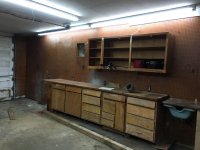
I have a new shop. This is good! REAL GOOD! One bay is walled off, with a door, so I thought I'd put a woodstove in that bay. It has pegboard on ALL walls, nailed on with galvanized drywall nails with the thin heads. I don't know if I like pegboard, cuz I yank tools & the hooks fall off (I think). Perhaps I can learn to like it. One guy said paint it white anyway, then the pegs will have to jam in, and will stay on.

It has no insulation in the walls behind the pegboard. It would be very easy to blow in the insulation on 3 walls, I suppose all done in one morning.

SO...can I blow in insulation into the walls behind the pegboard? Will it stay put? There will be no vapor barrier, but theres no shower or cooking or steam in my shop, no people sleeping etc - it will be cold most of the time, heated perhaps twice a week - if that.

Does blow-in insulation have fire resistance? I was thinking of a welding spark diving into a hole.

Hoping someone has experience with this. I need to make some decisions before I move in. Can't do a lot of work on it, have other fish to fry. I need a new workbench too. Soon, house projects will be TOP priority and its gonna be a long haul.
 
   / Blow-in insulation behind pegboard? #2  
Blown in can be cellulose or fiberglass. Both have an agent that is on the product that prevents free burning but it isn't fireproof. If you insist on leaving the insulation exposed or semi exposed Roxul is the only product I know of that a home owner can purchase relatively easily and provides a decent level of protection from high heat. However it's batt not blown in.
I'm not sure what you consider a vapor barrier in your area. However, insulation is designed to work in conjunction with products that prevent air movement. The typical setup is a house wrap on the exterior side and drywall with tape and paint on the inside. Again, I'm not sure what you mean when you say their is no vapor barrier- either side or just on the inside?
Peanut gallery idea- remove peg board, insulate then add plywood or OSB. If the shop has drywall everywhere else add drywall and then the sheathing on top of that.
Also remember about 70% of the heat loss occurs in the lid. You don't mention your plan for that.
 
   / Blow-in insulation behind pegboard? #3  
I can't say about the insulation, but if you are concerned about the peg board, look up "French cleat" for workshops. A little more work, but much more robust.
 
   / Blow-in insulation behind pegboard? #4  
Sodo, I hate pegboard. That said, sure go ahead and blow in fiberglass insulation behind it. Most of the commercial stuff nowadays is fire rated so I wouldn't be concerned at all. Your pegboard can burn but vertical surfaces hard to light especially with a 'spark' vs. continuous flame. I see your concern with an ember sitting in a peg hole but the fiberglass will just melt and not ignite.
 
   / Blow-in insulation behind pegboard? #5  
I don't think this is a good idea. You should have a vapor barrier between the heated space and the insulation for it to work well. If it was mine, I would pull the pegboard and put up some type of liner, if only thin particle board. I have pegboard in a lot of my shop but I have mounted to stand off strips over particle board. I also had a love/hate relationship with pegboard until I bought a large quantity of plastic hooks on ebay. They stay in place.
 
   / Blow-in insulation behind pegboard? #6  
I would be inclined to remove the pegboard and put in insulation that way. However, our blown-in insulation had some sort of adhesive agent added to it so it sticks together and doesn't settle. This approach might also reduce the mess if you ever removed some of the peg board in the future.
 
   / Blow-in insulation behind pegboard? #7  
If you want to breathe that stuff for the rest of your life, or at least until the particle-induced lung cancer puts you into hospice, go right ahead..

I think blown-in insulation and lots of square yards of small holes sounds like a very effective way to make sure you have plenty of dust in the air of your shop at all times. Short of using some kind of mechanism to feed it into a fan, I can't think of a better way to seed your lungs with bad stuff every minute you are in there.
 
   / Blow-in insulation behind pegboard? #8  
Attic Cat doesn't have a smell to it, it doesn't itch and when I'm blowing it into an attic, I don't have to wear a mask. It's really nice stuff to work with. Home Depot rents the machine for free if you buy ten bags, and the cost of it is the same as the smelly, itchy stuff. One bag costs more then the other stuff, but it goes so much farther that the price becomes the same.

Do you have enough attic insulation? If you are doing the walls, be sure to max out your attic. Around here, we shoot for R60, which is almost two feet of blown in insulation.

How much condensation do you get inside your walls? How much air infiltration do you get through the walls?

If it's not much, then go for it.
 
   / Blow-in insulation behind pegboard?
  • Thread Starter
#9  
OK do't want dust - cellulose is OUT. Good thing I didn't buy anything yet, the cellulose was $140 compared to $220 for the AttiCat. So what about the fiberglas Owens-Corning AttiCat? They claim it never loses it's loft.

I probed the ceiling with a wire and it seems to be insulated, and the roof is flat (new torchdown). I think the exterior sheathing is T111.
 
Last edited:
   / Blow-in insulation behind pegboard? #10  
If you do the insulation project wrong enough,, and something happens,,
you void your homeowners insurance,

Skip the insulation, buy a propane IR heater, and for the couple days a week,
simply add the extra heat.

The cost will be less,, you will be safer, State Farm Insurance will smile,,, :thumbsup:
 
   / Blow-in insulation behind pegboard?
  • Thread Starter
#11  
If theres any time at all - I want to build & "move into" a new workbench. The workshop bay is 14x23. Not sure what that hairdresser sink it all about; its not plumbed in, never was. There is a drain stub in the wall. I was hoping there might be plumbing for hot water for a real utility sink, but theres only cold. Someday will install an instant-on water heater. This house has some crazy stuff, was a rental for 10+ years.

RenderedContent-AAC90FCE-ACD8-446B-AD46-28DA53EF63EA.JPG

Have several woodstoves piling up & endless supply of firewood. Pretty much settled on a woodstove.
 
Last edited:
   / Blow-in insulation behind pegboard? #12  
On the sink, I'm going to go with "someone salvaged it and thought it was too cool to not use it for something."
 
   / Blow-in insulation behind pegboard? #13  
Rocxol is all they use in boiler instulation.
 
   / Blow-in insulation behind pegboard? #14  
Based on our experience, I would not recommend use cellulose behind pegboard. Blow in will begin to settle over time and the cellulose has a tendency to turn to dust which will come through the holes in the pegboard. You will never keep it cleaned up.

We are spray foam contractors, but we have received some many request from customers wanting the cellulose blow in removed that we are buying our own vacuum machine. The number 1 complaint (other than it no longer works) is they have a constant dusty smell in their house.

I would also recommend that you check your attic insulation.
 
   / Blow-in insulation behind pegboard? #15  
Based on our experience, I would not recommend use cellulose behind pegboard. Blow in will begin to settle over time and the cellulose has a tendency to turn to dust which will come through the holes in the pegboard. You will never keep it cleaned up.

We are spray foam contractors, but we have received some many request from customers wanting the cellulose blow in removed that we are buying our own vacuum machine. The number 1 complaint (other than it no longer works) is they have a constant dusty smell in their house.

I would also recommend that you check your attic insulation.

Have you ever had any complaints from people that have used Attic Cat blown in insulation?
 
   / Blow-in insulation behind pegboard? #16  
Spray foam is the way to go period end of discussion.
Best money I ever spent was to foam my shop and the wives tack room in the barn
 
   / Blow-in insulation behind pegboard? #17  
Not to be argumentative, but at what cost is spray foam the best?

I agree that it's superior to anything else on the market, but I struggle with the cost of it over fiberglass bats for the walls in a shop or barn with big doors in it that are rarely sealed, and usually wide open when working on projects. In my opinion, the best bang for the dollar is maxing out your R value in the attic and sealing off your exterior walls so the air cannot get through it.
 
   / Blow-in insulation behind pegboard? #18  
I have to agree with Eddie, last time I checked, spray foam was about triple the cost for just the product for DIY, even more if it is done by a professional.
If it was my shop, I would take off all the peg board and put in fiberglass bat insulation with the paper backing facing the heated side of the shop. IF you can afford it, put 3/8" plywood back on the walls and only put the pegboard back where you need to store tools. You can screw on 1x2 to raise it off the wall. The solid plywood is not going to trap a spark from welding and the fiberglass is not going to support much flame.
To install the fiberglass bat insulation, all you need is a staple gun and razor knife to cut it when needed. The rolls are already cut to 8 foot lengths but if your walls are not exactly 8 foot, you will have to do some splicing. I did my 30x14 boat shed walls and ceiling with it for around $200 in materials (I had a few rolls free from neighbor though). The walls were easy, but I had to enlist my brother in law to help hold up the ceiling panels. I left it all exposed except for about 5 feet on the lower walls that I covered with pieces of left over plywood just to protect the paper backing on the insulation from getting torn from activities in the shed. It sure made a difference in temps in there both summer and winter.
 
   / Blow-in insulation behind pegboard? #19  
Not to be argumentative, but at what cost is spray foam the best?

I agree that it's superior to anything else on the market, but I struggle with the cost of it over fiberglass bats for the walls in a shop or barn with big doors in it that are rarely sealed, and usually wide open when working on projects. In my opinion, the best bang for the dollar is maxing out your R value in the attic and sealing off your exterior walls so the air cannot get through it.
I originally installed fiberglass bats in the shop building and they worked Ok until the mice and moisture claimed their R value. Now, it can get pretty cold in Michigan and as age (mine) has crept into the picture working comfort is no longer 'nice' but a necessity.
The closed cell foam insulation in concert with insulated pass doors, a 3" thick insulated 16'x14' overhead door and a wood stove makes for a 65 degree working environment when the outside wind chills are in single didgets. The shop is a tad short of 2600 square feet I could never attain that comfort level with only fiberglass
Relative to cost, yes it's expensive. Cost vs value is in the eye of the beholder. Cold hands and cold feet drive me nuts.
B. John
 

Tractor & Equipment Auctions

2017 FORD F-150 XL CREW CAB TRUCK (A59823)
2017 FORD F-150 XL...
2018 John Deere 245G LC Excavator - Hydraulic Thumb, Tooth Bucket, 56K LB Class (A56438)
2018 John Deere...
2004 CATERPILLAR 320C L EXCAVATOR (A60429)
2004 CATERPILLAR...
UNKNOWN TANK MANIFOLD (A58214)
UNKNOWN TANK...
2006 Freightliner Auger Truck (A56438)
2006 Freightliner...
Jaw Crusher (A59228)
 
Top