Fall vs Spring Tilling of new garden

   / Fall vs Spring Tilling of new garden #1  

IslandTractor

Super Star Member
Joined
Sep 15, 2005
Messages
16,647
Location
Prudence Island, RI
Tractor
2007 Kioti DK40se HST, Woods BH
I have a question regarding tilling in Spring or Fall. Background info: I don't have much experience with tilling having just purchased one (6ft KKII) in April and have used it only in May/June and then again today (Oct). I should point out that I am tilling an old field which was once overgrown with wild grape and has not been tilled or plowed, just mowed, for the past 10-20 years.

This Spring was wet and I waited until late May/early June to till a plot to be used for corn. As noted there are old dead (presumably) wild grape roots in the field. A lot of them. During my Spring tilling I had to stop to remove the roots wrapped around the tiller every few minutes or after about 250ft of tilling, even on second passes through the area. Major PITA. Took hours to till a quarter acre plot. I tilled again today in an area directly adjacent to the corn field and was able to till to my hearts delight without ever needing to stop to remove grape roots.

I imagine that the reason was that the roots were wet and flexible in the Spring and therefore did not fracture when hit by the tiller but instead were sucked like pasta into the tiller creating a mess. At the end of the summer (fairly dry but hardly a drought year) the grape roots appear to be more brittle and the tiller seems to just split them into 3 inch pieces rather than wind them up. Maybe it is not the grape roots that are more brittle but that the ground is dry vs quite wet in the spring and that the dry ground holds the roots so the tiller can cut them while in the wet ground the roots can just be sucked out of the soil whole.

Two questions: Has anyone else noted this phenomenon? If I till in the Fall should I retill the same area in the Spring before planting (more corn)?
 
   / Fall vs Spring Tilling of new garden #2  
I dont know about grape root problem, but standard farm practice before the zero till process became popular was to disc or till the previous crop residue in the fall to give it time to rot before spring planting. This puts back all the nutrients that werent used to produce the crop. Also this is a good time to do fall lime if required to adjust the Ph.
Next spring you would need to till again to kill off any winter weeds and grass prior to planting and loosen up the soil. By doing it in the fall, it makes the spring tilling much easier. Your spring tilling could also incorporate the spring fertilizer ahead of the till. Just till in the granular fertilizer as soon as possible after the application. I usually disc it up till it is nice and granular with no lumps or weed residue and then row it up. Let it set for about a week if possible, then drag a harrow over the top to flatten the row a little and plant your crop. The lag time allows the fertilizer to dissolve completely and disperse into the soil so you dont get a hot spot on a tender young plant.
 
   / Fall vs Spring Tilling of new garden #3  
What Gary Fowler said.

Additional benefits of fall tilling (or plowing) is that if you have any clay, it will break down better with the freeze/thaw cycles of winter. Typically, fall tilling prevents some winter compaction problems and allows you to get on that soil a little earlier in spring as it will dry out a little sooner. A commercial farmer cannot afford too many trips across his field, but small plot keepers and gardeners can.
 
   / Fall vs Spring Tilling of new garden #4  
I also thought Gary said it well and that is pretty much what I do. Something else to consider is a winter cover crop to improve the soil. You then till it in during your spring tilling.

MarkV
 
   / Fall vs Spring Tilling of new garden #6  
I had a problem a bit like this when I expanded my garden. Bummed a 2 bottom moldboard plow and turned over the whole garden, including the area I am expanding into.
Plow worked the soil much deeper than the tillers will and I got the weeds and roots ripped free without screwing up the tiller.
 
   / Fall vs Spring Tilling of new garden #7  
I had a problem a bit like this when I expanded my garden. Bummed a 2 bottom moldboard plow and turned over the whole garden, including the area I am expanding into.
Plow worked the soil much deeper than the tillers will and I got the weeds and roots ripped free without screwing up the tiller.

I so agree. When establishing a new garden area out of soil not tilled previously, it is essential to turn the stuff over good. Not so deep as to bury your top soil, if you live in an area of thin soil and poor subsoil, but deep enough to "rot down" the sod and root systems that used to occupy that ground.

For this, a plow, in my experience, beats a tiller any day. At least use a middle buster or potato plough to break it. These little guys will go down 10" in a heartbeat, where tillers tend to only do 6-8".
 
   / Fall vs Spring Tilling of new garden #8  
+1 on the fall tilling. I just finished mine the other day. I also plant winter rye in the fall since it makes a good cover crop, the deer love it, and it is very easy (breaks down very quickly) to till in when spring comes. It should be a good thing to plant in your location, for a couple of weeks yet anyway, or maybe even a bit later where you are.
 
   / Fall vs Spring Tilling of new garden #10  
Something to consider with your overgrown areas is to use roundup now and plow it under/till it after a couple weeks. You will have less weeds next spring in your corn.
 
   / Fall vs Spring Tilling of new garden #11  
Something to consider with your overgrown areas is to use roundup now and plow it under/till it after a couple weeks. You will have less weeds next spring in your corn.

That is what I am doing for my new garden next year.

Now I just have to get off my duff and spray it.:p
 
   / Fall vs Spring Tilling of new garden
  • Thread Starter
#12  
Something to consider with your overgrown areas is to use roundup now and plow it under/till it after a couple weeks. You will have less weeds next spring in your corn.

This corn field is part of an old farm being managed by a conservation organization. It would take weeks of negotiating to be able to use a dread chemical on the field. I've already tilled about half the new land anyway so we're stuck for this year. Maybe I'll start working on that for next year. The weed situation was not bad this year however. Caterpillars and worms were a different matter. They got into nearly every ear of corn to some extent (again, no chemicals used and no one in the organization is smart enough yet about non chemical strategies for these things).
 
   / Fall vs Spring Tilling of new garden #13  
If you live in an area where it may be too wet to work the soil as early as you would like, a useful practice is, after plowing/tilling in the fall, ridge up the soil where you would locate each row in the spring. Come spring the tops of these ridges will warm up faster and be dryer than otherwise. You can till the tops of these ridges and plant earlier and get earlier germination.
Fall is the time to apply lime if needed since it takes several months for the lime to dissolve and alter the pH.

Typically, in the spring, one would put down the pre-plant fertilizer (if needed) two weeks before seed planting, then till the ridges, so it will be well incorporated and dissolved.

All this gives an early jump on spring crops when you can do it.

HTH.

Arkaybee
 
   / Fall vs Spring Tilling of new garden #14  
Most people plow in the fall because that gives time for nature to even out the very uneven plowed ground before spring. If you're rototilling, think it won't make much difference. Problems with rototilling is that it really doesn't go very deep, leaves a hard surface layer where it goes down to and really destroys any underground paths made by the worms and smaller animals working the soil for you.

I plowed my garden ONCE. Since then (8 years ago), I've practiced no till. Just mulch the rows. Using mulch promotes worm action and negates need for cover crops, which require some more work to get rid of them.

I did rework the garden some when I got my JD and an old soil ripper (looks like what they call "cultivators" now). I ripped it all up in order to make new raised rows. Got 20 rows where I only had 13 before made with my Gravely rotary plow. Since making them about 5 years ago, I haven't touched them with a plow or cultivator.

Ralph
 
   / Fall vs Spring Tilling of new garden #15  
This corn field is part of an old farm being managed by a conservation organization. It would take weeks of negotiating to be able to use a dread chemical on the field. I've already tilled about half the new land anyway so we're stuck for this year. Maybe I'll start working on that for next year. The weed situation was not bad this year however. Caterpillars and worms were a different matter. They got into nearly every ear of corn to some extent (again, no chemicals used and no one in the organization is smart enough yet about non chemical strategies for these things).


Someone here on TBN gave me some good advice on the corn worms, It is a non chemical way but time consuming. With eye dropper put several drops of mineral oil into the tassle/silk area of the corn. This smothers the worms. But then the racoons find it.
 
   / Fall vs Spring Tilling of new garden
  • Thread Starter
#16  
Thanks guys for all the suggestions. We are interested in reviving an abandon colonial era farm but don't have any really experienced farmers on the island. Lots of gardeners but that's kinda different. I'll share this advice with my colleagues and see what we can work out.

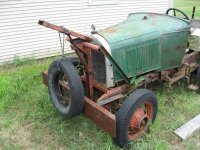
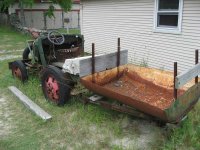
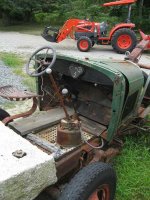
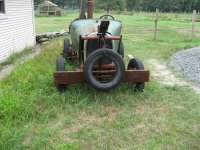
By the way, below are photos of the last farm vehicles to work the farm before a modern CUT showed up a few years ago. My favorite feature is the ballast which is a solid slab of granite bolted to the modified Model A right behind the operators seat. I also love the FEL.
 

Attachments

  • IMG_4393smallfile.jpg
    IMG_4393smallfile.jpg
    74.6 KB · Views: 163
  • IMG_4400smallfile.jpg
    IMG_4400smallfile.jpg
    68.8 KB · Views: 167
  • IMG_4403smallfile.jpg
    IMG_4403smallfile.jpg
    64.3 KB · Views: 149
  • IMG_4404smallfile.jpg
    IMG_4404smallfile.jpg
    80.5 KB · Views: 139
   / Fall vs Spring Tilling of new garden #17  
I will have to say that I found this thread a bit interesting. Mostly, because here in the area of Florida where we live what works for you is not the way here :)

We turn the soil shortly after the growing season while the hot summer sun can rot the vegitation. This makes it better when we plow/till for the fall planting. Then, in the late winter, we do it again.

That is the beauty of living where we can grow most of the year.

One of the things we also do is burn the field in the spring. We wait untill the grass/weeds have seeds, but before the seeds mature. After the field is burned, we turn it in and the whole process starts all over again. :D
 
   / Fall vs Spring Tilling of new garden #18  
islandtractor- I know EXACTLY what you mean about the grape vines. Its the wild grape vines that might have tiny purple grapes on it every other year on them. I have them ALL over the 1 acre property across the street. First year of tilling, I had a brand new craftsman tiller and it destroyed the bearings. After a couple years I ended up with kubota and bush hog tiller with slip clutch. Now I can till to my heart content and find that once I chop the vines the first year, it becomes brittle and eventually stop growing. There are still parts on the lot that have the vines growings, I would walk around every spring and use the hand loppers to cut them so they can dry out over the summer and become brittle and fall out of trees, branches etc after couple years. Tilling in the fall in the northeast really helps. If you have fall compost and put on garden, it helps to hold it in place and break down better and get rid of most of weeds for spring. When tilling- make sure you never do it wet or it will be a bear in the spring as it clumps up easy.
 
   / Fall vs Spring Tilling of new garden
  • Thread Starter
#19  
Radioman I wish I'd seen your advice last year. Tilling in the grape vine roots this past spring was a nightmare even with a pretty powerful tiller. Those vines, at least when in moist muddy soil, were just tenacious and wrapped around the tiller as effectively as electrical cords. I spent much more time cleaning the vines off the tiller than I did actually tilling. Fall tilling in dry soil seems to be the answer so I am planning to finish all primary tilling this fall. I know others have suggested plowing first and that might have worked better this spring but the tiller seems fine now. I understand it might be nice to dig deeper with a plow but as the top soil here is only about six to twelve inches I am able to mix up most of it with two or three passes of the tiller. Besides, I don't own a plow.
 
   / Fall vs Spring Tilling of new garden #20  
Those vines, at least when in moist muddy soil, were just tenacious and wrapped around the tiller as effectively as electrical cords.QUOTE]

I've done the electrical chord thing.

That reminds me that I need to clean out my tiller. I'm always reminded that tilling is so much nicer when the ground has been brush hogged first. The problem arises when I haul my tractor to a friend or relative's house and I only bring the tiller.
 

Tractor & Equipment Auctions

2017 Dodge Charger Sedan (A59231)
2017 Dodge Charger...
2015 Peterbilt 389 T/A Sleeper Cab Truck Tractor (A56858)
2015 Peterbilt 389...
DEUTZ MARATHON 60KW GENERATOR (A55745)
DEUTZ MARATHON...
2015 VANTAGE TRAILER 3 POD PNEUMATIC TRAILER (A55745)
2015 VANTAGE...
2008 Ford Escape XLS SUV (A59231)
2008 Ford Escape...
Unused 2025 CFG Industrial H15R Mini Excavator (A59228)
Unused 2025 CFG...
 
Top