Fertilizing organically

/ Fertilizing organically #1  

daugen

Epic Contributor
Joined
Feb 27, 2012
Messages
22,497
Location
New Hope PA
Tractor
in between now
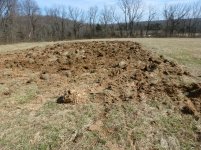
I am starting a new 50X100 garden in a field, which has currently been subsoiled, then will be plowed, then rototilled til fine. After taking out three million rocks. Clay, rocky, Bucks County PA typical soil. Lots of granite, and all kinds of quarries nearby, so my new garden comes with a few challenges.
The largest one actually to me is how to raise corn, sunflowers, big pumpkins, squash, cucumbers, etc much of which needs plenty of fertilizer, to grow nicely and not use Orthos's finest?

I'm willing to pay for the convenience of bagged fertilizer, as in bone meal, dried manure, whatever the local Agway has to offer. Will apply before the last rototilling to mix it in properly. I have always had mulch piles that have produced wonderful soil, we even plant our tomatoes in ours at home and get amazing results. So how to infuse some life into a fallow field and still have my sister who eats only organic food not turn up her nose at it. She loved our tomatoes last year; we just didn't tell her how well Miracle Grow worked on them and she really didn't want to ask.

I grew up reading Rodale and Organic Gardening. Over time I will transfer the contents of a big mulch pile into the dirt in this garden. But what can you all suggest for the first year, trying to stay as natural as possible. And no overwhelming smells please so six loads of pig slurry, well, no thanks.
 

Attachments

  • P1010113.jpg
    P1010113.jpg
    1.2 MB · Views: 282
/ Fertilizing organically #2  
I have a few folks that visit to get our horse compost. It has aged 6 months to a few years depending on what pile or how low I get. Earthworms visible some times of the year. More of a soil amendment than true fertilizer. Many pickup loads to do a good size garden though.
 
/ Fertilizing organically #3  
I went over to the neighbors and picked up after the stallions(they poop in one spot:laughing:) then cleaned her chicken and rabbit coops.Then took it to my parents down the road and made a big pile,then took the tiller and set it on pile and mixed it all up. I desided to put it out with 5gallon bucket(yes it was work) I just put it out were the rows were going(it made the pile go alot further) then tilled it in.
 
/ Fertilizing organically
  • Thread Starter
#4  
Jim, horse, cow, pig, it's all animal waste and I was hoping to avoid it, if only for e-coli issues. I have some history here that influences me. The main well on the farm I grew up on about ten miles from this garden was polluted after thirty years of the neighboring property that boarded horses, and just dumped the manure "out back". Later, much later, it finally made its way down into either the path down the hill or the aquifer, but the water in our well became seriously polluted with e-coli. And they were uphill of us, directly above our well, but maybe half a mile away. It wasn't far enough. So I guess I've been leery of animal waste ever since. The chlorinator on our well tasted miserable and made us remember how pure the water once was. Yes, I know it has wonderful growing properties. But I almost feel like a vegetarian here when I ask if there's a way to accomplish 80% and use other nutrients. Over time the composted leaves will help, I know that, but I'd like to grow some big pumpkins this year, not five years from now. My wife would like to mix up Miracle Grow in hundred gallon batches, she loves the stuff, but I'm holding her off trying to find an alternative method. The property owner is also pretty sensitive to chemicals and we all agreed that weedkillers and other chemicals were not to be used. But you have to fertilize, and I believe there was some historical factoid about the local Lenape Indians using a piece of a fish in each corn row planted. Something granular would be nice...
 
/ Fertilizing organically #5  
Just using carbon, ie leaves etc, won't get the job done. You'll have to have something to "drive" it. Finding enough "green" to balance the brown carbon is a challenge in compost making. I use chicken litter from our own chicken barn to market garden an acre or two. I follow commonly accepted manure safe handling practices, published by State Ag Extensions in most every state.

BTW, and I'm sure you know, e-coli, like salmonella, is a fact of nature. It is everywhere and "natural". It is the specific virulent strains that are of deep concern.
 
/ Fertilizing organically
  • Thread Starter
#6  
agreed, "all natural" and I have absolutely no way of knowing what's in the manure I buy, regardless of the animal that made it, so I don't know if it's all the all natural good stuff, like the ladybugs, or the bad bugs like the mites. And I know E coli to some degree is all around me, it's everywhere...I'm just trying not to intensify the dose. My brother's wife was gardening on our farm and got some dirt into a recent cut on her hand. Three days in intensive care, serious blood poisoning, there's some nasty stuff in that dirt and we can't see it.

I've put a lot of manure in gardens and know it works well. Just hoping there is an alternative, something nitrogen rich which I think I understand gives the garden a kickstart. Long term I need lots of compost, and that I know how to make. How about a truckload of overripe herring? That ought to smell good downwind... Isn't there some bulk plant material, some silage derivative that can be dumped on a garden? I'm off to the local feed mill tomorrow to look for the experts and see what they recommend as a local fertilizer. I grew up opening bag after bag of something called Bovung (sp?) and bone meal and lugging them out to the garden. Isn't there something new, maybe out of fish byproducts(?) that will also act as a natural fertilizer?
I can't play American Indian; if I took a fish out of the Delaware River and planted it in my garden, all I'd get is a dose of heavy metals. So no local fish...

btw, I love meat, this is not an anti animal thing, and if I want nitrogen, there may be no better way to get it than with a load of fresh manure, or sorta fresh. I sure am not shoveling it, I can't.
There are no animals on the farm I'm putting this garden, so even though I built this sandbox, the older property owners still get to say what I dump in it. We are close friends and they trust me explicitly; I'm just trying to do due diligence here to make sure I do the right thing. That way next year I can double the garden. I have the whole 18 acres to play in, but I'm starting small and making sure things grow well, or reasonably well for a first year, before I get delusions of wannabe farmer grandeur.
 
Last edited:
/ Fertilizing organically #7  
While more costly, perhaps you might consider alfalfa meal or soybean meal. Both will provide a green "manure" amendment that your plant would likely be able to take up with reasonable speed. Given the late date, those would be my choice.

The safe window for raw, non-composted manure has closed anyhow for this season.
 
/ Fertilizing organically
  • Thread Starter
#8  
The safe window
Thanks, three to four months I thought I read.
That sure guides me even further. So what is the "half-life" of a cockroach grade e-coli nasty? Especially the virulent stuff. Can it continue to live in ideal conditions just waiting for the roots of my fledgling longneck squash to suck it up? One of my best life long friends just retired as the head of a large municipal health dept. and he has sent me every nasty bug and epidemic bulletin issued for years now. Particularly articles about all the chemicals and even heavy metals in some foods. But he is an avid gardener too.

Beer hops. After they're done with them. That would smell nice...:thumbsup:
I think.
 
/ Fertilizing organically #9  
The compost I get rid of has been sitting around for a year or more. It has gone through a good heat. Usually wormy. Of course you don't want to spread pure fresh manure. Well some do and sometimes they have problems. If you get aged stuff I suspect you will not have problems. The stuff that leaves my farm looks like the stuff you pay ridiculous amounts of money in stores. I could swear I have seen folks grubbing around in it with bare hands. Tip: How to Compost and Use Horse Manure
 
/ Fertilizing organically #10  
E-coli is something to be concerned with. However it's everywhere, birds are a cause of some major contamination, any wild mammal along with the family pet.
Decomposed manure that is heated properly to break down the organic material will kill the E-coli. That's what you get when you buy Bull-in-a-bag or Chick-in-a-bag. For quantity at low cost composted manure is the choice.
 
/ Fertilizing organically
  • Thread Starter
#11  
ChickN'A Bag? Ooooh not good. My sister raises a few chickens,
I better not tell her...:)
But I'll look for the bag.
 
/ Fertilizing organically #12  
Steve Solomon's solution to this problem is to enrich his soil with what he calls "complete organic fertilizer." Gardening When It Counts gives you some leeway in blending this fertilizer, but the gist of the recipe is as follows:


•4 parts seedmeal
•1 part lime. (The best mixture is a quarter agricultural lime, a quarter gypsum, and half dolomite lime. If you're only using one type, dolomite is best because it includes both calcium and magnesium.)
•1 part finely ground rock phosphate, bonemeal, or high-phosphate guano
•0.5 to 1 part kelpmeal or 1 part basalt dust
from Complete organic fertilizer
I have the book and use this, but i also add organic matter into the soil. I do this by mulching with double ground hardwood much for a year and then that spring turn it into the soil.
 
/ Fertilizing organically #13  
I would do whatever is necessary to get the garden in this year. You don't have a lot of time before the early stuff needs to be planted. If available in your area, I would get some mushroom manure and till it into the soil; 3 or 4 cubic yards should be enough. It's weed free, pretty much been sterilized for the mushroom industry, and adds a bunch of organic material to your soil. If not available, go to your local Agway or farm store and find out what is available in bulk and from whom. After this growing season, you can start using your own composted materials, Fall planting winter rye as a cover crop, then mowing and tilling it in next spring. I like to add the mushroom manure every few years because it's just soooooo good! A 50 X 100 foot garden is going to be a pretty intense drain on the soil, so maintaining it is a must. Your garden soil will get better and better every year with proper management.
 
/ Fertilizing organically
  • Thread Starter
#14  
My trip to the local feed mill was interesting and I managed to pick up most of the "organic" items mentioned on a prior list. But I looked longingly at the big bales of peat moss, but really what I needed, as you point out, is our "local" mushroom hay. We are close enough to Kennett Square to have a lot of this available, and it was the first thing the feed mill recommended. So I will go back and fill up my p/u and dump it on the garden. Particularly with our current and near term heatwave, yes, it sure is time to get going. And the mushroom hay will also help to lighten up this thick wet clay soil. Thanks. Drew
correction: I called the feed mill and they have mushroom manure in bulk, not mushroom hay. Big difference, and if they bring a truckload of it, they won't go off pavement. That leaves me out, this garden is way off pavement. So back I go for expensive bagged humus and whatever else they suggest, but I'd sure like to get the soil a little more friable.
 
Last edited:
/ Fertilizing organically #15  
One more thing. I would seriously consider buying a 10X100' roll of black plastic and using it on things like tomatoes, peppers, eggplant and even cabbage type crops. Your picture looks like it is a virgin garden area and is going to have a bazillion weed seeds just waiting to grow. Don't forget to cut slits in the plastic in low spots for water to get under.You should be able to get at least 2 years out of some good heavy plastic. It's not cheap, but will save hours and hours of weeding labor. Besides, when you fold it up in the fall before planting the winter rye, the soil beneath the plastic will be weed free, soft, and easy to till like you wouldn't believe. The next spring when you are ready to plant, unfold it in a different part of the garden, (rotate crops) and away you go!
 
/ Fertilizing organically
  • Thread Starter
#16  
thanks, I impulse grabbed a 10X300 roll at Lowes which was on sale thinking I bet I could make some use of this. Now I sure will. Appreciate the reminder. Drew

Also, it was suggested I put down "salt hay" as bedding/walkway weed control. Not familiar with it. Does the "salt" help preserve it? Have you used it?
 
Last edited:
/ Fertilizing organically #17  
daugen said:
thanks, I impulse grabbed a 10X300 roll at Lowes which was on sale thinking I bet I could make some use of this. Now I sure will. Appreciate the reminder. Drew

Also, it was suggested I put down "salt hay" as bedding/walkway weed control. Not familiar with it. Does the "salt" help preserve it? Have you used it?

I have no source for salt hay in W. PA that I know of but wish I did. From what I understand it's hay from saltwater marsh grass and it won't grow or germinate in regular freshwater soil. I also believe that there isn't enough salt in the grass itself to cause any problem in your garden. Someone more familiar with it can chime in if I'm not accurate on the description.

On the plastic. I bought 500 anchor pins to hold my plastic down. I got them on Amazon.com from AM Leonard I believe. I really got tired of using bricks, stones, pieces of
4 x 4, etc. They rust, but I still reuse them after removing the plastic in the Fall.
 
/ Fertilizing organically #18  
My trip to the local feed mill was interesting and I managed to pick up most of the "organic" items mentioned on a prior list. But I looked longingly at the big bales of peat moss, but really what I needed, as you point out, is our "local" mushroom hay. We are close enough to Kennett Square to have a lot of this available, and it was the first thing the feed mill recommended. So I will go back and fill up my p/u and dump it on the garden. Particularly with our current and near term heatwave, yes, it sure is time to get going. And the mushroom hay will also help to lighten up this thick wet clay soil. Thanks. Drew
correction: I called the feed mill and they have mushroom manure in bulk, not mushroom hay. Big difference, and if they bring a truckload of it, they won't go off pavement. That leaves me out, this garden is way off pavement. So back I go for expensive bagged humus and whatever else they suggest, but I'd sure like to get the soil a little more friable.

mushroom and you thought chicken poop smelled
 
/ Fertilizing organically #19  
I have a trac vac and every fall mulch 20-30 loads of leaves. I dump them and after 10 piles accumulate use my 1050 to push them down over a bank. Have done this for many years so now the pile stretches out about 10 feet and about 7 feet high. So for the bottom 4 feet I have black black dirt. Stuff has worked awsome on my garden for fertilizer. I only fertilize every 3 years or so.
 
/ Fertilizing organically
  • Thread Starter
#20  
mushroom and you thought chicken poop smelled

uh.oh, the voice of experience is chiming in. Now how could those pretty little white mushrooms smell?...because what they are growing in came from animals too. I think I'm learning that if it's good, it will smell...
I'm most experienced with local turkey farms, no longer here, probably squeezed out by big homes, and boy was that an awful smell.

I had to chuckle here. There is a big preserved dairy farm right near Rte 95 where it passes our area. When the farmer puts down a heavy load of manure, I swear the traffic slows down on 95 as everyone reacts to the smell, and thinks "oh, what's that..." My property owner has told me not to worry about an occasional "natural" smell wafting down his way. I'm going to test for ph today before I throw down any lime, but until I get a FEL and can get out to this remote garden and dump stuff in it myself, I am restricted by what I can haul in 50 pound bags. Time to get a UTV it seems. My wife would love it. So for this year, I guess I'll have to buy manure in bags, which should mean it's easier to use, safe, and really expensive. I should have this more organized, and earlier too, for next year. I started a huge mulch pile on this farm, and it should be ready for next year too. My goal is to keep Ortho and Monsanto out of this garden. I may be changing my tune when the bugs descend, but part of the fun here is to see what works.
 

Marketplace Items

2016 KOMATSU PC360LC-11 EXCAVATOR (A58214)
2016 KOMATSU...
Deere 50D (A60462)
Deere 50D (A60462)
2001 Ford F-150 Ext. Cab Pickup Truck (A61568)
2001 Ford F-150...
2019 MQ POWER WHISPERWATT DCA-25 GENERATOR (A58214)
2019 MQ POWER...
2014 Timpte Hopper Bottom (A61307)
2014 Timpte Hopper...
2021 CATERPILLAR D3 CRAWLER DOZER (A62129)
2021 CATERPILLAR...
 
Top