
EddieWalker
Epic Contributor
I started a job today for a client with a three year old vinyl floor that is buckling. Under the vinyl planks is engineered wood strips that are glued to the concrete slab. The wood is ten years old. She doesn't know what was on the floor before that. The house is 20 years old.
There is no damage or staining anywhere along the walls. The concrete is noticeable lighter and drier looking along the walls. The concrete is perfect. No cracking of any kind.
What is really weird is that the concrete is noticeably darker in a perfect square inside the room with a light area all around it, next to the walls. The damaged wood is where the dark concrete is, but no all of that area is damaged wood. The wood by the walls is perfect. Light in color, solid and no sign of mold. The damaged wood is covered in black and white mold. It's falling apart and it smells really bad of mold.
A plumber scoped the drain lines and pressure tested the water lines. He could find no sign of a leak. On the outside wall, the concrete slab is exposed for 4 to 6 inches. There is no sign of a leak or any sign of moisture. The wall with the bathroom has perfect wood flooring for about 2 feet, and for several feet before that, it was minimal coloring on the wood, but not dark and no mold.
The HVAC system is in the attic above this room. There is no sign of a leak along the walls. All sheetrock and baseboards are perfect. Not even a small crack at the seams.
The concrete is dry to the touch. The wood flooring is dry to the touch.
All ideas, thoughts and suggestions are appreciated. As of right now, nothing is too crazy!!!!
Thank you


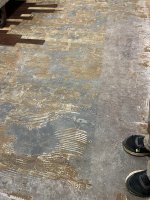
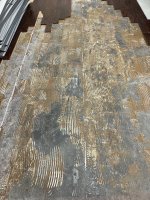
There is no damage or staining anywhere along the walls. The concrete is noticeable lighter and drier looking along the walls. The concrete is perfect. No cracking of any kind.
What is really weird is that the concrete is noticeably darker in a perfect square inside the room with a light area all around it, next to the walls. The damaged wood is where the dark concrete is, but no all of that area is damaged wood. The wood by the walls is perfect. Light in color, solid and no sign of mold. The damaged wood is covered in black and white mold. It's falling apart and it smells really bad of mold.
A plumber scoped the drain lines and pressure tested the water lines. He could find no sign of a leak. On the outside wall, the concrete slab is exposed for 4 to 6 inches. There is no sign of a leak or any sign of moisture. The wall with the bathroom has perfect wood flooring for about 2 feet, and for several feet before that, it was minimal coloring on the wood, but not dark and no mold.
The HVAC system is in the attic above this room. There is no sign of a leak along the walls. All sheetrock and baseboards are perfect. Not even a small crack at the seams.
The concrete is dry to the touch. The wood flooring is dry to the touch.
All ideas, thoughts and suggestions are appreciated. As of right now, nothing is too crazy!!!!
Thank you





