Hesitation problem

   / Hesitation problem #1  

duke7595

Gold Member
Joined
Jan 22, 2012
Messages
365
Location
S/W MO.
Tractor
820 ,1520,1020 (D) 1020 (G) 1050,4020 2240
i'M RESTORING A 1020 GAS J.D. . I have been working on the mechanics before I start body and paint work. The problem I'm having is hesitation it don't want
to respond when I throttle it up a little fast, it also appears to be loading up when idling. However, it runs well under load but it still has hesitation.

I have changed the plugs ,points,wires and cap but it didn't help. I am not well versed in carb. diagnoses and was wondering if this may be the problem ?
Would appreciate your advice.
 
   / Hesitation problem #2  
Did you change the rotor too? if not I'd change it too- since it directs spark to each plug. You need to verify dwell and timing are correct too if doing a tune-up.
Carb could be problematic, or fuel filter. Have you changed the fuel filter? If not do so.
You could have water in the gas, dirt in the carb bowl, or any number of other things going on. It could be an electrical problem related to the ignition coil, etc. have you done a compression test?
I'd want to get fresh gas, new gas filter, and see what it does then. If no change, then do dwell and timing and compression check.
Report back results.
Could also need a valve adjustment too.
 
   / Hesitation problem
  • Thread Starter
#3  
Coyote machine,

Thanks for the advice, yes I did change the rotor, the carb. does not have a line filter, so I will do as you advised and let yo know what occurs.
I usually deal with diesel tractors and really don't have a lot of experience with gas engines, especially the carb.
 
   / Hesitation problem #4  
duke7595,
I understand your lack of understanding of gas engines, BUT diesels aren't all that different when it comes to fuel, and running overall.
Gas engines of the type your tractor has are infinitely repairable and often at way less than the cost of fixing a diesel with fuel or ignition issues.
Gas being more refined than diesel uses spark to ignite combustion from the plugs, and the rotor cap and wires deliver spark to the plugs. So if properly timed to the valve train, a gas engine will run well with few problems. Clean gas and good spark delivered on time make it go. A good clean air filter is essential too, to keep dirt out of the carb and engine.
Diesels are mostly combustion ignition engines, that use glow plugs, in many instances, to preheat the fuel so when it is compressed it will ignite. The engine just keeps going until someone starves it of fuel. The expensive and highly tuned to close tolerances part of a diesel is the injection pump, which meters the proper amount of atomized fuel in time with the engine's stroke and delivers power to the drive train. When that system goes wrong it can be a nightmare and big $$$.
With no filter inline to the carb the gas will contaminate the carb with dirt, particulate matter and varnish as a result of fuel and how it's processed, how it deteriorates, (think E-10, weasel pi$$), etc. So, before you go tearing apart a carb, check the simpler stuff, and like you did with the ignition circuit, points, cap/rotor, plugs, etc. get some clean, fresh fuel and see what that does for the engine. I'd drain the tank, drop a small amount of fresh gas in it and drain it again, to try to clean any particles/dirt/ rust out of the tank's bottom and then start with new gas. Drain it into a clean container and see what you can see- OUTSIDE, away from ignition sources! If you can I'd add a fuel filter inline by cutting your fuel line and using the proper fuel line and clamps on both sides of the line and both sides of your new filter- BEFORE doing anything downstream at the carb. Make sure the line cuts are clean and not burred, use a knife blade end to CAREFULLY debur each end without letting any cuttings into the line going to the tank or carb.
Then see how she runs- any better? Worse?
After this initial test we can see if your carb needs attention. I suspect it will, but let's do it one step at a time and work toward completion of the fuel delivery system and ignition system, then the metal and other work- which is where I depart to other things and you continue your restoration.
I would take a look at the carb and see if there is a drain screw on the bottom of the bowl which will allow you to drain out any water and stale gas from the bottom of the bowl. Later, I suspect, you may need to do a partial or complete carb rebuild, but let's not borrow trouble for now.
How long has the tractor sat before you started working on it?
When was it last running well?
What vintage is your tractor? (year).
Did it run on leaded gas originally?
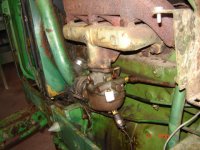
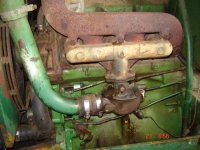
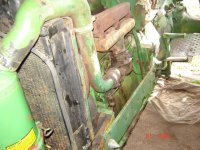
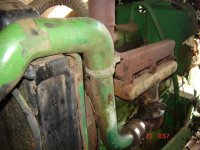
Can you post pics of the tractor, carb shots, front to back, etc. to help figure out what may need to be done going forward?

Thanks,

CM
 
Last edited:
   / Hesitation problem
  • Thread Starter
#5  
Coyote machine,

Yes I will post some pictures, also as you recommend I will make all the repairs to the point of the carb. should have it all done by tomorrow. Again, thanks
for taking the time to help.
 
   / Hesitation problem #6  
No problem.:thumbsup:
Age and hours on the tractor?
What gas did it use when it was new? Leaded or un-leaded?
 
   / Hesitation problem
  • Thread Starter
#7  
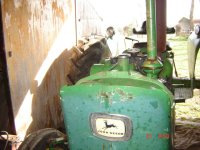
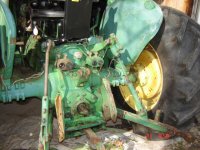
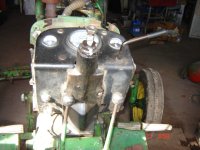
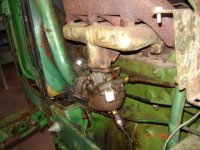
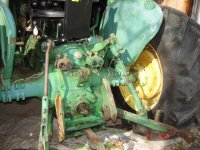
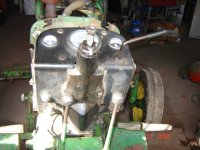
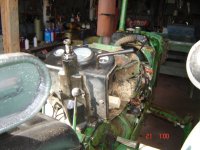
DSC03116.JPGDSC03117.JPGDSC03118.JPGDSC03119.JPGDSC03120.JPGDSC03121.JPGDSC03122.JPG
 
   / Hesitation problem #8  
Coyote, the 1020 was built between 1965 and 1973. It definitely was designed to run on leaded gas.

duke, One thing I would like to add is the brand of spark plug. Right around the same time leaded gas disappeared, I stopped having any luck with Champion plugs in these JD utility tractors. I switched to Autolite and had much better success. Have you tried adjusting the carb at all? The needle valve screw near the top of carb adjusts idle mixture. SInce it is loading up at idle, I would try turning that screw in maybe 1/4 turn to see if it helps.
 
   / Hesitation problem #9  
OK! Now I have a better idea what you're dealing with:eek::confused2:
For the moment forget about adding a fuel filter in line to the carb. I'd break out a can or two of PB Blaster or whatever you use to loosen up stuck/rusted stuff and hit every bolt and clamp near the carb and especially where the carb attaches to the intake manifold. Then at the end of the intake tube feeding the carb go to the bottom of where it says inspect daily or once per century, and undo the clamp and carefully take the oil bath pan and dump its contents into your neighbor's stream, so it flows toward his house:shocked: Just kidding- dump it into a container of waste oil to get rid of later on.
Then see if in fact there is an element of some sort in the big canister above the label I spoke of earlier. I'd go to your favorite JD dealer's web site and with your model, serial number and such search for a kit to rebuild your carb. And get an intake manifold gasket too in case you need to replace the one you have already on there.
The rubber hose between the carb and air cleaner tube will also likely need replacing, but not necessarily. You want to find parts available BEFORE you take the carb apart to clean it. All the brown gunk on the outside of the carb is varnish from gas leaking, and dirt too.
I noticed a solenoid looking thingy stuck into the carb near the back, with a wire barely attached to it. You should be careful not to break the connection to that sensor. I'm not sure of it's function yet but I can say it is most likely crucial to the carb running properly.

I need to know what year this tractor was made, and whether it ran on leaded or un-leaded, how many hours on the clock, etc.
Gimme some history!:confused3: Please.:)
Do you have a service manual or anything like that?
Can you tell me where the wire on the sensor runs?
Good pics. Let's have some more of the wiring, fuse block?, anything that might proove useful.
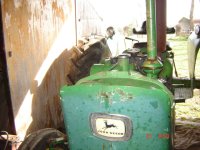
What's the jumping deer insignia on the front grille for?:D
 
   / Hesitation problem #10  
Coyote, the 1020 was built between 1965 and 1973. It definitely was designed to run on leaded gas.

duke, One thing I would like to add is the brand of spark plug. Right around the same time leaded gas disappeared, I stopped having any luck with Champion plugs in these JD utility tractors. I switched to Autolite and had much better success. Have you tried adjusting the carb at all? The needle valve screw near the top of carb adjusts idle mixture. SInce it is loading up at idle, I would try turning that screw in maybe 1/4 turn to see if it helps.

Nice- you and I posted close together in time frame so I hadn't seen your answer to when it was made. The leaded fuel is a big clue and your spark plug preference is also very relevant.
What is the solenoid thing at the bottom of the carb, near the rear, supposed to do for you?
How often do you find you need to adjust the timing/dwell, and valve train on these puppies?
Is there no fuel filter at all on these models? And what grade of gas do these tractors run well on?
Do the floats in the carb ever fill with gas and need replacement. I suspect they are metal right....
Average HP on these?
Anywhere you can point to for good parts source?

Thanks,

CM
 
   / Hesitation problem
  • Thread Starter
#11  
Coyote machine,

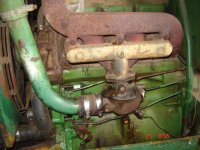
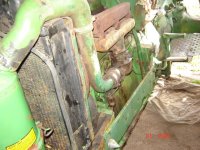
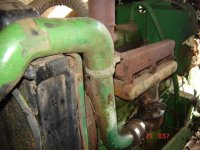
Here are some of the pictures of the tractor, the carb. manufacturer is Scribner.
This is what I have done since the last post. 1. Drained carb.(no water, fuel clean) 2. installed in line filter on opposite side of carb. just before the the
fuel pump (pic. did not come out, ) 3. Drained and cleaned fuel tank ( looks good) 4. Breather cup was cleaned and filled w/ new oil (not to dirty, but old )

I started the tractor with the breather hose off and it had some powerful suction, more so than any I have encountered in the past on other tractors, I don't know if this is good or bad, anyway I did squirt a few shots of carb. cleaner into the carb.

I believe the tractor is running better, however, I'm going to replace the plugs again since they have become sooty. With the new plugs I will be sure
I have covered all bases.

I noticed that the fuel pump is very similar to a diesel except it lacks the lift arm. I also added some pictures of the tractor in it's tear down process,
you may have noticed where I had to cut the old steering wheel off , first time I had to do that.
It's a shame this is not a diesel as it came from the factory with dual remotes which was a definite option back then as well as P/S ..

The tractor was stored inside a garage in Iowa for approx. 4 years, the gas had been drained before storage, this may have something to do with
it's problem, also we changed all the fluids and filters before we ran it for any length of time.

Well sir if the plugs take care of the problem I can continue tearing down the rest of the tractor and make it look new again. I'll show you the end result when finished.

The tractor is a 1971 with 3341 hours on a working tach, I'm not sure what type of gas was used.

.
 
   / Hesitation problem
  • Thread Starter
#12  
DSC03116.JPGDSC03117.JPGDSC03118.JPGDSC03119.JPGDSC03120.JPGDSC03121.JPGDSC03122.JPGDSC03125.JPG
 
   / Hesitation problem
  • Thread Starter
#13  
jd110,

Thanks for the tip on the plugs, it has Champion in it now but will change to AC tomorrow, No I have not adjusted the carb. however, I will now that you
have pointed that out, Thanks for the input.
 
   / Hesitation problem
  • Thread Starter
#14  
OK! Now I have a better idea what you're dealing with:eek::confused2:
For the moment forget about adding a fuel filter in line to the carb. I'd break out a can or two of PB Blaster or whatever you use to loosen up stuck/rusted stuff and hit every bolt and clamp near the carb and especially where the carb attaches to the intake manifold. Then at the end of the intake tube feeding the carb go to the bottom of where it says inspect daily or once per century, and undo the clamp and carefully take the oil bath pan and dump its contents into your neighbor's stream, so it flows toward his house:shocked: Just kidding- dump it into a container of waste oil to get rid of later on.
Then see if in fact there is an element of some sort in the big canister above the label I spoke of earlier. I'd go to your favorite JD dealer's web site and with your model, serial number and such search for a kit to rebuild your carb. And get an intake manifold gasket too in case you need to replace the one you have already on there.
The rubber hose between the carb and air cleaner tube will also likely need replacing, but not necessarily. You want to find parts available BEFORE you take the carb apart to clean it. All the brown gunk on the outside of the carb is varnish from gas leaking, and dirt too.
I noticed a solenoid looking thingy stuck into the carb near the back, with a wire barely attached to it. You should be careful not to break the connection to that sensor. I'm not sure of it's function yet but I can say it is most likely crucial to the carb running properly.

I need to know what year this tractor was made, and whether it ran on leaded or un-leaded, how many hours on the clock, etc.
Gimme some history!:confused3: Please.:)
Do you have a service manual or anything like that?
Can you tell me where the wire on the sensor runs?
Good pics. Let's have some more of the wiring, fuse block?, anything that might proove useful.
What's the jumping deer insignia on the front grille for?:D

Yes sir, I can take some pictures of the wiring from the solenoid to it's end and the fuse block as well.
The jumping Deere was a standard for all the John Deere's of that era, it unbolts from behind the grill, thankfully this one is undamaged as John Deer are very
proud of these, dollar wise.
You notice that this Deere has 4 legs, some earlier models have 3 legged Deere insignia's . Just a little trivia.
 
   / Hesitation problem #15  
Glad to hear it is running better, BUT the fact it was designed to run on leaded gas means that has a definite effect on what you need to run in it for gas now. Leaded obviously coated the valves back in the day and it was part of the inherent design of the way tractors were built then. Now without the lead the valves don't get the coating as they were designed to do, so with the amount of hours on the engine, (and I'm assuming for a moment there was never a rebuild done on this engine), or if one was done it might have been just a head cleaning and reseating of the valves. So the valve train doesn't necessarily need any more lead in it's life BUT it does need a higher octane than current UN-leaded gas provides; so I would venture to guess that the best way to get good performance out of this engine would be to use the highest octane un-leaded you can afford.
Lots of intake tube suction to the carb is never a bad thing, often it is what is lacking and causes run problems. Because of good suction and for other reasons i don't dislike using carb cleaner BUT it does tend to dry things out so following it with some WD-40 or similar might not be a bad idea.
When you say soot is on the plugs let's see pics of the plugs for diagnosis.
And see what you can do to get a pic or tow of the new inline fuel filter. Write on it date and hours on clock.
Is the restoration going to be a for use or for show job?
BTW, I'd want to run a compression test on the engine to get a 'before' reading. Just something basic, turn it over a few times, ground the hi tension wire of the coil to a good metal ground when cranking, and shut off fuel if possible...
Show results.
 
   / Hesitation problem #16  
If your going to keep this tractor you need to do a valve job. The conversion for unleaded gas on earlier motors is Stainless steel exhaust valves with stellite? seats. Run some SEa Foam in it too.
 
   / Hesitation problem #17  
If your going to keep this tractor you need to do a valve job. The conversion for unleaded gas on earlier motors is Stainless steel exhaust valves with stellite? seats. Run some SEa Foam in it too.

So Murph, what is the result of not converting the old exhaust valves and seats? I suspect some run these old motors without converting over, either because of the expense, or lack of knowledge of the problem.
 
   / Hesitation problem #18  
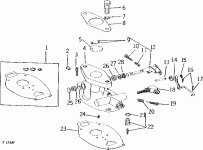
Solenoid on bottom of carb is supposed to be an anti-dieseling device. Float is metal but can develop a hole in it to hold gasoline. Be sure and check parts key #18(strainer) for trash. It's unusual to see a utility tractor that age with dual scv's(rear remotes).

Drawbar (claimed): 33 hp [24.6 kW]
PTO (claimed): 38.82 hp [28.9 kW]
Drawbar (tested): 31.81 hp [23.7 kW]
PTO (tested): 38.92 hp [29.0 kW]
 

Attachments

  • R19095_________UN01JAN94.gif
    R19095_________UN01JAN94.gif
    8.9 KB · Views: 127
   / Hesitation problem #19  
I agree with using higher octane gasoline. Especially with the addition of ethanol at 10%(at least in this area) the tendency to vapor lock is greater with 87 octane than 91 or 93 if available. The anti-dieseling solenoid is supplied 12 volts directly from the ignition switch. The solenoid shuts off the flow of fuel to the main jet in carburetor.
 
   / Hesitation problem
  • Thread Starter
#20  
Just Got home, Thanks Tx. Jim , jd110 and coyote machine for all your help, I am gone to continue work on it in
a day or 2 . Will let you know how it go's..
 

Tractor & Equipment Auctions

40' High Cube Multi-Door Container (A53314)
40' High Cube...
2012 JACK COUNTY TANK 130 BBL STEEL (A58214)
2012 JACK COUNTY...
2018 JOHN DEERE 844K-III AG HANDLER WHEEL LOADER (A60429)
2018 JOHN DEERE...
Toro Greenspro 1260 Towable Greens Roller (A56859)
Toro Greenspro...
2017 Toyota Tundra SR5 Ext. Cab Pickup Truck (A59230)
2017 Toyota Tundra...
500 BBL FRAC TANK (A58214)
500 BBL FRAC TANK...
 
Top