JJ and others - Post Hole Digger

   / JJ and others - Post Hole Digger #21  
Whats a controlled interference fit?

Also, JJ you mentioned I would need to have a connector machined? Any chance they allready exist?


Carl, You could use something that PT already has, if the taper is the same. Most of the wheel motors I have seen use 1 1/4 tapered or 1 1/2 in tapered shaft. There may be some adapters out there to go from say 1 1/4 tapered to a 1 in female adapter to fit the auger shaft. I would at least take a drawing to a machine shop and get an estimate for the adapter. You may need a different adapter for each implement you want to use. In the picture I sent above, the hydraulic motor just happens to fit the shaft of the implement, which is a neat setup for 3PT implements. If you are starting from scratch, you can specify the hydraulic motor to match something you already have, be it tapered,straight, or splined.


http://www.northerntool.com/webapp/...=mode+matchallpartial&Dx=mode+matchallpartial

These are some adapters used on tractors. You would need to show and explain what you are trying to do.
 
Last edited:
   / JJ and others - Post Hole Digger #22  
Do you mean something like this.

Yes, exactly. I had a hydraulic leak once that I thought was the motor. A TBN member offered to sell me a spare motor. He had changed his motors to a larger displacement to better handle steep slopes. Anyway, I bought all 4 since he didn't need them. I figured to use a couple for attachments.
 
   / JJ and others - Post Hole Digger #23  
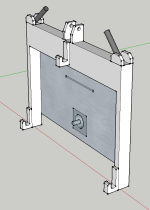
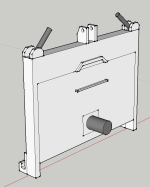
Maybe something similar to this?
 

Attachments

  • 3pt1.png
    3pt1.png
    75.3 KB · Views: 138
  • 3pt2.png
    3pt2.png
    16.5 KB · Views: 130
   / JJ and others - Post Hole Digger
  • Thread Starter
#24  
Martt. I have looked into something like this, but I am not sure it will work in our application. First is that the quck atach gets in the way of the motor, the other part is that these type quick attaches keep the device too close, making odd angle PTO shaft lines. Either you have to back up a ways or direct connect.

If you look at the net, the ones I see for bobcat keep the implement far away.

I think you are looking at the QA from Harbor Freight to save a few bucks? Maybe we can make extending ears.

One other thing, I think you have to make the QA plate angled to accomodate PT's weird angle.

But we should keep looking on this. Has to be a cheap yet effective way to do this.
 
   / JJ and others - Post Hole Digger
  • Thread Starter
#26  
I remember this link but was unable to find it. Thanks for reposting it.

So I have 3 questions on this build. Do you feel that you need the valve you put in still? I was going to just run this straight off my PTO circuit and use the engine speed to change the revolution speed of the PHD

Second, how is that swivel plate working out? I have mulled over a series of design ideas. First, is it necessary to have this swivel at all for your PHD use. i will be digging on slopes for sure.

Finally this tapered wheel that you used. How is that holding up?
 
   / JJ and others - Post Hole Digger #27  
In my rocky soil, reversing is essential for backing out stuck augers.

I don't know that I'd bother with the side swivel. I virtually always position the PT directly up or down slope from the hole. The PT tends to slip downhill while drilling. It would be really hard to compensate for that sliding sideways. Consequently, the side swivel doesn't get used much. The front/back swivel allows the PHD to pretty well self level due to the weight of the auger but I'm not sure it's really needed. I've also found that precision leveling is a waste of time on my property. Most holes end up oversized and off center due to hitting rocks.

I haven't had any problems whatsoever with the tapered hub setup.

Gravy
 
   / JJ and others - Post Hole Digger #28  
I built my own PHD for my 425. It wasn't terribly hard. Description & pix here:

http://www.tractorbynet.com/forums/power-trac/91387-better-late-than-never.html

If I were to do it again, I'd use a smaller displacement motor, probably in the 9-10 inch range. The 14 inch doesn't spin fast enough to throw off the dirt.

After looking at the calculations below, I can see why you could not throw the dirt out of the hole. You did have plenty of torque


At 8 gpm, and motor displacement of 24 cu in, motor speed = 77 rpm

torque would be 9554 in lbs

If you went with a 12 cu in motor, you would double your speed, and half
the torque
 
   / JJ and others - Post Hole Digger #29  
IIRC, my motor is approximately 14 cu in, so it spins faster that 77rpm (by memory of actual operation, closer to 120). However, it's still slow.

I sized mine based on PT's higher-torque "planter head" model because of the rocks. I've since figured out that the rocks are tougher than anything short of a drill rig. The PHD has rarely powered through any rocks. If it did, it would probably break augers. I suspect I would have done better to go for more speed to throw the dirt off. OTOH, it has successfully made over 100 holes of various sorts. That's about 95 more than I would have managed with hand tools, so I'm not going to complain.

Gravy
 
   / JJ and others - Post Hole Digger #30  
Oops!

After JJ's comments, I took another look at my original post and my old notes. The motor I used really is 24 inches, rather than the 14 I claimed today. So much for my memory. If I were doing it over, I'd go with something like 18 inches. IIRC, that's what PT was using for the smaller PHD at the time I built mine.

Gravy
 
   / JJ and others - Post Hole Digger #31  
Dear Carl,

I'm not sure I completely understand the question, but here goes.

Attachments for tractors are typically designed for operation at a fixed speed, but ground speed is adjusted to compensate. Many tractor speedometers are marked with PTO points in various gears.

There are two standard PTO speeds, 540, the old US standard, and 1000rpm, the old European standard. Tractor manufacturers try to have the gearing on the PTO output such that the engine rpm at the desired PTO speed (540/1000) is in the middle of the engine torque/HP curve, where it will be most fuel efficient. Many (most?) tractor will operate at either speed.

You can operate attachments at speeds other than the PTO benchmark speed, but there are drawbacks, e.g. fragmenting attachments, or carbonized engines, etc.

So, in your case, the blower wants 540rpm input, so you would want to design your hydraulic pump to put out 540 when you enough have enough HP to move around while operating the blower, which will consume some number of HP to run at 540. i.e. unless you plan to use the leaf blower with a wide open throttle, you might want to size the motor such that it hits 540 at say 2/3rds throttle, but checking to ensure that the motor can handle the full flow of the PT PTO pump at WOT.

Does that help?

All the best,

Peter

So here is a real dumb question JJ. I assume 540 RPM PTO speed is what you get when the engine is cranking - ie maximum top speed. And that most people are probably running there standard PTO at 400 RPM or so unless they are flogging the machine?

I ask because I am looking at this chipper that wants 35 HP and 540 RPMs Just making sure when I don't hit the RPM I am still OK...
 
   / JJ and others - Post Hole Digger
  • Thread Starter
#32  
Indeed it does.

What it comes down to is the amazing amount of choices on these motors. And for me, not understanding why one motor is different form another motor when the cubic inch specs are the same. Just learning I guess...
 
   / JJ and others - Post Hole Digger #33  
Dear Carl,

I'm not sure I completely understand the question, but here goes.

Attachments for tractors are typically designed for operation at a fixed speed, but ground speed is adjusted to compensate. Many tractor speedometers are marked with PTO points in various gears.

There are two standard PTO speeds, 540, the old US standard, and 1000rpm, the old European standard. Tractor manufacturers try to have the gearing on the PTO output such that the engine rpm at the desired PTO speed (540/1000) is in the middle of the engine torque/HP curve, where it will be most fuel efficient. Many (most?) tractor will operate at either speed.

You can operate attachments at speeds other than the PTO benchmark speed, but there are drawbacks, e.g. fragmenting attachments, or carbonized engines, etc.

So, in your case, the blower wants 540rpm input, so you would want to design your hydraulic pump to put out 540 when you enough have enough HP to move around while operating the blower, which will consume some number of HP to run at 540. i.e. unless you plan to use the leaf blower with a wide open throttle, you might want to size the motor such that it hits 540 at say 2/3rds throttle, but checking to ensure that the motor can handle the full flow of the PT PTO pump at WOT.

Does that help?

All the best,

Peter

Peter, I agree mostly with what you said, but let me add something. The PT has three pumps, and those pumps are sized to use a certain HP. I don't know which came first, the engine HP and then the pumps to match. or the work required, meaning the pumps and then the engine to supply the necessary HP to get the job done. They probably had to capitulate somewhere. Because of the size and rpm they were matched up with, PT didn't allow very much HP left over when all pumps are ruining at max. So, to the point, although you can run the engine at a lower rpm, and not use the power from a certain pump. You can not use the left over HP to get more work, because the pump was designed to work at a certain level and is already working at maximum in some situations, no more, no less unless you put the PT under a heavy load, such as when cutting up hill with bush hog.

I have figured out the HP required for my pumps, and it uses just about all the HP that I have available.

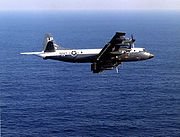
An analogy might be something like the P3C Lockheed aircraft that I flew as a crew member in the Navy. It had 4 large turboprop engines, with 4500 HP each. We used all 4 to takeoff and land, but once on station, 2 engines were shut down, and in an emergency, it could fly on 1 engine. What I am trying to say, is that extra HP is good.

Now if you could have purchased a PT-1445 with 60 HP, with the same pumps, then you would have some extra, and would never run out of HP. I believe your 1445 can lift more weight than mine, although we have the same HP. You may have larger lift cylinders, or larger pumps, Yours is diesel, and mine is gas.
 

Attachments

  • 180px-P-3A_VP-49_1964.jpg
    180px-P-3A_VP-49_1964.jpg
    6.4 KB · Views: 107
   / JJ and others - Post Hole Digger #34  
JJ: I agree. Not knowing the calculated HP of the pumps makes it hard to know what the load share is/could be.

One can certainly imagine an engineered solution with the HP split 40:40:20 or 100:100:20. A back of the envelope suggests that the PT is 60:?:8 PTO:wheels:aux
( I get 108rpm, at an unknown gpm for the wheel motors. Anyone who knows the model number could finish the calculation.)

Bottom line: my 1445 has a hydraulic HP rating of just of 26HP.

All the best,

Peter


Peter, I agree mostly with what you said, but let me add something. The PT has three pumps, and those pumps are sized to use a certain HP. I don't know which came first, the engine HP and then the pumps to match. or the work required, meaning the pumps and then the engine to supply the necessary HP to get the job done. They probably had to capitulate somewhere. Because of the size and rpm they were matched up with, PT didn't allow very much HP left over when all pumps are ruining at max. So, to the point, although you can run the engine at a lower rpm, and not use the power from a certain pump. You can not use the left over HP to get more work, because the pump was designed to work at a certain level and is already working at maximum in some situations, no more, no less unless you put the PT under a heavy load, such as when cutting up hill with bush hog.

I have figured out the HP required for my pumps, and it uses just about all the HP that I have available.

An analogy might be something like the P3C Lockheed aircraft that I flew as a crew member in the Navy. It had 4 large turboprop engines, with 4500 HP each. We used all 4 to takeoff and land, but once on station, 2 engines were shut down, and in an emergency, it could fly on 1 engine. What I am trying to say, is that extra HP is good.

Now if you could have purchased a PT-1445 with 60 HP, with the same pumps, then you would have some extra, and would never run out of HP. I believe your 1445 can lift more weight than mine, although we have the same HP. You may have larger lift cylinders, or larger pumps, Yours is diesel, and mine is gas.
 
   / JJ and others - Post Hole Digger
  • Thread Starter
#35  
My 1850 would be only 30 HP at the PTO or did I miscalculate? 18GPM, 3000 PSI, 60 HP engine driving the whole kit and kaboodle.
 
   / JJ and others - Post Hole Digger #36  
My 1850 would be only 30 HP at the PTO or did I miscalculate? 18GPM, 3000 PSI, 60 HP engine driving the whole kit and kaboodle.

Carl, I came up with 37 hp to run your PTO pump , 18 gpm at 3000 psi.

Your steering/lift will use abut 5 gpm, and that takes up 10 hp

The rest of the available hp goes to the VSP and drive motors.
 
   / JJ and others - Post Hole Digger #37  
Remember folks, we are talking about how much power might be available for the PTO function, which is a maximum possible power. Just to clarify a bit. 18gpm at 3000psi uses a MAXIMUM of 37HP. You could use less, much less, on the order of 2HP. I should also point out that while 18gpm at 3000psi requires 37HP to drive it, only about 31HP is available at the motor due to pumping losses and motor efficiency.

Typically, it takes about 5% of a pump capacity to idle it, or in your case, a little less than 2HP load.

How much of the remaining 58HP is available for the VSP and auxiliary? Good question. Potentially, you could have 56HP left over to run your VSP, if PT put in a drive pump that large.

While I dislike suggesting what others were thinking, I would guess that the design engineers undoubtedly assumed that you would want to be moving when using the hydraulic PTO and that you might need (want?) some power available to the wheels while spinning the mower blades.... :)

Using the chipper is a stationary use, probably not anticipated. It does bring up a major safety issue, if you aren't in the seat while chipping.

Have you looked at the brush clearing chippers that attach to the front of skid steers? It might be just what the doctor ordered for your blackberries.

All the best,

Peter

Carl, I came up with 37 hp to run your PTO pump , 18 gpm at 3000 psi.

Your steering/lift will use abut 5 gpm, and that takes up 10 hp

The rest of the available hp goes to the VSP and drive motors.
 
   / JJ and others - Post Hole Digger #38  
Remember folks, we are talking about how much power might be available for the PTO function, which is a maximum possible power. Just to clarify a bit. 18gpm at 3000psi uses a MAXIMUM of 37HP. You could use less, much less, on the order of 2HP. I should also point out that while 18gpm at 3000psi requires 37HP to drive it, only about 31HP is available at the motor due to pumping losses and motor efficiency.

Typically, it takes about 5% of a pump capacity to idle it, or in your case, a little less than 2HP load.

How much of the remaining 58HP is available for the VSP and auxiliary? Good question. Potentially, you could have 56HP left over to run your VSP, if PT put in a drive pump that large.

While I dislike suggesting what others were thinking, I would guess that the design engineers undoubtedly assumed that you would want to be moving when using the hydraulic PTO and that you might need (want?) some power available to the wheels while spinning the mower blades.... :)

Using the chipper is a stationary use, probably not anticipated. It does bring up a major safety issue, if you aren't in the seat while chipping.

Have you looked at the brush clearing chippers that attach to the front of skid steers? It might be just what the doctor ordered for your blackberries.

All the best,

Peter

Peter,

I disagree about the left over HP. The pumps running at max rpm will use what it is designed for. If you run the engine at less rpm, you decrease the power available, and can not do the stated work. The efficiency of the pumps to motor is about 85 %. There are three loads on the PT. Only on certain occasion, are all three pumps used. When not in use, You could say it is wasted potential HP. If you are sitting still ,just running the PTO at maximum, you are using 37 hp to run the pump. So with an efficiency of 85%, the hydraulic motor is developing 31.45 HP, and the remaining HP that is being put out just doesn't do anything. You might say, why run the engine that fast if you are running one pump. The answer is so the PTO pump is working at full power. As far as the VSP pump, we can creep along only using the HP required to power the hyd motors at a certain speed.

Have you tried to pick up a heavy load at half engine speed, or bush hog up a hill at half power? That's my story, and I am sticking to it.
 
   / JJ and others - Post Hole Digger #39  
JJ- I think we're strongly agreeing here. I think that perhaps a point to clarify is that if the load isn't developing the full backpressure at full gpm, i.e. 3000psi at 18gpm, you don't use all of the horsepower. If you do, you are. Lower backpressure at full rpm is reduced load, just like shunting the PTO back to the tank.

It is all about backpressure and therefor load.

I agree with all of your math below. As you point out, if you are using the PTO, and you need all 31HP, then you have to have the engine spun all the way up, since it is the only way you can get to 18gpm at 3000psi. The amount of wasted HP in the other pumps will depend on the backpressure in each system and the pump efficiency. If both are in 'neutral', then about 5% is a typical power wastage.

All the best,

Peter

Peter,

I disagree about the left over HP. The pumps running at max rpm will use what it is designed for. If you run the engine at less rpm, you decrease the power available, and can not do the stated work. The efficiency of the pumps to motor is about 85 %. There are three loads on the PT. Only on certain occasion, are all three pumps used. When not in use, You could say it is wasted potential HP. If you are sitting still ,just running the PTO at maximum, you are using 37 hp to run the pump. So with an efficiency of 85%, the hydraulic motor is developing 31.45 HP, and the remaining HP that is being put out just doesn't do anything. You might say, why run the engine that fast if you are running one pump. The answer is so the PTO pump is working at full power. As far as the VSP pump, we can creep along only using the HP required to power the hyd motors at a certain speed.

Have you tried to pick up a heavy load at half engine speed, or bush hog up a hill at half power? That's my story, and I am sticking to it.
 
   / JJ and others - Post Hole Digger #40  
This is a straight forward solution for you reversing needs. It is only a 12 gpm valve.

Burden Sales Surplus Center Item Detail

This is a 12 v DC valve for reversing motors. Once wired up correctly, a flip of the switch will put the valve in detent for continuous operation. You need a single pole double throw switch. When you need to run it in forward, flip the switch to up or fwd, To shut the motor off, toggle it to neutral. To go in reverse, flip the switch to dn, or rev. Whatever the switch is labeled. The PTO lines go the new valve, and the output lines go to the motor. You can put QD on the lines going to the new valve, so anything you are using now will still work.

Whoever you purchase the post hole digger from, ask if it will reverse. Most of them should.

The easy way would be to just reverse the lines from the motors. You probably will not need reverse very often. except to get out of trouble such as a jam.

Hey JJ,

Quick Q. On the product description of this valve it says that there is no neutral position, which confuses me and makes me think if I use this valve it's either forward or reverse, with no off setting.

I'm thinking of using a PTO driven system, and I'd like to leave the PTO on all the time and just use a 3 position toggle for forward/off/reverse as you describe.

Thanks,

-Jer.
 

Tractor & Equipment Auctions

2021 CAT 289D3 (A60462)
2021 CAT 289D3...
2016 INTERNATIONAL PROSTAR TANDEM AXLE DAY CAB (A59904)
2016 INTERNATIONAL...
2019 INTERNATIONAL LT625 TANDEM AXLE SLEEPER (A59905)
2019 INTERNATIONAL...
Wagon Wheel Rocking Chairs (A55758)
Wagon Wheel...
FORKLIFT (A56857)
FORKLIFT (A56857)
1987 CATERPILLAR D6H HIGH TRACK CRAWLER DOZER (A52709)
1987 CATERPILLAR...
 
Top