Marmot Infestation

   / Marmot Infestation #101  
Just so you all know, a groundhog ate my habanero peppers, leaves, fruit and all!

Now that you mention it, either marmots or gophers (or both) ate all my pepper plants two years running--right down to the ground.
I hope neither of you fine lads ever discovers a marmot or nest under a hood, or gopher either. I leave my trucks' hoods up but that won't keep mice out of the cab.

btw, don't leave paperwork, receipts, OM's etc for your farm truck IN it.

DAMHIK
 
   / Marmot Infestation
  • Thread Starter
#102  
Marmot Infestation Update

It has been 10 months since I last posted anything about my ongoing war against marmots. The total trapped at the end of August last year was 187. We got off to a slow start this year, but in the past 4 weeks I have trapped an additional 15, bringing the grand total of marmots trapped and removed from my property to 202. And that is good news!

I am hoping it will be like MossRoad predicted: I may eventually get control of the population. The rate of capture is way down compared to previous years; at one point I was trapping 75-80 marmots a year. I doubt it will ever reach a level of full control, but only 15 in 4 weeks is amazing. As long as I have a tall basalt cliff rising up in my front and an even taller cliff dropping off to my back, I will always have marmots looking at my literally greener pastures.

An interesting result of the constant trapping is that many of this year’s crop appear to be young’uns, much smaller than prior years. I did have an episode of hand-to-hand combat with a giant boar marmot who decided he would rather fight than run. He was sampling my garden so I ran toward him, expecting him to run: after all, they are just big ground squirrels. Instead, he moved toward me and rose up on his rear-end, emitting a sound like a mixture of growl and chirp. It was a strange event.

When I moved to this property, I never dreamed I would be battling marmots, gophers and starlings for control of my harvest. Still, as my daughter-in-law said, it is better than fighting an infant’s pee and poop and a toddler’s finicky diet.
 
   / Marmot Infestation #103  
Nice!

I'm seeing some mole activity this year. Been pretty dry, but the areas where I water I see the tunnels. Might have to start up the trap line soon, but fur prices are down.
 
   / Marmot Infestation #105  
This year I’m seeing a significant increase in the ground squirrel population and some of them are huge. I’m headed to TSC later this week to pickup traps and bait.
 
   / Marmot Infestation #106  
Just plug them in the head and leave it for the birds and bugs
 
   / Marmot Infestation #107  
My ground squirrel population has exploded this year. They are tearing up my leach field. Now they are eyeing my peach tree.
 
   / Marmot Infestation #108  
My ground squirrel population has exploded this year. They are tearing up my leach field. Now they are eyeing my peach tree.
I have had success live trapping them in my barn in the past with peanut butter and bread. But the population has exploded this year and I just ordered a bait station.
 
   / Marmot Infestation #109  
Just a camera and hope

How much money does Chunk The Groundhog make from YouTube?​

Below is an estimated average earnings from advertising on the channel, depending on language, price and current audience.

Daily​

$15

Weekly​

$104

Monthly​

$536

Yearly​

$20,342

The net worth of Chunk The Groundhog's channel through 28 Jun 2023

$90,434


Disclaimer: I like the 22LR solution......
 
   / Marmot Infestation
  • Thread Starter
#110  
How much are pelts bringing?
They can keep their pelts. I don’t touch them, if possible. They are carriers of multiple diseases, including rabies. Here is a quote from a pest control website:

Diseases Carried by Groundhogs

Of all the rodents, groundhogs are most likely to have rabies. Rabid groundhogs behave erratically, foam at the mouth, and are much less fearful of humans than healthy woodchucks, The viral diseases is transmitted via bite or scratch, so any encounters with aggressive groundhogs resulting in injury should be followed up with a visit to a medical professional.

Additionally, though rare, groundhogs can carry tularemia. Symptoms of this disease include fever, chills, headache, and diarrhea. Woodchucks can also carry groundhog ticks, which spread Lyme disease to humans.
 
   / Marmot Infestation #111  
Peanut butter + trap + 22 = bird food

You'd think they would learn but they aren't too bright.
 
   / Marmot Infestation
  • Thread Starter
#112  
They can keep their pelts. I don’t touch them, if possible. They are carriers of multiple diseases, including rabies. Here is a quote from a pest control website:

Diseases Carried by Groundhogs

Of all the rodents, groundhogs are most likely to have rabies. Rabid groundhogs behave erratically, foam at the mouth, and are much less fearful of humans than healthy woodchucks, The viral diseases is transmitted via bite or scratch, so any encounters with aggressive groundhogs resulting in injury should be followed up with a visit to a medical professional.

Additionally, though rare, groundhogs can carry tularemia. Symptoms of this disease include fever, chills, headache, and diarrhea. Woodchucks can also carry groundhog ticks, which spread Lyme disease to humans.
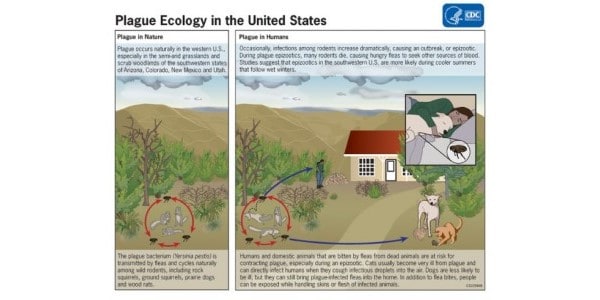
I forgot to mention that groundhogs are also carriers of bubonic plague worldwide--rare in the US, but still possible.
 
   / Marmot Infestation #113  
I forgot to mention that groundhogs are also carriers of bubonic plague worldwide--rare in the US, but still possible.
True!
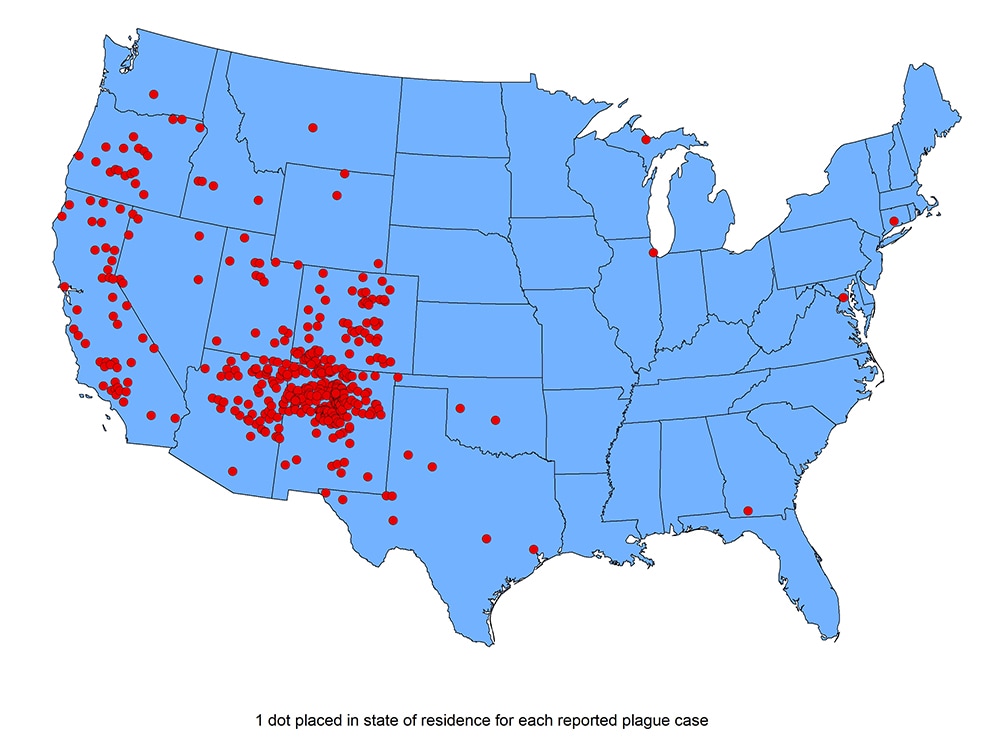
Map of cases from 1970-2020
Plague-Reported-Cases-of-Human-Plague-2020.jpg

I would phrase that as plague is rare in the US, but the primary cause is ground squirrels and their brethren.

I handle our ground squirrels as little as possible, if that...
 
   / Marmot Infestation #114  
True!

I would phrase that as plague is rare in the US, but the primary cause is ground squirrels and their brethren.

I handle our ground squirrels as little as possible, if that...
Actually plague is not so rare in the US. Every year there are a few cases in my county and throughout the foothills of the mountain west: prairie dog colonies and ground squirrels are notorious for carrying the fleas that cause plague. For the most part, antibiotics have made plague survivable nowadays.
 
   / Marmot Infestation #115  
Actually plague is not so rare in the US. Every year there are a few cases in my county and throughout the foothills of the mountain west: prairie dog colonies and ground squirrels are notorious for carrying the fleas that cause plague. For the most part, antibiotics have made plague survivable nowadays.
Yup, you are pretty much at ground zero for bubonic plague in the US, as shown in the map above, but for perspective, the US running average 1970-2020 was ten cases a year, though climbing of late.

All the best,

Peter
 
   / Marmot Infestation
  • Thread Starter
#116  
It has been a couple months since the last post about my war with the marmots, so I thought I would update you, probably the last post on the issue. When I posted in June, I had added an additional 15 marmots to the tally, making a total of 202 trapped and killed or transported. I trapped another 12 marmots in July for a total of 214. I saw only one juvenile after that, and the population virtually disappeared. I have open pasture of a couple acres behind me, usually a gathering ground for the critters, and it has been empty of marmots, although still overrun with gophers.

I am not claiming victory in the war: the basalt cliffs, full of the nooks and crannies they love, still rise up in front and behind me. But I definitely have had a break in the action. If I can keep the population down to 20-30 a year I will be happy, especially compared to the 70-80 I was getting in the beginning. As I mentioned before, apple bits are the perfect lure, and I have a couple apple trees to provide the bait, so I am ready.

Another issue frequently mentioned in this thread has been the pocket gopher problem, something that seems to be more universal than marmots or groundhogs. I have been working on gopher reduction along with the marmots, and made a little headway, at least in my garden and berry patch. I made a long ground probe so I don’t have to bend over, and got a Yard Butler tool to inject poison into the tunnels, then walked the entire perimeter of my cultivated area and every row of the garden, poking every foot or so, looking for tunnels and injecting poison in every suspect spot.

This was the first year in the past three that I have successfully grown a garden. The gophers still manage to find the garden and berry patch, but the damage has been minimal compared to previous years. An interesting event occurred when I was following a long gopher tunnel from the garden to the mulch pile, maybe 100 feet. I kept injecting poison any place I saw new activity, but the tunnel kept extending; then it stopped. A couple weeks later, I saw a lone corn plant emerging from the last dirt pile. The gopher apparently exchanged the corn kernel he got from my garden for the poisoned grain. I am letting the corn plant grow as a symbol of a small success.

As I said, this will likely be the last post about this issue. I can’t say I enjoyed the process, but it has definitely been a learning experience.

Ron
 
Last edited:
   / Marmot Infestation
  • Thread Starter
#119  
I thought my last post on this thread would be my final post: I was wrong. Marmots began emerging from their dens around mid-April this year and it was like the bell was rung and the match began. Through the end of June I had trapped an additional 60 marmots and so far this July added another 3 for a total to date this year of 63. If I add the previous three year’s total of 214 to this year’s “harvest”, I have trapped and otherwise disposed of 277 of the critters. I’m not sure I can comprehend it all.

The result of this year’s infestation is the total destruction of my garden, with the exception of the rhubarb and tomatoes, and breaking down of most of the raspberry neocanes, so they can eat the newly emerging leaves. This year’s neocanes are next year’s fruiticanes, so unless the plants can overcome the damage, the 2025 raspberry production will be significantly reduced.
An interesting side note regarding this year’s marmots is that most of them are juveniles, either newly born over the winter or yearlings. I have seen very few of the giant porkers I got the first couple of years; mostly juveniles and some mid-size adults. We had a mild winter, so maybe that had something to do with it.

I know there is no final answer to the problem as long as I continue to live on this little cultivated oasis with basalt cliffs to my back and front. Nothing marmots like more than lots of rocky nooks and crannies to den-up in and lots of well-watered vegetation to feed on. If I weren’t retired and have the time to patrol the property, I would consider moving on.

As my 4-year-old grandson has gotten older, he loves to accompany me on my frequent walks around the barnyard and back pasture. I think this year I will get him up on the tractor to help move some rocks around and clear the area where he has a small seasonal wading pond. Life is good.
 
   / Marmot Infestation #120  
for your situation I would compost them, animals make excellent compost. All you need is lots of carbon to bury the grounhogs in.
 

Tractor & Equipment Auctions

Kubota MX5400 land mgmt package
Kubota MX5400 land...
2014 Chevrolet Silverado 1500 High Country 4x4 Crew Cab Pickup Truck (A56858)
2014 Chevrolet...
Kubota HB84 Hopper Broom (A53317)
Kubota HB84 Hopper...
INGERSOLL RAND  G25 GENERATOR (A58216)
INGERSOLL RAND...
John Deere XUV825E (A56438)
John Deere XUV825E...
Bulk Lot of NEW Motorcycle Control Cables - Motion Pro & Biker's Choice (A56438)
Bulk Lot of NEW...
 
Top