new tractor idea possibly....

   / new tractor idea possibly.... #1  

boggen

Elite Member
Joined
Feb 22, 2011
Messages
3,829
Location
Trivoli, IL
Tractor
SSTT (Sideways Snake Tain Tractor) and STB (sideways train box) tractor, dirt harvester
superfly got me thinking on his "mini tracked" thread on project forum about various hydrualics. and started thinking about all the super sized tractors now a days. you have this huge honking engine, massive tires and amount of tires, and then this most likely bat wing or like implement behind the tractor for field work. and then you have width limits on road ways to deal with. and as more and more power happens with engines wider implements get made.

started looking at various hydrostatic transmissions, various types of hydraulic pumps. and no need for direct shaft to gear to pulleys needed between engine and wheels. but just some hoses or some paths for hyd oil to flow in either or direction.

i got looking at some zero turns and use of double hydrostatic transmissions, thought about "power trac" tractors along with articulated steering.

and started wondering why is there need for a typical "pulling rig" out in front, and then this huge implement in the rear. once you get into the larger class cat 2 to cat 3 implements most of them already have a full set of hydraulic cylinders to deal with fold-able wings, to deal with raising / lowering road gear. and possibly some other sort of hydraulics on the implement.

so started brain storming, of how to create a "powered implement" were you could interchange implements used. and then figure out how to make interchangeable implements, to use the same "engine / tires"

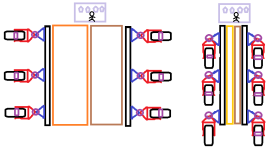
other words. engine, transmissions, tires, are all on implement. and there is no front "main machine"
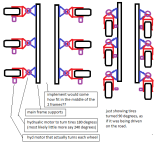
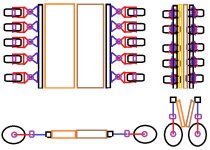
boggen new tractor idea1.png

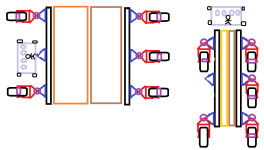
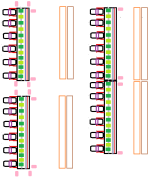
after seeing tires turned 90 degrees ,thought well duh. lets move the hyd motor for each tire, directly into the rim of each tire. this allowing tires to pivot more without sticking out further into road way, or nocking into the main frame.
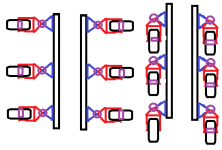
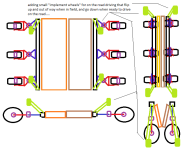
boggen new tractor idea2.png

================
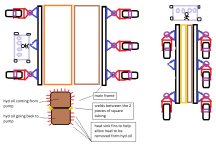
showing say "plow, disc" in top diagrams then say... (plow, disc, harrow) in bottom diagram.
left side folded out, and right side folded up for say moving to another field on the road. *shrugs*
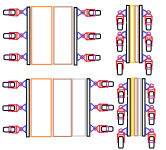
 

Attachments

  • boggen new tractor idea3.png
    boggen new tractor idea3.png
    29.6 KB · Views: 444
   / new tractor idea possibly....
  • Thread Starter
#2  
with implements folding up in the middle. and taking up all the middle space. been thinking about ok were to place an engine? and then were to place the person at?

thought about how long big cranes are drive, along with huge long pieces are driven on roads. and thought about placing engine and driver seat at far end.

boggen new tractor idea4.png

doesn't really work. once implement is unfolded. that and engine and driver seat would always need to pointed inwards on the field. so you do not take out fence posts, not to mention teater totter effect and the one side would be extremely heavy.

so i thought what about playing reverse rolls. instead of treating the engine and driver seat like a tractor, what about treating it like an implement. with some small size tires on it. like implement wheels. so it could move between from one side to an end. to transfer between transport position and field work position.

boggen new tractor idea5.png
 
   / new tractor idea possibly....
  • Thread Starter
#3  
cost of hyd hoses and pipes are rather expensive. and i keep looking at these beefy frame works for various implements. and thinking how could you turn these frame works into useable ways to run hyd oil to various tires, and cylinders and motors.

with todays age of "spray on rubbers and plastics" for truck beds, pools, ponds, etc... could someone spray the inside of a metal frame work. if needed at all. and turn the frame work into huge honking hoses and pipes to carrey hyd oil. and then use some small gauge 12v wire, and some eletrical valves. to adjust how much hyd oil went were?

and could we turn these large frames, into hyd oil coolers. by adding cool fins. or rather "heat sinks" to help allow heat to dissipate?

boggen new tractor idea6.png

ya we are use to hyd oil coolers ((errr radiators be instead of antifreeze / water hyd oil goes through them. to cool hyd oil down)) and then the use the main fan blade on engine to help pull cooler air through the radiator and hyd oil cooler.

but is there truely a need for such a thing? implements have these massive frame works and huge amount of surface area on them. is there truly a need for forced air cooling in this sort of setup?

going with personal computers, you have multi ways to cool a computer cheap, a heat sink, or heat sink with fan, or heat sink that uses a water and a secondary radiator to cool the chips. and for some chips no need to deal with heat, due to the chips do not heat up enough to worry about.

looking at some gear boxes and hydrostatic transmissions, to small engines. nearly all of them have some of "fins" on them to help allow heat to be dissipated.
 
   / new tractor idea possibly....
  • Thread Starter
#4  
how would you turn a multi wheeled machine? there are already plenty of "sensors" out there on the market. more so for robots. and remote control cars, planes, tanks, boats, etc... along with many automation machines found in factories.

there are already vehicles out there with all the sensors and chips / software....

most of these 150HP plus tractors that are new, are already computerized. so it is not like it is a big jump between old iron to new computerized setup.

=======================
would controlling say 50 to 100 foot long machine, down roads work? and then once out in the fields. unfolding everything and having 50 to 100 foot long machine, x 20 to 60 feet wide machine?

it is not like farmers do not already have multi things in tow.... tractor, some sort of liquid injector, and then 1 to 3 1000 gallon tanks being pulled behind the tractor. (at least around here)
 
   / new tractor idea possibly.... #5  
   / new tractor idea possibly....
  • Thread Starter
#6  
If you have a wide(N-S) and narrow (E-W) powered implement, how about having your AG wheels at 90 degrees to the road wheels. Lower the ones needed.

Like some of the smaller railcar movers have each function at 90 degrees.

http://www.trainweb.org/tomfassett/pics/railcar_movers/3TM_Trackmobile_Phoenix1.jpg

Used 5TM Trackmobile :: Andress Engineering Associates

makes sense. just keep on folding the implement up and then fold the AG tires right on up with the implement. then set down some small size wheels for "on the road driving"

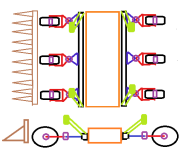
just showing implement folded up along with AG tires folded up.
boggen new tractor idea7.png

rubs chin, could you reduce the 24 to 40" plus diameter AG tires down to say 14 to 16" tires? and run more smaller AG tires?
goal being to obtain your traction at same time not compacting the dirt *shrugs*
boggen new tractor idea8.png

getting back on track with implement tires for "on the road traveling"
boggen new tractor idea9.png
 
   / new tractor idea possibly....
  • Thread Starter
#7  
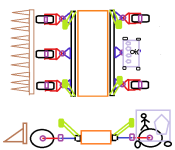
if AG tires get folded up with implement. why not unfold / fold things up. so there could be a grain box in middle. and combine head out in front of the tires on one side?
boggen new tractor idea10.png

if the engine and driver seat could move from side (when all completely unfolded in field) then move to other end when all folded up for ready for road travel) *shrugs*
boggen new tractor idea11.png
 
   / new tractor idea possibly....
  • Thread Starter
#8  
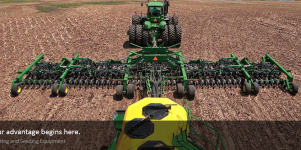
i went to John Deere Home Page Redirect just to relook at the large 40 to 60 plus feet implements.

tractor with 12 wheels (3 left front, 3 right front, 3 left back, and 3 right back) then you have...
air seeder, (10 front, 10 rear)
pulled behind tank another set of 4 wheels.

boggen new tractor idea12.png

a tracked, tractor. that might as well be any were from 8 to 12 wheeled tractor.
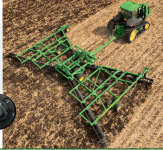
disc 14 wheels

boggen new tractor idea13.png
 
Last edited:
   / new tractor idea possibly....
  • Thread Starter
#9  
i then remember being in highschool and going on field trip to a nearby caterpillar plant and remember seeing this huge honking engine blocks 24 plus feet in length. 12 plus feet in diameter.

i also been thinking about the various ways a hyd pump can be made, from gears, to a rollers, to pistons, to other.

so my question is along the lines of... could an engine be "split" into multi parts. along with hyd pumps being placed between the split up portions of the engine. so the engine itself is not a large "cubed" shape piece that fits between front tires and almost into the rear tires, but rather stretched out from 10 to 50 feet long.... and only a foot maybe little more in diameter (once everything is connected to the engine and hyd pumps)

i realize diesel engines rely on compression and heat to do there thing. but could individual pistons be spread out...

other words instead of having this big beefy shaft that would be needed to handle all the force being applied to it, and then being able to transfer that power through the shaft. could splitting the cylinders up and placing hyd pumps between the cylinders/pistons of the engine. allow for smaller shafts?

boggen new tractor idea14.png
 
   / new tractor idea possibly....
  • Thread Starter
#10  
If you have a wide(N-S) and narrow (E-W) powered implement, how about having your AG wheels at 90 degrees to the road wheels. Lower the ones needed.

Like some of the smaller railcar movers have each function at 90 degrees.

http://www.trainweb.org/tomfassett/pics/railcar_movers/3TM_Trackmobile_Phoenix1.jpg

Used 5TM Trackmobile :: Andress Engineering Associates

ya got me thinking of "trains"

seeing any were from 1 to 3 1000 gallons liquid fertilizer tanks being pulled behind a pickup. to grain carts full of grain being pulled behind a tractor.

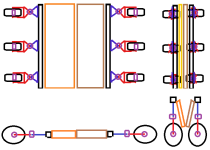
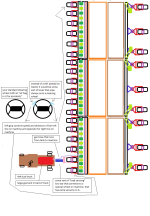
would it be possible. to say, make 20 foot long machine a couple feet wide, to deal with ag wheels, and transport wheels, and treat them like multi trailers behind a train or grain wagons. and then once pulled up into a field. have some sort of hyd cylinder pull each section together. to form any were from 20 foot to a couple hundered feet long machine / implement?

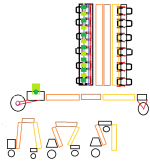
other words say below picture is just one 20 foot long machine / that can accept multi implements....

View attachment 279376

in below diagram 4 machines/implements get folded out and for 80 feet long machine / implment in the field.
in below diagram 4 machines/implements get folded UP and turn into wagons / trailers. and pulled with a pickup truck... *shrugs*
if one machine / implement breaks / goes down. stop pull it out, and continue going with the other machines / implements.
only limited by how many machines / implements you have that are in working order. or what would work in a given size field.

View attachment 279377
 
   / new tractor idea possibly....
  • Thread Starter
#11  
RECAP

View attachment 279379


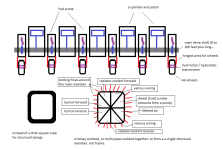
instead of a typical vehicle / tractor. were an engine is all in one larger chunk. the engine is split into multi "smaller engines" per say. but just enough needed for a cylinder/piston. between each cylinder/piston a hyd pump. goal being a single cylinder/pison is enough to drive the nearby hyd pumps. to keep main shaft some what small.

the main frame that supports all the cylinders/pistons for engine and all the hyd pumps. is honey combed or rather multi pipe welded together, to form the physical frame and help give enough structure to the main frame to support the forces being put on it. the main frame also triples as a large heat sink. to help dissipate heat from hyd oil. coolant (antifreeze / water mixture).

front wheels located on machine move up and down or flip up and down. to allow adjustment of implement.

with weight of the extremely long engine going across of machine, and then multi wheels in front. it would help give the extra weight on those front tires to help pull implements through dirt.

multi front tires could reduce overall need for larger diameter wheels found on tractors and perhaps use of tires any were from 8" to 24" in diameter.

am thinking treating each section like a separate machine, but with ability to connect these machines side by side. so if one machine was 20' long. you could keep adding the machines together to form something up to say 200 plus feet long with 10 total machines combined side by side. and then folded up for road travel and pulled behind like multi grain wagons or cargo trailers behind a train.
 
   / new tractor idea possibly....
  • Thread Starter
#12  
i been thinking about actual "FUEL" usage of some of these 150 to 500 plus HP tractors. and how much they consume fuel in a single day. with engine, tires, implement all being all tied together. there really is no room for a "operator station" along with a gas tank. and been thinking how many farmers have fuel tanks that fit in back of there pickup trucks, to wagons that hold fuel. and how many trucks now a days are 4x4's. and was thinking about make the machine without any sort of operating station / cab nor place fuel tank on the machine. but rather.....

Turn a truck itself. into the cab for this machine when out in the field. were there would be a wiring harness that goes back to the machine or perhaps short wireless connection. a short tow bar that connects from back of truck to one of the front wheels on the machine. the wheel would have to be a special wheel. so when truck turned. the wheel would pick up on this with sensors and cause other wheels on this machine to turn slower or faster. to allow the machine to turn behind the pickup truck. and gas would be just pumped from tank in back of pickup truck right into the machine.

when ya out of fuel your out of fuel. and just drive the truck to near by gas station or back to the farm were there is a bulk storage container of fuel. and then back to the field were the machine is.

it is not like folks have not "customized" vehicles before. and pulled out passenger side seat, so a laptop or 2 could be placed and room for a computer.

perhaps some sort of load sensing bar between rear of truck and this tire. so if truck gets going faster it a spring compresses and which then sends a single to cause all the tires on the machine to turn faster. and when truck slows down. the spring UN-compresses and sensor picks this up cause wheels on the machine to slow down and go to a stop possibly or go into reverse.

perhaps a couple handle grips that just fit onto any steering wheel. so if you move left side one, it triggers a response for far left tire, and if you move right side handle grip on stearing wheel, it triggers far right tire on machine. and a computer does the math for all the tires in between in how fast and direction those tires need to move.

==============
to above the pickup truck would carry a large storage tank of fuel on it. for fuel tank for the machine.
the pickup truck would not "pull the machine" but rather act like a "tug boat" and kinda "guide" the machine were you want it to go. and leaving the machine to actually power itself.

boggen new tractor idea18.png
 
Last edited:
   / new tractor idea possibly.... #13  
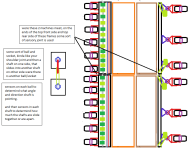
If you have multiple smaller engines, the railroads are working with that, too. They have 3-4 small (500hp :) ) diesels on one locomotive. They start up and quit as various amounts of power are needed.
Railpower Technologies - Wikipedia, the free encyclopedia
"Genset" type locomotives, which are powered by between 2 and 4 smaller diesel engines each. The engines are computer controlled, with the computer stopping and starting engines on a rotating basis, as required to produce the horsepower needed at any given moment.
 
   / new tractor idea possibly....
  • Thread Starter
#14  
*rubs chin*

i guess a vehicle really would not need to "guide" the machine along and could possibly drive off on side or perhaps behind the machine or any were in front of it. would just need something to act like a "fuel truck" for the machine. heck a tow-able fuel tank might work. hhmmsss.... then again.... having someone being in control of machine... and being able to hit an "emergency STOP" button.

just thinking alone the lines of making "HUGE" 180 degree turns. to go right back onto the field or making large 90 degree turns.

vs

running to edge of field. setting down "transport tires" rolling down field 20 to 200 feet. pickup transport wheels, then go back across field. i am not to sure about this last idea.

*shrugs off to something else*

========================
if each machine is say 20 feet long. and you end up placing 2 or more machines side by side. for upwards of 10 or more machines. and dealing with hills along with just turning the machine. i would think there would need to be some sort of "sensors" either radio waves and antennas and a receiver on each machine. or perhaps some sort of "connecting joint" sensors. so main computer can adjust things as needed.

i am think along the lines something like one of them compass balls. that tell ya North, East, South, West, along with what angle you are at, so you no how steep of a hill you are going up or down. but used with a shaft between 2 of them. and sensors all tied to a computer. so as one machine goes down hill and another machine goes up hill. and another machine wants to turn some. the sensor data should help computer adjust wheel speeds. to keep everything "straight" and going in correct direction.

boggen new tractor idea19.png

i am not familiar with current age GPS and tracking software in many of the larger machines. i would imagine everything could be tied into the tracking software. so when a turn needs to be made or when machine needs to slow down or speed up. it either does it, or lights stuff up letting you know what to do.
 
   / new tractor idea possibly....
  • Thread Starter
#15  
If you have multiple smaller engines, the railroads are working with that, too. They have 3-4 small (500hp :) ) diesels on one locomotive. They start up and quit as various amounts of power are needed.
Railpower Technologies - Wikipedia, the free encyclopedia
"Genset" type locomotives, which are powered by between 2 and 4 smaller diesel engines each. The engines are computer controlled, with the computer stopping and starting engines on a rotating basis, as required to produce the horsepower needed at any given moment.

cool statement! never thought about it, but having different cylinders turn on as more HP was needed...or turn off as less HP was needed. just trying to think though, of seeing a single cylinder diesel or even a smaller size diesel engine. problem i do not know engines. nor much else... *the more i know, the more i know i do not not know*

the "genset" noting, has been catching me, more so after the pickup truck with fuel tank in bed of it diagram. but instead a "trailed" engine, with a large hyd pump on it. and just some hyd hoses ran back to machine. but by the time you get engine large enough. you might as well have a large huge tractor. and multi wheels on tractor or a tracked machine. hmmsss.. then again. na, something just tells me to shy away from a trailed engine with a large hyd pump on it.

a train can have multi locomotives running one after each other and everything goes down a single track. i just do not see a farm machine being able to do that. other words a train and all of the cargo containers behind it. would have to be going sideways. vs going down the track. in order to deal with tilling / planting / fertilizing / harvesting etc.. you can only go so fast before dirt starts to become air born flying objects. or harvested goods start moving so fast and hitting things to point things start to smash and get pulverized into menace meat. and i am assuming why implements start to become wider and wider and wider. and MPH (miles per hour) stays roughly the same as tractor HP and weight go up in sizes with width of implements.

if you had a tractor that could pull a 20 foot implement you would need 3 drivers. to obtain 60 feet width. if you had 3 of these machines that were say 20 feet wide, you would have 3 tractors/3 implements but only need one driver. if one of the machines broke down. you would still have 40 feet working width out of the 2 other machines to keep on going.

am purely looking at years here on farm and farms around me. some years it rains some much. you have only a 1 day once a week for 3 weeks (3 days total) to prep fields and get crop in. and those years not everyone got a crop in. then on good years. farmers spending 18plus hour days working just the fields non stop in row to get crop in. and only so many implements large enough to be worth while and large enough tractors to pull them, let alone drivers for the tractors.

if multi small engines are on this machine, and they turn on/off as HP is required. some implements would need less HP to pull them. vs others implements that require much more HP.

sorry for jumping around (pretty much brain storming and going with what pops into my head)
 
   / new tractor idea possibly....
  • Thread Starter
#16  
say ya got 500 to 4000 acres that you farm. and need a way to easily attach different implements to this machine how would you?

would implements, be able to be loaded onto some sort of trailer so they can be just pulled to field and ready to be hooked up to this machine? or would you trailer this machine back to shed. so you could unhook current implement, and swap over to another type of implement?

i would imagine folks would want implements "folded up" so they take less space, and would be able to store the folded up implements in a shed.

with current tractors and implements. long width implements can be all folded up and then backed up into a shed. un hooked, and tractor moved some place else into shed or another shed. most sheds i see just have a single large door opening on one side of the shed.

but with this machine. you would need to drive up along side the implements, and then unhook truck, and then back up each machine to each implement individually? or could you keep 2 or more machines locked together. and backup all the machines at one time to hook up to implements.

how many extra wheels would be needed per machine and per implement just to unhook from one implement type and hook up to another implement type? along with transporting machine and implements on the road?

just showing little wheels around each machine for extra wheels possibly needed.
boggen new tractor idea20.png

how would implements be attached to this machine?
 
   / new tractor idea possibly....
  • Thread Starter
#17  
just random drawings trying to figure out what would be best way to "fold up" an implement for this machine. ya i realize it would differ from what was attached to each section. but at same time trying to figure out what might work across multi implements. so same set of "cylinders" might be used to fold implements up and possible stay attached to the "engine / hyd pump" portion or possibly rear implement wheel section. to reduce cost of things or possibly save time for unhook / hooking things up.

i am trying for what ever reason. to keep the "engine / hyd pump" portion of this machine. to keep standing up right. when things fold / unfold. and keep this section standing straight up. so oil does not go were it is not wanted within the multi engines.

i think part of above, is due to reading posts of tractor roll overs and having to deal with fluids, and then my own use of small size engines like push mowers, and getting them to much at an angle and start smoking left and right.

if it was possible to "fold" and tip everything upside down. it might make things super easy. and less likely human error when folding / unfolding things. but i honestly do not remember reading anything, that might allow for such a thing to happen. or what you might have to do. to allow such a thing to happen for an engine.

boggen new tractor idea21.png
 
   / new tractor idea possibly....
  • Thread Starter
#18  
How Things Work: Flying Upside Down | Flight Today | Air & Space Magazine ok....

so perhaps a unique common oil sump. and some sort of pumped injection system for fuel... would allow the "engine / hyd pump" section of this machine to be flipped upside and any way, so folding / unfolding could be done. and still have engine running or off. and still be able to start things up again without fear of damaging something...

so for the "engine / hyd pump" section of this machine... there would need to be following pipes....

cleaned air possibly air pump. to get air to were it needs to go.
oil under pressure to be pumped into each engine section of this machine.
oil not under pressure. (goes to tank / inlet on pump)
coolant (under pressure)
coolant not under pressure. (thermostat)
hyd oil (under pressure)
hyd oil not under pressure (goes to tank / inlet on pumps)
diesel (under pressure) for fuel injection.
wire harnesses

=======================
other things for engine / hyd pump section of this machine...
--air filter possible 2 sets one on each end?
--muffler per engine? or could you possibly pipe them all to a common pipe? do not k now about that, sounds like a lot of "back pressure" and large pipes needed possibly.
--battery more likely a larger size battery.
--alternator.
--oil filter for engines
--oil filter for hyd oil
--overflow tank for coolant (antifreeze / water mix)
--would there be need for an actual radiator for coolant? would it need be forced fan? or could a couple radiator cores just be placed on it. and have a pump push coolant through them?
--same goes for hyd oil for a hyd oil cooler/s?
--fuse box and relay box.
--would a single starter work? if things were setup for one engine to start up from starter motor. and then for other engines to start up, the would use the engine already running?
--would a starter motor be hooked up to a hyd pump. and each engine have its own "hyd motor" to start each engine? to reduce amount of stater motors that there would need to be? once another 2 pipes in the main frame?
--it seems kinda silly to have separate engines and separate hyd pumps. could they both be combined into say multi small engines each with a hyd pump? and then no common driver shaft would be needed? or would that kill the ability to use a single engine to drive 2 or more hyd pumps?
--i would imagine the fuel pump would be located on the machine itself. and it just sucked fuel from given fuel tank in truck bed. or would fuel pump be located on the fuel truck? and some sort of eletrical wires be used to adjust fuel pump?
--would there be need for a small couple gallon fuel tank on this machine to just act like a "cushion" between fuel truck fuel pump, and fuel pump on machine? that way more wide usage of fuel pump on fuel truck could be had? perhaps this small fuel tank would be needed just to deal with machine being flipped upside down and every which way, when folding/unfolding.

=================
thinking about different PSI and GPM. i do not fully understand variable speed hyd pumps. i have descent idea of hydrostatic transmissions. would setting things up. so there is a....
---3000PSI hyd pressure line
---1500PSI hyd pressure line

and letting computer decided which line a hyd variable speed pump, pumps hyd oil into?
and then letting computer decided for each hydrostatic transmission (per wheel) what hyd oil line to use 3000 or 1500PSI?

that way the wheels that need the extra "torque" can achieve it, while wheels that do not need the torque to over come something could use the 1500 PSI hyd pressure line?

or would just setting up a generic variable speed hyd pump, and hydrostatic transmissions. work across the board? and just let a valve play havoc on constant adjustments of how much hyd oil went to each hydrostatic transmission? and just let the computer turn on / off engines as needed to help produce more GPM and more pressure form the hyd variable speed pumps?
 
   / new tractor idea possibly....
  • Thread Starter
#19  
google "hydrostatic transmissions"
google "variable displacement pump"

goes over hydrostatic transmissions fairly good.
http://www1.eere.energy.gov/manufacturing/tech_deployment/pdfs/variable_speed_pumping.pdf

another link that gets a tad technical for hydrostatic pumps and 4 different ways a pump and tranny can be connected together.
Hydrostatic transmissions | Hydraulics content from Hydraulics and Pneumatics

think "variable displacement pump" think hydrostatic transmission turned around. instead of hydrostatic transmission turn drive wheels, an engine turns the shaft and it produces GPM and pressure of hyd oil. vs hydrostatic transmission that uses GPM and pressure of oil to turn wheels.
Variable displacement pump - Wikipedia, the free encyclopedia

odd ball link. about different type of engine type. *shrugs* something different than pistons and cylinders. it only got my attention due to simplicity of things.
http://www.moller.com/index.php?option=com_content&view=article&id=60&Itemid=71

==================
been mulling things more and more over my mind, and can not get to sleep till i jot them down....

multi engines and turning them on when needed for more HP, torque, GPM of hyd oil, pressure for hyd oil.

most folks are more use to the the double acting valve / lever. for connecting to hyd cylinders on there tractors, (FELs, backhoes, TNT (Top N Tilt), raising / lowering gauge wheels on equipment.

the electronic version (no hand lever) = (4 way proportional valve),

each engine would have a "variable displacement pump" connected directly to it. move lever one way, and it produces more GPM of hyd oil at less pressure, move lever opposite direction and it produces less GPM of hyd oil at higher pressure.

on inlet/outlet for hyd oil on the "variable displacement pump" a "4 way proportional valve" the other 2 ports on the "4 way proportional valve" would goto "hyd tank" and "pressurized hyd main line"

also the starter motor. instead of starter motor connect directly to fly wheel on an engine. it would have a hyd motor connected to it.

by switching the "4 way proportional valve" one way it would turn "variable displacement pump" into a "hydrostatic transmission" and in turn "crank the engine over". switching the "4 way proportional valve" the other way, (once engine is running), it will turn the "variable displacement pump" back into an actual pump. letting the "4 way proportional valve" go to neutral (center). and the engine would just idle and not pump any hyd oil.

*rubs chin* ya i think i got above right.

signed *UTH OH!*
 
   / new tractor idea possibly....
  • Thread Starter
#20  
*rubs chin*

if going with above last post. there would be no need for a common drive shaft that goes through the entire width of the machine. the only drive shaft if you could call it one. would be between what drives the pistons and connection the the "variable displacement pump"

and my mind just has not grasp all the components yet of an engine. so engine and pump could be made as one chunk of metal. or rather pump built right into the block / heads / manifolds on the engine.

==================
i am still trying to grasp the over all picture of....
more fuel to engine faster it turns = more RPMs more RPM's the faster the "variable displacement pump" produces hyd oil in GPM.
changing lever on "variable displacement pump" can either give higher GPM at less pressure, or less GPM at higher pressure of hyd oil
then hydrostatic transmission, changing lever gives higher RPMs at less torque, and changing lever other way can give opposite direction of travel for the wheel. when lever goes to neutral wheel "free spins"

=================
i am still trying to grasp the over all picture of....
if the hydrostatic transmission "outer body" is connected directly to the rim of the wheel. and then the shaft of hydrostatic transmission connects to support arms that hold the wheel in place. how do you get hyd oil to and from the hydrostatic transmission? is there a way to build a hydrostatic transmission so the insides are on the outside, and the outsides are in the insides... *if that makes sens*

i suppose the hydrostatic transmission could be the support arm itself for the wheel. and the shaft coming out of the hydrostatic transmission could connect to the rim of the wheel. but hhhmmsss. i can almost see a lot of bending action and a lot of broken in half hydrostatic transmissions.
 

Tractor & Equipment Auctions

2008 Bobcat S250 Compact Wheel Loader Skid Steer (A59228)
2008 Bobcat S250...
2002 Chevrolet C8500 Flatbed - CAT 3126 Diesel - Eaton Fuller 8 plus 2 Transmission (A56438)
2002 Chevrolet...
2020 DRAGON ESP 150BBL ALUMINUM (A58214)
2020 DRAGON ESP...
UNUSED RAYTREE RMT48-48" HYD TRENCHER (A60432)
UNUSED RAYTREE...
2013 HAMM GRW280I-30 8 WHEEL PNEUMATIC ROLLER (A60429)
2013 HAMM...
2019 Chevrolet Tahoe SUV (A59231)
2019 Chevrolet...
 
Top