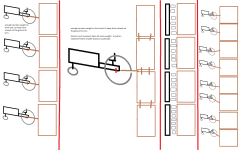
new tractor idea possibly....

   / new tractor idea possibly....
  • Thread Starter
#41  
while most of the stuff will be computer controlled. some things it would be nice to have a manual over ride leveler on some things. example for upper / lower link cylinders near area were they would be need to connect to an implement.

perhaps near cylinders for the "balance wheels"

ability to move far left tire forward/backward, or far right tire forward/backward. to make attaching implements easier. besides getting back into the cab errr (truck) that that might be a optional package.... then again...

been thinking about different package option. for the main front drive wheels. and being able to swap them out for "tracks" kinda like the tracks you might find to replace car wheels for them far northern that see snow/ice majority of year....

==============

trying to figure out how to deal with all the piping to get over the "flex joints" in the machine. more so hyd oil for the hydrostatic transmissions. i could see far left engine being on. and then wanting to move the far right tires. and needing large enough pipes to get oil from the far end to the other end.

thought about making the joints hydraulic joints. instead of greasing them. making them large enough on the (inside) to allow hyd oil to pass through them. but also hinge a few degrees.

another issue is how to lock the joints. when in transport mode. so the middle section does not drag across the pavement... this goes for implements that are attached as well. do some transport tires just drop down? or another set or 2 of balance wheels fold out? or does locking the flex joint / hing make things sturdy enough that entire machine becomes one solid mass. and you just need balance wheels / transport wheels on far ends of the machine?

hhmmmss never thought about weight per tire / axle limits that are out there.... arghs!!!! down with the bloody pirates!
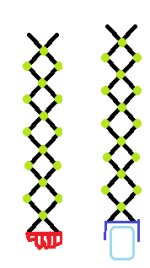
boggen new tractor idea38.png
pops the ground with the fist... err wheel! *shakes head no afterwards*
 
   / new tractor idea possibly.... #42  
One of the goals of large tractors is to lower the ground pressure to prevent compaction. Multi-wheel tractors and tracked drive systems are done as much to lower the ground pressure as traction - as compaction is a real problem. You need to solve that problem.

There's a real balance between the weight and resistance of the towed equipment, versus the tractor weight required to pull the equipment (to maintain traction), the surface area of the drive wheels/tracks required to put the power to the drawbar, and the overall pounds per square inch load on the ground reduced as much as possible to avoid compaction.

How do you convince a farm operation to reinvest in new equipment that is specific to your design? They already have 60-foot wide seed drills / planters, discs, cultivators, etc. - that represent hundreds of thousands of dollars in many cases and your design offers no real benefits to offset a total reinvestment in equipment.

Having been to Montana, Idaho, Kansas, Nebraska, the Dakotas, etc. where big ag equipment is used - they really don't have problems transporting the equipment between fields. I've passed many pieces of equipment, both passing and oncoming with no problem maneuvering around the equipment being towed or transported. I think you have a solution in search of a problem as I don't see any advantages to what you're proposing.
 
   / new tractor idea possibly....
  • Thread Starter
#43  
One of the goals of large tractors is to lower the ground pressure to prevent compaction. Multi-wheel tractors and tracked drive systems are done as much to lower the ground pressure as traction - as compaction is a real problem. You need to solve that problem.

There's a real balance between the weight and resistance of the towed equipment, versus the tractor weight required to pull the equipment (to maintain traction), the surface area of the drive wheels/tracks required to put the power to the drawbar, and the overall pounds per square inch load on the ground reduced as much as possible to avoid compaction.

How do you convince a farm operation to reinvest in new equipment that is specific to your design? They already have 60-foot wide seed drills / planters, discs, cultivators, etc. - that represent hundreds of thousands of dollars in many cases and your design offers no real benefits to offset a total reinvestment in equipment.

Having been to Montana, Idaho, Kansas, Nebraska, the Dakotas, etc. where big ag equipment is used - they really don't have problems transporting the equipment between fields. I've passed many pieces of equipment, both passing and oncoming with no problem maneuvering around the equipment being towed or transported. I think you have a solution in search of a problem as I don't see any advantages to what you're proposing.

excellent post! i am eager to respond, but need to take off for a bit. i am acutely wondering myself. to be all honest. i sat down few days ago and went with an idea, like many folks do, working out various problems for projects / jobs. will respond later tonight to your thread. hopefully something can be determined... or at very least thought out / brainstormed about....
 
   / new tractor idea possibly....
  • Thread Starter
#44  
before i forgot, need to figure out a way to lower the "balance wheels" to below the engine box frame if possible. or the main frame that holds the engines. curving / denting them in some. to allow for balance wheels to swing out... instead of 2 limited hinges between each section of machine going with a single hinged spot. both to help with connecting / disconnecting multi sections together. but possibly give room for balance wheels.

===================

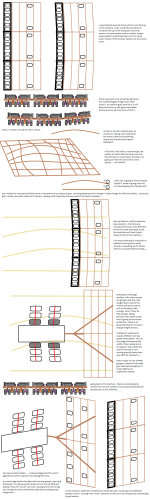
traction, weight, compaction....

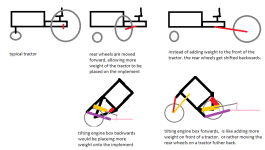
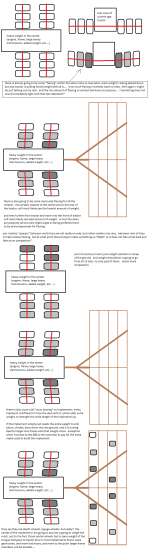
what originally started this idea off....was weight distribution. part of it was, just looking at current age tractors. and seeing this heavy box between 4 to 12 plus tires....

see attach diagram below...

boggen new tractor idea39.png

continue onto next attach diagram below...

boggen new tractor idea40.png

continue onto next attached diagram below...

boggen new tractor idea41.png

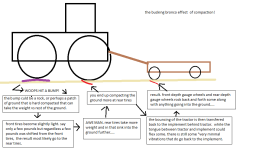
the bucking bronco. can be found on many threads here on TBN (tractorbynet.com) more so for gravel and dirt driveways / roads. and dealing with wash board or ripples within the driveway/road. and dealing with various compaction issues with base layer.....

remember a tractor really does not have any sort of "suspension" nor do implements. when they hit something hard the jump up. and then come crashing back down. the suspension that is in the field, is the ground itself. and the soil will just compact more to absorb the shock / load being placed on it...

is part of not driving faster... higher MPH (miles per hour) is do to try and keep the bucking bronco effect down to a min? and/or trying to keep dirt/soil from flying up off the ground?

bucking bronco effect. is just not from front wheels and rear wheels on tractor bouncing up and down. and being transferred back to the implement. it is the very "UN-noticable" amount of speed that happens as tractor bounces around vs staying at a non stop constant MPH measured down clear down into 100's or perhaps 1000's of a MPH ((do not take 100's or 1000's of a MPH as fact, i honestly do not know, but trying to get idea over, that most folks might state it as more of a vibration than anything....))

why do folks use a "vibration machine" to compact soil in trenches? and why is it normally noted to only back fill 4 to 6 inches and then compact the dirt in trenches?
 
   / new tractor idea possibly....
  • Thread Starter
#45  
need to write down a few reminders for myself, before i forget them.... this machine and implements like a plow or disc. and causing engine box to angle backwards. to place more weight on implement and in that bottom plows and discs. vs placing all the weight of engine box on the front drive wheels.

================
getting back to things....

still working out on the "balance" wheels for this machine. a few previous posts. went over hydraulic accumulators, or shocks/suspension a motor cycle front tire has. partial goal is to help remove the "bucking bronco effect" and limit how many times the bouncing from front to back happens. reducing overall compaction.

================
a good portion of this thread. has had some emphasis placed on "hilly fields". were i live there is a lot of old strip mine grounds, and bunch of valleys. were there is need of some sort of "grass way" to let run off water get out of the field without causing very much erosion. and to me, this machine needs to be able to handle this. now if you get out into other parts around me. you have fields that few hundred acres of nice flat ground. for these fields. the slop change happens over a very long distance. and at most you have little patches here or there. that are little more moist than others.

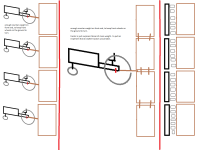
in this wide open fields. this machine really does not need complexity of "limited hinges" (flex joints) and with that said... 40 feet width per machine and 13.5 feet between flex joint, is just some random number. a machine could easily be 80 feet long and spacing between flex joints being say every 20 to 40 feet. and if things fold up correctly. could unfold out to 160 feet width. and then 2 to 4 feet plus how ever the implement folds out to be long. or how ever many machines are set side by side and attached together...

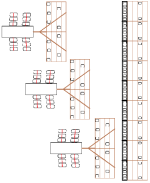
other words to above.... / comparison....

boggen new tractor idea42.png

==================
i been thinking about the "implements" and more so storage of them... with them not needing to fold up on top of each either. compared to currently implements that have 2 to 3 wings per side. perhaps a couple "stands" could be welded on top of each implement. so a fork lift could come along and "stack" implements one on top of each other. so many high, into a shed. or off into a corner...

===================
i been thinking of how 2 machines would unfold along with implements that are attached unfold. perhaps for hooking / unhooking implmements it might be better of the 2 machines hinged on front corner. so when folded up in transport mode, the machines are in the center, and the implements are on the outside folded up.

that way you could drive down a "lane" unhook implements on each side, drive little further down lane, hook up some other implements on each side. and then drive on to the field...

====================

How do you convince a farm operation to reinvest in new equipment that is specific to your design?
convince? na. not worth trying hook someone on some marketing statement. if it works and does better job than what is out there. and long term it pays off. (bottom dollar), and like with everything, learning, understanding, comprehension, knowledge, teaching, sharing of info.

to be honest, i do not see how throwing bigger diameter wheels and more of them on a tractor. really helps. you eventally hit a limit... to how many you can place on a tractor of current age. before returns and effects take a noise dive.

larger diameter wheels yes end up with a larger size patch of tire on the ground. and help reduce PSI on the ground. but to what extent? tires traveling in same groves. or spaced so front tires make groves and back tires run over the high spots of front tires make. you are still compacting a large patch of soil in front of the implement.

===================
when you switch tires/wheels over to tracks, there is a big difference. were the tracts give a much larger surface area that is contact with the ground. and all the little rollers along the bottom portion of track, pushing the track down into the ground besides the front sprocket and rear sprocket. helps things even further to reduce PSI placed to the ground.

tracks i would imagine make a lot more sense for farmers that have large fields were most of the time they are just driving straight. problems with tracks the longer the distance from front to back of the entire track. the more likely things are going to need to slip and slide. when turning. the sharper the turn the more slip / sliding of the tracks happen. more slip / slide the more wear on tracks.

not to mention all the mechanical pieces that move on tracked machines, would state by nature a higher cost of maintenance to keep tracks in good working order.

tracks do remove "bucking bronco" effect. and help remove "tire slipping" as tires turn and slip when loosing traction in a field.

current age tracked tractors. are still limited though. before getting into it. RAIN, just does not cover an entire field in same exact amount. one portion of a field might be really wet, another really dry. or you might have "spotting" were there are patches that are wet and/or really dry. a tracked tractor will be forced to drive through these patchs, no way around it, if they want to keep implement going down the field and keep things nice and straight. while tracked units will keep on going. through the wet areas with tearing the areas up to bad. the implements bottom plows, discs, etc... are going to see a wide variety of forces across the entire length of the implement. one side might hit a hard dry compacted area and pull hard backwards on the tractor. ((the tongue hooking to tractor acting like a hinge / fulcrum)) will cause other side of implement to be pulled forward some what if in it is in more loose soil.

what i am more looking at this machine on this thread. is a way to allow the "front drive" wheels with the hydrostatic transmissions and variable displacement pumps... is to allow wheels to get more torqure to them for those hard dry compacted areas. to drive that section through that spot. while other section of this machine, tires not having as much torque placed to the wheels.

was also looking at this machine. as possible way to let tires that are not in a "wet spot" help pull tires that are in "wet spots" through those wet spots. if computer senses wheel slip. (sudden higher RPM of change on axle going to tire or perhaps torque sensor). it would reduce RPM's for that wheel and perhaps place more torque / RPM's to other nearby wheels. to offset things... assuming machine is wide enough to get tires on good ground to grab traction in.
 
   / new tractor idea possibly....
  • Thread Starter
#46  
around here roads i am guessing are as narrow as they could possibly get away with. and are littered with guard rails, road signs, mail boxes, ugly nasty ditches with no shoulder to get on to. if you run into a tractor with implement you might be SOL. and the truck or car has to go into ditch to get around the tractor/implement combo. the other areas that are like WOW. nice wide shoulders, easy going ditches, wider width of roads. then in other spots (the true hilly billy sticks) were you have single lane gravel roads. and if county shoulder just barely large enough to get to full size vehicles to pass each other, and most of these roads are turning every direction going up and over hills, etc... removing any chance of looking clear out in front of you of were you might be able to pull over, and let on coming traffic by.

to me yes, width of tractor / implement / machine is a big thing. and as i said before there are many other areas around here that have nice roads and everything, and running a wide tractor and implement never really even clicks of needing to watch out for other things..

One of the goals of large tractors is to lower the ground pressure to prevent compaction. Multi-wheel tractors and tracked drive systems are done as much to lower the ground pressure as traction - as compaction is a real problem. You need to solve that problem.

There's a real balance between the weight and resistance of the towed equipment, versus the tractor weight required to pull the equipment (to maintain traction), the surface area of the drive wheels/tracks required to put the power to the drawbar, and the overall pounds per square inch load on the ground reduced as much as possible to avoid compaction.

How do you convince a farm operation to reinvest in new equipment that is specific to your design? They already have 60-foot wide seed drills / planters, discs, cultivators, etc. - that represent hundreds of thousands of dollars in many cases and your design offers no real benefits to offset a total reinvestment in equipment.

Having been to Montana, Idaho, Kansas, Nebraska, the Dakotas, etc. where big ag equipment is used - they really don't have problems transporting the equipment between fields. I've passed many pieces of equipment, both passing and oncoming with no problem maneuvering around the equipment being towed or transported. I think you have a solution in search of a problem as I don't see any advantages to what you're proposing.

i am out of ideas. not even something to go on some tangent about that does not matter. and not really sure if anything noted even comes close to answering your questions...

at moment machine is being geared towards fields that are hilly, and to handle all the various implements out there. fold up and be as compact as possible for transport. with quick unfold and go to work doings. and implements that are easy to attach / un-attach. figure if those can be nailed down making wider machines would be much easier...and just doing math and figuring measurements for longer frames and like for wider machines. perhaps just having some "short sections" of the machine on the far ends, and then going with "much longer" sections in the middle. to let the ends of the machine be better able to handle things better.
 
   / new tractor idea possibly....
  • Thread Starter
#47  
boggen new tractor idea43.png

lost post that went with above diagram. didn't realize internet went out due to rain / power flickering. and hit reply button, and it was washed away :/

boggen new tractor idea44.png

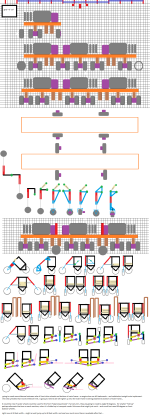
from 13.5 up to 30 feet length and now looking at 40 feet length. just to find room for transport wheels, and balance wheels.

drew some implement diagrams and how they would hook up, along with engine box tilt. and looks like space between front drive tires and main frame that engies and everything connects to. this space looks like i will need to be increased some. though moving frame (front and back) frames closer together might give some needed room.... it is not like an engine is actually a box. but has more of a half circle bottom on them.. i would just worry about "twisting" the frame over the distance if they get moved to close together. if not nearing that at 2 feet distance from outside front and outside back of main frame...

still undecided on "balance wheels" and transport wheels. been tempted to go at 3 to 4 feet width keeping engine box 2 feet, and giving an extra foot on front and extra foot on rear of engine box for transport wheels and balance wheels.

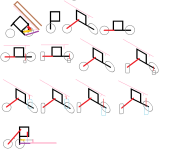
never thought about it. about tipping engine box to 45 degree angle over front balance wheels. and folding implement up right on top of the engine box. and use front balance wheels as one side for transport wheels. and dropping a couple wheels down on rear side of engine box for the other side for transport wheels.
 
   / new tractor idea possibly....
  • Thread Starter
#48  
yet more and more attempts.... to deal with front balance wheels

boggen new tractor idea45.png

thought about moving front drive wheels further in front of the engine box. so entire engines could tip further forward. to a point were some transport tires could be lowered. and just carry the implements folded up on top of the engine box... and actual length and weight of implements all depended on how much balanced wheels unfolded out for "transport" to keep things from tipping over when going down the road...

getting to the point were there will be 2 sets of axles. like a typical tractor / car / truck. :/ trying to keep as much weight on the main drive wheels. as possible or weight transfer to implement... the whole quickly being able to swap between transport mode and field mode, and attach/un-attach implements. is proving more difficult than what i thought it would. then again never really thought about it. how many folks i am sure went over this time and time again....

i realize even current tractors still get front weights placed on the very front of them. even the big boys.... just to keep front tires on the ground. but this machine. is in idea "multi tractors" with just the rear tires, transmissions, and engines. and the front wheels just serve to keep the stinking machine from falling on its face. and also hopefully reduce the bucking bronco effect of compaction.

small tractors in 20HP to tractors 450HP range. all of them some were along the lines get some sort of front weight added to the front of the tractor. to keep the front end of tractor from coming off the ground. the larger the engine and lower gear the transmission is placed in. the more torque at rear tires. all this means being able to lift more weight on the front end of the tractor off the ground, if there is sufficient weight / drag from implements to do such a thing. but this machine is reducing over all "torque" at the rear axle. by spreading the torque across the entire length and multi wheels. this reducing the "counter weight" on the front that would be needed across the entire machine... but reducing amount of counter weight that is need on front of machine and also, reducing how far the counter weight sticks in front of the drive wheels. hhhmmsss....
 
   / new tractor idea possibly....
  • Thread Starter
#49  
boggen new tractor idea46.png

*rubs chin*
swines quote....
There's a real balance between the weight and resistance of the towed equipment, versus the tractor weight required to pull the equipment (to maintain traction), the surface area of the drive wheels/tracks required to put the power to the drawbar, and the overall pounds per square inch load on the ground reduced as much as possible to avoid compaction.

is adding more weight to a tractors front. end up causing more compaction? vs say moving the rear axle on a current age tractor "further back" (see above attached diagram)

boggen new tractor idea47.png

an ugly attempt to show a comparison...

this machine. i am more looking at combining multi "smaller" tractors than above diagrams. to keep the counter weight on the front end light as possible. and keep it from sticking out as far. by placing tires from a 4WD or MFWD tractor and placing them all on the "rear axle" exception for a couple front wheels just to keep machine from falling flat on its face...

hhhmmmsss..... another way might be stating, is spreading the weight out over the entire width of machine and implements. vs a good portion of all traction, weight, placed in center of the tractor errr on rear end of a current age tractor....

and getting out of some possible "implement width" problems (once they get folded up and road width doings)
 
   / new tractor idea possibly....
  • Thread Starter
#50  
boggen new tractor idea48.png

this might be a better comparison. in attempt to get idea across of multi smaller tractors pulling smaller width implements. the implements and rear wheels are combined for this "new tractor idea aka machine" but instead of just using those smaller size engines. larger size engines are used to obtain the higher efficiency of the bigger engines. to a point... hopefully combining other things and making better overall efficiency in the overall machine. that a larger size tractor would see. along with allowing for that dynamic weight change for rear tires.
 
   / new tractor idea possibly....
  • Thread Starter
#51  
starting to like the P shape engine box and drive wheel doing, and folding the implement up at an angle over the top of the engine box, for transportation. it would allow for a larger length (front to back) engine box. and more room for "front balance wheels" and transport tires. perhaps getting a narrower width for transport. and couple minutes between change over from transport to field ready... exception dealing with cab. not sure about that just yet.

a longer engine box. might allow for more "optional engines" or instead placing the various tanks (fuel, engine oil, hyd oil, coolant) in between engines vs above the engines vs previous posts. were 2 foot front to back and getting up to 8 to 10 feet high.... now changed to say 5 to 6 feet (front to back) and keeping it down to say 4 to 5 feet high. hhhmmsss....

View attachment 280079

Tires, Traction and Compaction - University of Minnesota Extension dealings with tires, traction, and compaction....

never stated yet. but current tires for tractors with low PSI of air in them. almost act like "tracts" on a rim. good flat surface across the face of tire that touches dirt. and then the side walls flex just enough for suspension. and allow the surface of the tire to become more flat vs "curved" as the tire rotates into the ground.

i have almost thought about skipping the generic idea of AG / R1 tires. and go with tire with less higher "nubs" and more flatter surface on tire. then it hit me were do you want a "hard compacted" layer to form (groves left by tires)? anyhoots enough tire talk.
 
   / new tractor idea possibly....
  • Thread Starter
#52  
50th picture / set of diagrams...

View attachment 280095

connection points on machine and connection points on implement....

so you have a bottom plows on machine. and plows begin to dig in deep. do i want attachment points that will cause implement and machine. to pull down harder onto the rear tires to pull it through. or do i want some "twisting action" going on to pull the bottom plows back up out of the ground and hopefully if set correctly not completely back out of the ground?

since machine has "dynamic weight" ability. and bottom plows begin to dig in. would you rather the dynamic weight shifted more forward, and at same time slightly raise the bottom plows up out of the ground some? along with transferring weight / force to rear drive wheels to gain more traction?

would you rather avoid transferring a certain "max weight / combo force" to rear tires with a bottom plow? so you do not cause more compaction? though with a bottom plows... and set deep as possible.... would it really matter? but what if plows were set to only go so deep? any additional force from pulling bottom plows through ground would need to be transferred some place to pull the bottom plows through the ground...

would a third connection link might be wanted that a spring, or hyd cylinder with accumulator in line with this third cylinder. might be wanted for any sort of implement out there? remember implements would no longer have this long tow tong/hitch and front implement wheels, due to implement would be attached directly to back of this machine, kinda like a 3pt hitch implement. Or perhaps putting a hyd accumulator in line with one of the current 2 links between machine and implement?

================
been thinking of stuff that requires some sort of hopper or trailer or wagon, that is pulled behind implement or between tractor and implement, or some sort of box for seeds to grain to fertilizer....

current age tractors with fold up implements could fairly easy tow something behind them. to hold everything. but this machine. due to how it moves when transported. really does not offer a "easy way" to tow something. you would have to drive machine into field, then drive the (trailer, wagon, etc...) into field and then hook up each trailer, wagon, etc... were it needed to be hooked up. to be towed be hind the machine.

my other concern for some current age stuff. is most of the trailers, wagons, tanks, etc... that get pulled behind the implements. are not really designed to limit compaction. with many, having narrow based width wheels (typical truck / trailer tires) on them.

been trying to think of "how" some sort of container or containers could be setup. to fold / unfold with the implements. or perhaps, you hooked up to "containers" first full of seed, flipped them up over top of the machine. and then went back to hook up all the implements. if it was wagons for grain.... you would attach to the containers first. and flip them up on top of the machine, and then go back and attach to implements. same thing with some sort of tanks for liquid fertilizer maybe....

perhaps making room some how on the "balance wheels" for tanks and like? *cringes* do not know about that idea. that would most likely place a huge amount of weight on only a couple wheels on the front of the machine. you would almost need tanks and like that would fit between the balance wheels. or to possibly remove current balance wheels on machine, and be replaced by tanks and containers that had there own (front wheels aka balance wheels) and transport tires.
 
   / new tractor idea possibly....
  • Thread Starter
#53  
   / new tractor idea possibly....
  • Thread Starter
#54  
it has been bugging me for some time. and that is how this machine would actually "trailer" behind a large size truck or another smaller size pulling tractor. in previous version trying to stay with 2 feet width engine box. not really able to. but with engine box becoming wider / taller. there could be enough room. to drop down 3 or possibly 4 axles. on one side of the machine. and then have some sort of "tongue" or something that extends out for bumper hitch, or pintail, or 5th wheel like setup.

also if you had 2 or more of these machines being pulled other words....
truck <- first machine <- second machine <- third machine?!?!

normally wagons. have a solid axle in back, and then front axle pivots with tongue that attaches to back of truck. so the wagon "follows" the path of the truck tires.

in the old machine, i thought about tractor driving up along side of a trailer. and just roll up the side of the trailer for transport. been thinking kinda same idea but instead for the newer version of this machine possibly...but would really like to avoid a custom trailer, just to place machine on. to get it from field to field and back to farm. there is a good amount of combine heads, to seeders / no till drills around here that have there custom trailer. that they get loaded on. due to they, do not fold up or not enough to get them down the road...

main want is being able to connect multi of these machines side by side. to go down the field as one solid mass per say. and trying to disconnect and maneuver each machine onto its own trailer sounds like large time consumption task.

perhaps different towing packages. for machines. so one package is built for 3pt hitch for tractor, another for bumper pull another for pintail. but then a package that connects 2 machines together for in the field, and also being able to tow one behind the other...

is it even possible to tow say two 40 foot trailers, or even two 60 foot trailers. behind a single truck or tractor down the road at the same time?....

would there be optional CAB unit that has its own little engine, just to move it around the machines and to follow or stay in front of the machine. and then used to tow the machine? by using engines on the machine to power the CAB's larger tires? or rather engine on machine to power the transport wheels? eewww getting into them "huge long cranes" that has multi drive axles. with independent steering per axle. to get the crane through very tight corners...


hhmmsss..... i could almost 2 axles, 2 tires per axle per side for total of 8 tires. on far end of machine and the another set of on other far end of machine. that could spin 360 degrees. and be used both as "balance wheels" and as balance wheels. and wheels would have a hydrostatic tranmission. hhmmsss...

perhaps instead of duals floatation tires? hhmmss.....

View attachment 280132

who says duals? multi tracked unit....
 
   / new tractor idea possibly....
  • Thread Starter
#55  
View attachment 280158

and i thought i was on to something long time ago. this seems way to easy....

if you need more wheels to say pull not one but 2 sets of bottom plows. (another set behind the first set.

hook 2 machines up side by side... and crank up the all the engines... and see what gives first....

but who says 2 plows, perhaps a combine head and a some sort of grain wagon box (without wheels on other side? heck maybe special made wagons.... you back the wagons up to the machine. and attach rear end of wagons to links on machine. who knows... perhaps having a second machine following the machine with combine head. this second machine having grain boxes on each side. that way you could have a train moving side ways with a bunch of grain. to haul over to the road for a semi truck ready to take it all on....

to note it, i drew in 2 implements per side. there is no need for that. and perhaps not wanted at all to keep compaction down. *shrugs*
 
   / new tractor idea possibly....
  • Thread Starter
#56  
View attachment 280172

alrighty then! i am back to my sections of the machine. that can be down to 20 feet per section. not sure on min width per section. till wheels get figured out, and placements for links for implements. on all sides of machine. and length per section would be as long as someone wanted or multipules of min width per section.

argh! not again! either i could have "middle sections" and "end sections. or all in one sections that did not matter were they were placed... all in one sections sounds like a bloody costly adventure. wonder if i could make the "limited joints" between sections, along with "end links" for towing as select your package / addon on doing. and be able to bolt / unbolt. things. to switch things around if a customer wanted to... vs welding the end links and limited joints to each section...

hhhmmsss. limited joints.... main purpose is to keep implements and the sets of tires, from taking a sudden quick slope. and cause things to bind up on each other. and goal of limited joints. would be to keep that from happening.... since there is no "hyd cylinders" in current limited joints. why not place end links (for tow options or end implements) but also use these end links to create a "limited joint" by use of some solid bars between end links. of each section... it would make more sense. placing limited joint lower on each section. vs placing it high up on machine. the end links would already need to be beefed up, to some extent for towing or an implement being placed on the end links. hhmmsss....

before i jump to diagrams for limited joint and like... for implements that do not require a lot of extra HP to pull the implement through the ground or what not. perhaps adding in a "short section" that is called a "field cab" though field cabs cost $$$$, due to needing short width implements to cover width of cab would take up. along with just the comforts of a cab, (A/C, heating, all the controls, and buttons, etc...)
not sure if "cab" would have any sort of drive wheels under it. maybe instead of 8 wheels just 4 smaller wheels? or perhaps just a couple caster wheels that spun 360 degrees. just to help deal with weight... i could almost see the cab being able to do 360 degree turning. kinda like a tracked excavator cab. *eyes light up*
 
   / new tractor idea possibly....
  • Thread Starter
#57  
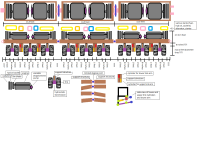
13.5 feet diameter. from center axis per wheel set.. (OUCH) on total width for "transporting mode"

View attachment 280173

tires = 1.5 feet width, 2 feet in diameter.
6" spacing between tires,
6" between tire and hydrostatic transmissions.
6" all the way around for clearance.
3.5 feet for transmission
end result = 13.5 feet diameter or dead man circle for wheels. were nothing can be placed in that circle or interfere with 360 turning of wheels.

the major implements. that fit on the sides (in transport mode) are going to need lower links that stick out some...from the main frame. if taking that into account, might give a few inches there.

i suppose implements could be placed in "total raised" position. to give clearance over wheels. but *yikes*... just a bad seal in a hyd cylinder, or 0-ring/seal in a valve, and machine would come to a dangerous crashing halt. way to risky to many seals / 0-rings / gaskets. not to mention possible hyd accumulators added into the mix. totaled raised implements (beside being titled back) to dangerous...

perhaps making a "indent" into the frame for were wheels would turn. that would give extra clearance when implements are tilted up.

3.5 feet for transmission area seems pretty large... so is spacing between tires, and spacing between tire and transmission. the transmission does not have to be "box shape" i could possibly squeeze it down to 1.5 maybe 2 feet?!?! and squeeze distance between tires down to 2 to 3 inches, (errr clogs getting stuck in between tires?!?) and then distance between tire and transmission... hmmsss....
 
   / new tractor idea possibly....
  • Thread Starter
#58  
View attachment 280175

down to a 9.5 feet diameter of a dead man circle for wheels.

googling other implements past few days. widest i think i saw when fully folded up was 16.5 feet. leaving about 7 feet for implement to be placed on one or both sides... for transportation with the machine....

i would love to go back to the 13.5 feet diameter. but could i add 2 more axles. to the transmission. and some how pivot them at the transmission. so the raise up for field use for 4 to 8 inches up. and then lower them down for transportation. and still keep the 360 spin. and all wheel drive, with each half axle having independent forward/reverse

i am almost positive there is a special "gear type set" that would allow transport tires to angle up and down. and still get power to the transport tires.

View attachment 280176
 
   / new tractor idea possibly.... #59  
Well, I officially give you the TBN award for most out-of-box (er tractor cab) thinking AND most posts to one thread in minimum amount of time. :drink::tractor:

You've certainly been struck by an innovative idea and are working thru the ramifications of the idea and just can't stop until you get it all worked out.

I admire your tenacity and innovations....hope they come to some sort of fruition for you and you see your new kind of tractor going thru the amber waves of grain!:cloud9:
 
   / new tractor idea possibly....
  • Thread Starter
#60  
View attachment 280191

20 feet width, with 8 feet long frame (not counting how far links stick out from frame.)

thinking about calling it
--STB (side train box) tractor
--STB (side train boggen) tractor
----kinda of an upside down box, if you have implements around all sides, you would have "flaps" like a box
or
--STT (side train tractor)
----thinking more along the lines of, multi units in a line, like a train, but moves side ways through field.
and of course
--STD (****** transmitted disease) tractor
----ok, i hope that name does not stick, kinda like FORD (found on road dead)
----saying STB or STT fast and could easily sound like STD :/
 
Last edited:

Tractor & Equipment Auctions

John Deere 5105M (A53317)
John Deere 5105M...
2007 KOMATSU GALEO D39PX-21 CRAWER DOZER (A60429)
2007 KOMATSU GALEO...
FUTURE 60" PALLET FORK (A60432)
FUTURE 60" PALLET...
New Holland 3930 (A60462)
New Holland 3930...
UNUSED FUTURE FT36C STAND ON SKID STEER (A52706)
UNUSED FUTURE...
2016 FORD F-250 SUPER DUTY (A58214)
2016 FORD F-250...
 
Top