new tractor idea possibly....

/ new tractor idea possibly....
  • Thread Starter
#321  
links... that helped me....
Pump - Wikipedia, the free encyclopedia
Gas compressor - Wikipedia, the free encyclopedia
Turbofan - Wikipedia, the free encyclopedia
Vacuum pump - Wikipedia, the free encyclopedia

search for "screw pump" on youtube
search for "scroll pump on google then clicking images.


alright, how do i adjust the "blades" so that i can obtain different compression ratios at different RPM's.

do i go with something like a helicopter blade setup. were you can adjust "tilt" or angle of blades. to gain either a more aggressive, straight up. or a less aggressive angle. to say hover in a single spot.

*rubs chin*, i guess it is going to come down. material used. the blades will need strength in themselves from breaking loose, and if say a small pebble / rock, gets in and nails a blade.

i guess i can go with say a bevel gear. (45 degree angle or something)

*rubs chin* starting to think fan blades might be a bad decision when trying to compress air, before fuel is injected and combustion occurs. it is more about. lower RPM's and wanting to keep Pressure up.

with piston/cylinder type of engine, it really does not matter what RPM's the engine runs at, the same compression of air/fuel mixture happens for the most part.

i think would be better off with a different air or air/fuel mixture compressor. that has a better way to build up the pressure and then be able to hold the pressure. being able to hold that pressure, would help deal with, controlled explosions. vs a continually combustion / explosion.

even if it was a continually combustion explosion. being able to supply a higher pressure across a large range of RPM's......

=================
looking at a "scroll pump" for compressing air or air/fuel mixture, and going to have to put it on the "no list" by the motion itself, i would be creating a compaction machine. even if i put multi "scroll pumps" side by side, and off set them. i would never be able to remove the vibration that would be created.

ggrrr then again. even a turbine and compressor for the turbine engine, both would create a vibration. but at what frequency and amplitude of the vibration...

looking at screw pumps. there might be something there. for compressing air or air/fuel mixture.

i came across this video...
a screw pump, engine.

it has nice postive displacement of a screw pump, and would achieve same amount of compression (within reason after wear/tear) over a large range of RPM's. meaning being able to compress air to a point were diesel could be injected and the diesel would exploded based on heat and compression.

the combustion / exhaust side of the screws. looks a tad to "restrictive" in video. and could possibly cause a good amount of efficiency problems. as some of the combustion tries to turn the screws in opposite direction as the combustion tries to works it way back into the compression area of the air or air/fuel mixture. BUT...

with wear and tear, and tolerances (spaces) between the screws get larger. the compression ratio of air or air/fuel mix would go down, and combustion would not have as much effect. but... hhmmssss... how do you compensate? i guess the compressor stage of air or air/fuel would be a longer screw with more points of screws locking. or i could say there is more "stages" that the air would have to go through. each stage would not need as a dramatic effect in how much air is compressed. but rather it is the multi stages and locking between each screw. that would overcome longer wear/tear.

and then on the combustion / exhaust side.... i would assume. wanting to keep things fairly short. part due to amount of heat created, but how fast a explosion happens. and trying to time the explosion, so the screws, fit more in tune with the explosion.

the other issue would be trying to keep things lubricated. both to reduce wear/tear, but also help in sealing some.

if i just sprayed oil right into the "compressor" (inlet side), i would end up having a extremely hot sputtering of oil coming out of the exhaust.

perhaps. i could go with turbine engine like doings. and kinda setup 2 screw pumps (compression stages). first stage. would for most part completely compress the air or air/fuel mixture. right up to the wanted pressure. but before moving on to the second screw pump. put a empty chamber. that is better designed to "retrieve a larger amount of oil" and then the compressed air, would move to 2nd stage. which was also tied directly to the combustion and exhaust screws. doing this would let me push more into the first stage of compression for lubrication, and get perhaps much better sealing to happen. but then when it comes to the 2nd stage of compression, combustion, exhaust. there would be less lubrication, and less sealing. and less hot oil to deal with as it comes out of the exhaust. granted i would loose some efficiency, due to not as good seals in the combustion / exhaust area. due to not as much oil for sealing. but..... i might be able to use a more expensive / costly metal or like. for this last stage. vs the longer first stage (compression stage).

i suppose by also spliting the 2 portions up. i could use different depth of threads on each screw. so 1st stage. has different depth vs the 2nd stage.

i suppose if i wanted to get really complicated. i could put some sort of transmission, between 1st and 2nd stage. so i could control CFM (cubic feet per minute) of air, at given pressure. this would most likely allow me to reach higher efficiency levels. based on different amounts of fuel injected, and in that keep the curves on a graph up to par clear across the wide range of RPM's and horse power, and fuel consumption.

if i placed transmission on generator, and then another transmission on hyd pump. and another transmission on air pump for tires... i could adjust things right down to the finite ability, of what ever the current age computer chips could process data.

hhhmmsss.... i really have been thinking about using the hyd oil lines, and coolant lines, that run the length of the SSTT (60 foot) on both sides of main frame. to help act as cooling. i may setup a better "heat sinks" errr i should say heat exchangers type of thing. ya that could work, and just leave the coolant pump/s and hydraulic oil pump. just constantly running. or rather running as needed. to help cool things.

=================
enough blah blah... the resulting chicken scratches in autodesk from above...
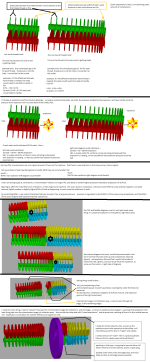
boggen elec sstt39.png
 
/ new tractor idea possibly....
  • Thread Starter
#322  
i do not think i could ever fit a CVT like transmission into everything, and not to thrilled about running a single long main drive shaft. so looking at going with kinda of a HST (hydrostatic transmission). were there is a single powerful pump, and then multi hyd motors. that run compressors, to generator. this should let me run "metal piping" around things for hyd oil. vs trying to deal with a drive shafts and gears and belts.

1. main engine
1.1 exhaust
1.2 screw engine (combustion)
1.3 screw pump compressor 2nd stage (for diesel or fuel that explodes under pressure/heat)

2. hydrualic pump (pump for hydrostatic transmissions *plural*)
2.1 clutch
2.2 screw pump 5,000 to 7,000 PSI max, main shaft connected to main engine via clutch

3. screw pump compressor
3.1 regulator and valve ((for 5,000 to 7,000 PSI hyd oil))
3.2 screw pump ((MOTOR)) hyd oil from 2.2 used to turn screws
3.3 screw pump compressor. 1st stage (compresses air) shaft directly connected to 3.2 shaft.

4. generator head
4.1 regulator and valve ((for 5,000 to 7,000 PSI hyd oil))
4.2 screw pump ((MOTOR)) hyd oil from 2.2 used to turn screws
4.3 generator, shaft directly connected to 4.2
((needs ability to turn opposite direction, to act like a starter motor))

5. hyd pump (for linkages or implements, augers, etc...)
5.1 regulator and valve ((for 5,000 to 7,000 PSI hyd oil))
5.2 screw pump ((MOTOR)) hyd oil from 2.2 used to turn screws
5.3 screw pump, (3000 PSI max) shaft directly connected to 5.2
(((i wonder if there might be a better regulator, to skip the 5,000 to 7,000 PSI coming from 2.2, and get 3,000 PSI.)))
((crud... may need to use this pump as some sort of charge pump possibly for 2.2, so cavitation does not happen))
5.4 using this as possibly charge pump for 2.2 and, at same time deal with "cooling" for the 5,000 to 7,000PSI hyd oil. since the 3,000PSI max lines will be running entire length of the SSTT. there would be more active cooling that could happen in these lines.
((crud, charge pump, may need to rethink that idea all together))

6.6 air pump for tires
6.1 regulator and valve ((for 5,000 to 7,000 PSI hyd oil))
6.2 screw pump ((MOTOR)) hyd oil from 2.2 used to turn screws
6.3 screw pump compressor, (150 PSI max) shaft directly connected to 6.2
((tempted, to split up 3.3 into 2 stages. this 6.3 being first stage. and 3.3 being 2nd stage. and then 1.3 being third stage))

7 water / antifreeze mix ((coolant))
7.1 motor ((pump itself really shouldn't be that big, or require to create that much pressure. so leaving it open ended for now, of electrical or hydraulic motor)
7.2 fluid pump (wet end of a pump)

=====================
as much as i been trying to "combine" things into a single doing, trying to split things up, seems to be about only way i will be able to cover all the basis.

i am not sure about all the screws, from pumps, to motors, to compressors for gas. looking at all of it as, a way to reduce vibrations. by not using pistons/cylinders. i suppose a "gear pump" might work for something, or an electrical motor for something else.


=====================
hhhmmmssss......

ok what about instead of the primary being hyd oil.... what if i went with pure electrical.....

1. main engine
1.1 exhaust
1.2 screw engine (combustion)
1.3 screw pump compressor 2nd stage (for diesel or fuel that explodes under pressure/heat)

2. large generator head
2.1 generator, shaft directly connected to 1.2
((needs ability to turn opposite direction, to act like a starter motor))

3. screw pump compressor
3.1 electrical motor
3.3 screw pump compressor. 1st stage (compresses air)

4. hyd pump (for linkages or implements, augers, etc...)
4.1 electrical motor
4.2 screw pump, (3000 PSI max)

5 air pump for tires
5.1 electrical motor
5.2 screw pump compressor, (150 PSI max) shaft directly connected to 6.2
((tempted, to split up 3.3 into 2 stages. this 6.2 being first stage. and 3.3 being 2nd stage. and then 1.3 being third stage))

6 water / antifreeze mix ((coolant))
6.1 electrical motor
6.2 fluid pump (wet end of a pump)

if i went with pure electrical.... hhmmsss the generator head. would most likely need multi coils, and in idea multi generators all combined into a single generator.

i don't know about this..... i am already looking to run a huge amount of electrical wheel motors. so generator in that respect will need to be large anyhow... but it is the air or air/fuel mixture compressors that are building up pressure to feed into 1.2 and 1.3 that has me worried. there will be a huge shift of power happening there. were a good amount power will go....

=========================
1 if hydrostatic tranmission, or 1 if generator.

when going back, trying to figure out what to use for "wheel hub motors". electrical won out over hydraulic motors, due to being able to more accurately adjust RPM's and torque going out the the tires or tracks... better accuracy for tires = better traction that could be possibly be achieved.

any sort of air bubble in hyd oil, or hoses (not pipes) for hyd oil, would cause a "shock absorption" and when i want to get that .001MPH faster, there could be a longer delay, due to air bubble being compressed, or hose expanding in diameter some. before the hyd motor of tire actually moved. that .001 MPH faster. if i go with electrical wheel hub motors, in tires, i can remove that "delay" that hyd oil would have.

if i apply same like logic, to everything above in this post... i might be able to run slightly less RPMs at 1, due to not needing to account for delays that hyd oil might cause. this is not a current age tractor. i will have hoses and wires, running 60 foot on both sides of the main frame, and there will be multi Metal pipes, but a large amount of hoses as well. that slightly less RPM's of the engine itself, would it help offset any sort of efficiency that may come from electrical, and more so weight of electrical motors.

there is a con with electrical motors. the stinking vibration, that you really you can not get away from. its all in how an electrical motor operates. and magnets and electrical magnets. granted hyd pumps and motors even screw pumps, i would imagine there is some vibration. but... hhmmmsss....

=========================
++++++++++

electrical is what it will be.... no other way around it. and should fit better for coming wave of electrical motors that will happen from auto industry for electrical vehicles. and most likely boost future SSTT versions better.

++++++++++
==========================
so what order to place everything in?.....

the exhaust is going to need to be right at end of a section. to help deal with exhaust most likely.

were does the generator get placed?!?! 2, 4, or 6

1. main engine
1.1 exhaust
1.2 screw engine (combustion)
1.3 screw pump compressor 3rd stage (for diesel or fuel that explodes under pressure/heat)

???? 2. large generator head
???? 2.1 generator, shaft directly connected to 1.2 ((needs ability to turn opposite direction, to act like a starter motor))

3. screw pump compressor
3.1 electrical motor
3.3 screw pump compressor. 2nd stage (compresses air)

???? 4 large generator head
???? 4.1 generator, shaft directly connected to 1.2 ((needs ability to turn opposite direction, to act like a starter motor))

5. screw pump compressor
5.1 electrical motor
5.3 screw pump compressor. 2nd stage (compresses air)

???? 6 large generator head
???? 6.1 generator, shaft directly connected to 1.2 ((needs ability to turn opposite direction, to act like a starter motor))

============
trying to route air metal pipes around a circle shape generator, is going to be troubling enough.
but also trying to deal with a drive shaft between 1 and generator, and going through the various compressors and motors (3 and/or 5)....

i suppose since i am going with electrical. i have a tad more flexibility. and would not have to deal with extremely high pressure hoses going between sections... so electrical motor, for hyd pump (max 3000PSI), water cooling pump, air pump for tires (might come off of 5.3) can be off set to some other section of the SSTT. allowing me to free up room to place air filtering and exhaust in the same section, as the engine itself, compressors, generator.

if i have to deal with EPA regs/laws. and needing to use exhaust heat. to pre-heat the incoming air... i am going need to route, either exhaust, or incoming air. over 1 (engine, were combustion happens). with space being what it is...and dealing with friction losses... i am most likely going to be forced. to place generator at 6. in the last order of things.... just so i have enough room to run the air intake, and exhaust....

i don't know about this... the heat from screw pump compressors, heat generated from just compressing air or air/fuel mixture, heat from generator, heat from the electrical motors. if i just placed panels around everything so intake air had to flow around it all and through it all. would i be raising air temp almost to point were it might be wanted.... and just deal with exhaust someway else. or would i be better to to put some sort of heat exchanger. right after 1 (engine were combustion happens). so intake air, and exhaust can transfer heat. bah.... what came first *grumbles*...

i guess time to rough things out, so i have an idea of actual sizes of things. so i have something to go by....

===========
before i post and head off to autodesk inventor. gearing, is going to happen at the generator and at the electrical motors. oh boy, this should be fun trying to figure out various wire sizes, coils, etc... and how to setup some sort of "smart generator" no gears here, it will all be done electrical... that's scary! gear heads turned into electricians...
 
/ new tractor idea possibly....
  • Thread Starter
#323  
looking at more screw compressors on youtube never occurred to me, to use a sliding valve. that is parallel to the screw. to adjust how much "compression" occurs. if i setup, the valves. i could for most part do direct shaft to shaft. ((screw to screw)) and would not need to ever setup an electrical motor or hyd motor. to run the screw compressors. pending on location of valves, i could adjust both CFM (volume of air per minute), and PSI that is created. and the screws would turn how ever fast as the *combustion / explosion* portion caused everything to turn. this alone would raise efficiency of everything a good deal, over various fuel types, and air/fuel ratios.

if i took things a tad further, i could do same thing for a screw pump. that would pump hyd fluid using some valves.

hhmmssss *rubs chin*

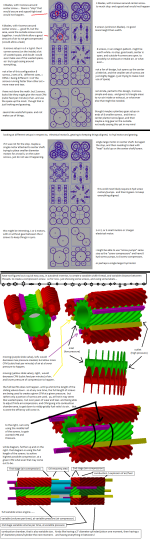
((see first attached diagram)), i am not a big fan, of 2 screw pumps or 2 screw compressors i have seen. and wondering if i should follow a 4 screw setup. were there is a central screw, and 3 orbiting screws. so the outer 3 screws for most part help keep everything lined up. ((referring to planetary gear setups)). were 3 planet gears around the sun gear. help hold everything in place. and reduces chance of gears wobbling. and binding up. as much as i am about reducing vibration, i doubt we will ever get away from it. and thinking it might be better to reduce chance of some screw wobbling along the length in the center. and causing all sorts of problems. i also have to deal with the "length" issue of the SSTT. while i might want a nice sturdy frame work that never twists, bends, warps, etc... my guess i am going to have to take a certain amount into account. and this twisting/bending/warping of the frame is going to feed right into the screws causing binding problems during operation...

hhmmsss... still need to get my mind wrapped around a screw compressor. or rather i should say, the threads.

from inlet side, the thread is thick, and distance from next thread is large. on the outlet side, thread is thin, and distance to next thread is small. i would almost need a program script. that calculates, thickness of thread and length between thread. and reduce each of the 2 numbers, down the length of the screw. making sure the screw that is parallel, does not "cross thread" , or rather i should say, stays same thickness of thread and distance between thread, but just in opposite rotation.

i guess it really does not matter screw to screw, as long as i keep counter clock wise / clock wise rotation of threads. and i could use simply "gear" approach for teeth errr threads. and just make the teeth interlock for a seal. i would just need the script to, how do i say, reduce thread pattern slightly as the thread goes down the length.

if i do the valving, i could run/use a much longer screws. that have a greater difference between intake volume, and output volume (errr compression). the entire dynamics of air to fuel ratio. would more be put on the computer chip. that controlled valving, and timing of everything. ack.... longer screws = more expansion of the metals. that could possibly cause end bearing issues.

===========
so how do i make the valves for the screw compressors.... i am going to need a good seal. so do i go with a pipe, with a plunger in it. that i can adjust with hyd fluid. or do i go with a electrical actuator type of setup. were there is a long threaded rod with nut on it. errr. that will not work. i need a "slide" like a sliding glass door, on a house. and the sliding glass door needs to partially curve around the screw. so air can by pass around the threads. when less volume of air is wanted or less compression of air is wanted. this sliding door GGRR sliding valve will need some sort of "tracks" to ride in most likely. to keep air pressure from forcing the sliding valve away from the screw.

==========
personal note for myself:
i want thinner threads, at the inlet, and thicker threads at the outlet, on screw compressor (compression stage of air) threads. so as the pressure builds up. there is extra thickness in threads to withstand the pressure that is being built up. at same time give a slightly larger "sealing face" so compress air does not leak by and go to the less compressed area behind the given thread.

for the screw compressor threads, for the (combustion / explosion) area. the same should apply as well. as initial start of explosion, and a tad moment after the start of explosion. is were i am going to guess the strongest pressure wave will happen. and will need thick threads. to withstand that initial pressure. and then as the explosion "gets bigger". threads can get smaller.

===========

before posting, my last final thoughts. after chicken scratch out stuff in autodesk inventor...

the variable setup is going to hurt in efficiency, vs being able to make and build to a specific RPM's and HP, and Torque. kinda like HST (hydrostatic transmissions) compared to manual gear transmissions. there is an efficiency loss with variable setup. but question is how much? and how much will it impact fuel usage? right now passage ways and how the slider valves are used and positioned, has me worried the most. and creating a bunch of extra friction loss if passageways are not taken into account.

boggen elec sstt40.png
 
/ new tractor idea possibly....
  • Thread Starter
#324  
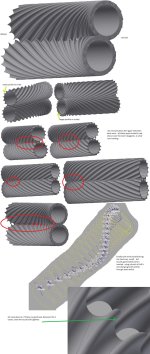
been getting my rear kicked, in trying to create "screw compressor threads".
finally came across....
Variable Pitch Helix by Equation Curve - Autodesk Discussion Groups

but still have not figured out the correct axis, and planes, and settings to get what i am wanting yet.

============
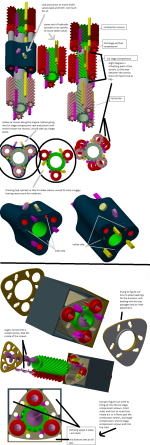
i lost, some other scribbles in a crash. in attempts to figure out if i could do the "slider valves" for the screws in a different way. and no luck there. everything i can think of would result in some triangle shape edge that is paper thin at the tip. and would be kissing that lip good bye in a heart beat. along with any sort of seal between threads.

i thought about going with holes drilled around the permeter, (in between the threads) and using some sort of secondary smaller pipe inside the screws. to align with holes. but i really would never achieve finite accuracy that way. and possibly create vacuum areas vs creating pressure. and gave that idea up.

with above said, looks like i am stuck with already drawn slider valves for the screws. though will most likely need to modify them to fit better. to better coop with compressing air, and for hyd pump as well.

============
have some extra ideas of turning screws into long planetary gear sets. but not sure if that would pan out. let alone being able to fit everything together. ((need to figure out how to make the compression screws first, to what i would like them to look like))

boggen elec sstt41.png
 
/ new tractor idea possibly....
  • Thread Starter
#325  
sorry no pictures today, just me rambling, as i try to make sense of things.

==========

*rubs chin*, i gotta question screw engine and if going in correct direction or not. searching and searching, and i have not came upon any actual physical engines, someone has made. ya super chargers and turbo charges for engines, but that is only for compressing air. as far as i can tell. and not actually creating an explosion within the threads of the screws.

i am kinda wondering, if someone some were down the line built a screw engine, for say airplanes / jets. but the "thrust" was not there. and more conventional bladed engine won out. due to able to get higher RPM's and thrust that i would assume is wanted to keep the airplane / jet up in the air. vs a low RPM that would never let the airplane/jet get off the ground. at moment conventional turbine engines for airplanes/jets i would imagine rely on some ventrui effect for extra thrust. vs a screw pump/engine really does not offer anything beyond lower RPM's possibly.

i am sure boats, to ships, to steam engines. screw blades have been used, to move the water. but there was no actual explosion / combustion of fuel within the fuel.

i wonder if there is any oil drillers. that might rely on some sort of positive displacement pump/motor. when they send these long pipes down into the ground.

====================
i am unsure about threads, and keep changing my mind back and forth.

example 1.
the screws do not actually compress. but act as positive displacement. and just pull air into the threads, and pushes the air right into a chamber. the faster the screws turn the more air compresses in the chamber. if i wanted an air compressor, for say shop tools, and had an expansion tank. were i could raise pressure up to say 200 PSI. the air compressor would turn on/off as needed to keep air pressure to wanted pressure.

example 2.
air gets sucked in. and as goes through the threads. the air gets compressed more and more. till finally reaching end of screws. (the compression happens within the screws). vs above were compression happens after the threads.


example 1, even with air leaking around the threads. the more threads i have. the greater amount of seals i would have.
example 2, every thread has to hold back X amount of pressure of air. plus any leakage.

example 1 = high RPMs to get higher pressures at a given rate
example 2 = lower RPMs, at a given constant pressure at a given rate.

if i wanted 50HP,
example 1 would have to really run the screws at a higher RPM. to get that wanted pressure.
example 2 would for most part stay same speed pending on RPM's of the combustion area.

my head starting to spin...

==================
jotting notes down before i forget them..

i was wanting to run some sort of oil within the "1st stage" of air compression. to help gain better seals. and allow a higher efficient compression of air.
this oil is going to be "dirty oil" much like "oil bathed air cleaners / filters" that have been used on various machinery. unlike a piston/cylinder engine. were it is limited area within the engine (within cylinder). and you have piston seals, and like. that help keep engine oil separated from dirty air. the 1st stage compression there really no way to "clean the air" beyond good air filters. but even then there is going to be some dust and grim that gets through.

do i want to use a common "sump" were engine oil and compression oil is all in one and the same. and flows through everything. or do i want to split the oil up. so there is a distinctive filters, and locations for different oils?

*rubs chin* i guess the hyd pump, will have hyd oil for lubrication. the little amount of grease / oil for generator head. will be limited. coolant pump (water/antifreeze), will have the water/antifreeze and what ever additives, to have its lubrication.

the 2nd stage of air compression, and combustion area. i would assume get some oil from 1st stage of compression (no direct way to remove all the oil from the compressed air).

BUT!!! compressing air. and the water that can come out of the air.... would i need to run some sort of "water absorption filter"?

figure i would just rely on some of the compressed air (directly after 1st stage compression), to push oil around. or rather i should state. pushing oil from end of 1st stage, right back to the front of 1st stage. and put some sort of valving in line. to adjust amount of oil. both GPM (gallons per minute), and amount of oil at end of the 1st stage sump area. trying to use some sort of pump. and pressure alone would run the pump in wrong direction, and/or allow a good amount of compressed air to escape right through the oil tubing and never make it through the combustion chamber.

the issue is "air locking" if i just relied on compressed air. i am guessing i am going to need to use some sort of little electrical motor. that has enough torque to counter act the compressed air pressure. and at same time help push oil from rear end to front end of the 1st stage compression area. most likely a positive displacement pump. so things can be "metered" or measured. i suppose if i did this, when engine gets shut down. this motor, could run for a few moments. to reduce built up air at end of the 1st stage compression. so if someone goes to work on something. there is less chance of compressed air suddenly turning things.

another issue at end of 1st stage compression. how do i remove extra oil from the air? been thinking of some sort of centrifuge water pump / blades / propeller / impeller or like. were air and oil hits blades. and everything is sent out and away from the center of the shaft, causing hyd oil to stay trapped to the inside casing walls. while allowing the air to flow on into the combustion area.

other issue is needing a oil tank large enough, to handle oil usage. by default this screw engine is going to use oil. or rather i state some oil will end up going right out the exhaust. and in that most likely use more oil than say a piston/cylinder engine, (i say that, because i have no idea at current moment). do i go with an oil? or do i go with some sort of other fluid, that is required for current age engines, to reduce emissions, and use that both as lubrication and sealing in the 1st stage compression. and then send that same stuff right out the exhaust?

====================
cooling... more so cooling for the "combustion" threads.... lots of explosions, lots of surface area. those threads are going to act like a reversed heat sink. and just suck up the heat.

if i go with a larger diameter shaft for the threads of combustion area. = more expansion from all the metal.
if i go with a smaller diameter shaft, = less expansion that would happen.

larger diameter might allow me to run coolant (water/antifreeze) right through the center of the shaft. the end of shaft, for combustion, one end would end up in the high pressure area (compressed air). and the other end, should be verly little explosion pressure on seal if anything at all.
well i take that back, if i go with solid single piece of metal. from first stage compression all the way through to end of combustion area. the seals to pump coolant through would have very little pressure on them. and i would only need to deal with a rotatory union / seal / coupler. that might work out nicely.

that might work out nicely, if i stay with 4 shafts (3 outer planet shafts *planetary gearing*) and then the center sun shaft. 4 lines, direct cooling from the inside. i already have "coolant lines" out the main frame of the SSTT (sideways snake train). to deal with coolant lines that run down to wheel motors or what not. i could just tap right into those lines.

question is which way do i run coolant. can i make use of the coolant fluid to act like radiant heating. and help warm up the "intake air" before it gets compressed. or do i want to mess with routing hot exhaust air through some sort of heat exchanger device to warm up intake air.

======================
getting back to start of this post. am i going in correct direction with a "rotatory screw compression engine" SSTT frame work and working out this and that is one thing, but engine as well? am i trying for to much? na... not yet, gotta figure it out, and see if it is worth while or not, or something better comes along.

=====================
alright time to see if i can figure out how to make the thread types i am wanting for the screws....

latest version i want to hit. is for a .001 thickness gear. and take say 3600 of them, and placed on a shaft. and then, slightly rotate each one. from one end offset rotation = .01 degree and as i get near the other end, each gear is offset by .4 degrees.
but i want to remove the step of making the 3600 gears .001 thick. and make a nice smooth transition. while keeping the same tooth shape. without tooth changing dimensions.

then another version with thinner teeth at the intake side, and thicker teeth at the outlet side.

the whole.... keeping same amount of teeth. and were the teeth of a gear for lack of better term. mesh together. that center line between threads as everything changes shape down length of the screw, is what has me worried. if the center line of the teeth changes of were they mesh. i could cause an imbalance were one section of threads, has a smaller and larger diameter threads, vs another part were binding would occur.

i am tempted to only go with a single main shaft. and let the planet screws (planetary gears) not have direct shafts, between each stage. if i did this. i could set the planet screws. into a different shape example cone shape shaft. and possibly go with threads, that would be much easier to physically machine. vs a variable pitch threads. well take that back. correct machine setup, would make easier work of variable pitch threads.

hhhmmss.... so many choices....

cone shape screws. may be a tad pain in the rump. to route coolant fluid through the center of the shafts. and then dealing with the "slide valves" to change CFM (cubic feet per minute) of air or combustion, along with changing pressure to make a variable HP engine.

the "slide valves" are going to automatically require a few inches on each side of 1st stage, and then 2nd stage/combustion area. more range the sliding valves are allowed to slide, the more inches on each side of each stage there will need to be. i can not shorten the sliding valves. or coil the sliding valves, without causing more air leaks around the screws.

arghs.... so tempted, to only stay with center main shaft. as one long screw / shaft / screw setup. and then not directly connect the planetary screws together. if i do not directly connect them. i could use different "gear ratios" per say, in each stage. which could give say higher compression of air at first stage, quicker compression in 2nd stage of compression, and then a different ratio for the combustion stage.

if i do not connect the planetary screws., i might be able to "offset" each stage a couple degrees. to allow room for the sliding valves. without the sliding valves bumping into each other. i was going to say cone shape screws it would not matter. but there still would most likely be an issue with cone shape screws as well and need to possibly offset each stage a couple degrees or so.

====================
diesel engine "knock"? hope i got correct term. were a diesel engine, glugs, glugs, glugs along at lower RPMs say at idle speed. and then at higher RPM's the engine knock almost completely goes away. if i am able to achieve, say 2" bore 3" inch stroke of a piston/cylinder engine one moment, and then say a 8" bore 9" stroke the next moment with the variable screw compression engine. can i keep the engine RPM's up higher, throughout the entire range of HP ranges. and reduce that "glug, glug glug" and in that possibly reduce vibration, and with that compaction possibly.

i just do not see it happening for the combustion area, as being cone shape screws. the slider valves. would bottom out into the 2nd stage compression screws. the only way i could make it possible, is either remove 2nd stage compression all together. (and really not wanting to). or split 2nd stage compression up from combustion stage. and link with a shaft, just so i would have room for slider valves. and not really liking that either. more so if i one of my goals is for diesel or like fuel. were pressure and heat is used to cause the air/fuel mixture to explode. and wanting that explosion to happen. so the explosion goes through the combustion screws. vs causing a backwards pressure wave that goes back into the 2nd stage.

hhmmsss.....

alright, straight threads (regular gear), to compression gear / threads, to straight gear (injection of fuel), to compression gear / threads (combustion threads)
well no.... hhmmss...

do i create a concentrated wave ripple maybe. na, that would just lock the screws up. and not even make them turn in favor of clock wise or counter clock wise direction.

======================
is the 2nd stage of air compression a bad idea? would i be better off letting first stage going up to a higher pressure. and opening valve, to let air rush into say a chamber. close the valve, inject fuel, as the fuel is getting carried away into the combustion screws. that way entire explosion force is directed in one direction.

would i be better off loading up the combustion chamber, with say 4 to 5 pockets of compressed air. to act as a shock absorber, and then causing the explosion that is furthest from the 1st stage of compression.

setting myself up with all the inlet/outlet valves on a cylinder/piston engine. so that i can obtain variable timing of explosions. and in that reduce overall RPMs vs a turbine engine. but feel like i am tip toeing around the subject/idea.

timed explosions.... there are going to be instances. were i revolution maybe every couple revolution. only a single explosion will happen. but during those revolutions, the screw threads are going to want to suck in air into the combustion chamber. and then act like a vacuum as the air moves through the combustion screw threads. there going to be a point were length of the combustion screw threads and just pressurized air starts to become negivite pressure and actually creates a vacuum. then say next thread coming around has an explosion happening. and i am going to assume it will take longer for that explosion to go from high pressure to a lower pressure. than just pressurized air. i doubt the sliding valve would hold up trying to do a few hundred MPH (miles per hour) switching between explosion to pressurized air. the only way i am going to get around this, is going with an explosion between every thread. so each pressure created by explosion evens out across of point between were pressure being a positive number, to point it goes to negative number. if i can even out those pressures a sliding valve would slowly move back and forth as needed.

but above brings up other problem. if i have to create an explosion between every thread (should be saying tooth of a gear) the more teeth = more explosions per 1 single revolution. if i was at 2000 RPMs and 5 teeth per screw. then if i went with piston/cylinder like inlet/outlet valves. those valves would need to move 10000 times at 2000 RPMs. OUCH! that would really kill things. a regular piston/cylinder gets away form high speed valve opening/closing due to it takes 2 revolutions for a complete cycle of (intake air, pressurizing air, exploding/combustion, exhaust). but on this screw compressor engine that is not the case.

ok what if i went with a "rotating" disc, with some holes in it. so when disc rotated X degrees the holes would line up to let air into the combustion screws. and then as disc rotated a few more degrees holes would no longer be lined up. so in that effect act like a "valve". that open/closes. that sounds better of a disc rotating around than a bunch of valves hammering the living daylights out of themselves.

but that brings up another issue. a disc is not going to handle shock wave pressure from explosions very good. so most likely will need some sort of one way check valve. perhaps..... spring->metal ball->spring. and a cylinder shape around ball. that allowed ball to close when pressure shockwave hits it from explosion. and then ball moves to other side of the cylinder to let compressed air in. the springs would be more of a way to "cushion" the metal ball. vs letting the metal ball act like a bullet and getting jammed up.

i suppose i could go with metal reeds (kinda like a mouth piece reed for a flute or like musical instrument) ya blow in, and thin metal piece bows out letting air in, and then closes back over a hole. not really liking idea of the reeds as a check valve though. have seen enough in power tools / small size air compressors. and honestly do not care much for them. though i maybe wrong.

arghs... i am still stuck with a valve or a set of valves make it check valves or like, that would be moving extremely fast opening/closing. so about only way i am going to get away from that. is to re-enforce the disc with holes in it. both sealing, tolerances, and physical structure of it.

well hhmmsss.... yep still stuck with piston/cylinder thinking. as soon as screws turn, to finish one shot of drawing air in between threads, the other set of threads coming around open up to suck more air in. to a point of a very small "pulsation" of air flowing into the combustion screws.

alright, so no valves that open/close to let air into the combustion chamber. and only using the sliding valves. to control combustion screw chamber length.

====================
alrighty then. if i stayed with last couple posts diagrams i attached to this thread. were 2nd stage compression of air happens, and directly connected is the combustion screws.

(talking diesel fuel)
i am going to guess, there will end up being a "sweet spot" some were in the 2nd stage compression. were heat/pressure gets high enough to cause diesel to begin exploding. the explosion will have compressed air behind it, (in the 2nd stage compression), and it will have compressed air in front of it (in the combustion screws. as everything turns, the 2nd stage compression, is going to try and push the explosion out of the 2nd stage compression, and into the combustion threads. the combustion threads, will have a vacuum effect to pull the explosion into it. once full explosion is in side the combustion threads. it will all be in the expansion of the explosion.

other words. the 2nd stage compression area. were the threads interlock. to point threads interlock in the combustion screws. the "volume" say cubic inches on the combustion area will need to be larger at point of explosion, than cubic inches within side the 2nd stage. the more i can move point of were explosion happens into the combustion threads. they more efficient everything would be.

so how do more insure explosion will begin to occur nearer to the combustion screws or within the combustion screws????

do i simply move injection point of fuel into the beginning of combustion screws. and make sure the air pressure will be more than high enough so even after the compressed air enters the combustion screws and begins going down in pressure, there is still enough pressure and heat to cause diesel to ignite and explode.

it would require more HP to compress air up to a higher pressure. and in that a less efficient engine overall. due to wasting power on getting a higher air pressure. but.... i would think, it would not be a huge loss. same pressure that is built up, would also help turn the combustion screws. and they only major loss will come from. is friction loss. of high pressure air moving. through everything.

though higher pressure might be a good thing, and might help "hold" the explosion pressure, from leaking back into the compression area. well... hhmmmsss. higher pressure, larger more powerful explosion, to an extent of how much fuel is injected.

=================
alright, so i am going to need to set the 2nd stage compression screws and the combustion screws. at a certain degree of rotation off from each other. so when the explosion begins, and explosion ends. the pressure of the explosion, is not against the 2 threads, are are currently sucking in compressed air. the more threads errr (teeth like a gear). the more air locks and back pressure i could have, to keep the explosion pressure leakage from getting back between 1st stage and 2nd stage of air compression.

i have been debating about it, and been trying to push the thoughts to a later time. but not happening. been thinking of using another sliding valve. to act like an injector. to locate / move were fuel is injected. possibly adding some sort of pressure sensor

also been thinking about making the sliding valves more like C shape that wrap around the smaller size screws vs using ( partial C shape slider valves. and in that. having sleeves or rather sliding valves. that could be easily replaced. to say "re new" the engine. vs relining a cylinder of a piston/cylinder engine.

================
================
================
================
recap....
--slider valves in ( and/or C shape.
--no cone shape threads, and in that cylinder shaped threads of the screws. (not sure about shaft though, guessing though cylinder shape as well)
--no inlet/outlet valves for compressed air. this includes no disc valve.
--electrical motor controlled oil pump. to move oil from one side to other side of 1st stage compression. (acts more like a regulator)
--offset degree of rotation between inlet of 2nd stage, and were "sweet spot" for fuel injection happens and in that combustion/explosion happens. (more deals with helix curve and how threads/teeth are spaced.)


depends / possibly
--thread design and tooth design per say for the screws. (un-decided)
--offset degree of rotation between 1st stage air compression and (2nd stage air compression and combustion stage)
--coolant (water/antifreeze) going through center of screws for cooling, (depends on material out there and cost of it), but most likely coolant through center of the screw shafts.
--possibly adjustable location for were fuel is injected.

unsure
--unsure how to remove more oil between 1st stage and 2nd stage air compression. to keep amount of oil used down to min amount.
--unsure if oil will be used vs some EPA or what not fluid or gas to deal with emission control.

hhmmsss... starting to get brain fried. time to post, and let everything sink in of the good's, bad's, and the ugly's.
 
/ new tractor idea possibly....
  • Thread Starter
#326  
finally, something hit me for sliding valves... and trying for less amount explosions between every teeth/thread.

timing valves of a piston/cylinders and running things off of some sort of cam. (circle shape with a triangle per say on one side of it).

a shaft that runs parallel to the screws. that has a one way clutch built in. so a electrical motor. could cause this shaft to momentary slow down, or speed up. so as an explsoin happens between one set of teeth/threads. it spins slightly to to keep explosion within the screws, while the next teeth/threads. it spins slightly more to allow just compressed air to by pass the screws so a vacuum would not occur inside the screws.

i suppose this shaft, would be a screw in itself. but the center of this screw (the shaft itself. would have another grove in it. arghs... hhmmsss.... never mind. i would end up having thread of the screws, that were never attached to a shaft.

but.... that might work for a coolant pump. inserting an "auger" for lack of better term. right into one of the larger central screws. (assumption coolant (water/antifreeze mix) sent through center of the screws for cooling) the auger would act like a "pump" be instead of moving grain up to a wagon, or bin or what not. it would just be moving water. put a some sort of clutch to stop auger or let auger to spin at same speed of the screw that the auger is in. or perhaps simply let auger free spin. i suppose some sort of gearing might be wanted, pending on GPM and pressure developed. but i would think, a person could figure out the math, to roughly size the auger. for desired GPM and pressure developed. and if more is needed. then another pump could be added. example on sections of the SSTT that does not have the engine. and electrical wheel motors or other, is just not obtaining the needed GPM of coolant and at a wanted temperature range.

i guess size for size, i would be looking at a regular wood drill bit of 1/2" to 3" in size. vs grain auger sizes of 4" to 12" in size. for the cooling pump action.

that actually might work out in good doings. and give the screws more structural support in the center, at same time, act like a heat sink. to help draw heat from the screws. more so the combustion screws. and during initial start up and everything is cold. it might help push extra heat into everything. during them first few minutes.

the one way clutch, would be there, if say the screws the material they are made out of, expands just enough, to catch the cooling auger. and not allow the cooling auger/pump to freely spin.

errr getting a few different things here...
1. were the cooling pump / auger. fits tight enough. that it does not freely spin.
2. were the cooling pump/ auger. fits loose enough, that it can freely spin.

the fluid dynamics... hhmmssss... good amount of difference. in both cases. to point not sure what may be best, or what would work out better. also issue of pure friction, of the coolant fluid and creating more heat, than what is being removed from the screws.

coolant, i really do not need a huge amount of pressure, compared to compressing air, and then the combustion stage. but rather. i need GPM (gallons per minute) the faster the coolant flows through the screws and through radiator/s. the more cooling per say could happen. and more even temperature across everything would happen.

the amount of pressure needed, would come from simply needing to over come, the friction loss, in all the hoses, pipes, radiators, etc... that shouldn't be to bad of a problem.

question would be though, would i be better off with like an auger like screw. or going with more of a box fan, style fan/pump blades. i guess auger like screw would be best choice. *forgets technically term for water pumps with a single screw* but they are out there.

hhmmsss startup of engine, i would imagine, i would want the coolant auger/pump to be able to disengage. so less start up power from starter/generator would be needed. it may only be a few PSI, of extra pressure to overcome, but that may make a difference between, in winter and more so cold mornings, and starting up, vs having to crank, and crank. if not disengage, then need to make sure "valves" and like are open during start up. so least amount of friction loss of fluid flowing through all the pipes / hoses happens.

alright need to post and really get busy on autodesk.

=================
not much progress made in autodesk inventor for the 1st stage compression area.

boggen elec sstt42.png
 
/ new tractor idea possibly....
  • Thread Starter
#327  
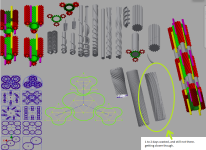
finally! figured out a way to get the compression screws the way i want them!! WOOT! YA!

from just dragging things about, it looks like everything connects, rolls, and hopefully seals decently for what i am wanting.

i do not need huge amounts of volume of air per minute at very low pressure, and i do not need extremely high pressures at very little air volume, but a mix some place in between.

boggen elec sstt44.jpg
 
/ new tractor idea possibly....
  • Thread Starter
#328  
*rubs chin* more and more i look at the screw compressor idea of an engine. the more i want to step away from it, and go with a traditional turbine engines that have actual blades, vs vanes / threads of a screw compressor. but what gets me is the RPM's and small over all diameter of the fan blades. the only way i could compensate, for lower RPM's and diameter. is to place more fan blades, to increase overall length that the blades take up. the length really not the problem, but the "intake air" and "exhaust" is the problem, and more to the point using drive shafts to connect up to a generator and hyd pump.

with a turbine engine, and all the crud that gets kicked up while in the field. not sure how i could run air intake, and hook up to air filters on another section of the SSTT. and in that routing air around the turbine engine fans and turbine itself, or routing around generator and hyd pump.

if i stay with screw compressor engine setup. i can create passage ways via using something like planetary gear setup, with sun gear, planetary gears, and ring gear. and work air passages between the planet gears ((gears in this case = screw compressor vanes)) if i tried same thing for fan blades. i would most likely get in trouble at lower RPM's and never be able to create enough pressure to ignite diesel fuel via pressure and heat.

i guess only difference going between fan blades and screw compressor (vanes), is i am creating a more physical barrier, to help compress air. and not allow the air to backfeed back out the intake in a sense. i guess that starting to make sense. screw compressor vanes vs turbine engine fan blades. would be like changing blade style for say a centrifuge pump. instead of high volume per time at low pressure, i would be changing for a medium volume per time for medium pressure.

*DUH* moment, maybe i can stay with a more traditional turbine engine setup. its just that the blades, will be sucking in the center, and blowing at the tips. arghs, still be at the mercy of lower RPM's, and not being able to create a higher compressed air pressure.

============
alright, enough doubt, staying with screw compressors.

the next issue, is i need to look at 3D model better, to see if circumference of "planetary gears" (outer compression screws), needs to be adjusted to the "arc length", between the planetary gears (outer compression screws) on the central sun gear (middle compression screw). there maybe a high "friction loss" of air traveling from one screw to next, as it gets compressed, resulting in less efficient setup.

i wonder if the vanes (teeth of a gear), can be shaped a tad better, to cause a "pressure barrier" errr i guess that is bad term, a extremely turbulent zone, right were vanes (teeth of gears), meet, that might be used as an advantage to reduce air leakage at the vanes touching from one screw to the next.

also is there a way to shape vanes so that, as the vanes go around, and almost touch the casing. can the vanes be shaped, to create an air foil or barrier of air right at the edges/tip of the vanes. so there is less leakage of air.

amount of physical full 360 rotations a single vane makes, to amount of air compression, is going to effect things i am sure. more full 360 turns = less compression per rotation. and perhaps less overall leakage between vanes. but i would imagine. there is a point of to many turns and efficiency curve of amount of air leakage, would almost flat line at some point. and same would go for min amount of turns. i guess turns is bad term, and "twists" might be better statement. of how many twists the vanes make.

the longer the overall compression screws are, the more "twists" i could make, and less compression would happen per full 360 degrees rotation. which would most likely result in a higher efficiency setup. (within reason).

were 2 compressions screw vanes mesh up (teeth of gear mesh up), one side there will be almost a "suction side (negative pressure)" and the other side will be a "positive pressure side", i will need to keep this in mind, when i place the compression screws together, of what vane overlaps the other vane on the other screw compressor. so that vanes might actually "touch" like gears, and create a better "seal" to keep air from leaking by.

never really tried to figure out were to inject "oil" into the screw compressors, along with how much. if i apply "centrifuge" style pumps. to the screw compression vanes. oil would end up at the very tip of the vanes. were the seal would end up being wanted. the only problem i have with injecting oil, is trying to twist vanes so tight, that a given amount of hyd oil could get in, and (then not be able to compress like air), and hyd oil would start to seize the screws up from rotating. and start causing a bunch of extra friction heat, as oil leaked passed the vane tips. and in that, the lubrication oil, sealing oil, cooling oil (what ever you want to call it), alone may determine how much air can be compressed down to.

alright, is going with planetary gear setup a good idea?, vs only going with 2 compression screws..... to state difference, 3 planetary compression screws and most likely larger diameter sun compression screw. vs 2 compression screws. it is not the "gear ratio" that has me concerned but rather how much air can be compressed (volume per time) and to what pressure
--planetary = higher air leakage between vanes and casing, ((more overall circumference of case)) vs 2 compression screws.
--planetary = more seals between vanes meshing together, and in that most likely more air leakage at meshing points.
--planetary = could create a physical longer path or shorter path, vs over all length of screws. other words planetary setup changes amount of twists, and amount of compression over, over all length of screws.

so what else am i missing, and need to take into account for shaping and building the compression screws????

====================
i am missing....

if i go with planetary gear like setup for the screw compressors. both planets and the sun, will need to be exactly the same except, the helix curve will need to go in opposite direction for the sun gear (compression screw), ya a little slow on that one. with that stated it gives me fewer choices to pick from...

and to limit things even further.... in order to keep rotation going in correct direction. odd amount of screws = NO NO. or less there are 2 screws that do not touch / mesh together.


=================
sent a few emails off to some companies, in attempt to see if i can find some more information of engines already out there. see what happens.
 
/ new tractor idea possibly....
  • Thread Starter
#329  
created 2 threads on 2 other forums....in attempt to find an engine that might work. to point of will work.
trying to find a engine that will fit some dimensions - Hot Rod Forum : Hotrodders Bulletin Board
trying to find an engine to fit some dimensions.

===========

below 2 pictures are from....
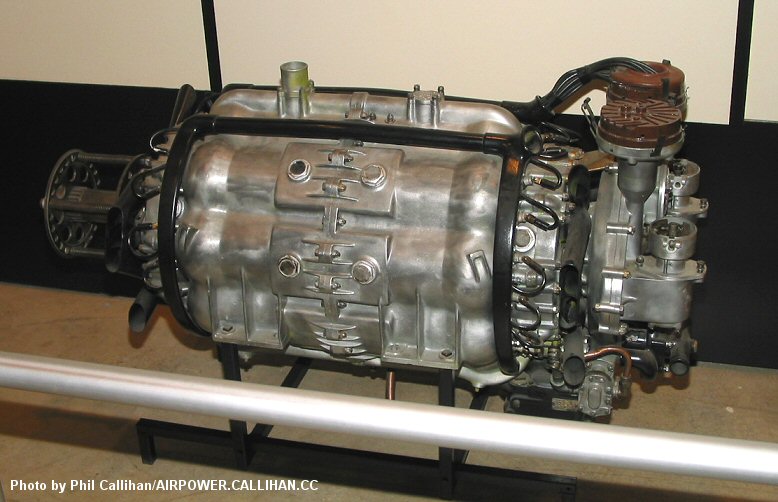
Axial Internal-Combustion Engines.
Almen%20A-4%201.jpg

04USAFM-AlmenA4Barrelengine.jpg

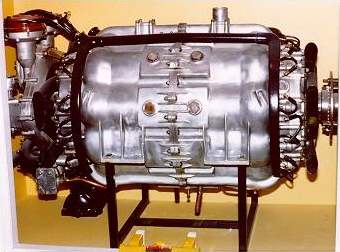
Output 425 HP at 2000rpm
Weight 749 lb
Diameter 20in

made back in 1921, it would be nice to find an "updated" version of this engine.

==========
dyna cam engine, much like above...
The Revolver Cam Engine (Previously known as the Dynacam engine).wmv - YouTube

but not able to find anything, that i could just go out and buy, or just call and ask for specs or like....

============
small model of above engines...
4 Cylinder Gas Powered Engine - From Gyroscope.com

==============
Turbocombustion Green-Engine Technology Assembly - YouTube
Turbocombustion Green-Engine Technology See How It Works - YouTube
might be something, but internet searching has not revealed anything... and webpage noted in video, is coming up 404 not found....

==============
mazda granted more towards air craft but....
http://www.rotaryforum.com/forum/showthread.php?t=34305

==============
need to look more at this, seems there is better categories of patents, perhaps it will let me track some engine design types down.
F01B 3 - Reciprocating-piston machines or engines with cylinder axes coaxial with, or parallel or inclined to, main shaft axis - Patents Sitemap

==========
different notes....
for the screw compressor engine... (something different)
paradoxical gear set 1,2,3 teeth - YouTube
 

Attachments

  • 04USAFM-AlmenA4Barrelengine.jpg
    04USAFM-AlmenA4Barrelengine.jpg
    84.7 KB · Views: 139
/ new tractor idea possibly....
  • Thread Starter
#330  
have been sending emails back and forth with rotaryengine.com | Rotary Engine Specialists | Mazda Performance | RX7 Specialties for last 3 to 4 days now. (most likely a nightmare customer for them, due to my own lack of knowledge, of what is needed/wanted). there website, gives impression of customized mazda engine builds. and website notation of experience of running generator setup with various engines, emails have been being returned in a timely maner. at my view, company has qualities of what I am looking for.

==========
2 barrel engine actual working demo running
Barrel Engine short - YouTube

==========
another website / video on "duke engines"
Duke Engines – 5 Cylinder 4 Stroke 3 Injector Valveless Axial Engine

i keep looking at it, and wanting the engine. vs barrel engines (seen in previous post). it is more about the "swash plate" or "wobble plate" how ever you want to define it. and staying with more of a "linkage arms" between piston, and connection point to the "swash plate" and being able to work out the load forces so more force is placed in actually turning the shaft. vs friction and rollers trying to turn a swash plate. not to sure about gas (showing spark plug) in all the videos that i remember seeing, and assuming gas vs diesel. but....i did email company a while back, and did get a quick response, noting there trying to get production stuff figured out for mass production. ((been to long to remember the email))

===========
i am still interested in the (to many terms, do not remember them all), opposed cylinder opposed piston engine setups. and for what i am looking at as far as space 20" width x 20" height. and if possible smaller measurements.... i am tempted to see what it would take to run a few barrel engines back to back. and put into the same engine block per say. to get opposed cylinder and opposed piston combo going, so i can get the "drive shaft" going in correct direction.

============
on other hand....
trying to find a engine that will fit some dimensions - Hot Rod Forum : Hotrodders Bulletin Board
trying to find an engine to fit some dimensions.

both of above threads. with mention of more of a common V shape piston/cylinder chevy small block engine... and more likely use of off the shelf parts. and redo connection points for air filter, exhaust, etc...

============
then the wankle engine, from mazda.

another wankle engine
LiquidPiston unveils 40-bhp X2 rotary engine with 75 percent thermal efficiency

============
completely different style than what i have seen to date. not so sure about getting things hooked up to the rotational part,
The Doyle Rotary Engine

============
axial vector engine, not sure exactly what is going on, not sure if dyna-cam won out. or if emireatescapital put everything under something different or what.
http://www.emiratescapital.net/pdf/AVEC.pdf
web.archive website i guess took snape shoot of website before it was given up?
Axial Vector Engine Corporation - Gallery

I have tried emails, but there all coming back as "failed delievery"

=============
barrel / swash plate engine. sent email off a little bit ago. hopefully will get a response from them.
FairDiesel Limited
FairDiesel Limited

=============
a search for "barrel engine" brings back a good list of engines and notations it looks like. have not taken time to flip through it all.
Browse Flight's archive of Historic Aviation

=============
not much info on this engine, but 150 or so HP, and fits in wanted 20x20 dimensions, i gotta tag it.
Suter Aircraft Technology AG - a smart and brilliant innovation

=============
chart of overall dimensions for cylinder/piston engines, seems folks have copied this chart around a few different places...
The Official H-Body Internet Community • View topic - Chevy Engine Dimensions

blue prints for a wide variety of cars/trucks
SMCars

possibly other forum, i might try posting to, to see what info i can get for engines.
Forum Index - ChevyTalk --The Social Network for Chevy Fans

fair discussion on various engine types.
THIS JUST IN. Hold on to your hats! But... when will it happen?

==========
speeder reducer (grear ratio thing), and hydraulic motor. maybe even a wheel hub motor possibly.
there was a better video for gear ratio. for much higher ratio that normally achieved by planetary gear setups in same amount of space.
the hydraulic motor, type thing more of a note: for myself, when i go back to detailing out wheel motors.
Interesting Speed Reducer - YouTube
hydroengine - YouTube
Hägglunds Drives Powering the revolution - YouTube

=============
needing to take a brake from engines...

the more i search through engine types, the more i am wanting to apply for a patent for the SSTT tractor. beyond relying on the statement of requiring free to use for yourself, but not make money from the idea, without written permission by me. ((see previous post some place in this thread for better notation)). basic idea towards farming would be, is just a simple "tool bar" with an engine, fuel tank, and wires and hydraulic lines, coolant lines, etc... that someone could then build off of errr i should say attach to. to do what ever. if it was marketed towards transportation, it would be a self propelled trailer in idea. or rather toolbar/frame work to attach wheels and flat bed or box like frame on it. its not really a vehicle were someone actually rides in it or on it. i suppose someone could, by attaching a cab to it some place. were said cab, was bolted/pin down. to a point were it would take considerable amount of time to remove cab. it is really not setup to be a single function unit, like a self propelled (enter something), that only does one special thing.

==============
alright time to post.
 
/ new tractor idea possibly....
  • Thread Starter
#331  
side tracking for a moment....

magnetic gearing vs gears or hydrualic fluid
Magnetic Couplings & Gearing - MGT HDV.mpg - YouTube

another magnetic gearing from different manufacture.
MAGNOMATICS' MAGNETIC GEAR AND PDD® MOTOR/GENERATOR - YouTube

it makes sense, just how well efficiency actually is.... and how much weight / amount of magnets to bring up that efficiency.

not sure what video above goes with below website, website gives a good amount of extra live rear world examples of what they have tried.
MGT - Magnetic Gearing & Turbine Corp: World Leader in Magnetic Gearing Technology

presentation slide show type of pdf file.
http://www.terramagnetica.com/papers/hatch-permanent-magnet-gears.pdf

===============
===============
getting back on track...

FairDiesel Limited received email back. that there current engine setup, should be possible to fit with what i want. but, there not in production point of yet. so what do i do? it would be nice to approach the bigger tractor manufactures and say hey, i need help, this is what i need. and yada yada yada.... but not sure how to approach and deal with problem at hand. at moment it is kinda like what comes first (chicken or the egg). for engine folks, due they just build something, and then let everyone build around the engine, or due build the item what ever it maybe, and find an engine that meets requirements. or rather hopefully get a complete mix of working back and forth.

Engine Technology, Vehicle, Marine, Light Aircraft, Multi Fuel
to many posts to look back when i emailed them. to find out specs. and they noted they were getting things ready in production or something...and really did not get any sort of information. and then checking out there website yesterday, they have updated there website with dimensions, graphs, and then i see below statement on there website....
Duke Engines is looking for international co development and licensing partners for its range of unique axial engines.
will wait before emailing them again. till i take some more time trying to search down other engines out there already.

not sure what this is about, there was mention of turning one into an engine.
Cylindrical Energy Module (from Internet Glossary of Pumps)

possible alternative to dukeengines or fairdiesel, and first mention that i can remember of agriculture in application notations.
S-RAM Dynamics
================
================
steam engine, but a wide amount of videos showing a rotatory style engine.
Green Steam Engine Home Page

================
found a "web ring" for mazda rotatory engines. giving links to various companies.
Mazda Rotary
on one of the sites of the web ring, came across, Craig's Rotary Page: John Deere Rotary Engines "John Deere" building a wankle / rotatory engine. back in the 1990's it is not much, but something.

that data of webring, and websites i saw, go back to 2004 to 2007. and did not see much of an update across websites. guessing someone went around trying to find businesses or like and created the webring.

http://www.rotarytop150.com/ another source... for companies / folks dealing with wankle / rotary engines.

mazdarotaryclub.com forum seems to have a good amount of posts.

Aircraft Rotary Engine News Letter good amount of pictures and graphs, and various engines. granted no physical dimensions, but pictures help protray a engine type that should fit the SSTT (sideways snake train tractor)

finally found dimensions and descent explanation of them dimensions of a rotatory engine.
How much does an RX8 Engine Weigh? - RX8Club.com
21 inches long x 17 inches high 12 inches wide.
================
================

areas of other forums, (when going back to there older threads) covering a wider amount of engine types and what ever may be the latest greatest thing out there.
Firewall Forward / Props / Fuel system
Propulsion - Boat Design Forums
===============
===============

with limitations of what is currently out there (engines producing X amount of HP), and there length, width, height dimensions. it is looking more like i maybe. going with more of a "multi engine" setup. every 15 footer section. would have its own engine, generator, hyd pump, fuel tank, radiators, etc.... vs staying with a single larger engine that drives 3 to 4 sections.

it has its con's and the pro's... from 3 to 4 engines vs 1 bigger engine...
more engines
--more things that could go wrong and most likely fail.
--backup, if one engine goes down, another engine to pickup its area,
--ability to have say 15 to 20 foot section that has its own power on smaller fields. and then being able to hook a few of them up for larger fields.
--always seems a single larger engine is more fuel efficient than a bunch of smaller engines. when speaking pure amount of fuel consumed vs HP created.
--i suppose a farmer could mix and match to some degree between "powered sections" vs non powered sections. and mix and match for implement that will be in the field.
--multiple engines setup, would allow one smaller engine to run full on right at its BEP (best efficient point), and then as needed turn on another engine, to gain what ever extra HP was needed for task at hand.
--multiple smaller engines, would not require a "engine swap" from 600HP engine to say 150HP engine. you would simple mix and match "powered sections" with non powered sections.
--might provoke a "mass production" and in that saving more on cost of parts and like. due to multi engines, etc... being duplicated over and over again on each section.
--major con, most likely is additional weight.
--major con, maintenance nightmare, each section would need to be serviced individually. PLUS SIDE, if one engine / section goes down for what ever reason, and if there are enough powered engines connected for what ever ya doing in field. you could keep on going. if you were preping a week or a couple days before hand trying to get ready for fields to be just right. and find a problem, you could pull that section out, and still have other sections to at least get ya going in the field, until repair tech gets out there or part arrives or the like.
--non power section, might have extra fuel tank/s, or perhaps gutted out, to allow for some sort of "grain wagon" were grain comes out of middle bottom of the frame. pulling grain around does not require a whole lot of HP, compared to say a tiller (tines) / rotatory cultivator. or a bottom plow.

major issue, i would need to create a better "quick connect" per say between sections. vs relying on bolts/nuts or even welding stuff directly into place. so a single person could control multi sections as one large setup. and/or each section was independent of each other, and operated more like controlled traffic in the field. were drone tractor follows a lead tractor.

i am still gun ho, of trying to maximize 60 feet. to deal with road laws. and dealing with the SSTT needing to flex within the field to deal with slopes/hills. and dealing with wet spots, and wanting multi sections connected together to possibly keep more wheels on dryer dirt to pull/push the SSTT through. along with multi sections connected together to get down the road.

===============
recap....
engine threads i have created
trying to find a engine that will fit some dimensions - Hot Rod Forum : Hotrodders Bulletin Board
trying to find an engine to fit some dimensions.
looking for an eninge that will fit some dimensions - Boat Design Forums
 
/ new tractor idea possibly....
  • Thread Starter
#332  
getting side tracked by below couple threads.... go with the flow....

What would you say to John Deere's tractor engineers?
Viewing a thread - What would you say to John Deere's tractor engineers?

What to Say to Deere's Tractor Engineers - Thank you!
Viewing a thread - What to Say to Deere's Tractor Engineers - Thank you!

==============
in order to try and wrap up anything goes for engine search. and begin focusing on narrowing down the list.... going to finish out the few other engines i found...

it is a barrel / swash plate / wobble plate per say. but the pistons are rectangle shape. vs cylinder shape. it is a possibility. though i gotta question 4 seals that would be needed around each piston, and how long before wear and tear on the pistons deteriorates enough to really cause performance to go down quickly. and wondering what might happen to the pistons, if the engine "stalls" due to trying to overcome to much torque. along with if the pistons can withstand the constant beating / vibration from the 4 stages, of air intake, compression, explosion, exhaust, over a long term doings as in years. i would imagine the pistons could be made decently enough to last a handful of years, but say 7 years even 10 years? i honestly don't know, to much math, and material properties, and ways something could be manufactured / made. and most of which would most likely come from a specialized select group of folks.
Reg Technologies Inc.

to be honest not sure what to make of this engine. i see a lot of parts, that have "curved" edges that someone would follow or slide on, a wobble/swash plate kinda thing. but not sure how it works. the need for a simple animated diagram would help understand how the engine operates.
NEVIS Engine Company - Breakthrough Engine Nearly Doubling Fuel Effeciency

to be honest i originally passed up on this engine type/style many times. but seeing below page, help push things through. the issue i do have with this engine is the "casing" halves. and trying to hold back the pressure from the explosion, and not getting "leaks" and trying to micro manage how much torque each and every bolt got for the 2 casing halves. to make sure a perfect seal happen. and then making sure that all the bolts stayed at same torque (not loosening or tightening) over a longer period of time. other wise i do like the engine, variable air intake / compression, the external compression chamber, and then controled point of were explosion happen all looks good. but that "small wheel with grove cut in it, to let piston spin around". that wheel also has me, and pressure causing that wheel to become "warped" and to vibrate. ya i am sure someone could make it X thick, to beef up this grooved wheel. but don't know. past my knowledge.
Roundengine: How it Works

it would seem to be a wankle engine manufacture alternative to the mazda wankle engine. though do not quote me on that.
Welcome to FREEDOM MOTORS

from reading, it looks like another barrel / swash plate / wobble plate engine. but there is only a single huge piston in the center. vs multi pistons in more of a barrel engine. if i got that right, not sure about it. i guess it might work kinda like a "double acting hydrualic cylinder" it might have promise. if everything was worked out. but that large mass of metal going back and forth. it just sounds like a "vibration machine" waiting to happen. granted vibration most likely be reduced a good amount. but not sure if the overall mass could ever be compensated for.
Reinventing the engine; Redmond inventor's efficient design could have wide-ranging effects | | The Bulletin

not to sure about idea, turning piston into a cork screw pipe. it might have promise, but information is lacking, to make it useable.
Green Car Congress: Results Of MUSIC Engine In-Vehicle Demonstration To Be Presented 17 December

see comments more of "cat and mouse engine" the engine makes sense. but for what ever reason, i want to back away from the engine. it looks like it is going into production, or is in production. but not sure at this point. the whole piston thing, and keeping the pistons from wanting to twist back and forth, between the 4 stages... and long term life span of the engine. perhaps it is just me. and i simply do not understand.
http://peswiki.com/index.php/Directory:Massive_Yet_Tiny_(MYT)_Engine

there was other engine, that got lost some place along the line for a link....
--one of them had a "free piston" that bounced back and forth in a tube. the middle section of piston was magnets, and middle portion of the cylinders was coils of wires. basically it was a direct piston movement generator i guess you could call it. though i frankly dismissed the idea. due to creating a "vibration" machine. and possibility of something going wrong, and a piston slamming into either end of cylinder housing, and piston turning into a bullet shooting out of the engine. good concept, wish i had the link... but then again vibration machine might not be. if compression was happening to kinda act like an air bag cushion.
--really wish i had the link now...

==================
==================
found most engines at.... (directly listing of various new tech engines out there in development)
http://peswiki.com/energy/Directory:Engines

==================
==================
if i had to choose engine right here today, it would most likely be a mazda wankle engine. and most likely entire engine dropped into the SSTT. with exception of muffler, air intake filters, and general plumbing of coolant (antifreeze/water mix), and engine oil locations moved about some to make it more feasible to actually work on within the SSTT, and to better fit the overall SSTT frame work. i would assume any problems a mazda wankle engine has now, would carry right on over. maybe fixing one thing, but another thing showing its ugly rear. i am guessing most of any additional problems would creep up in the electronic air injection system, and fuel injection system. and trying to tie it into everything else.

looking at a SBC (small block chevy) 350. the dimensions just to tall. at moment it is on the bottom of the list. and most likely would prefer to put cash towards some new tech engine that does not have a track record, vs trying to deal with a generic piston/cylinder engine like a SBC 350, and the height they would need, and problems that would result of that height.

below three....
Engine Technology, Vehicle, Marine, Light Aircraft, Multi Fuel
FairDiesel Limited
S-RAM Dynamics
the way SSTT is currently setup. has plenty of length, but small width and height for an engine. the current dukeengines setup might be best choice. playing around in autodesk inventor, and trying to find physical room to route, exhaust pipes, and air intake pipe work. and simply not enough room to route them past the engine. ya it could be done. but it looking pretty ugly and so cramped. that heat build up, would most likely cause a bunch of other problems. the current dukeengine, with exhaust / air intake only on one side. and to the point same side. might be a better overall option for SSTT. and being able to use up total 20x20 for the pistons/cylinders and not have to make them smaller to allow for air intake / exhaust.

The Doyle Rotary Engine
engine size would fit the SSTT. but the entire outer mass rotating has me concerned. way to much garbage (leaves, steams, etc...) that could fly up between this outer drum of pistons per say. and get stuck between it and the frame work, and start a fire. if the outer drum of pistons was held stationary. and only the center rotated. this engine could be a good possibility for the SSTT.

Cylindrical Energy Module (from Internet Glossary of Pumps)
might be something, but at moment, i am having second thoughts over it, vs other engines noted above.

below 2....
Reg Technologies Inc.
NEVIS Engine Company - Breakthrough Engine Nearly Doubling Fuel Effeciency
possibility, for the SSTT.

Reg Technologies Inc.
no idea about this engine. looks like a lot of work to route exhaust and air intake around the engine. if i am guessing what is inlet/outlet ports on the engine.

============
head is starting to spin... information overload, and trying to visualize things quickly in my head vs actually taking time in autodesk inventor to see things. time to post and let things soak for a bit to maybe narrow things down a bit more. granted at this point i doubt i will be able to make final selection and needing folks more up to par with various engines speak up. and until that point, only narrowing down approx engine HP, and approx dimensions, approx CFM (cubic feet per minute) of air intake and exhaust to deal with air filters, and exhaust pipe sizing.

at least now i know engine size can be meet without any major changes to the frame work for the SSTT (sideways snake train tractor) though finding locations to check oil, fill oil tanks, or coolant tank or like, still needs to be dealt with.

alright time to make spread sheet it would seem of specs.
 
/ new tractor idea possibly.... #333  
Ryan The Mazda or Wankle engine I don't if over come . But running in Arizona or N. Mexico dust the seals went quickly. scouring the cylinders.

There is a light air cooled engine Farmers use to pump water. and seem to run all summer with good results. low fuel consumption also.
Duetz engine made in Europe.
If the equipment is hard to work on or takes special tool or methods to repair sure would be hard to sell to a farmer.

Keep thinking and writing and a lot of the experimental engines never leave the drawing room.
ken
 
/ new tractor idea possibly.... #334  
Hard to beat the durability and fuel consumption of a diesel coupled to electric generator... Or hydro pump.
 
/ new tractor idea possibly....
  • Thread Starter
#335  
still not happy about an engine....and the search began again....

came across...."free piston linear generator engine" say that 10 times fast....
and begin typing up ramblings. and then soon realized it was approaching 15 to 20 printed pages in length. as i attempted to figure out what i was looking for in a free piston linear generator engine.

===========
i am seeing a lot more Pro's than any engine so far....
--ability to have say 15:1 air compression in a .5 cubic inch of air space, or have 15:1 air compression in a 3 cubic inch of air space. when piston reaches TDC (top dead center)
--ability to have different stroke lengths, from either say 2" to 20" completely variable.
--ability to possible deal with engine knock, or even cause engine knock on purpose, and controlling everything via the linear generator.
--ability to remove some of the odd ball stuff of converting linear motion of a piston, to rotation motion. and then into electrical. it is straight linear motion of piston to straight electrical generation. no extra bearings, or anything.
--ability to have "magnetic" like bearings. to keep the piston for most part completely self centered within the cylinder. possibly reducing complete contact of piston and piston seals touching the cylinder walls.
--ability to "spin" the piston so what vibrations that do enter the piston. might be able to wobble itself out or possibly be able to better deflect a vibration coming in from air/fuel combustion and/or compression due the centrifugal forces of the spinning piston.
--ability to use multi fuel types, if not mixing different fuel types on demand and at different ratios in the some combustion cycle or different cycles of combustion.

===========
some of the tougher things for me, that took a while to think about and jump the gap between current age engines to these free piston linear generator engines.
--has been how to keep these pistons from turning into a bullet and shooting out the end of the cylinders.
--dealing with "vibrations" and theoretically as one website put it. and completely canceling out the vibrations.
--getting over the idea... that i was just dealing with an engine, and then a generator slapped to the drive shaft and treating each one separately. but rather needing to come to realization. that both combustion area and linear generator was a single unit. and the linear generator was a "real time sensor" and the linear generator could easily become a electrical actuator as well if not perhaps generating power in one spot and becoming an electrical actuator in another spot. ya.... it gets a little complicated. once ya dive into the electronics part of it.
--how to wrap wires around the piston for the linear generator, and reduce vibrations in 2 areas. one down the length of the piston. but also the spinning of the piston.

===========
do i go with a....
==1 cylinder, 1 piston, 1 combustion area
==1 cylinder, 2 pistons, 1 combustion area
==1 cylinder, 2 pistons, 2 combustion areas
==2 cylinders, 2 pistons, 1 combustion areas
==2 cylinders, 2 pistons, 2 combustion areas
==2 cylinders, 2 pistons, 3 combustion areas
==2 cylinders, 2 pistons, 4 combustion areas

ya a lot of choices...
1 cylinder, 2 pistons, 1 combustion area ((currently in favor of))
--the combustion area would be in the middle. and when air/fuel explode, each piston would be sent in opposite directions. hopefully canceling out vibrations.
--i should be able to tie both linear generators together (1 on each side of the combustion area) and control which way an explosion happens, and at same time if one linear generator go down, perhaps have enough fail safe. to keep one or both pistons from shooting out the ends of the cylinders.
--each piston would move half the distance. vs going with a single piston and same air/fuel mixture and compression ratio.
--not to sure about this one. creating a "vortex" or whirl pool or maybe better stated a tornado like air stream within side the cylinder and between the pistons in the center. to obtain better air mixing with fuel, and possibly heating up the intake air with hotter areas in cylinder to pre heat the air. if not possibly mixing intake air with some hotter exhaust air.
--not sure as of yet, 2 stroke or 4 stroke. which ever may be the case (other words both can happen at different power requirements for example or heat up or cool down cycles for the engine) the combustion pushes the pistons apart. and then the linear generator turns into electrical actuators to bring the pistons back together in the center.

the only issue with the above setup. is routing the stinking exhaust and intake air. so i have room to place a muffler and air filters. if that is not able to be solved then more likely looking at....
two of these...
==1 cylinder, 1 piston, 1 combustion area
that are back to back. (linear generators touch each other) but nothing is actually physically connected. beyond electrical wires.

=========
what has me some what discouraged....
--not seeing regular engine oil or like. being put into some of these "free piston linear generator engines" and using the oil to help get a better seal between piston and cylinder walls. granted the linear generator would act more like a magnetic bearing. and keep piston for most part dead center in the cylinder. but... the blow by of combustion and compression of air...
--not sure about... if not oil above. due i take coolant (water/antifreeze mix) and inject it near the linear generator of the piston. in attempt to cool down the piston, and try to keep more heat being transferred down to were the permanent magnets would be. (hot magnets = loosing magnetic forces, has me a tad worried) tempted to cut in kinda like a squirrel cage pattern into the piston. to create kinda of a turbine fan blade. and then shoot coolant across the blade to "control" spinning of the piston to some degree, and at same time cool the piston/s

--what i keep seeing as "air scavenging" and/or needing a turbocharger and/or supercharger or all 3. that whole compression of air. getting a tad to complex to visualize it all in my head.

==========
kinda encouraged being able to possibly stack 2,3,4,5 of ((1 cylinder, 2 pistons, 1 combustion area )) into a 20 inch x 20 inch area possibly. and each setup is completely and fully independent of each other. kinda like having 5 small engines, that can be electrical combined into a single large engine. ((ya i know, computer chip challenged, it is))

==========
i came across a few notes of "Bill Gates" from Microsoft, that lead me to a few patents, that are in his name and from looks most if not all the combinations are under his name for "free piston linear generator engine". along with some other engines in experimental doings. almost looks like he went on a spur, and funded a few different engine types within a short range each other being funded. though have not went that far to try and follow money trail. to see if common setup is going or if these are shared ventures in the various engines.

===========
===========
bunch of links. (turning into a click fest) so no order to them....
Mazda RX7 | Owners, Parts, Repair, Performance, Mods, Wheels - RX7Club.com wankle engine mazda forum

went on a search of trying to find a database of engines.... came across these sites...
NAFTA Diesel Engine Production Database - Research and Markets
Engine Certification Data | Heavy Trucks, Buses, and Engines | US EPA
Buy or Sell your Diesel Engine - diesel engine motor.com
List of aircraft engines - Wikipedia, the free encyclopedia

Exhaust pulse pressure charging - Wikipedia, the free encyclopedia
Pressure wave supercharger - Wikipedia, the free encyclopedia
40 Years In The Desert: Revolutionary Aero Engine Concepts
Wave Rotor Projects
Homogeneous charge compression ignition - Wikipedia, the free encyclopedia

i gotta call out below 2 links. lots of animations for different pumps ((CLICK ON STATIC IMAGES TO SEE ANIMATION))
Centrifugal, Vane, Lobe, and Other Pumps Animations
Fluid Flow Control Animations by Liquid Dynamics
Pump Types Guide - Find the right pump for the job (more pump types)

links to free piston engines (not always a linear generator attached)
PAT2PDF - Free PDF copies of patents: Download and print! (hopefully it shows up had some problems, i think this shows all the diagrams for the Bill Gates patent for free piston linear generator engines.)
Free Piston Power Home
10/2/11 - 10/9/11
Physics Lab Equipment Instruments Suppliers Exporter Manufacturers India | J.S. Exports
ScienceDirect.com - Applied Energy - Numerical analysis of two-stroke free piston engine operating on HCCI combustion
Directory:Wave buoys - PESWiki
Directory:Linear Combustion Electromagnetic Engines - PESWiki
Directory:Linear Motors and Generators - PESWiki
LCE - Linear combustion engine project: project history
DLR Portal - News Archive - DLR researchers unveil a new kind of range extender for electric cars
free-piston linear generator (Freikolbenlineargenerator - FKLG) from DLR - YouTube (video for above engine)
Free-piston engine - Wikipedia, the free encyclopedia
Free Piston Engines / Freikolbenmotoren
Free Piston Generator
DCES
Popular Science - Google Books
Linear motor - Wikipedia, the free encyclopedia

OPOC opposed piston opposed cylinder engines
http://www.pattakon.com/pattakonPatPOC.htm
Ecomotors OPOC Engine - Two-Strokes Revival? | Indian Motos Blog
Advanced Propulsion Technologies, Inc.
The Lighter, Better, More Efficient Two-Stroke Engine - 2011 Breakthrough Award Winner - Popular Mechanics
Bill Gates invests in the OPOC engine | Motor Nature: for green drivers
http://www.pattakon.com/pattakonOPRE.htm
Golle Motor GmbH :: Motorenbau :: Geschichte ((needs translated to English)) i used google, put link as the search term, click search, and a "translate" option should come up.
Inside Ecomotors Revolutionary High-Efficiency Engine | The Truth About Cars
OPOC - Shape of Diesels to Come?
Two Stroke Engine - EcoMotors OPOC Engine - Internal Combusion Engine (IC) - Automobile Magazine
OPOC (Opposed Piston Opposed Cylinder), 2 cylinders and 4 pistons two stroke diesel - Weapons Cache Forums

someone put a lot of work into this thread. about sterling engines....
Motori Stirling. Come funzionano. Vendita. Risorse varie
have not taken time to actually read up on it yet.

==============
alright this is getting down right daunting of pure amount of engines out there. it is no longer about this or that type of engine, but rather needing togo down a list of what you are needing. and what might fit a given situation the best. with so many of these engines are experimental. what is it going to take for all these companies just to come together and set down, and make a list of things. and get these engines off the ground. vs fumbling around repeating same thing over and over again.

attached file = my blah blah blah, as i try to understand the "free piston linear generator engines"

View attachment 310778
 
Last edited:
/ new tractor idea possibly....
  • Thread Starter
#336  
Ryan The Mazda or Wankle engine I don't if over come . But running in Arizona or N. Mexico dust the seals went quickly. scouring the cylinders.

There is a light air cooled engine Farmers use to pump water. and seem to run all summer with good results. low fuel consumption also.
Duetz engine made in Europe.
If the equipment is hard to work on or takes special tool or methods to repair sure would be hard to sell to a farmer.

Keep thinking and writing and a lot of the experimental engines never leave the drawing room.
ken

duetz engines... looks like 3 other manufacture engines. just re-branded, at least at first glimpse. though first time seen a better listing of multi engines that is actually easy to use.

mazda / wankle engine has taken a back seat. though kinda hardpressed, with already having an engine out there and easily bought off the shelf right now type of thing. when ya say arizona and n mexico. what type of air filters were they running? and were the air filters, setup for all the double stage plus air filters in tractors, to help reduce amount of gunk getting into the engines?
with above. i could easily believe what your saying. about quick seal damage from just the min of crud getting into the engine.

Hard to beat the durability and fuel consumption of a diesel coupled to electric generator... Or hydro pump.
can i get them as a single combo unit? like the "free piston linear generator engines". if i am going all electrical for most part, might as well go all the way...:)
 
/ new tractor idea possibly....
  • Thread Starter
#337  
setting here waiting for hopefully a working ASUS motherboard replacement to arrive via fedex. lost count think i'am up to 40 plus days now. dealing with Asus. A tad bit on the ugly, checked out BBB.org and flashing "RED ALERT" for Asus. and seeing complaints of customer service to products defective even after replacement. and it has been going for 2 years now *frowns*.

been slowly searching patents for "tractor" and flipping through them, to double check SSTT (sideways snake train tractor). getting a tad buggy eye'ed. only a few more thousand to go.

needing a break, from the click fest for patents, went on a "robot, drone autonomous, auto nav" tractor searches on google. came across a couple things....
lost the link, in all the mess. i want to say it was something like fendt.uk or something like that.
Fendt and placing a small set of tracks on left side and right side of a regular wheeled tractor and tracks raise/lower. kinda of good of both worlds. not tearing up tracks on roads, at same time able to lower them in field to gain that extra traction and reduce compaction by trying to spread weight out.

Viewing a thread - New tractor design pics
interesting setup. near the idea i have for the SSTT. but wheels do not pivot 360 degrees. and cab is attached to tractor. almost resembles the Dowler Gantery machine.

Fendt traktoreiden teknisiä tietoja
road grader turned into a tractor, with implement were the blade use to be.

Stylists queue up to shape the tractors of the future | Features | Farmers Guardian
not really related to SSTT but rather tractor of future concepts.

=============
it is getting down to point... were SSTT is becoming a generator with combustion engine. that basically has a box placed around it all. that allows multi things attached to it. make it wheels, to linkages (think kinda like 3pt hitch on tractors). to grain bins, to flat bed like a trailer, to other. the main frame is kinda of a all-in one swiss army knife. but as soon as i state that. i think it is more like one of them kid construction sets, make it legos to other. were you have this battery pack with motor attached to it in a single large block. and you just attach what you need. to get what you want.

in this case..... stuff that attaches would be...
--single wheel (no motor, no brakes) just wheel and rim
--single wheel with motor and brakes
--double wheel (no motor, no brakes)
--double wheel with motor and brakes
--optional fender mounted low watt lights, for either driving at night, or bright lights while in the field.
--track (few different widths) (small length say 2 to 3 feet long)
--track (few different widths) (meidum length say 3 to 5 feet long)
--track (few different widths) (meidum length say 4 to 8 feet long)
--linkage (think 3pt hitch) (couple different power rated grades, of how much they can lift)
--linkages optional, extra long version of above, for what ever.
--quick connect option for linkages. to make it easier to attach implements
--flat bed (think flat bed trailer)
--box bed (think grain wagon)
--grain wagon, with augers or conveyer belt pending on crop type.
--bulk fluid container, (fluid for a sprayer setup, or some sort of liquid fertilizer, or simply water tanks, to water the live stock)
--weight box
--dynamic weight box (contracts / extends) in and out while out in field. to add or remove how much weight is out in front of the SSTT. to counter balance implement being pulled behind the SSTT.

main frame + engine
--1 to 3 grades, cheap and light, medium, and costly / beefy frame.
--each frame type X amount of HP, and perhaps an engine or 2 to choose from.
main frame (no engine)
--kinda of a drag around frame, for implements and stuff that ya really do not need another engine for,

end connections (sort width ends)
--solid beam, (connects to frames together, and makes both frames as if they were a solid single frame)
--multi flex, (lets each frame twist and bend, but no real control of how they do it)
--powered multi flex, (ability to transfer weight around, and make better tighter controlled turns)

end kits for frames
--light kit / slow motion options. ((tail lights, left and right turn singles, brake lights, slow motion signs))
--light kit front head lights
--optional front and rear camera options for front and rear option kits
--wireless communication setup kits (other words different antenna arrangements and types of antenna's)

field mode option kits for lights and cameras
--boom mounted camera and lights (on a pole that just sticks up in the air) and mounts to one side of SSTT
--dynamic boom mounted camera and lights (motors and actuators, everything can be moved around and bend and twist. so a person could move lights and camera down low to the ground or perhaps moved at a certain angle to check on things, that would other wise be impossible to see without, physically stopping everything and getting out and walk around and check things out)

while it may not be legos, or some sort of kids "construction set" that allows kids to build what ever they can think of. the overall idea is near to that effect of using similar connection type points for everything. but most likely for the SSTT, things are more "specialized" vs having a common connection type across the entire thing and how everything connects.

boy, while the kid in my says ya ya, the other part of me is saying, i don't know about this. but... then i look at the 100's of regular current age tractors. and ya got a basic frame, engine. and then everything is adjusted for the engine from wheel sizes, to frame, to weight. to other. and i am looking more at a specific length say 13 feet long 8 feet wide for everything to fit into. and adjust things as needed for that. so i can keep CTF control traffic farming, adjust wheels for spacing, add/remove wheels as needed for compaction in a field or task at hand and overall weight, adjust frame and engine. or rather take wheels from one frame with smaller engine in it. to another beefer frame and larger engine in it. and keep everything the same. just swapping things. and still be able to use same implements, controls, etc... i guess when i think back, when mom, found this metal frame like construction kit at some yard sale and brought home for me, and building something, i was thinking, boy... i wish i had the knowledge and ability to make this that a little more stronger and beefer. to actually make work, and a different sized motor for right here, and a different pulley, or chain for this.

===========
arghs, fill like part of me is dead, without a pc that i can use autodesk inventor, or like CAD program. hurry up fedex
with above said, getting near end of engine search. and need to narrow things down. though, not sure at this point.

if i can get pc backup and running, i may hit autodesk inventor, and then buy the newer "farm simulation 2013" game. and see about getting 3D files from autodesk inventor transferred to the game. just to see how things would look and operate.
if i can not get pc going, then it will be BBB.org and most likely buying a new computer *frowns* and then during down time, see about narrowing engines down. and slowly going through all the patent searches with a fine tip brush.
 
/ new tractor idea possibly....
  • Thread Starter
#338  
almost a year since i set the project aside....

i am still looking at engines.... and pretty well settled on a... linear free piston design engine / generator style of setup. were stroke length, compression ratios, fuel ratios, air ratios, can be completely variable at any given time, along with amp/s, currents that is produced being variable adjusted on the fly.

most of the engines, generators, electrical actuators, various coil designs, i have seen up to this date. just not looking good for me.

most of the researching i have been doing has been on "coil design" how to wrap a silly wire up into a coil. along with how magnets are made and how to shape them and change them...

with above said, everything i have seen so far, resembles more of a "straight manual gear transmission" vs what i am wanting is more of a pure hyd transmission that is infinitely variable in torque/rpms.

needless to say... in my searching for info... i ran across some pretty crazy far fetched ideas.... and reading through some of it was nightmarish. with there plots of government, to aliens, to some text, were i am wondering if the folks were in a mental hospital. sorry, i guess i still have some frustration still in me. along with the new notation of "over unity" everyone is hooked on. that alone took some time going through the various ideas and builds folks have done, and understanding were folks think something may be overunity vs not. or rather how much more efficient a device maybe vs another.

==================
coils.. from electrical motor, to generator head, to electrical actuator (think hyd cylinder/piston but electrical version) to robotic control / sensors, to transformers, to other....

i got the basic idea down of what i want and how i want to wind a coil up. but i am stuck between CAD software and dealing with complex programming to get desired pathing down of how the wire is shaped coiled. vs. building some sort of contraption, to wind the coil up.

i can take a paper towel cardboard center, and wrap some 20 to 24 gauge wire around it, and then use my fingers to bend things were i want, to give basic idea of what i want to do. but trying to deal with the 3D aspect of X,Y,Z to a different X,Y,Z coordinates, and being so precise, that leaving any sort of void space (empty space were air could accumulate) is getting daunting. and then trying to figure out a way to use varnish or some other way to fill in those voids.

trapped air + plus high temperature = insulation on wire melting / catching fire / lower efficiency overall.

======================
looking at how wires themselves are created, and going for a square shape, or 6 sided or 8 sided wire... and min dimensions the wire can be made has also been a road block. and trying to use the wire shape itself to fill in the voids....

i have looked into a custom shaper for wires, were 1 foot is 6 sided shape, while next 1 foot section of wire is of a different shape all together. but it comes back to how the wire is formed, stretched, and compressed, to keep a nice wire without any cracks, and/or deformations.... and using a softer metal say copper, to harder metal say iron. and the mix of the various types of metals.

different metals, with just a little bit of this or that, and how everything is melted/mixed, and formed, can quickly change the properties of the wire of electrical force and/or magnetic force the wire has....while i am no metallurgist by no means, the fundamentals, has been an eye opener. more so in the manufacturing aspect of creating wire.

=================
electrical magnets and permanent magnets has been a challenge, more so learning the flow properties of a magnetic field. think how water and fluids flow through a pipe, and various eddie currents that can happen to cause friction loss. it would be equivalent of the magnetic field around wires and permanent magnets. and how to amplify, or add or subtract overall magnetic field strengths and how to focus the magnetic field were you want it, and how you want the magnetic field current and electrical current to flow without creating extra eddie currents per say.

how to send a magnetic field through a wire vs an electrical current through a wire. example plug a transformer into a 230v socket, and then a wire of X length, to another transfer that converts the magnetic field back to 230Vs. and only using a single wire, and no risk of electrical shock if wire is cut while still plugged in.. to running multi North and South poles in a single wire.

permanent magnets, and wanting "washers" as in nuts, bolts, washers. and having North on one side south on other side, or north on inside hole, and south on the outside diameter, to having north/south poles being at an angle compared to parallel with washer or perpendicular to the washer.

using a multi pole magnet, were you have say a 4" by 4" by 1/2" thick sheet of metal / permanent magnet, and using a "dot matrix printer" head in idea, to create little dots of North and South pole on one side, to create a stronger magnetic force or weaker magnetic force at different distances of what you want the magnet to stick to.

=====================
coils, from antennas for your cellphone, to satellites such as satellite tv or internet, to wifi / wireless internet modems and routers, to generic over the air TV, to other... how the coils in them are made and fractal patterns used to achieve certain wants and non wants. to tesla coils and different pairings and windings of them. to different types of transformers and different cores. along with A/C to D/C electrical conversion and vice vs. while some of it seemed pretty useless to me at the time reading through some of the stuff. it did help me to understand how to focus magnetic fields. along with use of wireless charging of batteries for example some new charging stations that wirelessly charge a electrical vehicle batteries. and generic understanding how cellphones could be recharged without ever plugging them into something to charge the battery in them.

====================
batteries and capacitors, have a been big interest to me as well. more so capacitors, or a temporary holding of electrical charge, or a tesla coil holding of a magnetic charge. to other various coil types that holds some sort of combination of magnetic/electrical charge in them. the primary reason of wanting a temp holding charge. is to deal with time lag of mechanical portions of a linear free piston engine/generator (the cycles of combustion engine, pulling in air/fuel, compressing it, exploding the air/fuel, and exhausting the combustion). and smoothing out both magnetic/electrical current, to bare min of what something needs and giving that motor or electrical actuator, or sensor just what it needs vs sending extra to it.

=====================
enough rambling, need to decide if i want to post pictures of current ideas on coils or not for linear free piston engine/generator...
 
/ new tractor idea possibly....
  • Thread Starter
#339  
over on www.koiphen.com i learned about self cleaning liner ponds that have bottom drain with air diffuser or a "return" coming up through the center of it and TPRs (tangential point returns).
bottom drains 2.pngbottom drains 1.JPG

the TPRs, create a whirl pool or vortex action in a round pond.
the bottom drain sucks stuff down into it, while the air diffuser or return coming up through center of it creates an upward flow of current creating a "donuts shape current" were water current rises up in the center, goes across the surface of the pond, and then down the walls of the pond, across the bottom of the pond and then into the drain.

in sense a hurricane or tornado effect is created within the pond which primary purpose is to move sufrace muck (leaves, and like to skimmers at edge of pond) and thin bring fish poo towards the centrally located bottom drain. and in idea create a self cleaning pond.

==============
coil types.png
A = taking a paper towel roll card board center, and wrapping wire around it to form a nice tight coil of wire that fits side by side. then pulling the coil off the paper towel center, and slightly bending each turn to form kinda like a overlapping circular stair case.

B,C,D,E = all the same thing. unlike A were outside edge of the wire touches the inner circle. the inside edge of the circle touches the circle.
these 2D sketches might resemble a rodin coil. rodin coil = donut / toriod shape, with wire wrapped around and through center many many times. i am more looking for effect of a "circular stair case effect"
when i make shift them with paper towel roll center, i get what resembles threads on a bolt on the outside, and then female threads of a nut on the inside. these threads that are made from winding up the wire into B through E diagrams. is what i am wanting. BUT looking at B,C,D diagrams you can see the "gaps" that need to be dealt with. these gaps = no good.

the goal of(B,C,D,E) is to re create the spiraling vortex current that also has a donuts shape current going on as well...errr how do i say, the piston of the linear generator, would be the air bubbles, and instead of the water, it would be the coiling of the wires. to hold the magnetic / electrical current. E is only the first layer of inner coiling of wires. that would go directly against the outside of the cylinder that the piston would move in.

=================
the piston itself i want it to rotate as it moves through the cylinder, much like a bullet as it is fired out of a gun, will produce a spinning rotation to the bullet, to help reduce "drag" and allow the bullet to shoot further. but i don't want an un-controled spin, i want to control that spin and make use of the spin, by doing a kinda of a circular stair case winding of the wire (creates threads on outside like a bolt, and threads on the inside kinda like a nut) i am hoping the speed of the piston and the so called threads, will give interaction to create electric magnetic field, that can be used to power stuff. and i want to take things a step further... and create a donuts like shape current much like aerated bottom drain current. that allows the electric magnetic current to feed back onto itself. to maintain a longer lasting current that doesn't instantly dissolve and go back to a stale mate of nothing happening. other words a dynamically changing / charging capacitor, that holds the electrical magnetically charge for a short amount of time, hopefully long enough, for the next cycle of combustion that would happen.

the spinning of the piston, i am hoping would lead to some better vortex action of the air/fuel mixture as it enters the cylinder, and also during the combustion, for an overall better efficiency of combustion of fuel. the top of the piston (side against the combustion) i would like to think i could form more of a fan pattern in idea to it. so as the combustion happens, and pushes the piston, it would cause the piston to rotate and begin spinning at a certain range of RPM's, as it moves through the cylinder.
 
/ new tractor idea possibly....
  • Thread Starter
#340  
*rubs chin* i find my mind drifting back to this project. more so towards the "free piston linear generator" ran a few short simple google searches to bring myself backup to speed and not finding much.

--still have post #339 in mind of the coil.
--been looking a bit more at "hallbach array" and amplify or rather direction magnet forces in given direction.
--been looking at magnetic battery / capacitor type of thing. were an electrical and/or magnetic charge can be stored.
--been looking at various coils of wire and how they are shaped.
--been looking at various "fractal" patterns more so when it comes to sending / receiving radio waves. such as cell phone antennas or wireless charging batteries.

my mind has been drifting some on... Simulated Gravity with Centripetal Force
--more of issue of how to raise "pressure" or "gravity" or rather "force" while operating within a vacuum negative pressure. this more aligns with "manufacturing process" and trying to figure out how to equalize pressures, temperatures, forces. at same time being able to work at much higher pressures / temperatures / forces.
--was thinking more along the lines of mounting a large size 3D printer for example. and mounting into a wheel on its side kinda like...
--force_centrifugal_carnival_ride.jpg image is from Centrifugal Force Caused by Inertia by Ron Kurtus - Succeed in Understanding Physics: School for Champions
--other words instead of a person mount a 3D printer. and then place each 3D printer into large tank. so gas like pressure could be adjusted. add a couple more things to allow tank to spin some. so adjustment of centripetal force could be adjusted...
--thoughts are more along the lines of how some capacitors are made, along with how some materials expand / contract (heated up during manufacturing then cooled), and how some materials are heated up and then a magnet/s are inserted to get correct alignment of magnetic forces of a material. also how some circuit boards / computer chips are made. the need for different gas mixtures to various pressures, to various cold/hot temperatures. to simple being able to apply more "gravity per say" so when injecting say hot copper, you are not just pushing hot molten copper out of a nozzle. but it is also being pulled out from centrifuge like forces, the the wire itself comes out more "clean" with out less rips / tears / imperfections on the outside of the wire.

to above... needing to figure out how to make a typical round / cylinder shaped wire. into a wire that has different shapes and bends, and diameters, and like, as it is being applied to the "free piston linear generator". i need / want more 3D vs 2D ability.
--i am not to much for "layering" like is done in computer chips to circuit boards. i just do not see magnetic forces, properly flowing without creating a bunch of small size eddie currents that might be seen with a fluid flowing through a pipe or hose.
--i am not to much for "3D printing", were material is built up one little dot at a time. (another layering)
--looking for a way to feed say a 1/8 inch diameter wire into a nozzle that i could control feed input and pressure output, nozzle diameter. at same time control output feed / forces. so i could adjust shape / diameter at same time.
--i am more interested in kinda of a welding between say copper wire and insulation around it. but also the structural material that holds it all together. this is more to do with final product and dealing with expansion / contraction of different materials and each one having different properties and trying to keep expansion / contraction down to min amount. ((if i can apply more pressure / heat via centrifuge force. and in that raise density or lower density / compaction of various materials on the fly....)) along with say changing out different gases within the tank were 3D printer is. to deal with inert like gas for give operation...

==========
typing out above.... and thinking about how they use "sand" and some sort of chemical to create "molds" for molten metals. and they pour the molten into the sand mold. then break the sand away after the molten metal has cooled and taken its shape. same like thing done with magnetizing metals with magnetic properties.
--*rubs chin* is there a way to 3D print something up. then metal specific say wax / material out, then push in molten copper. then once cooled. add some sort of dissolving agent / heat to remove another material from a 3D printer material. and push in a different material say iron. then repeat for a different material... *arghs* not going to work for wires. needing a insulated wrapping around them. to keep them from shorting out.
 

Marketplace Items

2005 Kubota L3130 (A60462)
2005 Kubota L3130...
iDrive TDS-2010H ProJack M2 Electric Trailer Dolly (A59228)
iDrive TDS-2010H...
10 Lug Wheels Full Set (A57453)
10 Lug Wheels Full...
UNUSED RAYTREE RMA42 HYD AUGER (A60432)
UNUSED RAYTREE...
2015 Freightliner M2 106 AWD Altec AT37G Bucket Truck (A60460)
2015 Freightliner...
(INOP) 2005 MACK GRANITE CV713 DUMP TRUCK (A60430)
(INOP) 2005 MACK...
 
Top