Piston Inspection/Assembly/help

   / Piston Inspection/Assembly/help #1  

rancher41

New member
Joined
Jul 22, 2007
Messages
19
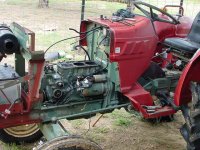
Hello to all. I disassembled my Yanmar 2310 today to replace rings. The rings were bad in two of the pistons. I ridge reamed etc. and am going to be ordering parts. This is my first time at this and I would like some advice from those who have done this.

First, the sleeves look ok although I had to ream the ridges. How do I check ring gap to make sure I do not need to go ahead and replace the sleeves?

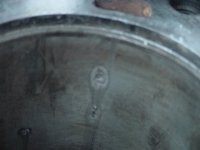
Second, two of the piston have some skoring on the sides. Do I need to replace the pistons?

Third, I am taking the head to the machine shop, what should I have them do to it?

Fourth, When I pulled the head the thid piston was at the top of its stroke, should I reassemble it this way.


fith , what is the procedure for checking the valves (after top dead center)?


Tourques:

Pistonrods?
Head bolts and sequence?
oil pan?
valve cover?

I know this is alot of questions but I sure need it to go back togheter ok and need the tractor on a daily basis.

Thanks .

Jim
 
   / Piston Inspection/Assembly/help #2  
the 1 st place to start would be to purchase a parts manual & or a service manual . Service manual should give you all your specs.
 
   / Piston Inspection/Assembly/help
  • Thread Starter
#3  
Yeah I plan on ordering the manual with the parts. What about the slight scoring on the pistons?, I can upload a pic. Also is the ridge I reamed off of the top of the cylinder wall to be expected?

Jim
 
   / Piston Inspection/Assembly/help #4  
If you are talking about the piston skirts. I would say use them.If the piston is running up & down in a sleeve The cylinder shouldn't have a ridge.I haven't had a diesel engine apart but, I have had many gasoiline engines apart with a ridge but , the gasoline engine piston don't run in a sleeve which would cause a ridge
 
   / Piston Inspection/Assembly/help #5  
Jim,

I would be interested to know how the rings were bad in the two cylinders. Were they broken? were they just worn? Was the spring tension taken out by overheating? What was "bad" about them?

There are a lot of factors in your questions. The scuffed piston skirts are usable, but the ring end gap, ring land wear, and cylinder taper are important points to consider.

End gap is checked with a new ring placed in the cylinder at the top of the stroke. You can square the ring in the cylinder by pushing it down with the top of an inverted piston with no rings on it. With few exceptions the end gap will not be a problem when installing new rings in an old cylinder.

Ring land wear is checked with a feeler gage with a ring installed in a clean ring groove.

The cylinder taper can be checked by using the same method as end gap, but checking at the top of the stroke and at the bottom and comparing the difference.

There are specs for all of these things. If any is out of the specified range then you need to re-sleeve the engine. Normally it is a package deal, which includes the sleeves, pistons, and rings.

Usually if the engine has sufficient wear that a significant ridge formed in the cylinder then it is better to re-sleeve the engine. In a non-sleeved engine they would bore it out and put in over-sized pistons. This is not to say that it will not work to simply hone the cylinder and put new rings on the piston. But the life of the engine will be MUCH longer with new sleeves.

Just my opinion.

Mike
 
   / Piston Inspection/Assembly/help
  • Thread Starter
#6  
Mike,

It appears the top ring in the #1 got hot and lost its spring, also it is missing part of it broken. #2 cylinder has broken ring as well.
The scoring is on the skirt of two of the pistons.
So if the cylinders have ridges I should probably replace sleeves? How do I get them out?
The hour meter on the tractor reads 1680hrs
I will take in to consideration your advise.

Jim
 
   / Piston Inspection/Assembly/help #7  
You should consider Yanmars recommendations for overhaul / rebuild. Overhaul is rings and bearings, rebuild is cylinders, pistons, rings and bearings. There is nothing wrong with taper or a ridge in a cylinder as long as it doesn't exceed the max allowable by the manufacturer. Once it exceeds the max allowable specs, you are marginalizing the unit by not following the manufactures recommendations to rebuild. To change out cylinders and pistons when not needed is a personal choice, much based on personality (and available funds). The real question is what is the relationship to your tractor? Many owners today don't use tractors the way we have in the past, the relationship has changed. Owners like to rebuild them, paint them, compare them with other owners and have them to new specs. (This isn't a slight towards anyone out there, it's just our changing society). The question you need to ask yourself honestly is do you have the tractor simply as a tool for specific work; or do you want more out of it. I treat my equipment really well, but I work it hard and I mean really hard. I blow out universals, have to replace tires, tie rods, clutch plates and am welding things back together constantly. I don't paint my equipment because I don't care about paint, but I am constantly overhauling equipment because of use. I really admire people who take the time to paint a tractor, I just can't be bothered. The long and short of it is, if you simply overhaul the engine just to haunt yourself that you didn't rebuild it, you better go all the way while you have it on the bench. Think of it this way, many people replace the rear tires when they begin to show age cracks. Others replace them when the side walls tear open. If you're the type of owner who doesn't want to see any cracks on tires or scratches on a fender, I would completely rebuild because you will be happy you did.
 
   / Piston Inspection/Assembly/help #8  
rancher41 said:
So if the cylinders have ridges I should probably replace sleeves? How do I get them out?

Jim, The best way to go about this is to check the measurements that you make on the engine with what is specified by Yanmar. There will be a tolerance range +- and if the part fits in the range then reuse it, if it does not, then replace it.

How to pull the cylinders? I do not know what the proper method is. When I did it I made a puller with a piece of all thread, a few pieces of flat stock, and some nuts.

But the critical thing now is to determine what needs to be replaced and what can stay--or as srvc guy said, how well do you want to build this thing.

Mike
 
   / Piston Inspection/Assembly/help
  • Thread Starter
#9  
Hey Guys,

Got the sleeves out via welding. Burnt through sleeve a littl. Will hone out. Is this ok???

Machinist said check rod bearings for copper color. Sure enough.

He said this could indicate crank journal excessive wear. What do you think?

A little bit discouraged today. Sleeves out, hope the pits in cylinder will not be a problem after honing. Sure wasn't planning on pulling crank.

Opinions please.

Thanks,

Jim
 
   / Piston Inspection/Assembly/help
  • Thread Starter
#10  
Here is a picture of where I burnt through the sleeve. It looks worse in this picture. I only did it on the first sleeve. On the remaining two I tacked a pipe cap into the sleeve and they drove right out.

Regarding the crank journals any suggestions on what to look for. The machinist said to mike for specs. I thought I was on a role until the sleeve mishap and now the possibilty of having a crank with worn journals.

I can upload pics of the rod bearings with minimal copper coloring if it would help.

Really need to get the tractor back together but as previously mentioned, a little discouraged.

This board has gotton me pretty far along so far.

Jim
 

Attachments

  • MVC-024S.JPG
    MVC-024S.JPG
    38.4 KB · Views: 298
   / Piston Inspection/Assembly/help
  • Thread Starter
#11  
Oh and svcguy. I am really particular on how I take care of my equipment as well. My little tractor is showing terriable cosmetic signs but filters, oil changes and grease it has not seen a shortage of.

Funny thing, when I started tearing it down thoughts of a new coat of paint came to mind. However, the realization hit today ,that right now, I hope just to hear it run again.

If the rebuild works out maybe I will treat to a coat of paint.
 

Attachments

  • MVC-011S.JPG
    MVC-011S.JPG
    39.2 KB · Views: 251
   / Piston Inspection/Assembly/help #12  
I am sure your overhaul or rebuild will work out just fine. In fact, anyone doing their own work will almost certainly be happy with the result if they are careful. The chances of a poor job is almost impossible if you follow the instructions in a manual and use the manufacturers recommendations. I wouldn't worry too much about the burn, but ensure it has no high spots before reassembly and would recommend using a high temp sleeve retainer like Permatex or an equiv. This is a space age plastic that seals between sleeves and the block. You can read more at:

http://www.devcon.com/techinfo/HI TEMP SLEEVE RETAINER.pdf

If you have removed your sleeves, you will need to replace them. I am not sure what you mean by honing out. You don't want to hone the block after removing the sleeves, but will want to lightly hone the new cylinders to ensure for a good ring seal if they are not honed already. When replacing your sleeves, watch your surface rise on the sleeves. Your engine may call for it and may not. It has a lot to do with sealing the head gasket. Search the internet for examples of a good, 'light' crosshatch before honing. Don't hone too much. You want enough to seat the rings, but this is a lightly honed surface, barely able to be felt with your fingertips. I find the ball hones work well, but don't over do it. I have seen some pretty enthusiastic honing, where the person would have been better off leaving the original cylinder in place. An original .008 taper isn't impossible to work with, but I have seen people hone .010 off a new wall by not understanding the idea of breaking the glaze on a cylinder. I would make sure the head is in good shape before replacement. If you had excessive ridge, the chance you need new guides is pretty high and at that point, clean up the valve margins. Don't lap your valves, either reface them or take them to a shop to do it for you. You can easily see if there is excessive wear on the crank journals by using a micrometer to measure them. At the very least, check the new bearing clearance with plastigauge.

Cheap Way to Measure Bearing Clearance

This will remove any doubts you may have about the bottom end. And check all your torques at least three times, that way you won't obsess about them afterwards. You sound like a very capable person, I am sure you will be fine.
 
   / Piston Inspection/Assembly/help #13  
rancher41 said:
Machinist said check rod bearings for copper color. Sure enough. He said this could indicate crank journal excessive wear. What do you think?

Jim, No reason to be discouraged. This may turn out to be one of those projects where your initial thinking is that you want to go a yard but since you are there you might as well go another step and since you are already this far then another and another--We have all been there. I have done it more than once on an engine rebuild too. Initial thinking rings and then a complete rebuild at the end.

However, a little "copper color" does not necessarily mean it is necessary to turn crank. You should mic the rod journals to find the smallest size and the largest. The difference will tell you your out-of-round (the largest and smallest will be 90 degrees apart). Yanmar has a spec for that too. if it is within tolerances then new bearings and go. If it is outside the specs then turning and oversize bearings are necessary. The top rod bearing and the bottom main will be worn.

Do not hone the bore for the cylinder liner! Just carefully remove any high spots, maybe with a dremel tool. I do not know how thick the walls are, but the cooling jacket is behind that wall and you do not want to put a hole there or your block will be junk. I do not recommend honing because you want a tight fit and do not want to enlarge the hole at all. The dry sleeves rely on the tight fit for the heat transfer and you do not want any relative movement of the liner to block.

Take heart and just push ahead!!

Mike
 
   / Piston Inspection/Assembly/help
  • Thread Starter
#14  
Appreciate the comments fellas. I will let you know what I find out. I feel much better about the project and going out to work on it today after reading you imput.

Jim
 
   / Piston Inspection/Assembly/help
  • Thread Starter
#15  
Crank measured (with plastitape) .002 with old rod bearing. Machinist says that should be ok!

Noticed copper colored gunk in oil pan while cleaning it today?
Not sure what that is?

Parts will be here tommorrow and head might be done.

jim
 
   / Piston Inspection/Assembly/help #16  
Interesting question and one I wish I could answer. Over the years I have noticed what seems to be very fine copper suspended in oil after a change (if viewed in sunlight). No one has ever been able to give me a definitive answer as to what it is. Have been told it's an acidic reaction with heated oil, bearing failure and all kinds of other stories. I have seen it in tractor, truck, car, motorcycle and airplane oil, none of which ever failed to my knowledge. Don't know if that is what your copper colored sludge is, but my YM240D manual actually calls for removing the pan and cleaning it out every 300 hours.
 
   / Piston Inspection/Assembly/help
  • Thread Starter
#17  
Would it be ok to VERY lightl hit the block cylinders with the hone just to clean them up?

What are the chances my oil pump and injectors are bad?

Bought one new injector thinking I was getting all three. Should I return or buy two more.


Jim
 
   / Piston Inspection/Assembly/help
  • Thread Starter
#18  
Oh yeah, any advise on installing the piston bushings. I do not have special tool shown in manual. Heasd will not be ready until next week.

While the crank journal speced ok, I hope the main bearings don't come back to haunt me. I am about out of time and money for repairs. Any thoughts?

Jim
 
   / Piston Inspection/Assembly/help #19  
I see a lot of good info on a basic rebuild. Every engine has it's own specs that are more important. If you are to hone the sleeves then let them be in the block! That is the same as boring or honing with a plate to simulate the torque of the head bolts being torqued down which is a must.They do change you know! With a diesel to make it start good I like to make sure the valve protrusions are right.
 
   / Piston Inspection/Assembly/help #20  
Jim, I wouldn't worry too much about your mains if the rod bearings weren't bad. As a rule, your mains will hold up much better than the rods. As for the block, I really wouldn't advise honing before inserting the cylinders. The block will be machined to fit the cylinders perfectly and I just wouldn't recommend putting a hone to them. Clean the block really well of any contaminants, ensure any nicks are smoothed and leave it at that.

I doubt your oil pump will cause you any problem if it was working before disassembly. Injectors are a different story, but wouldn't worry at this time unless they were suspect to begin with. You can change them out easily at any time. There is no end to what you can spend, but ask yourself this - if you could have run it another 6 months or a year without the rebuild, would you have changed them out? I doubt it. I would reassemble with close attention to torques, triple check everything before closing up and see how it runs. You will have plenty of time to change out the injectors if necessary.

Not sure what you mean by piston bushings. Are you meaning wrist pin bushings in the rods?
 

Tractor & Equipment Auctions

2014 Dodge Charger Sedan (A59231)
2014 Dodge Charger...
LMC 6' SOIL CONDITIONER (A59823)
LMC 6' SOIL...
Sellick S80 (A60462)
Informational Lot - Shipping (A56438)
Informational Lot...
2018 CATERPILLAR 305E2 CR EXCAVATOR (A60429)
2018 CATERPILLAR...
2019 MACK PINNACLE (A55745)
2019 MACK PINNACLE...
 
Top