Please explain this difference between diesel and gasoline engines

/ Please explain this difference between diesel and gasoline engines #1  

etpm

Veteran Member
Joined
Jun 30, 2021
Messages
2,345
Location
Whidbey Island, WA
Tractor
Yanmar YM2310, Honda H5013, Case 580 CK, Ford 9N
I know someone here can help me with this question. Maybe the question should be spark ignition versus compression ignition, but I will just use gasoline spark ignition vs diesel compression ignition. Anyway, gasoline engines are very sensitive to air/fuel ratios. For example, gasoline engines when run too lean can run way too hot and this can result in pre-ignition, burnt valves, and melted pistons. I have personal experience with a melted piston crown, darn it. So the air/fuel mixture is closely controlled. Diesel engines don't control the air at all, the engines are always sucking in as much air as possible. This means that the air/fuel mixture is all over the place. So why is it that a compression ignition diesel engine can tolerate the very lean condition at low throttle settings? And, from what I have read here, diesel engines run hotter at higher throttle settings and running them at too low of a throttle setting, such as excessive idling, can cause problems such as "wet stacking". The reason being that the engine is running too cool and all the fuel is not burning completely. It's just idle curiosity on my part and I figure a good answer is likely to be found here.
Thanks,
Eric
 
/ Please explain this difference between diesel and gasoline engines #2  
a lengthily post. for simplicity, can you reduce your question to a sentence or two? regards
 
/ Please explain this difference between diesel and gasoline engines #3  
The only answer I have is diesels are built better/heavy duty. They have heavier duty components due to the high compression ratios. They are designed to tolerate the points you bring up.
 
/ Please explain this difference between diesel and gasoline engines #4  
In one sentence:

It is the nature of the fuels used, not the engine mechanicals.

To elaborate, oil fuels burn more slowly regardless of how many ignition centers are produced under compression.

High volatility fuels, combust much more quickly, and often destructively.

Alcohol mixes are an attempt to "cool/slow things down" inside the combustion chamber (NOT the EPA kind)
 
/ Please explain this difference between diesel and gasoline engines #5  
Diesel engines bring in a fixed volume of air per stroke, compress it anywhere from 14:1 to as high as 25:1 and then a very precise amount of fuel is injected under very high pressure to atomize it on the piston to combust. So, “the air fuel mixture is not all over the place”.
 
/ Please explain this difference between diesel and gasoline engines #6  
Also diesel engines usually when taken care of last longer
than a gas engine and the diesel engine usually gets better
fuel mileage and more lugging power vs a gas job

willy
 
/ Please explain this difference between diesel and gasoline engines #7  
Diesel engines bring in a fixed volume of air per stroke, compress it anywhere from 14:1 to as high as 25:1 and then a very precise amount of fuel is injected under very high pressure to atomize it on the piston to combust. So, “the air fuel mixture is not all over the place”.
This is non sense!
 
/ Please explain this difference between diesel and gasoline engines #8  
Also diesel engines usually when taken care of last longer
than a gas engine and the diesel engine usually gets better
fuel mileage and more lugging power vs a gas job

willy
This is not the intent of the post.

I don't give greater care to my compression ignition Hurlimann, than I do to the spark fired gasoline fueled Fordson E27n. The Fordson has a rated RPM of 1100. with pto speed 540. talk of lugging....
 
/ Please explain this difference between diesel and gasoline engines #9  
Diesel engines bring in a fixed volume of air per stroke, compress it anywhere from 14:1 to as high as 25:1 and then a very precise amount of fuel is injected under very high pressure to atomize it on the piston to combust. So, “the air fuel mixture is not all over the place”.
Can you elaborate using the Detroit diesel in example?
 
/ Please explain this difference between diesel and gasoline engines #10  
It's a combo of things. Diesel burns slower than petrol so the peak temperature isn't as high. Diesels are built heavier out of more sturdy materials. They run *very* lean compared to petrol. Diesels run slower so there is comparatively more time for the heat to disperse between ignition events.

You can still melt diesel pistons. Diesels come the other way where more fuel makes the combustion hotter. So winding up the fuel screw and hoping for the best is the same as leaning out the fuel on a petrol. Eventually you will get the piston hot enough to melt.

From a quick google, diesels run about 18 or 20 to 1 under high load, as opposed to petrol running 12.5 - 14.7 depending on your tune. Some petrol engines can run in lean burn for economy under light load but I don't know the specifics.
 
/ Please explain this difference between diesel and gasoline engines #11  
Unless you have ideas about improving the design it isn't important. What is important is keeping engines in their power band as much as possible. One reason diesel engines have a reputation for longevity is because a high percentage has traditionally been operated by professionals and operators with training. As witnessed by the number of posts here about overheating, armatures are rapidly changing statistics.
 
/ Please explain this difference between diesel and gasoline engines #12  
The non control of intake air is not set in stone.

RAM with Cummins added an intake throttle valve under ECU control on the newer 6.7's and as soon as they did, a market was created to remove them. Diesel air fuel running ratios are much wider than a gas engine. See shot at 1:50 for a throttle valve being removed.

 
Last edited:
/ Please explain this difference between diesel and gasoline engines #13  
Fairly easy to explain the difference. 3 of them. The fuel, second is ignition and third is fuel pressure. Diesel fuel has more has more energy than gas. Second, Gas needs a spark diesel just uses high compression. To push fuel into a combustion chamber of a diesel engine takes more pressure since compression is so high. Everything else is a wash…
 
/ Please explain this difference between diesel and gasoline engines #14  
Diesels need: Air, fuel, compression, & proper cam/crank timing.
Gas need: Air, fuel, spark, compression, proper cam/crank timing, & proper ignition timing.

All in all...it comes down to the volatility of the fuel. Diesels need heat to help combustion. Gas engines try and shed all heat. Because heat has energy, diesels harness and use the heat better.
 
/ Please explain this difference between diesel and gasoline engines
  • Thread Starter
#15  
Diesel engines bring in a fixed volume of air per stroke, compress it anywhere from 14:1 to as high as 25:1 and then a very precise amount of fuel is injected under very high pressure to atomize it on the piston to combust. So, “the air fuel mixture is not all over the place”.

Diesel engines do bring in a fixed volume of air every stroke. It is only the fuel volume that varies. So the air/fuel mixture is all over the place. Because the fuel volume changes while the air volume does not. You post makes no sense.
Eric
 
/ Please explain this difference between diesel and gasoline engines
  • Thread Starter
#16  
Diesels need: Air, fuel, compression, & proper cam/crank timing.
Gas need: Air, fuel, spark, compression, proper cam/crank timing, & proper ignition timing.

All in all...it comes down to the volatility of the fuel. Diesels need heat to help combustion. Gas engines try and shed all heat. Because heat has energy, diesels harness and use the heat better.
So why do gas engines run hotter when running lean but diesels do not? Is it because diesel, when volatilizing, cools down the combustion chamber? I don't care about efficiency, or torque, or longevity, I just want to know why the two types of engines burn differently. I know that if diesel is pre-heated it can be used in a gasoline engine. If this is done will the gasoline engine still exhibit the same lean running behavior? And will this be because the diesel is hot when introduced into the combustion chamber? Maybe I need to buy a book.
Eric
 
/ Please explain this difference between diesel and gasoline engines #17  
So why do gas engines run hotter when running lean but diesels do not? Is it because diesel, when volatilizing, cools down the combustion chamber? I don't care about efficiency, or torque, or longevity, I just want to know why the two types of engines burn differently. I know that if diesel is pre-heated it can be used in a gasoline engine. If this is done will the gasoline engine still exhibit the same lean running behavior? And will this be because the diesel is hot when introduced into the combustion chamber? Maybe I need to buy a book.
Eric
air is a gas and gasses burn hotter than a fluid.

-thermal dynamics 101
 
/ Please explain this difference between diesel and gasoline engines
  • Thread Starter
#18  
air is a gas and gasses burn hotter than a fluid.

-thermal dynamics 101
I'm sorry, I don't understand your response. Air is certainly a gas but it is the gasoline or diesel that is burning, the air is just the oxidizer. And air is being used in both engines. When the gasoline is first introduced into the cylinder it is a fine mist and/or vapor. The diesel is a fine mist. I don't know but I imagine that some of both the gasoline and the diesel turn into a gas during the combustion process. Does this phase change in a diesel engine cool the air and diesel charge in the cylinder so much that running lean doesn't lead to high temperatures like it would in a gasoline engine?
Thanks,
Eric
 
/ Please explain this difference between diesel and gasoline engines #19  
This is a tough crowd!

Just some statements off the cuff as pertains to I.C. engines.

First, "The High Speed Internal Combustion Engine" by Ricardo 1923 IS a MUST READ!

Gasoline engines don't need spark ignition to burn, but the uncontrolled flame front propagation will kill the engine in no time.

Honda experimented with "Radical Burn" technology and there are several "lean burn" schemes that have come and gone over the years. (as mentioned here by others)

Gasoline engines also rely on the "heat of vaporization" to cool the intake charge.

Alcohol burning engines such as JAP or ESO speedway machines run VERY HIGH compression ratios without detonation due to their FUEL, Alky, but still rely on spark ignition.
Methanol is Alky, and has a HUGE heat of vaporization value, Speedway bike cylinder heads are sometimes insulated to keep heat IN.

Popular in England , and elsewhere for a time, were TVO engines. Thermal Vaporizing Oil.
The spark ignition engines were started on gasoline, and after a suitable engine warm up, the fuel tap was switched to draw from a kerosene tank. This was popular for ag tractors due to fuel costs and availability. Many Fordson tractors built in Cork and Dagenham were so fitted.
This "flex fuel" desighn was an option for the E27n that I run, though the one I have is gasoline only. IIRC the engine compression ratio is around 6:1. ;-)
There was little difference in the engine internals between the TVO and a gasoline only engine., but the induction track had a Heat Plate that was warmed by the hot exhaust. I'm quite sure the engine would run just fine on gasoline but perhaps there would be a tendency to knock under load.

I am not aware of any Diesel cycle engines that do not make use of direct injection. The pressurized spray being required to atomize the heavy fuel being necessary I suppose.
Ocean going diesels burning "bunker crude" require fuel heaters to liquefy the fuel to make it suitable for injection.
Compression ignition engines Diesels, come in both four stroke and two stroke designs.
The "Detroit Diesel" the flag bearer of the two stokes.

I have not seen any "rotary piston" compression ignition engines . Wankels would seem to be a great platform, but not yet ;-)

I could go on, Please add in any otherr gems you might be holding back. I have engoyed the IC engine all my life, I must have 40 of them all counted .

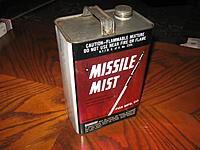
Now don't get me started on glow ignition. I can smell the "Missile Mist" now.... ;-)
 

Attachments

  • 1695182847014.png
    1695182847014.png
    69.1 KB · Views: 172
/ Please explain this difference between diesel and gasoline engines
  • Thread Starter
#20  
This is a tough crowd!

Just some statements off the cuff as pertains to I.C. engines.

First, "The High Speed Internal Combustion Engine" by Ricardo 1923 IS a MUST READ!

Gasoline engines don't need spark ignition to burn, but the uncontrolled flame front propagation will kill the engine in no time.

Honda experimented with "Radical Burn" technology and there are several "lean burn" schemes that have come and gone over the years. (as mentioned here by others)

Gasoline engines also rely on the "heat of vaporization" to cool the intake charge.

Alcohol burning engines such as JAP or ESO speedway machines run VERY HIGH compression ratios without detonation due to their FUEL, Alky, but still rely on spark ignition.
Methanol is Alky, and has a HUGE heat of vaporization value, Speedway bike cylinder heads are sometimes insulated to keep heat IN.

Popular in England , and elsewhere for a time, were TVO engines. Thermal Vaporizing Oil.
The spark ignition engines were started on gasoline, and after a suitable engine warm up, the fuel tap was switched to draw from a kerosene tank. This was popular for ag tractors due to fuel costs and availability. Many Fordson tractors built in Cork and Dagenham were so fitted.
This "flex fuel" desighn was an option for the E27n that I run, though the one I have is gasoline only. IIRC the engine compression ratio is around 6:1. ;-)
There was little difference in the engine internals between the TVO and a gasoline only engine., but the induction track had a Heat Plate that was warmed by the hot exhaust. I'm quite sure the engine would run just fine on gasoline but perhaps there would be a tendency to knock under load.

I am not aware of any Diesel cycle engines that do not make use of direct injection. The pressurized spray being required to atomize the heavy fuel being necessary I suppose.
Ocean going diesels burning "bunker crude" require fuel heaters to liquefy the fuel to make it suitable for injection.
Compression ignition engines Diesels, come in both four stroke and two stroke designs.
The "Detroit Diesel" the flag bearer of the two stokes.

I have not seen any "rotary piston" compression ignition engines . Wankels would seem to be a great platform, but not yet ;-)

I could go on, Please add in any otherr gems you might be holding back. I have engoyed the IC engine all my life, I must have 40 of them all counted .

Now don't get me started on glow ignition. I can smell the "Missile Mist" now.... ;-)
Your post reminds me of something I fooled around with about 40 years ago. I was just window shopping in a place that sold all sorts of glow plug engine stuff. And also exotic airplane engines. Really cool engines with all sorts of different valving schemes. Some engines were 4 stroke, others two stroke. There were engines that used sleeve valves and others that used cylindrical valves and others that used disc valves. The best part was that many of the engines used nitro methane fuel. The nitro was mixed with oil and MEK by the customer. For glow engines the MEK was used for ignition timing. I guess the more MEK, up to a point, advanced the timing. Anyway, I wasn't buying any of these wonderful engines, they were way too expensive of a hobby for a newly married guy with a baby and a wife in school and buying a house at 11.75% interest. But I did buy nitro methane in quart bottles to play with. I would machine the heads on my lawn mowers to raise the compression. These were side valve engines so there wasn't the ability to raise the compression as much as overhead valve engines. But I would also relieve the head where the valves went and would shape the valve pockets in the heads to help the air/fuel and exhaust flow. Then with some nitro mixed in with premium gas I could get way more than 3.5 HP out of the motors. They didn't last long but boy could they cut tall grass. It was all for fun. My brother was amazed at how the lawn mowers could mow down the tallest grass without any problem. I had a lot of fun goofing with those engines. But I still want my original questions asked about diesel vs gasoline engines.
Eric
 

Marketplace Items

WAREHOUSE STEPS (A60432)
WAREHOUSE STEPS...
2011 FORD F350 SERVICE TRUCK (A52707)
2011 FORD F350...
2018 John Deere Z997R (A53317)
2018 John Deere...
UNUSED FUTURE FT-GB200-79"X71 1/2"-1" STEEL PLATE (A60432)
UNUSED FUTURE...
PALLET OF (22) BOXES OF ARMSTRONG TILE FLOORING (A60432)
PALLET OF (22)...
LOAD OUT AND SHIPPING (A61166)
LOAD OUT AND...
 
Top