ROPS Welding

Status
Not open for further replies.
/ ROPS Welding #1  

Bigboyskioti

Silver Member
Joined
Mar 25, 2007
Messages
106
Just wanting to know have you or would you weld brackets for lights on the roll bar? I'm wanting to put a couple lights up there but am not sure what it would do to the metal integrity.
 
/ ROPS Welding #2  
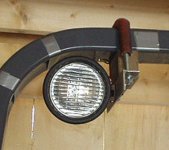
It is recommend that you don't drill, weld or cut a ROPS, but there are some that do what ever they want. It hasn't been very long since there was several pages to a thread over this. This topic is almost as bad as the hydro vs standard transmission topic as far as getting heated. There are lots of ways to make good looking brackets without welding on the ROPS. One member posted pictures of a novel set of brackets that he make a month or so ago. I have attached a copy of it. I'm sorry, but I forgot to put the members name on it. If who ever made it will let me know I will rename it.
If you have a canopy, the lights work better on the front of it.
 

Attachments

  • Light Bracket.jpg
    Light Bracket.jpg
    73 KB · Views: 1,430
Last edited:
/ ROPS Welding #3  
It won't hurt a thing,[this is assuming that you can weld,,without under cutting the bar or burning holes in it],,put your ground as close as you can to where you are welding,watch where sparks might go,might want to dissconnect battery too,,thingy
 
/ ROPS Welding #4  
If it's a new machine, you may void your warranty.
If you do roll the machine and get injured, you'd have no legal recourse if the ROPS failed.
The problem with welding is you can create localized stress risers. These ROPS are made from high strength steel. The heat from welding can damage the metallurgical properties of the steel.

Personally, if I was going to mount lights on the ROPS, I'd clamp. If I had to affix the lamps to the ROPS, I'd sooner drill a through hole, chamfer inside and out (at least deburr) and bolt a bracket. But clamps works quite well, so there is no good reason to drill or weld on a ROPS.

It's your tractor...your choice...

There's a good thread in the Safety Forum about ROPS and roll overs. You can view it here: http://www.tractorbynet.com/forums/safety/97525-tractor-rollover-myths-facts.html.

Mars1952 has linked some very good information in a post on page 2 of this thread.

If you're considering welding on your ROPS, at least you'll be able to make an informed decision.
 
/ ROPS Welding #5  
What kinda high strength steel would that be there Roy? I bet they are just made out of plain ole steel myself,,it won't create any stress risers as long as you get a decent weld on it,,probably all thats needed is a good size tack,,I'd rather weld on something like that to attach a little light bracket than drill a hole,,now theres a stress riser for sure. [edit here,,,after thinking about that word high strength steel,,lets assume it is,,,that don't mean you can't weld on it,,,thats just a word which can mean alot or very little when it comes to welding,,all kinds of high strength steel, different grades,,main reason it would be used on roll bar would be it would be lighter weight than a piece of mild steel that had same strength,made so by alloy,and or a heat treat of some kind,most thinner high strength steels,can be welded with 6011 or 6010 rod even with little or no preheat,,let alone post heat,,some can't,,but if this roll bar is that hard it would be to brittle to use as a roll bar,,and we are talking about a few little fillit welds here probably,,if you wanted to play it real safe,preheat it to 150 degrees and use 7018 or 70S mig wire on it ,and keep welding to minimum, and again assuming that the weld would be neat without undercut,,,]thingy
 
Last edited:
/ ROPS Welding #6  
First, this came from a FAQ on one ROPS manufacturer's web site:

Q. Why can't I just make my own ROPS?
A. ROPS design and functionality is counter-intuitive or in other words, not what people expect. This is why most people, even Agricultural dealers, do not understand the safety principles of a ROPS. They think that a super-strong, rigid structure will afford greater protection.
A ROPS is not meant to be rigid and must be able to absorb energy, similar to the crumple zone of a car or a crash helmet. In the event of a roll over, this ability to absorb a discrete amount of energy, while maintaining a zone of clearance or protection, helps to prevent the tractor from pole-vaulting downhill. It also helps to prevent the energy generated from the roll over, from being transferred to the tractor itself. Not only does this lessen the likelihood of major damage to the tractor, more importantly, it reduces the likelihood of serious injury or death, as a consequence of the tractor's being torn apart. Many countries have stringent guidelines for the provision of ROPS, usually called a Standard.


In my experience (Quality Assurance, including Non-Destructive testing, in several fabrication companies), in order to meet the testing requirements and still be of a reasonable weight, companies use a higher strength steel. There's a trade off when selecting any steel.
The main thing is the testing to ensure the ROPS will work as designed (and material selection is part of the design), no changes can be made to the structure unless that change is tested as well.

Welding, obviously, requires heat. Heat does change the metallurgical properties of a material which can be stress relieved or tested to determine if the heat has detrimental effects to the design.
The Navy did testing on arc strikes (small areas that an electric arc briefly touched the work piece without fully welding...this isn't an uncommon occurrence when welding). These small spots were (in the high strength steels) hardened and more brittle. This resulted in cracking under load. Obviously, this wouldn't happen every time a welder touched his rod (or wire) to a work piece. However, we're looking at a worst case scenario (which is what happens when a tractor rolls).

Thingy, you can bet all you want. That's your option... But unless you know the design, materials and testing requirements, you don't know. If you do want to know, get a copy of SAE J2194 (Standard for Agricultural Tractor Rollover Protective Structures (ROPS)).
If you welded on a ROPS for a customer (I'm guessing you do fabrication work as a trade) and that ROPS failed, you may find yourself legally liable. I'm sure you're quite experienced and have "hands on" knowledge. However, when a person posts a recommendation or opinion on a web site such as TBN, they have no knowledge of the reader's skills (in this case, as a welder). That introduces another uncontrolled variable.

As far as drilling rather then a weld... A circular hole is still a stress riser, but at least the stresses are distributed evenly. As written in my original response, I wouldn't even drill the hole. It's just be the lesser of two evils (IMHO).

The operator has to depend on a safety feature design at the worst time. His tractor is about to test a safety device in an uncontrolled manner. Any changes to that feature may reduce the effectiveness of the design.
 
/ ROPS Welding #7  
Bigboyskioti said:
Just wanting to know have you or would you weld brackets for lights on the roll bar? I'm wanting to put a couple lights up there but am not sure what it would do to the metal integrity.


I wouldn't worry about it if you know what you are doing. I welded tabs on mine and have absolutely no fear of a ROPS failure.
 
/ ROPS Welding #8  
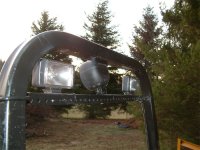
Here's how I did mine.

Some pre-drilled angle iron from Lowes/HD and some square U-Bolts. Lots of mounting places for lots of lights.

No drilling or welding required.
 

Attachments

  • rops_light_front.jpg
    rops_light_front.jpg
    85.8 KB · Views: 955
/ ROPS Welding #9  
I drilled mine, it's not high strenght that's for sure. It appears similar to 4130 steel I use to work with in aviation but I'm not sure exactly what kind it is.
 
/ ROPS Welding
  • Thread Starter
#10  
Thanks for all the replies! I have been on the site for a long while just reading and soaking up some graet information. I didn't see the post on welding the rops.... And while I "think" I could do this without any probems. This is one that I'd hate to find out that I couldn't..... The angle and square u bolt idea was the other idea and seeing yours has sold me on the idea! Thanks again. I'll get these mounted and I have few pictures that I need to get on here. Thanks again! Mitch
 
/ ROPS Welding #11  
When I bought my tractor I went through the same dilemma. The dilemma was resolved however when my dealer informed me that if I modified the ROPS in any way and then decided to trade in my tractor, they would deduct the cost of installing a new ROPS from the trade-in value.

They will not sell a tractor with a modified ROPS. They apparently were sued and prosecuted for reckless endangerment when one of thier customers was killed in a rollover accident, on a tractor they sold with a modified ROPS.

There are lots of ways to attach lights without welding or drilling.
 
/ ROPS Welding #12  
Roy,of course welding causes metallurgical changes to the metal,,saying that says nothing,everybody knows that.The question is is it harmfull to the intended service of the thing being welded,,on many things its not,and I'm saying that the roll bar is made out of one that it ain't.[again assuming you got a quality weld on it].
Arc strikes,,know about them too,an arc strike is not a weld,,rapid heating of small spot,rapid cooling,generally leaving a very small pit,,,which could result in a crack,,a weld is not that,we're not talking about putting arc strikes all over it.
The term high strength steel,,means very little,,many different kinds of high strength steel,some made so by carbon content and heating/ cooling,most are made by adding an alloy to it,,which would make it an alloy steel really,,some of it is welded every day with 60/70 filler,without preheat or post heat,,,so saying you can't weld on high strength steel is wrong Roy
You don't know what its made of either,you're just saying you can't weld on it,you can weld anykind of steel Roy,some you need to take special precautions,,pre and post heat,hardness testing,stricter weld quality requirements,nde,,etc,,,many are considered easily welded without all that,,it also depends on thickness. thingy
 
/ ROPS Welding #13  
"Roy,of course welding causes metallurgical changes to the metal,,saying that says nothing,everybody knows that..."

Thingy, there's a lot of folks on TBN who don't have a lot of technical or hands on experience. We don't want to assume they know things...which is one reason they ask questions here.

All we can give them is opinions (note my signature line below) based upon our experiences or research. A really good example is the thread Mars1952 started in the Safety Forum concerning rollovers. There was a substantial amount of research done on that thread and the links provided.

Modifying any safety device entails risk. If the device fails, it could be lethal. Or, it could cost nothing more then having to replace parts at trade in time. Or a lawsuit in the event of an accident. If an operator decides to take the risk...that's fine, as long as he or she is making an informed decision.

I'll grant you, I am a safety freak. I also don't want to see CUTs regulated excessively due to owner/operator mistakes that could be easily avoided.
 
/ ROPS Welding #14  
I cannot speak to whether welding will affect ROPS or not, but I can speak to the legal implications. I have been on both sides of many product liability lawsuits. If a product, such as a ROPS fails, then, depending on what side of the lawsuit you are on the following will occur:

1. If you are injured or killed, the plaintiff's attorney will likely hire multiple experts to include a metallurgist. These experts will opine that any modifications done by the injured or deceased party did not substantially change the design and function of the ROPS and it was therefore in the same or substantially the same condition at the time of the accident as when placed into the stream of commerce by the manufacturer. If someone else modified the ROPS, the plaintiff's attorney may make the same or opposite argument depending on the existence of insurance or assets.

2. If you are the manufacturer, modifier or seller of a ROPS which was subsequently modified by someone else, your experts will opine that the modification materially altered the design or function of the ROPS. If you modified the ROPS or sold a modified ROPS, then your experts will likely opine the opposite.

In otherwords, it is one big circle using experts to make one's case. What will happen, who will be successful, will all depend on specific facts, not the least of which will be did the modification alter the function of the ROPS. If, however, there is never a modification to the ROPS, then that will not be an issue. In that case the arguments will likely revolve around whether it was properly designed, manufactured and whether it was being used in a reasonably anticipated manner at the time of the accident. Hopefully, none of us will ever be in any of the positions outlined above.
 
/ ROPS Welding #15  
Hello everyone,
I have a question. Since just about everyone out there wants to add lights or some other type of brackets to their ROPS, do any of the ROPS manufacturers have tested ROPS with brackets already installed? :confused: If not does anyone on here have a contact in the business that can offer the suggestion? Just curious.
Craig
 
/ ROPS Welding #16  
We could all sit here an argue for days on this. But why even do it?? The manufacture says NO! If you have any lawsuit you will assume all liability. What the heck is wrong with clamping it??? Some of them look pretty darn nice. I have mine on magnet mounts. I only use mine when the loader is on. When my loader is off I can take my lights off. I can move them around to point to work areas. So again, why even weld or drill???


murph
 
/ ROPS Welding #17  
Murph,,of course you could clamp something on it,you could also drill a few small holes and screw or bolt something to it,,and you could weld something to it,the question was,listen now,can the man weld somekinda bracket to roll bar to put a light on it,,WELD IT.
Hangfire,,know nothing about sueing people,but again the question was can he weld a little bracket or angle to bar,,not some hypothetical dooms day event that may happen or not down the road to someone at sometime. Some people must think this rollbar is made outta some speical steel that is strong,but if you put a little weld on it it turns to glass or something and I'm here telling you that ain't the case. Yeah,the manufactors got all kinds of rules and regulations and some for a good reason,cause they gotta assume the worst case and cover their @##,and some just cause some lawyer said if you say this most people won't read it and we got them if the time comes and we save money,,its a sue happy country made so by lawyers more than normal peoples greed. I'm just assuming the guy owns the tractor,and is an adult,with common sense,,also suggested to not do it if he was going to make a nasty weld with holes and under cut,,also assume its just a few inches at most of weld he is going to do,[he did say lights,not cutting bar into and making it longer or wider or something],,and I'm saying,he can do this safely,without worrying about the rollbar shattering or something else strange.
Roy,of course thats the reason people asks questions,,,I ask some myself,,but its nice to get the right answer,,this has evolved into a legal issue with manufactor,not if the guy can weld a light bracket onto his roll bar,,there may be reasons he don't want to,,just saying from a welding point of view,they ain't one,,,and again,that was the question. thingy
 
/ ROPS Welding #18  
Thingy, I was responding to posts referencing litigation, not yours. My post started out: "I cannot speak to whether welding will affect the ROPS or not ..."
 
/ ROPS Welding #19  
This is a common question from new owners, particularly when they find out headlights are all but useless on most FEL equipped tractors.

When there are several alternatives to welding and drilling, e.g., magnetic, epoxy, clamps, I don't see why anyone would weld or drill. But as every other thread about this has mentioned, it's your tractor, do what you want. Me, I bought square clamps at TSC, painted them black and used them to attach the lights to the ROPS.
 
/ ROPS Welding #20  
"Roy,of course thats the reason people asks questions,,,I ask some myself,,but its nice to get the right answer,,this has evolved into a legal issue with manufactor,not if the guy can weld a light bracket onto his roll bar,,there may be reasons he don't want to,,just saying from a welding point of view,they ain't one,,,and again,that was the question."

The manufacturers state it, safety organizations state it...Don't modify the ROPS
Thingy, unless you've done testing per the SAE spec...you really can't state welding doesn't degrade the ROPS because you don't know.

Reckon that's all I say on this topic... It's going in circles now.
 
Status
Not open for further replies.

Marketplace Items

KUBOTA M8540D TRACTOR (A60430)
KUBOTA M8540D...
John Deere Z997R (A60462)
John Deere Z997R...
2016 Case Magnum 310 (A60462)
2016 Case Magnum...
2009 MULTIQUIP 25KW GENERATOR (A55745)
2009 MULTIQUIP...
CATERPILLAR 108" WHEEL LOADER RAKE (A52707)
CATERPILLAR 108"...
CABINET OF HOSE ENDS (A58214)
CABINET OF HOSE...
 
Top