Truss Spacing and load question?

   / Truss Spacing and load question? #1  

City Farmer

Platinum Member
Joined
Jan 3, 2013
Messages
528
Location
Chesterfield, Mi
Tractor
Ford 3000, 4400 & 4500TLB Case 830 Case 350 dozer
Hi all,
I'd appreciate a little help. I'm fixing up a barn on my new property.

The Bad: The metal roof is leaking around the nailed on rubber washers, theres a few (bullet?)holes the roof, the exterior is dented and it's been painted a few times.....so I'd like to replace it all.

The Good: The structure is in great shape and all the poles are solid. When I shoot it with the laser, it's only out 1/4" in 40'. I want this to be my primary heated workshop when I'm finished.

The barn is 24'x40', engineered trusses 4' OC, Purlins 2' OC laid flat, 3/12 pitch, 2x10 truss carrier, and 8' pole spacing. .
Can I sheet it with 1/2" OSB, shingle it and still meet the snow loads in SE Michigan? I've been looking and I cannot find the info. I'm looking for.
 
   / Truss Spacing and load question? #2  
You're asking questions that can only be answered by a structural engineer. What can be said is that sheeting with OSB and shingling the roof will be quite a bit heavier than the current steel roof. That weight WILL reduce the snow load capacity of the roof by the amount that the roof weight increases.

What you don't know is what snow load it was designed to hold in the first place... It may be that the trusses are a bit over-designed, or they may be right to the limit with design snow load. Depending on your required snow load numbers, it may also be that the 2x10 truss carriers are actually the weak point.

My suggestion is to rip off the nasty steel roof and replace it with a new steel roof. Use foil backed insulation when you do so, as it will prevent condensation, and add a good amount of insulating effect. If you plan to heat it, you may still want some additional insulation, but you may also find that it doesn't pay to add much more if you don't plan to spend a lot of time out there in the winter. A few ceiling fans to send the heat back down might be money better spent.

FWIW, finishing the ceiling and insulating it will also reduce the snow load capacity of the roof... Any weight you add reduces the carrying capacity. The only way to know how much is to get a structural engineer to do an analysis.

Good Luck!
 
   / Truss Spacing and load question? #3  
Are you saying you want to overlay the existing purlins with 1/2" osb and still meet the snow loading?
 
   / Truss Spacing and load question?
  • Thread Starter
#4  
Are you saying you want to overlay the existing purlins with 1/2" osb and still meet the snow loading?

Yes. Ideally, I'd like to shingle it.
 
   / Truss Spacing and load question?
  • Thread Starter
#5  
You're asking questions that can only be answered by a structural engineer. What can be said is that sheeting with OSB and shingling the roof will be quite a bit heavier than the current steel roof. That weight WILL reduce the snow load capacity of the roof by the amount that the roof weight increases.

What you don't know is what snow load it was designed to hold in the first place... It may be that the trusses are a bit over-designed, or they may be right to the limit with design snow load. Depending on your required snow load numbers, it may also be that the 2x10 truss carriers are actually the weak point.

My suggestion is to rip off the nasty steel roof and replace it with a new steel roof. Use foil backed insulation when you do so, as it will prevent condensation, and add a good amount of insulating effect. If you plan to heat it, you may still want some additional insulation, but you may also find that it doesn't pay to add much more if you don't plan to spend a lot of time out there in the winter. A few ceiling fans to send the heat back down might be money better spent.

FWIW, finishing the ceiling and insulating it will also reduce the snow load capacity of the roof... Any weight you add reduces the carrying capacity. The only way to know how much is to get a structural engineer to do an analysis.

Good Luck!

I didn't know if there was a standard on the pitch, span and truss spacing for shingled and metal roofs. I'll check later this afternoon on the truss carrier size, they might be 12".
 
   / Truss Spacing and load question? #6  
There is not. It has to be engineered based on wind, snow, and dead loads. Or rather, it should be... Bit many are put up based on guesses and luck...
 
   / Truss Spacing and load question? #7  
The building was engineered and approved as it stands now. Having said that I haven't seen 1/2" sheathing for a roof in snow country-yes in coastal California though. Typically folks sheet with 5/8" ply or more typically OSB. They also use the Simpson 5/8" plywood clips between the 2' span- this prevents uneven movement between sheets.

This is the first time I've ever posted about NOT getting an engineer. However, over sheeting an existing roof is common practice for various reasons- including yours.

Simpson Strong-Tie 5/8 in. 2-Gauge Plywood Sheathing Clip (25-Pack)-PSCL 5/8 - The Home Depot
 
   / Truss Spacing and load question? #8  
I am not a carpenter, but, I know a LOT about stress,,,
I can only guess as to all your abbreviations, but, if I am correct,,,
it sounds like the roof you are trying to build is far worse (structurally) than my house in Virginia.

Switch from metal, to shingles, the snow will never slide off.
If the roof is to flat, the snow will never slide off (a 3/12 pitch is flat,, IMHO)

I built my 45X57 shed,, my metal roof covers the steel supports
I can not use words like "purlins, etc" because I did not use conventional techniques.
My metal roof spans 4 feet between the supports.
The "local carpenters" that helped me thought the roof would not survive the first snow.

Actually, my steel is so strong, you could park a car on it,,, literally.

Be careful about replacing a metal roof with wood.

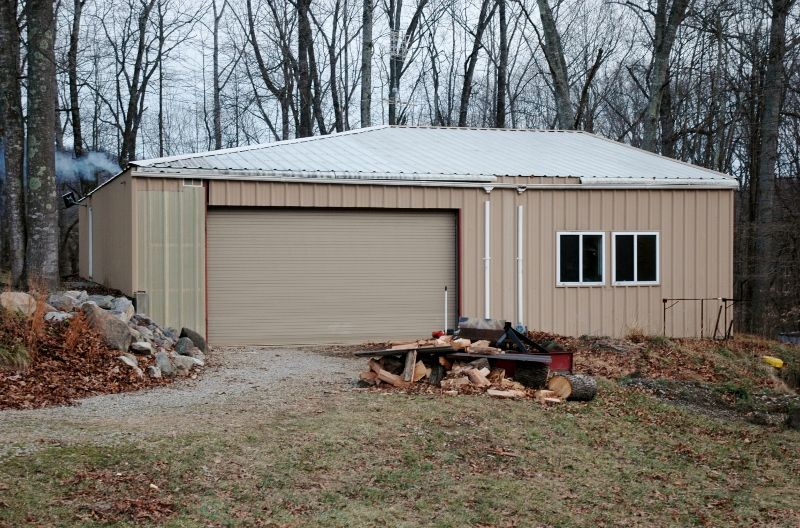
DSC_0126800x528.jpg


This pic shows the 4 foot gaps between the roof metal support beams

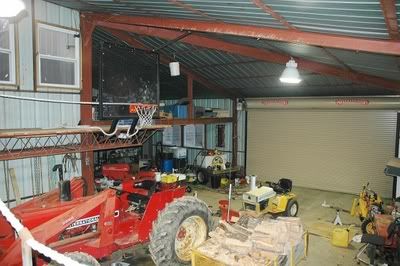
DSC_0147640x426.jpg


The tan roll up door in the pic is 18 feet wide.

I use the word beams, the roof is supported by actual I-beams

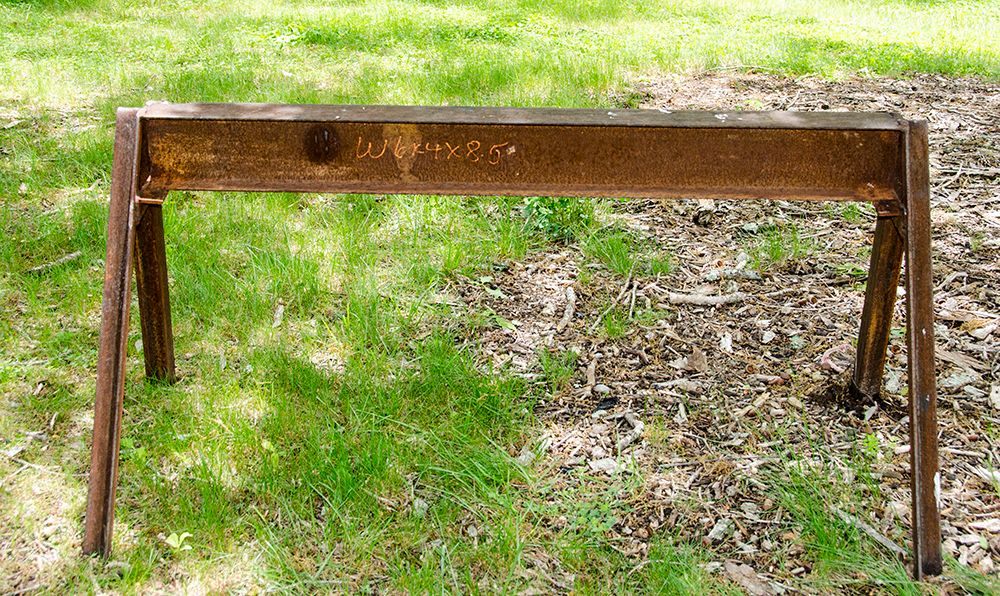
This saw horse is made out of some of the beam material,

saw3_zpse6f097cf.jpg
 
   / Truss Spacing and load question? #9  
As others have said, trusses are specifically engineered and it's pretty hard to say what they were designed for in an old building. That said, here in Michigan, most trusses are designed for either steel or shingle roofs. This is especially likely with a building only 24 feet wide.

If it was mine (and I had a similar situation a few years ago with my 40 x 48 pole barn), I wouldn't consider a shingle roof. Put on a new metal roof with good eave and ridge venting. Then add a metal ceiling under the trusses and blow in insulation. That will give you the best performing and longest lasting upgrade you can get at a reasonable price.
 
   / Truss Spacing and load question? #10  
No way to know without knowing what the trusses were designed for.

And even knowing the dimensions and design of the truss is no help. The lumber used....be it 2x4 or 2x6 or whatever is only half the info. Need to know what grade the lumber is. Is it #2, #1, DSS, MSR (and what grade MSR) etc. What is the species also?

Given a 24' span an 4' centers, I am assuming its an all 2x4 W type truss. But there is a HUGE strength difference between #2 grade and a MSR rated lumber. And the size of the metal plates is also critical.

When I was having trusses quoted/designed for my building, I wasnt sure if I wanted 4,6,8,10,or 12' span.

Sometimes when upping one size, the only thing that changed was larger heavier plates. Sometimes it was simply going from a #1 grade board to a MSR board.

So final question, why shingle it? Why not new metal and screws? IT will likely last alot longer than shingles and will be easier and faster to put up
 
   / Truss Spacing and load question?
  • Thread Starter
#11  
Thanks for the help everyone, I appreciate it.
In no specific order:
1) Foil backed insulation over purlins
2) new metal roof
3) metal ceiling with blown insulation
4) ridge vent
5) wall insulation
Can someone recommend a quality foil back insulation I can install over the purlins?

Eave venting might be a problem because whoever built it hardly anything for the overhang, there's only a few inches.
 
   / Truss Spacing and load question? #12  
If eve vents will be an issue consider turtle backs when the roof is redone. Their is a science to venting- both size and locations so read up on that or have someone do those calcs.

Insulation is a whole other topic and your data isn't sufficient to weigh in.

The foil back insulation is something your local building supply will have. Telling you a brand is near useless as most building supplies only carry one brand. If you are after the foil backing- they also make roof sheathing that has it preinstalled. I personally haven't seen the science that supports the cost but I have seen it installed a few times when speced.

Snow loads aren't calced differently for metal vs comp shingle- that isn't an issue. You can google "psf snow loads by zip" or something similar for your own edification but remember these calcs were done when the building was built and changing roofing won't change the load- unless you decided to put a 6" concrete slab up there for a roof- that's sarcasm!

It's nice to see the concern and forethought with this project! It sounds like this will turn out nice!!
 
   / Truss Spacing and load question? #13  
if these are engineered trusses then odds are a building permit was required and taken out when it was constructed....that means you should be able to go down to your local building department and have them pull the permit jacket.......most building departments require a copy of the engineered truss drawings to be submitted as part of the permitting process........so you will be able to look at and maybe even get a copy of the truss design drawings which will have all the design criteria that was used to design them......in general trusses are designed based on span, spacing, dead loads (weight of the truss, sheathing, purlins, roofing material) and live loads (wind load, snow load).....in your case adding sheathing and shingling will only change the dead load.......typically around here trusses are designed using a dead load of 7 - 10 psf which if you think about it is quite a bit of weight and more then usually found in most construction......so if you can get a hold of the truss drawings you can bring them to a structural engineer who can quickly advise you on the suitability of what you want to do.....its a very simple calculation........they will also be able to tell you what thickness sheathing to use as it will depend on the span rating of the sheathing........the 3/12 roof pitch falls in the minimum slope for asphalt shingles and will require a double underlayment.....personally I like to use full coverage ice and water shield on low slope roofs as the underlayment......especially in areas where snow will be sitting on the roof.........keep in mind even metal roofing will have minimum slope requirements which will vary from manufacturer........Jack
 
   / Truss Spacing and load question? #14  
Generally, in Michigan you don't need a building permit "IF" the building was/is built for farm use.

SR
 
   / Truss Spacing and load question? #15  
My building was not set up for eave venting so I put a couple of wall vents in the end walls above the ceiling. Works fine.
 
   / Truss Spacing and load question? #16  
I see no value in foil for insulation under the metal spend the money wisely else ware. With metal roofing you have an approx.1" every 8" alone with gable vents and continuous ridge venting you'll have plenty of vent. If you calculate the space the ribs give you for venting it = 's more than you acquire with 2' aluminum sofeting.
 
   / Truss Spacing and load question? #17  
In Chesterfield your going to need a building permit. Because I would bet your not zoned Ag.
That pole barn will handle a singled roof. I have a very similar 30x40 here in Fair Haven, MI.
If you need a builder let me know. I have Mark Bonser in Marine City build all our stuff here on the farm
 
   / Truss Spacing and load question? #18  
Generally, in Michigan you don't need a building permit "IF" the building was/is built for farm use.

SR

Now that is good regulation !!
 
   / Truss Spacing and load question? #19  
I vote for replacing the metal roof. A lot of metal roof and siding builders are using the plastic cellular insulation. High R, light, easy to handle and install, and provides an excellent vapor barrier to prevent condensation. Based on many tears in military construction and maintenance. We tried many insulation schemes for pre-engineered buildings and I was impressed with cellular the most. On an older building; unless you did or had it done originally you have no idea what the previous owner(s) did or had done. Play it safe unless you are an practicing engineer instead of an arm chair engineer.

Ron
 
   / Truss Spacing and load question? #20  
With metal roofing you have an approx.1" every 8" alone with gable vents and continuous ridge venting you'll have plenty of vent. If you calculate the space the ribs give you for venting it = 's more than you acquire with 2' aluminum sofeting.

Was going to say the same thing.

Unless you use NON-vented closure strips across the eaves and non vented at the ridge.......you have plenty of ventilation. Most use nothing at the eave and vented closure at the ridge.
 

Tractor & Equipment Auctions

500 BBL FRAC TANK (A58214)
500 BBL FRAC TANK...
WATER TRAILER (A58214)
2014 Ford F-550 (A55973)
2014 Ford F-550...
Toyota RF1-SD1X45 4,500 LB Stand-On Electric Forklift (A59228)
Toyota RF1-SD1X45...
2016 CATERPILLAR M322F MOBILE EXCAVATOR (A60429)
2016 CATERPILLAR...
Trailmobile Van Trailer (A56438)
Trailmobile Van...
 
Top