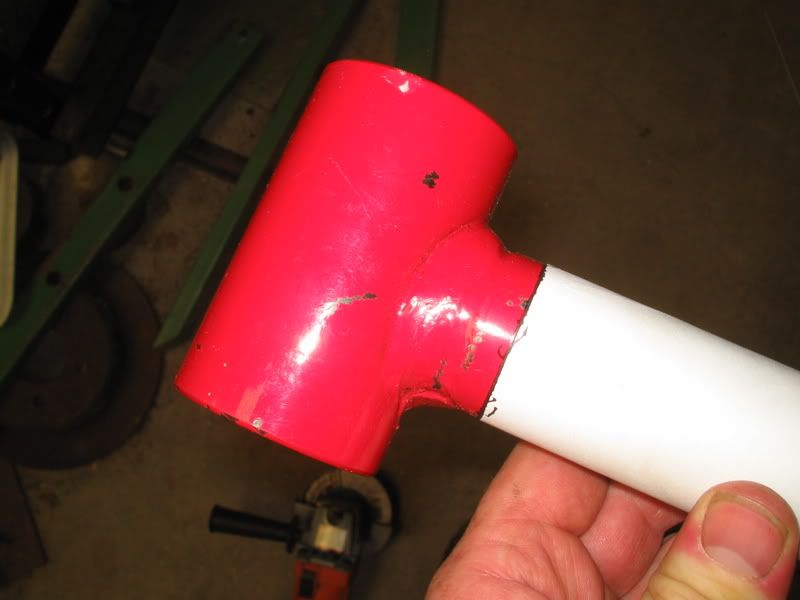
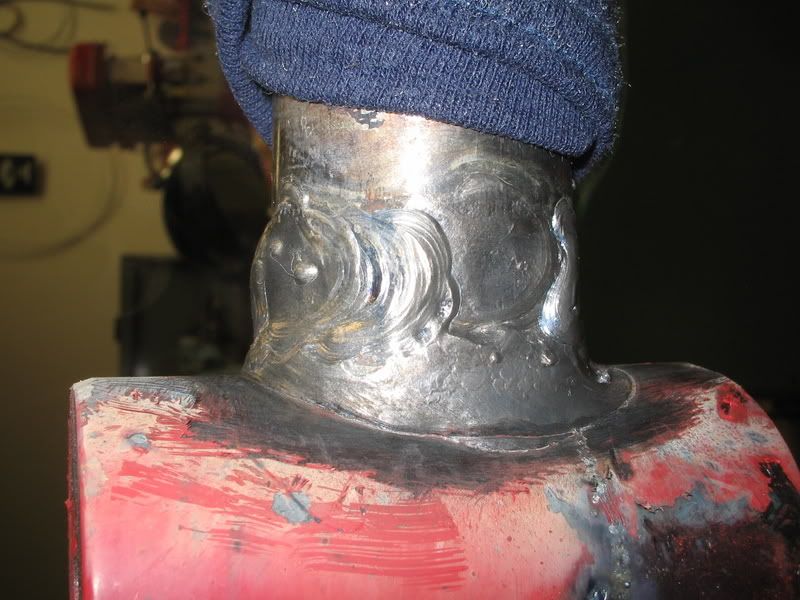
The original weld was just too small. Look at the cross-sectional area of the break compared to everything else. It didn't matter how good the bond was, there simply wasn't enough material, not to mention it didn't even cover the entire circumference. More bevel, more penetration, more and/or bigger passes would all be in the direction of goodness.
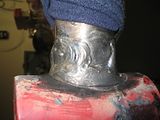
The one time I did it, it looked like this:
I had to shorten the extended rods on the 2 hydraulic cylinders I got for the stabilizers. I didn't want to ruin the blade on my big band saw so I used the hand-held. I started out by marking the cut circle with a wrapped sheet of paper and extra fine sharpie.
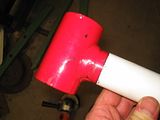

The band saw wouldn't touch the hard chrome so I used an air cutoff tool to cut a groove all the way around the circle.

The cut ends came out pretty good.

I beveled the edges and used a bent piece of welding rod as a spacer. The space helps prevent a sharp notch at the root.

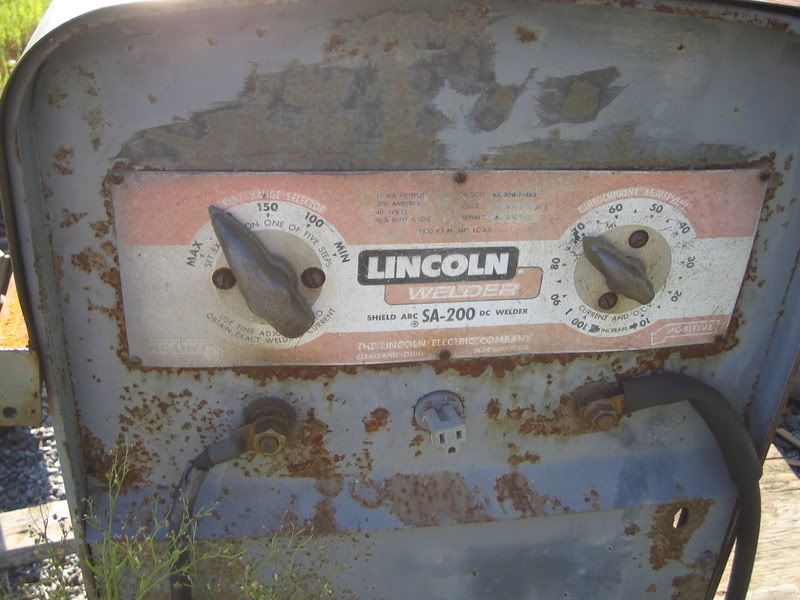
Set the SA200 on about 140 amps (DC). I decided to try out the 1/8" 7018AC rods that came in a variety pack in a screw top plastic rod can. Did a test weld to check the settings and then had at the rod end.
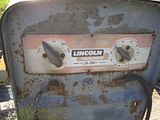
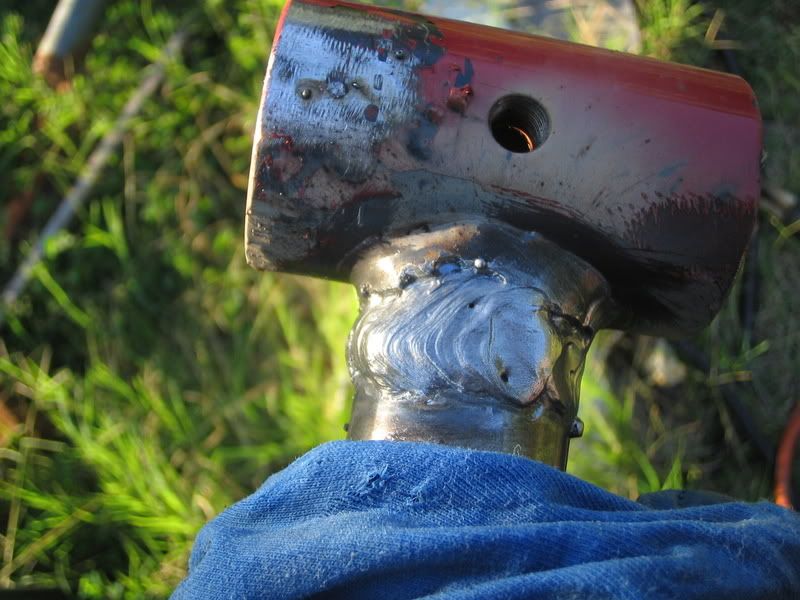
This is a good angle on an otherwise not too purdy weld. It's tough to make it look good with a series of short welds on a relatively small diameter.
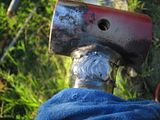
Here's the second cylinder. This time I used 3/32 6011 for the root pass. It made a smaller weld and should be tougher in the notch. The rest is still 7018. That blue thing is an old
WET T-SHIRT. (I have no idea what is up with that font. :

)