Wildfire Protection

   / Wildfire Protection #1  

Larry Caldwell

Super Member
Joined
Jun 30, 2010
Messages
5,265
Location
Myrtle Creek, Oregon
Tractor
Kubota l3130
With all the homes burning, it occurred to me that people who don't normally live in a wildfire area might not know what they should do to preserve their house.

1 - The first thing to do is clean your gutters. During dry weather, the duff in the bottom of the gutter turns into tinder. A single spark will light it, and the fire will burn up under the roofing and catch the roof sheathing on fire.

2 - Cedar shake roofs are a bad choice. The best roof for a house in wildfire areas is metal. Second comes any other class A fire resistive roofing, like vitreous tile (bad choice in a hailstorm) or asphalt composition shingles.

3 - Establish a 50 foot defensible space around the house that contains nothing that will flare. Green grass is OK, dry grass not. No oily shrubs like juniper or cedar. No trees within tree height of the house, and remember, that 50 foot pine will be a 100 foot pine someday. Essentially, no fuel stored wihin 50 feet of the house, and no trees or branches that can fall on the house.

4 - Build a driveway that a fire engine can get down. Your local fire department (if you have one) can give you the specifications.

5 - Store fire fighting water. My county requires 1500 gallons on-site storage anywhere a hydrant is not available. You can buy a 2500 gallon spun poly tank for about $800, and that is more water than a fire department tanker hauls. You don't have to have a swimming pool to have on-site water.

6 - Plan your escape. Leave it to the fire department to save your house. Nothing stands in front of a wind driven wildfire. Sometimes the best thing you can do is run.
 
   / Wildfire Protection #2  
Good suggestions Larry.

Another is the soffets under the eaves. They either should be flame resistant and/or boxed in with vent screens that won't allow embers to enter the attic space. Often you'll see a stucco house that wouldn't burn otherwise with wood soffets and screens big enough that the wind driven embers get in, and then it's too late.

Phil
 
   / Wildfire Protection #3  
Good suggestions.

I would add, that CAL Fire has a good website. Note they recommend a bigger defensible space now, 100'.

http://www.fire.ca.gov/communications/downloads/fact_sheets/DefensibleSpaceFlyer.pdf

http://www.fire.ca.gov/communications/downloads/fact_sheets/Checklist.pdf

http://www.fire.ca.gov/CDFBOFDB/pdfs/Copyof4291finalguidelines9_29_06.pdf

- Yes, access is crucial. Fire apparatus(Engines, Tenders ect) are BIG. To save your home, we(Fire Dept) needs to be able to get to it. Safely... Remember, this not only applies to wildfires, but for that medical emergency at 2am on a rainy dark night...

- Make your house saveable. If there is difficult access, and no defensible space, it is too dangerous for firefighters to be there. We want to get home to our families too... There are some houses that are just defensible.
 
   / Wildfire Protection #4  
You can buy a 2500 gallon spun poly tank for about $800, and that is more water than a fire department tanker hauls

Actually that is not true. Most departments are buying upwards of 3000 or 3500 with some buying tractor trailer tankers. Also, fire department tankers, cisterns and portable tanks are derated at 20% due to never getting all the water out of them.

Everyone had very good points. Remember to keep your driveway numbers posted. We have had numerous issues with house numbers not posted at the end of the driveway. This really can delay our response. Another good resource to use would be to google "FIREWISE PROGRAM". It takes you over everything to prevent your house from being burned or at least make it a higher priority for fire crews. They prioritize houses buy defendable or non defendable. If they know they have a good shot because you did your homework it helps them that much more.
 
   / Wildfire Protection #5  
I've been pricing tanks... Would like to buy one of the 2500 gallon tanks for $800 +/-

Any idea where to go?
 
   / Wildfire Protection #6  
Was jus tlooking at a 3000 gal potable water tank, black, at tractor supply for 1,399.00
 
   / Wildfire Protection #8  
Tankers fly thru the air and drop retardant :D

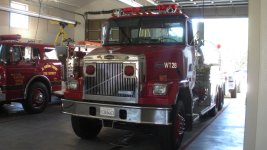
Water Tenders on the other hand... My NFPA D/O book calls them "Mobile Water Supply Apparatus" known as Tenders or Tankers... FWIW, Tenders in my area range around 3000 gallons. Here is the one I have been doing some driver training on.

It must be a regional thing. Around here, if you call for a tanker, you're gonna get a plane carrying retardant.

Tankers can range from 1,000 - 8,000+ gallons...
 

Attachments

  • DSCN1136.JPG
    DSCN1136.JPG
    414.5 KB · Views: 187
   / Wildfire Protection #9  
RobertN,

It is a regional thing, It is supposed to be a national deal but I have rarely heard anyone differentiate between the two when in PA and VA. VA also really does not contract any air tankers. That is a nice ford open cab engine in the back ground.

CompactTractorFan,

Size is also a regional thing. Usually departments will buy what works for there area as in size, manuverability and cost. The most around here seem to be 3500 down to 1850. When I volunteered in PA it was dealers choice on what was around. I seen everything from old septic trucks converted to the newest fanciest and biggest available. I have not seen to many tractor trailer jobs and would like to work with one a time or two. The problem with getting over 3500 gal. and tractor trailers is there is a lot more time involved in training people to drive. Thus equalling fewer drivers.
 
   / Wildfire Protection #10  
Tankers fly thru the air and drop retardant :D

Water Tenders on the other hand... My NFPA D/O book calls them "Mobile Water Supply Apparatus" known as Tenders or Tankers... FWIW, Tenders in my area range around 3000 gallons. Here is the one I have been doing some driver training on.

It must be a regional thing. Around here, if you call for a tanker, you're gonna get a plane carrying retardant.

Yeah, it is a east/west coast thing...
 
   / Wildfire Protection #11  
CompactTractorFan,

Size is also a regional thing. Usually departments will buy what works for there area as in size, manuverability and cost. The most around here seem to be 3500 down to 1850. When I volunteered in PA it was dealers choice on what was around. I seen everything from old septic trucks converted to the newest fanciest and biggest available. I have not seen to many tractor trailer jobs and would like to work with one a time or two. The problem with getting over 3500 gal. and tractor trailers is there is a lot more time involved in training people to drive. Thus equalling fewer drivers.

Yeah, most around here are around 2,000-3,000 gallon...
 
   / Wildfire Protection #12  
We have had 3 fires out here in the last 2 months. Oddly 2 in the same place, they thought 2 days ago they were going to evacuate us. They did people further down the road.

I had the motorhome ready and the toad hooked up. I've been thinking about it. I grabbed some important papers and a few clothes and banking information plus meds. Was going to get DD, the dog, and cat and go. The chickens are on their own. Pity the back neighbor with almost 20 horses.

But what I'm getting ready to do is turn the motorhome around so its headed out, its fueled up. I may go ahead and hook the toad back up. Sometimes I can do it quick, sometimes it takes me awhile to get it lined up. I've got my cart by the back door and I'm pulling the important papers, God help us if we lost some of that stuff and put them in the bays until we get some decent rain. As hubby says be careful there are only 2 roads out of here both parallel and he said back here a fire could skip and cut off both and east of us is the river bottoms full of trees.

Long as I get out with my credit card, some cash and my bank stuff plus the CPU from this computer I can make it. It sure gave me pause the other day when I thought I needed to leave. The cops were back here by the house.

It's not near us yet and would have to cover a lot of territory to do so but there is a big burn at Magnolia, I hear 10 miles long by 3 miles wide, no school over there and evacuations. It's 15 or so miles away from us I guess. My understanding is its still not under control. I would find it hard to believe that could ever get to us.

We had a big mulch fire about a half mile behind us a month or so ago. They had to bring in dozers and all to contain it. It was mountains of mulch they were grinding to sell, I saw it burned there equipment, that thing burned for over a month.

It sure is a time to be careful and if you smell smoke like I often do find out where its coming from.

Oh and we have all metal roofs and a brick house. I will take the advice though and clean the leaves off the back eave, that's the only place there are any.
 
   / Wildfire Protection #13  
Oh and we have all metal roofs and a brick house. I will take the advice though and clean the leaves off the back eave, that's the only place there are any.

You've looked and there aren't little screens venting your attic space in the eves?

I've personally seen what would've been thought to be "flame resistant" homes burned to the ground only because 'nobody thought about the soffit vents'.

Yeah, I know.... almost a double post. But if Patriotic Stabilist can affirm there isn't an easy way for embers to be blown into the attic space, it's worth it.

Phil
 
   / Wildfire Protection #14  
After viewing the stunning and heartbreaking aerial photos of the hundreds of burned-out homes from Colorado's Waldo Canyon fire, I was struck by how many didn't seem to have any "defensible space" around their dwellings. Won't the insurance companies covering these burned-out policyholders refuse to pay out for the damages, or isn't defensible space mandated? I'm curious because I don't know anything about the issue.

Larry, your information taught me some things that are good to know, even here in the rain-soaked PNW. I didn't see this link posted and wanted to add it to your thread for additional insights on perhaps avoiding the horrible fate so many in Colorado Springs are now suffering:

https://docs.google.com/file/d/0B9l12T4WhRVKWmZxSTFGZkwtY3M/edit?pli=1
 
   / Wildfire Protection #15  
After viewing the stunning and heartbreaking aerial photos of the hundreds of burned-out homes from Colorado's Waldo Canyon fire, I was struck by how many didn't seem to have any "defensible space" around their dwellings.
One of the more interesting things to come out of an analysis of the Waldo Canyon fire storm .

The 65 mph winds generated temps of 1300-1500 degrees in front of the flames. Those temps caused the flammable materials inside the houses to burn despite the outside of the houses being 'fireproofed'. This meant the houses burned from the inside out. Having more or less defensible space, or things like a brick exterior didn't matter in this situation.

We have people staying at our property because their home is in the mandatory evacuation area for the Waldo Canyon fire
 
   / Wildfire Protection
  • Thread Starter
#16  
One of the more interesting things to come out of an analysis of the Waldo Canyon fire storm .

The 65 mph winds generated temps of 1300-1500 degrees in front of the flames. Those temps caused the flammable materials inside the houses to burn despite the outside of the houses being 'fireproofed'. This meant the houses burned from the inside out. Having more or less defensible space, or things like a brick exterior didn't matter in this situation.

We have people staying at our property because their home is in the mandatory evacuation area for the Waldo Canyon fire

Yeah. With a high wind and a big fuel load, nothing is going to help. Or, as I mentioned when I started this thread:

6 - Plan your escape. Leave it to the fire department to save your house. Nothing stands in front of a wind driven wildfire. Sometimes the best thing you can do is run.
 
   / Wildfire Protection #17  
After the Cedar fire in '03 I have a healthy respect for wind driven fire. I found a benz melted into the pavement and the closest fuel for the fire other than the vehicle was nearly 100 feet. I was burnt over manning a road block. The fire closed on me by covering a mile and jumping a divided freeway in not much more than 60 seconds. If there is a wind driven fire within 5 miles of here in a direction where it could turn towards us, I'm leaving. Family, dog, and a few pictures and a computer. Everything else can burn. I don't have 100 feet with no fuel. I'm in a juniper forest, once it crowns it is all over, 100 feet won't make a difference. I'd lock my gate on the way out. No one should get trapped at my place trying to save it.
 
   / Wildfire Protection #18  
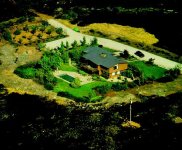
Thanks for the comments about wind-driven fires jumping what I thought was truly "defensible" space around a dwelling. So you're saying the kind of fire mitigation techniques illustrated in this picture won't work?

fire-safe.jpg
 
   / Wildfire Protection #19  
Defensible space is good for a low intensity fire but not for a wildfire in mid summer with a howling wind behind it. It is worthwhile as a basic defence....with lots of hoping in a bigger fire.

WeedPharma
 

Tractor & Equipment Auctions

2021 Allmand Bros Maxi-Lite II 20kW Towable Light Tower (A55973)
2021 Allmand Bros...
Commercial Lawn Mower 652R (A56859)
Commercial Lawn...
Honda EM3500S Portable Gasoline Generator (A59228)
Honda EM3500S...
CATERPILLAR 108" WHEEL LOADER RAKE (A52707)
CATERPILLAR 108"...
CAT D5G LGP DOZER (A58214)
CAT D5G LGP DOZER...
2013 Ram 1500 Crew Cab Pickup Truck (A59230)
2013 Ram 1500 Crew...
 
Top