
JLwoodworks
Silver Member

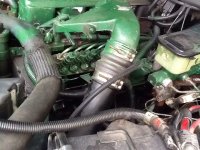
Thats my coolant filter setup.
First filter

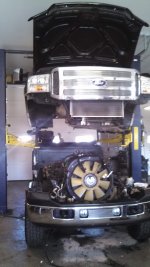
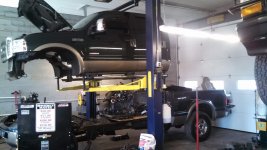
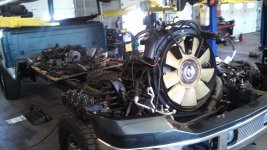
Crazy to see the cab off for the headstuds

And one all back together since we all love pictures on here


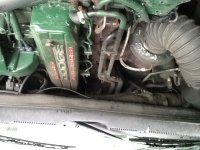

Crazy to see the cab off for the headstuds

Did you get rid of the truck after that experience?


And btw, to FTG-05, and anyone else regarding anti-freeze. In your pic it looks like possibly dexcool? Or maybe just the camera or something changing its appearance? You never want to stray from the Ford Gold antifreeze. Allot of people skimp and put green or orange to save a few bucks. I'm sure there are some other formulations that may be the same, I'm no chemist. Like maybe the Dodge equivalent (Hoat G05), but I'm not sure, I just always use Ford Gold. If you would like, I can explain why. Or I can mind my own business, lol. Just an observation, but it CAN cause major damage over time

And btw, to FTG-05, and anyone else regarding anti-freeze. In your pic it looks like possibly dexcool? Or maybe just the camera or something changing its appearance? You never want to stray from the Ford Gold antifreeze. Allot of people skimp and put green or orange to save a few bucks. I'm sure there are some other formulations that may be the same, I'm no chemist. Like maybe the Dodge equivalent (Hoat G05), but I'm not sure, I just always use Ford Gold. If you would like, I can explain why. Or I can mind my own business, lol. Just an observation, but it CAN cause major damage over time


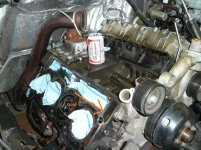
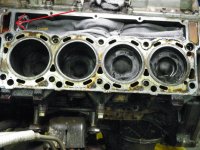
Wow. Looks like you guys have had to do some serious work to keep those on the road. Was that covered under warranty? Did you get rid of the truck after that experience?

But on a diesel, the main reason is far more destructive. A diesel is a high compression motor. If you look at the last picture in FTG's post, you can see the rings around the tops of the cylinders. There are sleeves that go down through the block forming the cylinders, and surrounding the cylinders is the coolant. When the piston goes down, the turbo fills the cylinder full of air, the piston comes up, it compresses it as tight as it can. If its tight enough to stretch the headbolts (which is why you get blown head gaskets), its tight enough to "bulge" these sleeves. When the sleeves bulge out, it pushes the coolant out with it. When the piston goes back down and the valve opens, the sleeve relaxes. The problem that was occurring was the aftermarket coolant couldn't keep up. It was forming tiny bubbles, if you will. When the next cycle came around, the bubbles would pop, and the coolant would implode back against the sleeve. Over time this pressure washing effect would eat its way all the way through the sleeves and into the cylinders. Game over. The manufacturer specific antifreezes are formulated to "stick" to the sides of the cylinders to prevent this from happening.





