DC stick amperage needed for general farm repairs.

   / DC stick amperage needed for general farm repairs. #1  

Ed of all trades

Elite Member
Joined
Jun 21, 2012
Messages
4,415
Location
Waynesboro Va
Tractor
John Deere X310, JD LA 145
I plan on doing basic "farm" type repairs and a little "farm" type fab work. I used to farm full time now I just play with some things here around the house and garden. I like building things for my little tractor and hope to get a bigger small tractor one day. I used to weld a lot but it was years ago and I forgot the amp setting. Looking at new DC inverter welders that you can carry around and plug in and weld. Is 160 amps enough or do I need to go to 200? I do hope to tig some damascus billets without filler rod so I won't have to grind the welds off. They will be a stack of about 1/8 or thinner steel by one inch. welded on the edge so they stay together until I can forge weld them. Ed
 
   / DC stick amperage needed for general farm repairs. #2  
For random stick/tig welding I don't see any problems with 160 amp welders.
They burn 1/8" rods very well.
 
   / DC stick amperage needed for general farm repairs. #3  
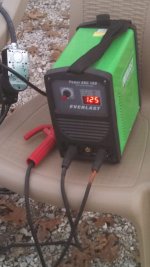
160 might be enough, it will be good for up to 1/4 material. I generally run stick welding from 110 to 130 amps, with 6013, 6011, or 7018 rods. Scratch start tig welding can be done on many of the newer stick welders. Most of the less expensive units won't include high frequency start, although the Everlast 160STH has it (the H is for high freq I am guessing). At $439 on Amazon, it is a bargain IMHO. But that assumes that you would do much TIG work, and therefore want the easier starting of high frequency start TIG. For about $375 you can step up to the Everlast 200 amp unit, which is scratch start TIG.

So one question is what process do you want to use, stick, tig, or mig? Stick is used on farm work many times due to the fact that you can weld semi-dirty or painted surfaces where MIG and TIG require the metal to be clean. TIG is a much more precise process, so it is commonly used where heat control is at least a moderate consideration, along with having a high quality appearance or low amount of impurities in the weld. MIG is considered by many to be the easiest process to learn, but like TIG the metal must be clean. Stick is the most tolerant of unclean metal, and the welds can be somewhat ugly and still strong.

All this is assuming that you are working with steel, not aluminum or stainless.

To answer your question about 160 versus 200, you need to think about where you want to set the limits, as it takes more amps the thicker the metal is. Also, look at the duty cycle of the welders that you are considering. A welder rated at 160 amps plugged into 220 volts is going to be at a 20 - 35% duty cycle, which means the percentage of time that you can welder per 10 minutes. If it supports TIG, it is probably a reduced rate, say 130 amps. And if you plug it into 110volts (if it supports dual voltage) it will be limited to 125 amps or less on the highest setting.

If it were me, and I had the extra bucks, I would spring for the 200 to ensure that I had the capacity for the future, but that's just me...
 
   / DC stick amperage needed for general farm repairs. #4  
160 might be enough, it will be good for up to 1/4 material. I generally run stick welding from 110 to 130 amps, with 6013, 6011, or 7018 rods. Scratch start tig welding can be done on many of the newer stick welders. Most of the less expensive units won't include high frequency start, although the Everlast 160STH has it (the H is for high freq I am guessing). At $439 on Amazon, it is a bargain IMHO. But that assumes that you would do much TIG work, and therefore want the easier starting of high frequency start TIG. For about $375 you can step up to the Everlast 200 amp unit, which is scratch start TIG.

So one question is what process do you want to use, stick, tig, or mig? Stick is used on farm work many times due to the fact that you can weld semi-dirty or painted surfaces where MIG and TIG require the metal to be clean. TIG is a much more precise process, so it is commonly used where heat control is at least a moderate consideration, along with having a high quality appearance or low amount of impurities in the weld. MIG is considered by many to be the easiest process to learn, but like TIG the metal must be clean. Stick is the most tolerant of unclean metal, and the welds can be somewhat ugly and still strong.

All this is assuming that you are working with steel, not aluminum or stainless.

To answer your question about 160 versus 200, you need to think about where you want to set the limits, as it takes more amps the thicker the metal is. Also, look at the duty cycle of the welders that you are considering. A welder rated at 160 amps plugged into 220 volts is going to be at a 20 - 35% duty cycle, which means the percentage of time that you can welder per 10 minutes. If it supports TIG, it is probably a reduced rate, say 130 amps. And if you plug it into 110volts (if it supports dual voltage) it will be limited to 125 amps or less on the highest setting.

If it were me, and I had the extra bucks, I would spring for the 200 to ensure that I had the capacity for the future, but that's just me...


How many times have you heard someone say " I wish I had a lot smaller welder"??
 
   / DC stick amperage needed for general farm repairs.
  • Thread Starter
#5  
I have a 160 amp mig and just want a stick with the ability to do tig in the future. Will 160 amp tig do the billets I hope to do in the future? The PA 200st is a lift arc tig and I am leaning toward that. Ed
 
   / DC stick amperage needed for general farm repairs. #7  
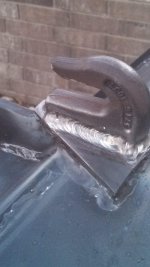
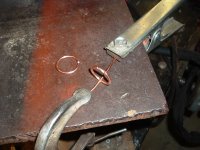
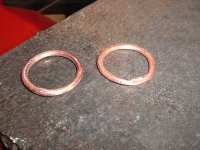
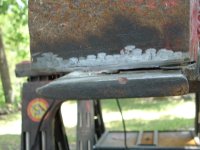
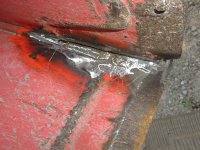
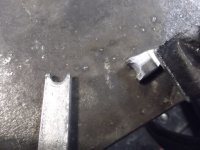
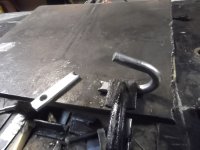
Here are some photos below of what my little 160 amp welder can do. If you wan to weld 1/8 inch material, I can't see why a 160 amp welder would not work for you. Below are stick and TIG projects done with the little PA160 Everlast
IMG_20121117_165336_859.jpgIMG_20131023_145811_920.jpgIMG_20131018_104229_173.jpgIMG_20131018_115507_563.jpgtig and ground.jpgIMG_20121117_165303_772.jpgDSCF0524.JPGDSCF0525.JPG6outside weld.jpg4outside prep.JPG5inside prep.jpgPicture 006.jpgPicture 007.jpgPicture 011.jpg
 
   / DC stick amperage needed for general farm repairs. #8  
I used a 230 ampAC buzz box on the farm for over 45 years. (Still have it)

Although I am now retired and have 'bigger' machines, I'm certain I could get by just fine with only my 150 amp stick/lift arc tig.

ImageUploadedByTapatalk1455495168.251903.jpg

Edit: sorry no cool project pics like James'. :)
 
Last edited:
   / DC stick amperage needed for general farm repairs.
  • Thread Starter
#9  
Anyone know of a cheep and good 160 or so amp stick and lift arc tig welder?
 
   / DC stick amperage needed for general farm repairs. #10  
Anyone know of a cheep and good 160 or so amp stick and lift arc tig welder?

IMHO "cheap" shouldn't be a priority....

I don't think you can go wrong talking to Mark at Everlast.

Terry
 
   / DC stick amperage needed for general farm repairs. #11  
Anyone know of a cheep and good 160 or so amp stick and lift arc tig welder?

My ESAB 161 is a very good one - it is just as good as my maxstar was.

I only sold it to buy the ESAB because I had the stick only version of the Miller.

Tweco makes very nice multi process machines too.
 
   / DC stick amperage needed for general farm repairs. #12  
Tweco makes very nice multi process machines too.


Dave makes a good point. For a few bucks more you can also mig.

NOW we've started you down a slippery $$slope$$. :D

I like my little Tweco.
ImageUploadedByTapatalk1455497547.080254.jpg

Terry
 
   / DC stick amperage needed for general farm repairs. #13  
My field welder was a 10 hp Generac portable, 5kw "standby generator" powering a 200A ACDC Model 130 Miller stick welder. I used 3/32 6011 rods; anything larger was a waste of time. I was welding 2 ⅜ Sch 30 pipe or steel purlins and it was all I could do to get things stuck together; even had to do it on AC to get more amperage out of it for what was driving it...obviously the joints were horrible, not pretty but functional. Later on I managed to get a 6500w 16 hp power unit (standby generator) and that was enough to do it right. Always wanted one of the fancy all in one professional grade but I'm retired not and that window has come and gone.

Now how many amps did I get out of it??????? Well if the source was 5kw, forgetting losses, and the arc voltage was 40v, then 5000/40 is 125 amps...factor in the losses and probably around 100. So your 130 number is kinda iffy, but if that's all you have, just crank the amps all the way up, use the AC function and she'll deliver what she can of that max selected amperage. Then ensure that you use the smallest diameter, easiest welding rod you can find. I think on the rods the 2013 and 7018 tied for a close second but didn't penetrate all that much......course I didn't need all that much. I think the 6011s in 3/32 were easily obtainable and the others seemed to stop at ⅛" as far as availability around was concerned.
 
   / DC stick amperage needed for general farm repairs. #14  
I just got a mufti process machine that can do mig, stick and tig. Got it primarily for portability, weighs around 50lbs and has 110 and 220 plugs. Max amps is 220 with GMAW. Can run off my 10k watt genny for pipe fence (stick). As some nice features, inductance, run in, arc force and hot start.

This is a Lincoln electric 210mp runs around $1k and comes ready for stick and gas mig. Aluminum spool gun and tig separate.

As to your origional question, with this machine, you dial in your process, steel thickness, electrode and it will set your amps (ballpark) and you fine tune From there...
 
   / DC stick amperage needed for general farm repairs.
  • Thread Starter
#15  
I keep coming back to where I started. I was looking at the Power Arc 200 st from Everlast. It has the lift arc tig and stick with 60% duty cycle. Have heard good things about that welder and it is only $349. I had thought I might save a few $$$$$ if i got a 160 amp welder instead but I have not found that to be true. What I want is the PA 200st but if it were in 160 amp for less $$$ I would lean toward it. Money is Tight and other things are not helping right now. Thanks Ed
 
   / DC stick amperage needed for general farm repairs. #16  
I would go with at least a 200-amp welder for SMAW. It is nice to have a little safety factor with the welder. Just say you get into a project that requires you to run 5/32-inch 7018 one after the other.
In time you could pick up a Tig rig, and maybe find a good deal on an LN-25. Pretty much all your bases would be covered then.
 
   / DC stick amperage needed for general farm repairs. #17  
For what you want to do, I think the only difference between the 160 and 200 is gonna come down to duty cycle. With 1/8 rods, its rare to get to 160a or more. But lets say you are burning some thicker stuff and pushing near 140-150a. The 200 isnt gonna cycle out as quickly as the 160.

Here are some photos below of what my little 160 amp welder can do. If you wan to weld 1/8 inch material, I can't see why a 160 amp welder would not work for you. Below are stick and TIG projects done with the little PA160 Everlast
View attachment 457090View attachment 457092View attachment 457091

Not to derail the thread, But was that the old kubota bucket or the new kioti? or someone elses? I must have missed a thread where you fixed that....or did you not post one? Whatever loader it was on...how did you manage that?
 
   / DC stick amperage needed for general farm repairs. #18  
For what you want to do, I think the only difference between the 160 and 200 is gonna come down to duty cycle. With 1/8 rods, its rare to get to 160a or more. But lets say you are burning some thicker stuff and pushing near 140-150a. The 200 isnt gonna cycle out as quickly as the 160.


Not to derail the thread, But was that the old kubota bucket or the new kioti? or someone elses? I must have missed a thread where you fixed that....or did you not post one? Whatever loader it was on...how did you manage that?

The old Kubota bucket. In examination of the original weld, in my opinion it was not welded properly at the factory. The other side of the bucket had much more weld metal in place than the side that cracked. I am not sure when it cracked, as there was a lot of rust in the crack, and must have been busted for some time. In any case, I just ground it out and welded it back up, and it has held nicely ever since. You can follow it here on this thread.
 
   / DC stick amperage needed for general farm repairs. #19  
The old Kubota bucket. In examination of the original weld, in my opinion it was not welded properly at the factory. The other side of the bucket had much more weld metal in place than the side that cracked. I am not sure when it cracked, as there was a lot of rust in the crack, and must have been busted for some time. In any case, I just ground it out and welded it back up, and it has held nicely ever since. You can follow it here on this thread.

I see....you were using it on that big bad kioti loader:laughing:

I do think I remember reading that post now.....eh....memory going to h3ll.

Ok....no more derail. Back to welders.
 
   / DC stick amperage needed for general farm repairs. #20  
Look for a high OCV (open cicuit voltage) in a welder - easier to start an arc (especially for rusty steel) and the arc is more stable. A good SMAW machine will have at least 80 volts OCV in DC mode.
John
 

Marketplace Items

Meyer 8' Snow Plow w/ Bracket (A55272)
Meyer 8' Snow Plow...
Kubota Snow plow with subframe
Kubota Snow plow...
2011 CATERPILLAR 924H WHEEL LOADER (A60429)
2011 CATERPILLAR...
2012 FORD F450 XL SUPER DUTY TRUCK (A59823)
2012 FORD F450 XL...
2021 UTILITY VS2DX 53FT DRY VAN (A59905)
2021 UTILITY VS2DX...
Honda EM3500SX Portable Gasoline Generator (A59228)
Honda EM3500SX...
 
Top