Water storage solutions in a drought

   / Water storage solutions in a drought #1  

beowulf

Veteran Member
Joined
Dec 31, 2003
Messages
1,316
Location
Central California Foothills
Tractor
Kubota L3410 HST, J Deere riding mower
For 35 years we have lived here on a well with a 1.5 hp pump at 420' and a pressure tank set to 40-60. The last time the yield was tested it was about 21 gpm. We never had any issue with water and we use a good bit with gardening, orchard, landscaping, animals, household, and my wife's countless flower pots and plots. However, this year it is reported to be the third driest year in Cali history and there was an article in the local paper about expectations that many wells may go dry or the yield greatly unreliable. Also many here in the foothills are sharing stories about how wells have gone dry in the past in such circumstances. That got me to thinking that I may want to put in a storage tank just in case.

But because the current plumbing set up is that water comes out of the shaft and into the pressure tank and into the house, I am not certain what my options would be to install a storage tank as a back up. I could put it up the hill side and use it as a valve controlled gravity fed source if needed but the pressure would be quite low. Or, perhaps I could do that but then also add a booster pump between the storage tank and the house but would I then also need another pressure tank or somehow manage the booster pump in some way to turn it on and off? That does not seem feasible. Maybe plumb things so that the well pump pumps into a storage tank with a float switch to shut it down when full, and then a booster pump at the out port of the storage tank pumping into my existing pressure tank. Need some advice before I screw things up. Sometimes my confidence out paces my abilities and understanding. But I am always fond of a challenge.

In the past I have thought about a gravity fed storage tank in case the electricity was out for a prolonged period of time and so maybe there is a solution for both a drought situation and a power-out situation. That plan, however, was to put the gravity tank far up a hill side which would not quite work out if I plumb it as outlined above.

Suggestions?
 
   / Water storage solutions in a drought #2  
Here, our water has a ton of minerals in it, no shortage but lots of calcium so I use 3 350 gallon IBC totes for storage of rainwater from the gutters on the shop and I use that for equipment washdown and watering the garden. You could probably do the same for water storage. I did use food grade IBC totes and I wrapped each of them in black plastic stuck on with 3M general Trim adhesive so there would not be a sunlight / algae issue.

Had them for 5 years how, works very well and IBC totes are cheap to buy.
 
   / Water storage solutions in a drought #3  
We had two 1750 gal storage tanks set up on our well system (when I was still using the well). Our first well went dry, drilled a second well 200' deeper. It produced 15 gal / min at first, but over 3 years, also went almost dry (maybe 10 gal per HOUR)

At that time, set up a timer in conjunction with the pump protector. When the pump protector tripped to "off", the timer would trip on, keeping the pump protector from starting the pump for 2 hours until the well would replenish. This is when we installed the tanks.

The well would feed into one tank with a float valve to turn it off when full. The second tank was just gravity fed from the first (effectively filling both tanks simultaneously). The same pipe that gravity fed the tank was where a booster pump was installed (off a "T" fitting) so it pulled from both tanks. The original 60 gal pressure tank was right after the pump, then going to the house.

It worked very well like this for years, supplying a 5 BR, 3 bath house, 6 people. ......Until that well went dry. It cost me over $35K to get the municipal water line run a mile to our house.

In your situation, I would probably just install a couple of tanks, plumb them into the system with shut off valves. You would need to put a shut off on the well pump supply line (or at least a one way check valve) to prevent the tanks from draining back down the well. Also a valve prior to the pressure tank to isolate the pressure tank to the house (This will allow shunting the well to fill the tanks without backflowing from the house). I would also put a booster pump on the tank line before the shutoff. (You can still fill the tanks just flowing backwards through the pump).

This will allow a few things...
1) if the well pump ever went out, you could still operate the household at full pressure running off the tanks.
2) you can fill the tanks from the well by turning a few valves.
3) you can run a booster pump off of a small generator, in case of power failure.
4) you can set up a hose tap after the booster to be able to connect a hose for fire suppression.... won't put out a wildfire, but could wet stuff down if needed.

I hope this helps. Don't hesitate to ask any other questions.
 
   / Water storage solutions in a drought #4  
Have you have kept records on the static water level in your well? If so - then the first step is to see what the static water level is now. Maybe all your concern is for naught.
 
   / Water storage solutions in a drought
  • Thread Starter
#5  
LS Tractor, thank you for your thorough response. I have read it several times - understanding the concept a bit better each time. I will likely post my understanding of your plan along with questions tomorrow. I think I get most of it but not quite all. I had planned on locating the tank I was contemplating about 80 feet away and about 40 feet higher than the well, which would involve a lot of work in terms of trenching and running electricity there. But, if I understand how your plan might work for me, I think I could locate it right near the existing well and still accomplish most of my tasks. I will elaborate once I rethink all this. Thanks again - got me thinking.
 
   / Water storage solutions in a drought
  • Thread Starter
#6  
oosik, thanks for responding. The last time the well was opened the static water level was less than two feet down - that is with the pump set at about 420'. I am guessing it is about the same now. But the real problem with the wells around here would be in July - August - September. So that is what I am trying to prepare for. You are right that it may never be an issue, but if we do have a problem it would be a huge problem. One good thing, I suppose, is that we are higher than most homes here in the hills (2430' elevation) with a mountain ridge just above us. So the hydraulics of the water in the fissures in the rock might mean that we would get our water first - or could mean that it would just all drain away below us. I don't know enough about how it all works to figure out what we might face. We do have several seasonal small springs on the 90 acres.

BTW - a week ago we had a well drilled on a hill on this same property about a tenth of a mile away from our well. It is for a planned home our daughter and son-in-law want to build there. They did not hit water until 690' (8 gpm then). That well was not likely drilled in an optimal location. I should have selected a site about 300-400 feet away and near a spring but that would have been a difficult location to drill and would present significant problems with trenching and power getting there. Still, kind of wish I would have done that. I am not too old to learn things I guess.
 
   / Water storage solutions in a drought #7  
Judging aquifer reserves is tough in general, and especially so in California where the geology is beyond complicated. Depending on where you are, your local well company may be able to give you insights as to how large the local aquifer is, and whether you are at a deep center point or an edge. Not all drillers are happy to share that information, so definitely a YMMV.

FWIW: In our case, we are at the end of four miles or so of a ridge that has an aquifer in it, but there is no aquifer north or south of that band. My neighbor one mile west of us drilled 700' to get a low yield well. In addition to the main aquifer, there is a second small one that follows a draw. It is a much slower yielding aquifer, but lower in dissolved solids.

We use two 5,000 gallon tanks at the top of the hill fed by the main well pump. The two tanks gravity feed the rest of the property, including the house. In the house we have a 1/2HP booster into a pressure tank to have 40-60psi. Every 33.5 feet of elevation will get you 15psi.

If I were doing it over, and I will need to as the existing plastic tanks are forty plus years old, I would put in closer to 30,000 gallons of storage not so much to make it through droughts as for fire. I would also put in 12" of 2-3" rock as a base for the tanks. The current tanks have six inches or so of 1/8" minus base which the ground squirrels adore. One thing that you may want to consider is how water might get trucked to your tanks if the worst happens and your well goes dry.

@oosik makes a great point about monitoring the static water level, but I have to admit that I looked into it and it is pricey, and/or not super reliable, at least as far as I could tell. Or at least I couldn't find anything that struck me as reliable and safe. (One method is to drop a weighted string, another is to hang an air line that bubbles, neither which I want in my well, as a malfunction would likely require pulling the pump plus service.) I did find some electronic monitors, but the ones I found were thousands of dollars, for devices that concede that they aren't reliably accurate. I found a startup with an interesting solution using ultrasound probes, but they have been stuck in a verification mode for a couple of years which leads me to believe it doesn't really work.

If someone knows of a good monitor that can handle hundreds of feet in depth reliably, I am all ears.

All the best,

Peter
 
   / Water storage solutions in a drought #8  
Storage tanks are common where I am. We have one that's 9,000 gallons. The typical setup is that the well fills the storage tank using a float switch and then a booster pump supplies pressurized water from the storage tank.

I would be concerned about water just sitting in a tank asa backup getting nasty with algae and such. I think if you're going to put in the storage tank, you should go ahead and switch to a booster pump use the water from the tank.
 
   / Water storage solutions in a drought #9  
Storage tanks are common where I am. We have one that's 9,000 gallons. The typical setup is that the well fills the storage tank using a float switch and then a booster pump supplies pressurized water from the storage tank.

I would be concerned about water just sitting in a tank asa backup getting nasty with algae and such. I think if you're going to put in the storage tank, you should go ahead and switch to a booster pump use the water from the tank.
Unless the well water is contaminated with organic matter and bacteria, water just sitting isn't normally an issue. So, yes rain water tanks get pretty overgrown.

Our tanks are dark enough to prevent algae growing.

If you have iron or manganese in the water, letting the water sit will precipitate out some or most of the metals.

Ideally, the tanks are plumbed so that water is filled into one tank, and then flows to the next tank(s) and then is used to keep it turning over. Around here, the float is on the first tank, and the water cascades to the last tank, where the home is plumbed in near the top, with the fire line plumbed in the bottom to pull from all the tanks. Lots of ways to do it, and I think it really depends on the end users needs or goals.

All the best,

Peter
 
   / Water storage solutions in a drought #10  
All I have to say is. I'm thankful we live where we do (Great Lakes watershed). Water is never an issue here and you can hit water here with a driven point just about anywhere. Might not be the best because of the limestone strata but it's wet and plentiful.
 
   / Water storage solutions in a drought #11  
While you are kicking ideas around for emergency water for the house,you should make preparations for outdoor water that you can start using right away. That will save electricity, wear on well pump and possibly be better for plants than well water. I'm thinking elavated tanks to catch rain off roof plus an earth pond. A little 20x20 pond only 6 feet deep will store 18,000 gallons which would require quit an investment if stored in tanks.
 
   / Water storage solutions in a drought #12  
I remember with a sense of panic when our shallow well went dry back in the 80’s, but a friend quickly drove a new 25’ point a short distance away and we were back in business. Hope you always have the water you need.

The drought map is looking ugly (we have entered abnormally dry territory in the Adirondacks)
 
   / Water storage solutions in a drought #13  
While you are kicking ideas around for emergency water for the house,you should make preparations for outdoor water that you can start using right away. That will save electricity, wear on well pump and possibly be better for plants than well water. I'm thinking elavated tanks to catch rain off roof plus an earth pond. A little 20x20 pond only 6 feet deep will store 18,000 gallons which would require quit an investment if stored in tanks.
This is what I’m thinking. People hear 1,000 gallons and think that’s a lot of water. It isn’t. If you were wanting to plan for legit drought I’d be thinking in the tens of thousands at least.
 
   / Water storage solutions in a drought #14  
A little 20x20 pond only 6 feet deep will store 18,000 gallons which would require quit an investment if stored in tanks.

A pond could potentially store more water than tanks, but .... good luck getting a new pond permitted anywhere in California. And during a drought! Your neighbors who own nearby wells might have an opinion about you pumping groundwater to fill a new open-air pond.

My pond is 1 acre in size, 2.1 million gallons, 12' deep, replenished by a seasonal creek. Engineers calculate 57" annual loss due to evapotranspiration, which is consistent with experience. By late summer my pond level has dropped 4-5 feet below full. In a milder climate than the OP.

In his area, I'm pretty sure that a small pond would turn into a mud hole by mid-to-late summer.
 
   / Water storage solutions in a drought #15  
Our well rarely goes completely dry in the summer, but produces very little water. I have a 2500 gallon spun poly tank that I keep full, but we don't do much irrigation, just a small garden plot and a 5 x 16 raised bed. A 1/2 hp. centrifugal pump easily provides 5 gpm out of the cistern. Centrifugal pumps suck at sucking, but push like a bandit. I have a ball valve on the line from the well that lets me throttle back well flow. 1/2 gpm is plenty of water for domestic use. If the well goes completely dry, which happens in severe droughts, I can call for a truckload of water.

Both the well and cistern pumps have safety pressure switches that kick off if water pressure drops too low. It saves burning the packing out of the pumps, but I have to keep an eye on the system or risk running out of water if the well pump shuts down and I don't notice. Under normal circumstances, a float valve in the cistern keeps it topped off.

As a plus, the bottom of the cistern is about 4' above house floor height, and the tank is 8' tall, so we have low head gravity feed water during power outages. I have to fire up a generator to take a shower, but it's very convenient to be able to tap water at the kitchen sink or flush the toilet.

During normal water years the system keeps up just fine, but it's the end of April and hasn't rained since March. There was already a 220 acre brush fire just south of me this week. I've been out with a chainsaw, weed whacker and mower getting vegetation away from the house.
 
   / Water storage solutions in a drought #16  
Yes, I wish that we had the spare water for open air ponds.

Open air ponds around here lose many feet during the summer in the face of 10% humidity. Those in the California foothills also have altitude induced water losses.

Locally, within five milesthere are five permanent ponds that I know of. As far as I know, four of the five permanent ponds are spring fed, and I just don't know about the fifth. All are many decades old, and only one is natural, though enlarged, all of them built before there were regulations.

Permitting ponds in California is...complex. The starting concern is earthquake damage to the dam, and any resulting damage downhill for which the pond owner is 100% liable, and it goes "downhill" from there. If there is an existing low spot, you also have to worry about all of the California wetland species that might be affected like fairy shrimp before you enlarge it. I know of no circumstances that would permit a pond to be built on this property, but definitely dependent on locally issues.

Diverting rainwater from your roof(s) to tanks is also not without issue, and in many places in California, it is just plain not permitted. My county has only just permitted it in the last few years. You also have to factor in that with only 10-12" of annual rainfall in many areas, rainfall on a roof doesn't get you a lot. An inch of rain gets you roughly about half of a gallon per square foot of roof. A good rainfall here might be 0.25", so with initial water diversion, it isn't a lot.

Water rights in California are...different, as they are a mixture of rights to use due to ownership, and rights to use based in past, and continuing use (think miners needing water to sluice for gold). Lots of places have wordings like "all water through 1" pipe for irrigation", which might not cover other uses...and just because a stream flows through your property doesn't mean you have water rights.

Tanks have the advantage that water loss is minimal. Many of my neighbors have swimming pools as an emergency earthquake and fire water storage device, but the water loss can be significant, as is the installation cost and running costs are not trivial in the face of $0.37-$0.48/kWh electricity. One neighbor gets by on a maximum 4gpm well that occasionally goes slower.

We don't do much in the way of plant watering, and almost all of it is drip irrigation. Everything we have is low flow; toilets, sinks, shower, washer, dishwasher. We try to be low impact.

All the best,

Peter
 
   / Water storage solutions in a drought #17  
If you live in the West, it's probably a good idea to install drought infrastructure. Think of it as an insurance policy. Half of the United States is in a mega-drought right now, and it could get really ugly. Lake Powell is lower than it has been since they dammed the Colorado, and some big cities may become uninhabitable. We're already seeing climate refugees from Mexico and Central America. I wonder what they will call the new Dust Bowl when a million people have to leave Arizona to find drinking water?

Irrigation districts all over the West are being shut off. The NOAA drought map was updated on March 31, and it was looking really ugly even though we are still in the rainy season. Parts of the US where it rains in the summer have no concept of how dry it can get.

 
   / Water storage solutions in a drought #18  
It's too late this year to capture rain water in most of California. Except for the high sierras it only rains in the winter. To make it worse the rainy season seems to have ended early this year.

Our setup has a 10,000 gallon tank way up the hill from the house and well. Even that doesn't last long between watering the garden, lawn and home use. In the last drought ~5 years ago our well started sucking air. In that drought we stopped watering the lawn and cut back on the garden and made it through. The lawn makes a good fire break for the house but if it gets too dry to maintain it I'll have to do something else.

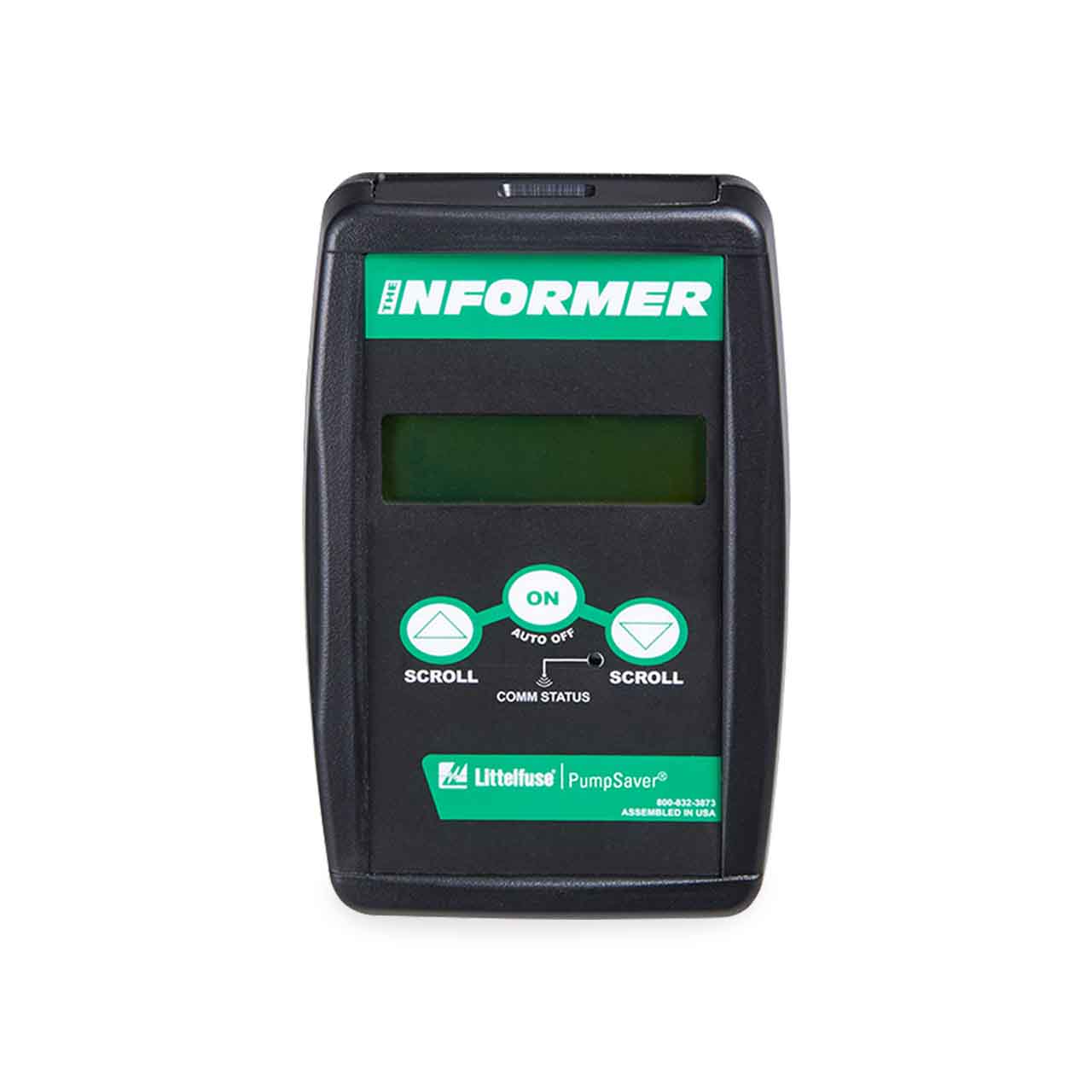
We have a pumpsaver on the well which shuts it off when the pump overspeeds or has other errors (which are generally caused by low water). It records the events. I use a small device sold by the same company to read out it's memory and find out when it's had soft and hard errors so I can tell when the level is getting low, before it shuts off. It's an electric device which you can add at the well head.

This is the one we have: SymCom PumpSaver 231 INSIDER-P | Pump Protection

The fiber optic cable hanging off it is what you use to read the data, using this:
 
   / Water storage solutions in a drought
  • Thread Starter
#19  
While you are kicking ideas around for emergency water for the house,you should make preparations for outdoor water that you can start using right away. That will save electricity, wear on well pump and possibly be better for plants than well water. I'm thinking elavated tanks to catch rain off roof plus an earth pond. A little 20x20 pond only 6 feet deep will store 18,000 gallons which would require quit an investment if stored in tanks.
Totally agree. We have barrels to catch the rain water from each building but it does not work out exactly as we hoped. Here we get rain only for a part of the year. This year it was from sometime in December through March. When it does rain the barrels fill quickly and then overflow. We don't need and really cannot use that water until the summer and getting it to where we want it is a problem. The water is collected at a lower elevation than where is later needed. We do have a small pond but that dries up every August and won't refill until after we get a bit of rain.

i really need, I think, because we live in the hills and things are situated on different levels (sort of terraced) that a storage tank higher up to catch and hold rain run off might help.

Thanks for responding. Gives me something to think about.
 
   / Water storage solutions in a drought
  • Thread Starter
#20  
It's too late this year to capture rain water in most of California. Except for the high sierras it only rains in the winter. To make it worse the rainy season seems to have ended early this year.

Our setup has a 10,000 gallon tank way up the hill from the house and well. Even that doesn't last long between watering the garden, lawn and home use. In the last drought ~5 years ago our well started sucking air. In that drought we stopped watering the lawn and cut back on the garden and made it through. The lawn makes a good fire break for the house but if it gets too dry to maintain it I'll have to do something else.

We have a pumpsaver on the well which shuts it off when the pump overspeeds or has other errors (which are generally caused by low water). It records the events. I use a small device sold by the same company to read out it's memory and find out when it's had soft and hard errors so I can tell when the level is getting low, before it shuts off. It's an electric device which you can add at the well head.

This is the one we have: SymCom PumpSaver 231 INSIDER-P | Pump Protection

The fiber optic cable hanging off it is what you use to read the data, using this:
Precisely - too late to capture the rain, and no easy way to collect it where we need it here in the hills. f our rain runoff would be above the house and such instead of below it would help. Before next year I may try to set up a system where all that water somehow gets to a tank below which we could them pump back up.

A large tank way up the hills behind our house / barn etc. makes sense as then we could use it as a gravity fed source. I know we can cut back on the garden, not so much on the small orchard, and have told the wife she may need to start thinking about how to manage all her flowers. We have never had an issue but I really want to be prepared given the consequences if we don't have water.
 

Tractor & Equipment Auctions

2020 CATERPILLAR 323 EXCAVATOR (A60429)
2020 CATERPILLAR...
DEUTZ MARATHON 60KW GENERATOR (A58214)
DEUTZ MARATHON...
2020 VOLVO 760 TANDEM AXLE SLEEPER (A57880)
2020 VOLVO 760...
2019 KUBOTA SVL75-2 SKID STEER (A60429)
2019 KUBOTA...
Year: 2016 Make: Ford Model: Explorer Vehicle Type: Multipurpose Vehicle (MPV) Mileage: Plate: Body (A55853)
Year: 2016 Make...
Preliminary Listing / Full Catalog Coming Soon! (A53317)
Preliminary...
 
Top