
Snobdds
Super Member
AttaboyStraight six beats V-8 in tractors & trucks.
Its is the best diesel configuration you can buy in a light, medium, or heavy duty.
Duramax is a nice V-8
AttaboyStraight six beats V-8 in tractors & trucks.
Its is the best diesel configuration you can buy in a light, medium, or heavy duty.
Duramax is a nice V-8


You’re a bit confused.Do note these new V6's, even the standard edition, make way more horsepower and torque than today's 5.7L V8 Hemi, as configured for pickups:
5.7L V8 Hemi: 395 HP / 410 lb-ft
Std. Hurricane V6: 420 HP / 468 lb-ft
HO Hurricane V6: 540 HP / 521 lb-ft

lol... oops! Actually, not confused, but in such a habit of typing "V" that I didn't even catch myself doing it.You’re a bit confused.
The new powerful engine is a “straight “ aka.. inline 6 cylinder. It’s not a V6.
The old lower powered Pentistar V-6 is only going to be used for recharging the battery on the hybrid truck, and maybe but not likely low end engine option
That is true.You’re a bit confused.
The new powerful engine is a “straight “ aka.. inline 6 cylinder. It’s not a V6.
The old lower powered Pentistar V-6 is only going to be used for recharging the battery on the hybrid truck, and maybe but not likely low end engine option
Come to think of it, I have 7 diesel diesel powered pieces of equipment.
5 are in-line 6’s, one in an in-line 3 and another is an in-line 4.
None are “V“ configuration and I didn’t custom order one of them and no V configurations were available.
Well, mine were all pretty much junk.You sound like the expert on V configurations...being bad.
Well, mine were all pretty much junk.
I’ve had Ford 351’s and 460’s. I think at most they made 230HP? Maybe 390 ft lbs?
Then I had probabaly 6 different 7.3L “Power” strokes that made about 210HP and 500ft lbs. Nothing really to write home about.
Then I had 3 different 6.4L powerstrokes that made good power but suffered horrific reliability and repair issues.
Had 1 Duramax with a V-8 that made nice smooth power…THAT was a nice engine.
Now in a Cummins in line 6 that will outpull any of those engines with ease.
All my farm tractors are in-line six. There’s few, if any ag tractors with V-8’s….. My BMX X-5 is a in line six twin turbo. That thing‘s got some gitty-up.
The pattern is there. I know what I’m talking about. All the manufacturers are going to in-line engines and making the V-8 part of history of the more inefficient engines we’ve been subjected to.


I see GM is having issues with the small diesel they put in the Colorado pickup trucks. Don't know what issues they are having however. Our vet has one and so far he's had no issues that I know of. I'm quite happy with my 7.3 Navistar diesel in my Ford F350 pickup truck but when I bought it in 1997, first trip was to Fords SVO in Rouge, Michigan and they modified both the engine and transmission and they dynoed it at 325 RWHP with OD locked out. It serves my needs quite well, never sees any snow, rust free and I've been offered what I paid for it new which was 37 grand. Not for sale. A new one comparably equipped would set me back close to 100 grand. Not happening while I'm alive. I have an ARB air locker in the front differential and a Detroit Tru-Trak out back, courtesy of Fords SVO I might add. All I paid for was the parts. No labor involved as my BIL was managing SVO at the time.I was not a fan of the in-line engines in the Saturn cars nor the in-lines in the first gen Colorado/Canyon trucks. I think engine design and proven durability trumps cylinder configuration. I have had great V's and inline's and very poor ones of different manufactures. Sometimes they get it right, sometimes not.
Inline engines are a long, long, long ago proven reliable design, from millions of small motorcycle engines revving up to 13k Rpm’s, to the largest 30 foot tall inline ship engines, to the current millions of turbo inline 4’s going in most SUV’s…Whatever sub-par engine GM put in Saturns or Colorados is no indication of the inline engine reliability or potentialI was not a fan of the in-line engines in the Saturn cars nor the in-lines in the first gen Colorado/Canyon trucks.
Inline engines are a long, long, long ago proven reliable design, from millions of small motorcycle engines revving up to 13k Rpm’s, to the largest 30 foot tall inline ship engines, to the current millions of turbo inline 4’s going in most SUV’s…Whatever sub-par engine GM put in Saturns or Colorados is no indication of the inline engine reliability or potential
Didn’t forget it. Cheapest to build. One cylinder head vs 2, one exhaust manifold vs 2, less camshafts. , etc.It's also the cheapest to build...you forgot that.
More internal bearing surface with the V.Cheapest to build. 1 cylinder head vs 2, one exhaust manifold vs 2, less camshafts. , etc.
An I6 is also better vibration balanced than a v8.
Intake plumbing has room on a side, and not restricted within the “V”
Only real drawback compared to a V is the inline is longer, but that’s not a real issue in a full size truck.
I’m glad RAM is going to a turbo I6
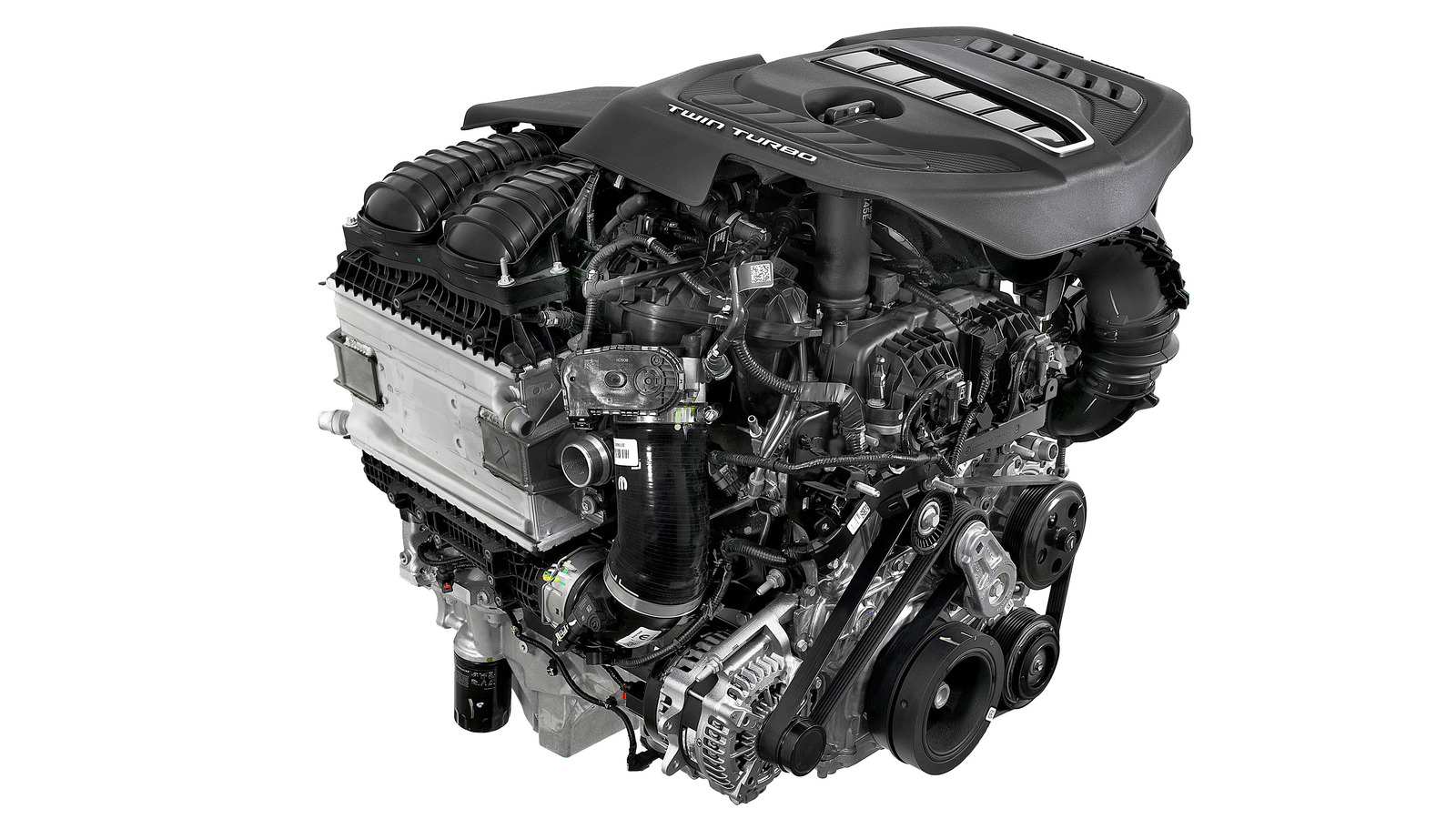
 www.slashgear.com

Thanks for posting. A very interesting read.Here’s a easy read on the advantages of an inline-6, as mostly compared to a V8
The Inline-6 Engine Is Making A Comeback: Here's Why - SlashGear
The V6 and V8 have dominated engine design for a long time now, but the inline-6 is making a comeback. Here's why it's happening and why it may be a good thing.
Engines with a v layout have also proven themselves. Honda, Suzuki, and Yamaha all had their v-4 bikes through the 80's on up (many were touring bikes). Also, ship engines can be had in v configuration, like the Colt-Pielstick engines.Inline engines are a long, long, long ago proven reliable design, from millions of small motorcycle engines revving up to 13k Rpm’s, to the largest 30 foot tall inline ship engines, to the current millions of turbo inline 4’s going in most SUV’s…Whatever sub-par engine GM put in Saturns or Colorados is no indication of the inline engine reliability or potential



