58 MPG by 2032

   / 58 MPG by 2032 #521  
Another problem...to cut weight, car companies are making cars with paper thin metals, aluminum and steel. These get hail damaged so easily, I'm sure the insurance companies will end up charging even higher prices to cover the hail damage. I know, I drive a hail damaged 2015 GM vehicle. the hood only weighs maybe 8 lbs? I can easily pick it up with 2 fingers thru the hood latch.
 
   / 58 MPG by 2032 #522  
Another problem...to cut weight, car companies are making cars with paper thin metals, aluminum and steel. These get hail damaged so easily, I'm sure the insurance companies will end up charging even higher prices to cover the hail damage. I know, I drive a hail damaged 2015 GM vehicle. the hood only weighs maybe 8 lbs? I can easily pick it up with 2 fingers thru the hood latch.
I noticed the same on EV mowers. Due to their high weight, manufacturers are going thin on things like mower deck sheet steel. They're still too heavy for many soft lawns, even after all the component weight reductions.
 
   / 58 MPG by 2032 #523  
I only met the Japanese plant manager when it was joint venture with GM, Toyota and UAW...

Even being a joint venture it seemed key management was Toyota and a lot of Toyotas produced and we have one of them...
The id10t that ran the Freemont factory ended up as CEO of the company I worked for (tier 1 supplier) and brought in a bunch of his old GM cronies to help him. We went from thriving supplier with facilities in 8 states to bankrupt and the pieces sold off to 2 Canadian firms in 2.5 years. Anything GM is cancer to me.
 
   / 58 MPG by 2032 #524  
They should scrap all the polution crap and let the car companies
work on making the gas/diesel engines run more efficent
A better exhause system will help improve gas mileage

willy
 
   / 58 MPG by 2032 #525  
I only met the Japanese plant manager when it was joint venture with GM, Toyota and UAW...

Even being a joint venture it seemed key management was Toyota and a lot of Toyotas produced and we have one of them...
The plant manager was named Don Dees, and he was 100% American.
 
   / 58 MPG by 2032 #526  
They should scrap all the polution crap and let the car companies
work on making the gas/diesel engines run more efficent
A better exhause system will help improve gas mileage

willy
Willy is silly. Today's automobile emissions are at least 100 times cleaner per mile than they were in 1966. Better running. Faster. And more efficient.
 
   / 58 MPG by 2032 #527  
Eh, the efficiency part of your argument is debatable. Look at average vehicle mpg by year. Flat for 20 years now. There's no denying that emissions control has hampered internal combustion efficiency, especially for diesels. I still vote for the cleaner emissions and same efficiency, personally. Otherwise all our cities would be disgustingly smog choked, every day.
 
   / 58 MPG by 2032 #528  
Eh, the efficiency part of your argument is debatable. Look at average vehicle mpg by year. Flat for 20 years now. There's no denying that emissions control has hampered internal combustion efficiency, especially for diesels. I still vote for the cleaner emissions and same efficiency, personally. Otherwise all our cities would be disgustingly smog choked, every day.
Ok, you placed the bet, I call, show your hand. How is there any doubt today's automobiles are not more efficient than in 1966 when there was no smog control?

1966 VW Beetle might get 30 MPG! My 2016 Subaru Outback's 26,338 mile average (26,338 miles divided by 908 gallons purchased, you can't average averages) is 29.06 MPG after a 550 mile 24 MPG hit driven by a lead foot brake/accelerator friend. My Subaru is a much nicer and larger vehicle than the Beetle.

OK, I decided to look it up. 1966 VW Beetle average 20.41 MPG: 1966 Volkswagen Beetle MPG - Actual MPG from 21 1966 Volkswagen Beetle owners

2016 Outback is 24.69 MPG at 2016 Subaru Outback MPG - Actual MPG from 561 2016 Subaru Outback owners

Outback is PZEV emissions rated.
 
   / 58 MPG by 2032 #529  
I said "20 years", not 60.

But I should have more artfully articulated that actually, a major reason that overall american vehicle mpg is flat for decades now is because the vehicles themselves have gotten bigger and heavier, accounting for our consumer demand and safety requirements.

Nonetheless! Avoiding formation of NOx in combustion is a direct trade off for combustion efficiency - for both gasoline and diesel. We don't need to debate this basic fact, the tighter the emissions regulations get, the less efficient combustion can be in the cylinder given current and standard ICE technology. Measuring this trade-off in the dyno lab is my day job.
 
   / 58 MPG by 2032 #530  
Eh, the efficiency part of your argument is debatable. Look at average vehicle mpg by year. Flat for 20 years now.
Data is an inconvenient thing. You can easily see that the actual CAFE performance averages are all up 30% - 50% over the last 20 years. This is data, this is fact.

1695653239140.png


   / 58 MPG by 2032 #531  
Data is an inconvenient thing. You can easily see that the actual CAFE performance averages are all up 30% - 50% over the last 20 years. This is data, this is fact.

View attachment 823195

Lol, so smug. You obviously don't realize how complex the CAFE calculations are. Its a system to be gamed by the manufacturers. Edit: sorry, I don't need to be this rude. Having a monday here at work, haha.

Here is the real world performance of mpg in the USA. Yes, it is ticking back up more recently with improved transmissions, reduced rolling losses, better aerodynamics, and increasing hybridization. But the truth is that the combustion efficiency inside the internal combustion engine is not improving much at all.

1695655006465.png
 
Last edited:
   / 58 MPG by 2032 #532  
The plant manager was named Don Dees, and he was 100% American.
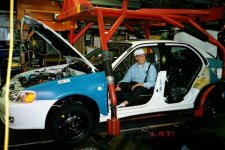
When mom ordered her one and only new car it was a Toyota Corolla… 2001 model S with factory sunroof.

I wrote a letter to the president of Toyota in Japan asking to see her car being made and received a response with build date inviting mom and me to come to the factory as it was being made.

A person identified as plant manager invited us to the company cafeteria and sat down with us for a few minutes saying he was from Japan and he gave mom a Toyota hat signed by himself and others…

We later received a copy of the company newsletter with a very nice write up of our visit…

Maybe he was the Toyota side of the joint venture?

Super car and many a time over 40 mpg.

The undercarriage is signed by many of the line workers with a sharpie... a true signature edition.

I couldn't believe the red carpet treatment and we witnessed the first start at the end of the line...
 

Attachments

  • F3BD9370-AC00-4A81-AB3B-CBD1ABB2F3BE.jpeg
    F3BD9370-AC00-4A81-AB3B-CBD1ABB2F3BE.jpeg
    169.6 KB · Views: 129
Last edited:
   / 58 MPG by 2032 #533  
Lol, so smug. You obviously don't realize how complex the CAFE calculations are. Its a system to be gamed by the manufacturers. Edit: sorry, I don't need to be this rude. Having a monday here at work, haha.

Here is the real world performance of mpg in the USA. Yes, it is ticking back up more recently with improved transmissions, reduced rolling losses, better aerodynamics, and increasing hybridization. But the truth is that the combustion efficiency inside the internal combustion engine is not improving much at all.

View attachment 823203
Yeah, sorry that sounded smug. But what's your source for this data? Mine came from NHTSA (link provided). Clearly they're using a different basis for calculating average MPG, assuming both are honest graphs.
 
   / 58 MPG by 2032 #534  
Yeah, sorry that sounded smug. But what's your source for this data? Mine came from NHTSA (link provided). Clearly they're using a different basis for calculating average MPG, assuming both are honest graphs.
Here's part of the problem...excerpted from the report that goes with your graph.

This is just effectively an average of the mpg of those broad classes as reported by the mfg. The numbers will get better if the market (no necessarily sell) smaller, more fuel efficient vehicles. Want to sell more Tundras? Put some additional Prius models in the fleet.

The other data is actual engine performance.

So, they way I am seeing the data, yours is easy to manipulate just by selling more 4 cylinder or hybrid cars. Deezler is looking at the engines themselves and comparing if a given 4 cylinder get better mpg today than it did X years ago.
1000001516.jpg
 
   / 58 MPG by 2032 #535  
I said "20 years", not 60.
I said 1966 and you changed to fit your narrative.
But I should have more artfully articulated that actually, a major reason that overall american vehicle mpg is flat for decades now is because the vehicles themselves have gotten bigger and heavier, accounting for our consumer demand and safety requirements.
So you admit vehicles are getting more efficient in spite of emissions regulations. Not a question.

My 2018 4x4 F-150 is much bigger, faster, capable, and nicer than the 2001 Sonoma I had. MPG is better in the F-150. No doubt the F-150 meets more stringent emissions standards.

Edit: So not only is my F-150 more economical, it is much more efficient doing more work with less fuel.
 
   / 58 MPG by 2032 #536  
Lol, so smug. You obviously don't realize how complex the CAFE calculations are. Its a system to be gamed by the manufacturers. Edit: sorry, I don't need to be this rude. Having a monday here at work, haha.

Here is the real world performance of mpg in the USA. Yes, it is ticking back up more recently with improved transmissions, reduced rolling losses, better aerodynamics, and increasing hybridization. But the truth is that the combustion efficiency inside the internal combustion engine is not improving much at all.

View attachment 823203
Come back when you learn the difference between "fuel economy" and "fuel efficiency".
 
   / 58 MPG by 2032 #537  
1have learned that the ones with the VW bug drove them
until they quit running. Also you list 1966 VW and 2016
Suburu. I had a 1966 Dodge 273 cu in auto and running wide
open going from Great lakes ILL to Fond du Lac WI of
course I had to slow down going threw the boder but I was
getting 19 mpg. 126 miles took me hour and 25 minutes
VW had a diesel test vehicle that was getting 24 mpg at
220 mpg they also have it looked like a small enclosed
motor cycle and it they said got 160 miles on one gallon
of diesel it was one cyclender
I tried to find this on the internet but all I get is the VW diesel
scandal


willy.
 
   / 58 MPG by 2032 #538  
Come back when you learn the difference between "fuel economy" and "fuel efficiency".
Oh please, do enlighten us.

I measure indicated mean effective pressure (IMEP) and brake thermal efficiency (BTE) to evaluate the performance of our powertrain components in a wide variety of internal combustion engines, maybe you want to learn about that?

Of course fuel economy means MPG. But "efficiency" is a looser term that depends on your specific context.

I already explained why overall vehicle mpg is increasing above, but I'll copy and paste it again for you: "improved transmissions, reduced rolling losses, better aerodynamics, and increasing hybridization".

My point was that tightening emissions regulations continue to prevent us from achieving better combustion efficiency in-cylinder. Not sure what is confusing to you about that, but let's be done with this.
 
   / 58 MPG by 2032 #539  
Still odd the Utility sends out thank you messages when consumption drops and pushes rebates for a multitude of energy saving appliances and measures.


If my business is selling electricity why would I spend money and provide incentives to customers for buying less of what I have to offer?
So that as their customer base residential and commerical increases they can continue providing a high level of service without having to increase generating capacity?
 
   / 58 MPG by 2032 #540  
If my business is selling electricity why would I spend money and provide incentives to customers for buying less of what I have to offer?
Since a few people have asked the same, it's worth clearing this up. Electric utilities receive state and federal money in rebates, and are both incentivized and required to support this advertising, promoting energy usage reduction, or at least reducing its growth. As you know, their rate changes must be approved by state and/or federal government, and requirements for them to host these campaigns can be attached to the approval of such rate hikes.
 

Tractor & Equipment Auctions

2025 CATERPILLAR 255 SKID STEER (A60429)
2025 CATERPILLAR...
Butler MFG Water Tanker (A56438)
Butler MFG Water...
3ft Metal 5-Point Star Art (A55853)
3ft Metal 5-Point...
2004 Pierce Tilt Crew Cab Enforcer Fire Truck (A59230)
2004 Pierce Tilt...
2018 Toro Groundsmaster 7200 72in Zero Turn Commercial Mower (A59228)
2018 Toro...
KUBOTA SVL97-2 SKID STEER (A60429)
KUBOTA SVL97-2...
 
Top