You are using an out of date browser. It may not display this or other websites correctly.
You should upgrade or use an alternative browser.
You should upgrade or use an alternative browser.
Battery based electric vehicles of today and tomorrow.
- Thread starter Gale Hawkins
- Start date
- Views: 985715
- Status
- Not open for further replies.
More options
Who Replied?
/ Battery based electric vehicles of today and tomorrow.
#5,201

California
Super Star Member
- Joined
- Jan 22, 2004
- Messages
- 16,664
- Location
- An hour north of San Francisco
- Tractor
- Yanmar YM240 Yanmar YM186D
That explanation makes the most sense.Engine brake with a two stroke would destroy the engine, no gas, no lubrication, so a free wheel was installed to avoid this problem.
Here in California early Saabs and DKW, were exceedingly rare. And the Simca's with the modified Ford V8-60 engine. Only imported by individuals. The only place I saw any of these was near UC-Berkeley, likely brought back from a vacation in Europe by free-thinker types on the faculty there.
While VW, Volvo and Mercedes were common and had dealer support.
OP
Gale Hawkins
Super Star Member
- Joined
- Sep 20, 2009
- Messages
- 12,426
- Location
- Murray, KY
- Tractor
- 1948 Allis Chambers Model B 1976 265 MF / 1983 JD 310B Backhoe / 1966 Ford 3000 Diesel / 1980 3600 Diesel
Gasoline is a coolant. If piston driven plane engines were ran too lean they would get too hot.
We know electric cars came first because the technology was more simple. Gasoline took over because that energy source could be distributed by donkey and ox carts into places with no electric grid requirements.
Today EV braking force comes mainly generators. Power distribution doesn't require pipelines and power grid infrastructures in a technical sense.
We know electric cars came first because the technology was more simple. Gasoline took over because that energy source could be distributed by donkey and ox carts into places with no electric grid requirements.
Today EV braking force comes mainly generators. Power distribution doesn't require pipelines and power grid infrastructures in a technical sense.

MossRoad
Super Moderator
- Joined
- Aug 31, 2001
- Messages
- 66,167
- Location
- South Bend, Indiana (near)
- Tractor
- Power Trac PT425 2001 Model Year
My first boss said when she and her sister were in high school in the early 60's, her dad bought them a Messerschmitt to drive to school in. 3 wheeled car with 2-stroke engine. She said they had to put in X gallons of gas then add correct amount of oil to the gas, then grab the bumper and shake the car!First time I saw a Saab I was working in a gas station. Owner poured his quart of oil in the gas tank then asked for precisely 8 gallons of gas.
Obviously a 2-stroke, but I hadn't known there were 2-stoke cars before that.

She said frequently they'd pull up to school and some football players would pick the car up and carry it around the parking lot with them in it.

Torvy
Super Member
This describes every player on a Samoan rugby side.There's a player position in American football (can't remember the name) were typically the top players are not only really big, but also extremely agile.
Rgds, D.

California
Super Star Member
- Joined
- Jan 22, 2004
- Messages
- 16,664
- Location
- An hour north of San Francisco
- Tractor
- Yanmar YM240 Yanmar YM186D
That reminded me - back then I had a paper route that went by a small Volvo dealer. His back row by the fence always had interesting cars that he apparently bought just for fun.My first boss said when she and her sister were in high school in the early 60's, her dad bought them a Messerschmitt to drive to school in. 3 wheeled car with 2-stroke engine.
First time I saw a BMW was in there. BMW Isetta 3 wheels (or two closely spaced at the back) and the whole front of the car was the only door. Then a Subaru, nearly a twin to the BMW.
MossRoad
Super Moderator
- Joined
- Aug 31, 2001
- Messages
- 66,167
- Location
- South Bend, Indiana (near)
- Tractor
- Power Trac PT425 2001 Model Year
Our neighbors had an Isetta in the 60's. Pretty weird!
OP
Gale Hawkins
Super Star Member
- Joined
- Sep 20, 2009
- Messages
- 12,426
- Location
- Murray, KY
- Tractor
- 1948 Allis Chambers Model B 1976 265 MF / 1983 JD 310B Backhoe / 1966 Ford 3000 Diesel / 1980 3600 Diesel
https://www.autoevolution.com/news/...-wont-end-in-2022-intel-ceo-warns-172416.html
I have a hard time understanding how covid-19 did all of this damage to the automotive industry by itself.
I have a hard time understanding how covid-19 did all of this damage to the automotive industry by itself.
OP
Gale Hawkins
Super Star Member
- Joined
- Sep 20, 2009
- Messages
- 12,426
- Location
- Murray, KY
- Tractor
- 1948 Allis Chambers Model B 1976 265 MF / 1983 JD 310B Backhoe / 1966 Ford 3000 Diesel / 1980 3600 Diesel
The Coming Electric Car Disruption That Nobody’s Talking About
So the reality of us moving to EV'S is being grasped by the minds
of the USA industry!
The ICE industry is larger than I realized. It is kind of strange the lack of computer chips is bringing the ICE industry down faster than just the move to EV'S.
So the reality of us moving to EV'S is being grasped by the minds
of the USA industry!
The ICE industry is larger than I realized. It is kind of strange the lack of computer chips is bringing the ICE industry down faster than just the move to EV'S.

Frankenkubota
Elite Member
- Joined
- Jun 11, 2020
- Messages
- 2,827
- Location
- Carthage NC...Deep in the woods
- Tractor
- Kubota MX 5800, SkidPro 4 in 1, Ratchet rake, SkidPro pallet forks
here's one for you....i had a model 96? ....the station wagon version, looked just like the sedan in the front, batmobile in the back.First time I saw a Saab I was working in a gas station. Owner poured his quart of oil in the gas tank then asked for precisely 8 gallons of gas.
Obviously a 2-stroke, but I hadn't known there were 2-stoke cars before that.
i've had many english cars and when it comes to odd ball chit, saab takes the cake.
my saab had some odd ball chit.
4 speed manual, on the column
had a ford V4, 4 stroke engine....i still have the badge
here's the best one....if you were in gear, just rolling along and came to a downhill section where you lifted off the accelerator, the transmission would go into neutral. no movement of any kind on the column or any noticeable feel on the clutch pedal....it just free wheeled and the engin dropped immediately to idle.
just as soon as i touched the gas pedal everything went back to normal.
it was designed to do that and it took me a long time to figure that one out.
ANYONE KNOW WHY IT DID THAT?

txdon
Super Star Member
Yes, my 2019 KIA Stinger does the same thing in ECO mode. you let off the gas and it goes into coasting mode (neutral) if you start going downhill too fast it disengages back into gear and the motor will slow you down or it goes back into gear when you touch the accelerator or brake. The RPMs drop to an idle, about 1800 which is about 1000 less that the it would be if the car stayed in gear with your foot off the accelerator. It is done to save fuel. It coast downhill and if you are coming to a stop and take your foot off the accelerator. Once you come to a complete stop the motor shuts off and restarts when you take your foot off the brake.here's the best one....if you were in gear, just rolling along and came to a downhill section where you lifted off the accelerator, the transmission would go into neutral. no movement of any kind on the column or any noticeable feel on the clutch pedal....it just free wheeled and the engin dropped immediately to idle.
just as soon as i touched the gas pedal everything went back to normal.
ANYONE KNOW WHY IT DID THAT?
Frankenkubota
Elite Member
- Joined
- Jun 11, 2020
- Messages
- 2,827
- Location
- Carthage NC...Deep in the woods
- Tractor
- Kubota MX 5800, SkidPro 4 in 1, Ratchet rake, SkidPro pallet forks
i just posted a question that you already answered. when going downhill gravity is pushing the car, no need for gas.Engine brake with a two stroke would destroy the engine, no gas, no lubrication, so a free wheel was installed to avoid this problem.
while in gear and just coasting down the hill, foot off the gas, the engine will rev at high rpms with-very little fuel delivered therefor very little lubrication, with a 2 stroke.
the transmission in my car was a left over from 2 stroke days. unnecessary with a 4 stroke engine but why not use up the old transmissions?
Triumph kinda did a similar thing. They were ready to introduce their TR6 but found they had a bunch of TR4 bodies left over so they built a car for 1 year, used the new 6 cylinder motor. Used the left over TR 4 bodies.
It was called a TR 250. I had one. License plate read
NIFTY250
Cars gone but the plate hangs on my garage wall.
Never knew you could have so many U joints on one drive line!
Covid 19 gets the press these days.... but most of these situations have long-standing factors at play.https://www.autoevolution.com/news/...-wont-end-in-2022-intel-ceo-warns-172416.html
I have a hard time understanding how covid-19 did all of this damage to the automotive industry by itself.
Different sandbox, but with all the general reporting now about the backlog @ USA west-coast ports, I had the same thought-response... All Due To Covid ? Hmmm.....
Automotive has had razor-thin (for the component suppliers) margins for a long time. Micro-controllers and even certain sensors are sole-sourced, so when that one pipeline dries up, you wait.
I know of one ultrasonic DEF level-sensor that is sole-sourced across several diesel vehicle OEMs. THAT one has caused huge problems this year.
That ^ is a good example of the economics at play..... industrial ultrasonic fluid level detection is relatively old technology, so a company like Siemens could easily build that in volume..... but, I'd be surprised if they would even bid on an automotive RFQ.
Even pre-Covid, a lot of automotive component suppliers were fixing their gaze on The Exit, so in some cases it's just been the relatively small log that broke the camel's back.
How long can you wrap your own money around products going out the door ? A lot of businesses are struggling with that issue; Covid just being the headline grabber lately.....
Rgds, D.
Agvg
Elite Member
Then the factory has to do it the old way, build things themselves, go for lowest bidders and then lowering it bit more has its cost, so it's nice to see this race to the bottom bites them in the ass.
txdon
Super Star Member
"EVs cost more to power than gasoline costs to fuel an internal combustion car that gets reasonable gas mileage."
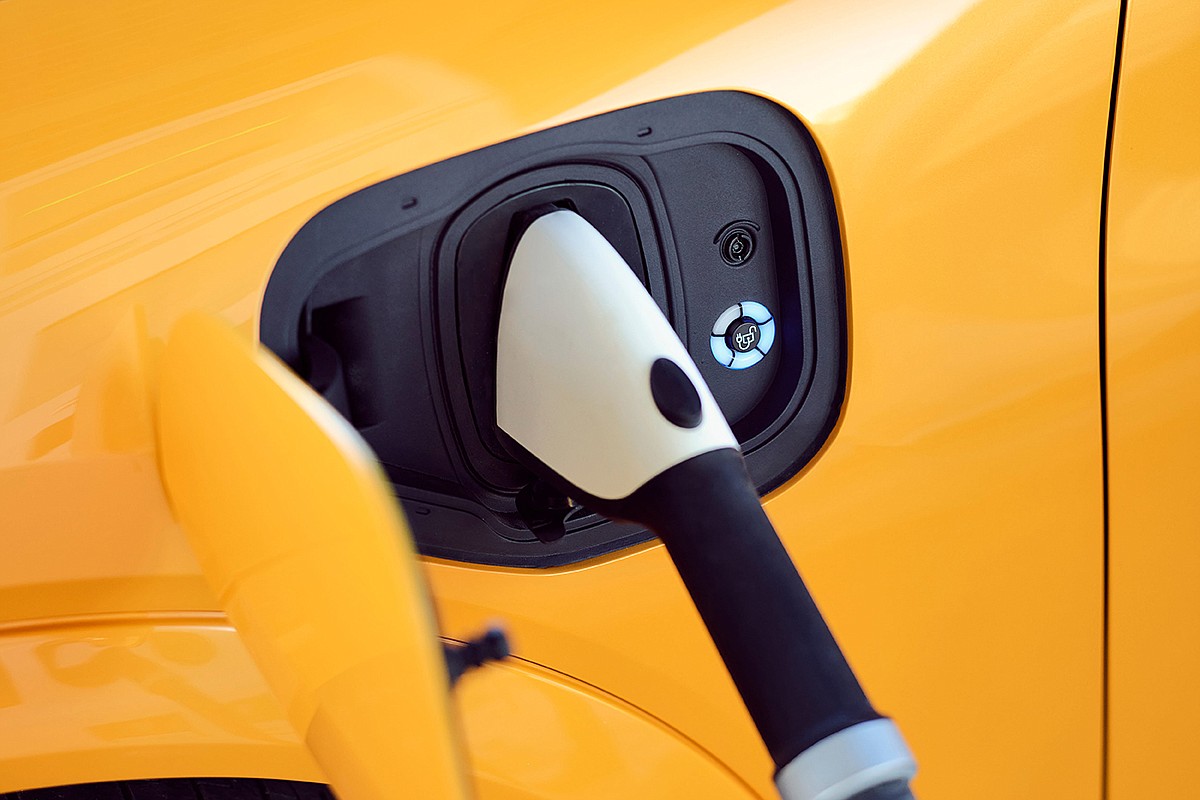
 www.texarkanagazette.com
Study compares electric vehicle charge costs vs. gas -- and results were surprising | Texarkana Gazette
Last year Patrick Anderson went electric: He got a Porsche Taycan EV in dark blue.
www.texarkanagazette.com

Larry Caldwell
Super Member
My older brother drove an Isetta when he was in college. It was good enough to get to classes.Our neighbors had an Isetta in the 60's. Pretty weird!
Cat385B
Silver Member
"EVs cost more to power than gasoline costs to fuel an internal combustion car that gets reasonable gas mileage."
Study compares electric vehicle charge costs vs. gas -- and results were surprising | Texarkana Gazette
Last year Patrick Anderson went electric: He got a Porsche Taycan EV in dark blue.
“The study found that the average cost to install a Level 1 charger is $600.”
Oh, you mean a standard 110 outlet that absolutely everyone already has? One of those? $600?
BS news stories like that should end with ‘published with permission from the Petroleum Industry’.

Fuddy1952
Elite Member
- Joined
- Apr 17, 2018
- Messages
- 4,332
- Location
- South Central Virginia
- Tractor
- 1973 Economy and 2018 John Deere 3038E
I believe there's a lot of truth if you read the entire article.
To me is prepping everyone for the Green New Deal (I'm being apolitical), getting people used to the idea petroleum is bad, electric is good without looking at the big picture. The environmental impact of upgrading our current electric grid, manufacturing/disposing batteries, manufacturing and installing towers, solar panels, wind generators, nuclear, etc.
It's not just as simple as plug it in, it gets 200 mpg equivalent, I can vacation charging in a few minutes like filling your tank now.
All the petroleum stations existing now, the price you pay per KWh right NOW will change, the landscape/deforestation impact & vistas will change.
It's a major, major change and foolish not to look at it from every angle. Never assume new is always better. Never embrace everything that comes down the pike as an improvement without looking deeper.
To me is prepping everyone for the Green New Deal (I'm being apolitical), getting people used to the idea petroleum is bad, electric is good without looking at the big picture. The environmental impact of upgrading our current electric grid, manufacturing/disposing batteries, manufacturing and installing towers, solar panels, wind generators, nuclear, etc.
It's not just as simple as plug it in, it gets 200 mpg equivalent, I can vacation charging in a few minutes like filling your tank now.
All the petroleum stations existing now, the price you pay per KWh right NOW will change, the landscape/deforestation impact & vistas will change.
It's a major, major change and foolish not to look at it from every angle. Never assume new is always better. Never embrace everything that comes down the pike as an improvement without looking deeper.
Torvy
Super Member
I thought the same thing. Our Prius Prime (plug in hybrid) came with an L1 charger. Plugs into the standard outlet.. We spent about $300 to have the 220 added for L2, but don't need it. While wife sleeps car gets fully charged. 90% of the times she drives it is local and is 100% EV. The other times it is just like a 'classic' Prius with 540+ miles of range beyond the EV miles.
“The study found that the average cost to install a Level 1 charger is $600.”
Oh, you mean a standard 110 outlet that absolutely everyone already has? One of those? $600?
- Status
- Not open for further replies.


