European vs US safety

/ European vs US safety #1  

niemeyjt

Gold Member
Joined
Jun 4, 2009
Messages
266
Location
Suffolk UK / Lausanne CH
Tractor
Kubota B1750
One of the many interesting things on TBN is the exchange of ideas and information between the posters from the different continents - so I thought I would run this one by you all for thoughts as a safety matter - I hope you do not feel an open discussion like this will dilute the message of a safety forum - if it does I am sure a mod will move it.

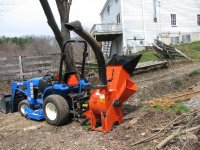
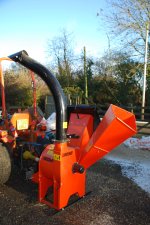
Attached are two photos of a Bearcat 73554 chipper shredder - one is Hazmat's (I hope he does not mind me using his photo, and I would like to thank him for his postings which guided me to my choice), the other is mine. Spot the difference (other than the blue / orange on the front)!

Clue - mine has the European feed extension that elongates the feed chute so I cannot put my hand down and touch the moving blades. It also means that I have to feed much straighter wood in, and wood without side branches, as otherwise it fouls the top of the feed chute. I also have to lift it higher.

In a similar vein, my wood splitter has two handles both of which have to be depressed to operate it so that (unless you have three arms) you cannot operate machine with a hand in front of the wedge. It also means you cannot use one hand to steady a log and stop it rolling off.

So my questions for your thoughts:

Do you think American-market (and maybe others?) products adequately protect the user or do you think that additional guards and controls like those fitted to European tools should be legislated for and fitted in all markets even if the cost does go up and functionality goes down?

Do you think that European-market products are overkill on the safety to the detriment of the operation of the machine where common sense should / would dictate that you don't feed you hand into a chipper or splitter?

Regards,

Julian
 

Attachments

  • us chipper.jpg
    us chipper.jpg
    151.2 KB · Views: 501
  • UK Chipper.jpg
    UK Chipper.jpg
    719.5 KB · Views: 473
/ European vs US safety #3  
Julian (BTW I have a great Uncle with that name!),

It is *my personal belief* that the Health and Safety laws of the EU (and many other MICs) are superior to those in the "States" and should be universally adopted.

Why do I say that? From the perspective of one born and raised in the US of A, Germany and many other EU countries have much more strict Health, Safety and Enviromental laws. Where do the technologies come from? Research and Development budgets of the companies.

"Oh well, you see that's the biggest reason not to do it, cost!" Yea, gnash your teeth all you want but when is PROFIT more important than safety? If safety and environmental laws are so terrible and costly, how come there are MANY many products so widly sold in the US when the reported "cost" of doing business like they do in the EU is reportedly so high???? Simple, the costs are not "so high", they may be a little more but not so much so that the products are non-competative. Lee Iacocca put it best, "Lead, follow, or get out of the way!" This applies to many things in life and I believe it's a good motto to aspire to.

I'm tired of listening to pundits complaining about anything related to a clean environment, safety or wages that might add $0.00000001 to the cost of a product. Do they REALLY expect me to believe that the US manufacturers are so stupid that they cannot figure out how to do anything both Well and Safely? Hmm, so we have the most inept workers and managers in the world, so much so that we must have some of the most lax safety, environmental and emissions laws just to compete?

Are we aiming to emulate China or Germany (GB, Norway, Sweden, Italy) in terms of quality of life?
 
/ European vs US safety #4  
IMHO things are not as simple as that.
I live in Europe and I don't find that European equipment generally has more safety features than US equipment. Yes, like niemeyjt's, my log splitter requires to have both hands on the handles and I'm grateful for that, prevents me from putting my hand in the wrong place, especially when tired. On the other hand, my JD tractor, like all tractors sold in France, has no safety belt.
There is a cultural and historical aspect to the way safety is understood in different countries : for instance, tractors cannot be sold here without 2 rear view mirrors and amber stobe lights, but they do not have a slow vehicle sign.
There is also an economic aspect to it. Lobbies can influence politicians to vote legislation making this or that device compulsory just because such and such a firm happens to manufacture it. Protectionism also plays a part on both sides of the Atlantic, there is a lot of legislation making imports more difficult in the sacred name of safety: for instance US headlights are not legal in Europe and vice versa.
Sorry for having been so long but I feel there is a lot to be said on the subject ...
 
/ European vs US safety #5  
I prefer the "common sense" approach rather then the nanny state concept of the European. In Europe, sometimes the bureaucrats are a bit too intrusive in the lives of the citizens (not just in safety).
I guess it depends if you want to control your own life or let some one else do it for you.
This topic has the potential of getting too political, so I'll end my response now.
 
/ European vs US safety #6  
Soulasphil - Good point about cultural and historical differences.

Here is another safety comparison. Where I lived in Germany, a licensed chimney sweep made mandatory visits to each home with a chimney - (virtually all homes) either once or twice (forget which) per year. The chimney sweeps each had a district for which they were the only sweeps.

He cleaned the chimney, inspected it and also had some say over the oil-fired boiler's operation as to emissions and safety. He had the power to condemn your chimney or furnace, forcing you to get it repaired.

Since the sweeps district was protected, you didn't have the option of getting a 'friendlier' opinion from another sweep.

Sounds like a 'nanny' thing alright, but it has the consequences of rare chimney fires and less air pollution. Those are worthy goals in and of themselves.

If you include the follow-on costs of a house fire from damage through death - which we all pay for one way or another, it has a validity that is hard to argue against.

The cultural feelings about this vary widely of course. Historically, one lazy homeowner could be responsible for burning down half the village in the days before modern fire fighting equipment. Culturally, you can decide it is better to have a fire department and bear the cost of burns to people and property inorder to preserve the right to be lazy.

For some cultures that makes sense, others not.

Dave.
 
/ European vs US safety #7  
I get tired of guys arguing against anything new. Really, folks will argue about seatbelts in cars, when data has shown for decades that they save lives. Same with airbags. Or, god forbid, motorcycle helmets. The safety laws on these items are there mostly to protect the public purse - taking care of the dweebs who become vegetables because they refuse to wear a helmet costs the government a lot of money. And jacks up everbody's insurance rates.
 
/ European vs US safety #8  
I get tired of guys arguing against anything new. Really, folks will argue about seatbelts in cars, when data has shown for decades that they save lives. Same with airbags. Or, god forbid, motorcycle helmets. The safety laws on these items are there mostly to protect the public purse - taking care of the dweebs who become vegetables because they refuse to wear a helmet costs the government a lot of money. And jacks up everbody's insurance rates.

The safety items you cited are all clear cut cases. No doubt.

I see your point, but I think Julian poses a valid question. Do the extensions improve his safety, or are they just something someone thought would be a good idea? Or, in the EU is there a safety regulation that requires a minimum clearance between the blades and feed opening that gets applied to all similar equipment?

Being that a chipper is designed to make small pieces out of large ones, the user bears some level of responsibilty for personal safety when using one. If there were safety tests done that show the feed hopper extensions prevent injury and not just stupidity, the results should be publically available at least. For all I know they are :) I am waiting for delivery of my own BX62, I would sure like to know if there is an issue that I need to be aware of. Since reading of the 'chuck and duck' loading techniques, I take that as an important clue :D

Perhaps the sticking point is dealing with reduced functionality while not being informed as to why. People are for the most part reasonable and definitely safer, when informed. Although, there are those who never buckle their seatbelts too.

Not trying to get all serious or anything, but I think Julian's question isn't a simple one.
Dave.
 
/ European vs US safety #9  
There are definitely different ideas, and different approaches. I do not like to be protected from myself in general, by something that makes the job more difficult.

However, I think it would be of great benefit to share the ideas(the engineers) more, because no country or company has "THE" best answer.

I think the same regarding smog stuff on cars. California is a strong leader in reducing emissions, but I think they may very well be able to learn from some European countries, as well as Australia. Kills me it is so hard to get Volkswagen TDI's here. ANd, I would love to have my little PT Cruiser in a TDI. I have a 5spd and turbo, 29mpg is best I have got. I think 50+mpg with a peppy little diesel.

I'm sure there are safety regs on US cars, tools ect that other countries think are extreme or odd. Same for the US looking at other countries. But, we could all learn from others.
 
/ European vs US safety #10  
There are definitely different ideas, and different approaches. I do not like to be protected from myself in general, by something that makes the job more difficult.

However, I think it would be of great benefit to share the ideas(the engineers) more, because no country or company has "THE" best answer.

I think the same regarding smog stuff on cars. California is a strong leader in reducing emissions, but I think they may very well be able to learn from some European countries, as well as Australia. Kills me it is so hard to get Volkswagen TDI's here. ANd, I would love to have my little PT Cruiser in a TDI. I have a 5spd and turbo, 29mpg is best I have got. I think 50+mpg with a peppy little diesel.

I'm sure there are safety regs on US cars, tools ect that other countries think are extreme or odd. Same for the US looking at other countries. But, we could all learn from others.

That is protectionism at work. In Europe (if I am not mistaken) they measure pollution per km driven. In USA we measure polution as percentage of pollutants in the total exhaust. European approach penalizes large engines no matter how clean they are while USA restricts less clean nevertheless less polluting vehicles such as mentioned Golf TDI.

Speaking about tractor safety. In Czech republic you can't buy an open platform tractor for at least past 45 50 years. In fact the cab has to be certified to withstand complete rollover. When I was a kid I witnessed a tractor rollover killing the driver. Made really strong impression on me seeing him squished. Due to large number of such death the government legislated the cabs.
 
Last edited:
/ European vs US safety #11  
In Europe (if I am not mistaken) they measure pollution pre km driven.

You are perfectly right, grams of CO2 per kilometre driven. At least that is the case in France. It was devised to make it more expensive to buy and own German cars that generally have bigger engines than French cars. Europe doesn't preclude competition between European countries !
 
/ European vs US safety #12  
Well there is a guy in my area, minus a hand because of a wood chipper. Seems like a good idea on that one. The log splitter, I don't see a problem with only one hand use. I'm sure it is possible to cut your hand off with it, but most likely worse case would be some broken fingers. At some point the saftey items become to difficult and hinder the use of the machine. Its a fine line to walk.
 
/ European vs US safety #13  
I prefer the "common sense" approach rather then the nanny state concept of the European. In Europe, sometimes the bureaucrats are a bit too intrusive in the lives of the citizens (not just in safety).
I guess it depends if you want to control your own life or let some one else do it for you.
This topic has the potential of getting too political, so I'll end my response now.

I second Roy's "common sense" approach. Are safety devices a good thing? Yes, when they enhance safety without sacrificing ease of operation. Would I have a CUT or larger rig without a ROPS and a seatbelt? No; but when the safety device becomes too intrusive, then people (myself included) find ways to circumvent them. On my L-130 lawn tractor, I disabled the RIO (Reverse Implement Operation) switch that requires you to push a button before mowing in reverse. I got fed up with the sudden engine stops from forgetting to push the button, and flopping around like a rag doll as a result. On the 4200, I added a selectable switch that allows me to use the seat mounted PTO switch as designed by Deere, or flip the switch and bypass the operator presence system. This makes using a sprayer with a roller pump easier as I don't have to remember some silly sequence that allows me to leave the tractor with the PTO running to use my handgun. I also removed the PTO guard as it's so busy back there that the guard and the plastic driveshaft cover made it a PITA to hook up any PTO powered equipment.

Note, I am fully aware that my modifications may compromise my safety, and I take responsibility for my actions.

It looks like you can remove the chipper feed chute extension if it's in the way.

Unfortunately life carries risks, and the 'nanny state' governments of the world can't protect people from every little thing that may happen to them.
 
/ European vs US safety #14  
WOW, Talk about an epiphany, everyone that wants your safety to be somebody else's responsibility -MOVE TO EUROPE, everybody else stay here!! :confused2: MikeD74T
 
/ European vs US safety #15  
Thanks for the suggestion D7. The question might be a little more nuanced than that.

mjncad had a good point. Safety devices a good thing when they enhance safety without sacrificing ease of operation, and it's a pretty fine line. We've all taken off guards and bypassed switches, and probably had an angle grinder come up and hit us in the face because of it. It's fine when we take responsibility for it. Even better when we're no worse for the wear (except maybe a little scared and feeling lucky.)

Dodge man had a sobering point. If I was running a crew, I'd want my guys to have all the safety equipment they could have. I wouldn't want any of my guy to lose a hand just to make a little more money, finish by 5:00, or whatever.

To somewhat answer Julian's question. I guess it'd be nice to have options when purchasing. If I was buying a chipper for employees to operate. I'd probably want one with that required two hands to run. Like mjncad, if I was using it for myself I might be tempted to bypass that switch and let it run wide open under certain conditions.
 
/ European vs US safety #16  
One of the many interesting things on TBN is the exchange of ideas and information between the posters from the different continents - so I thought I would run this one by you all for thoughts as a safety matter - I hope you do not feel an open discussion like this will dilute the message of a safety forum - if it does I am sure a mod will move it.

Attached are two photos of a Bearcat 73554 chipper shredder - one is Hazmat's (I hope he does not mind me using his photo, and I would like to thank him for his postings which guided me to my choice), the other is mine. Spot the difference (other than the blue / orange on the front)!

Clue - mine has the European feed extension that elongates the feed chute so I cannot put my hand down and touch the moving blades. It also means that I have to feed much straighter wood in, and wood without side branches, as otherwise it fouls the top of the feed chute. I also have to lift it higher.

In a similar vein, my wood splitter has two handles both of which have to be depressed to operate it so that (unless you have three arms) you cannot operate machine with a hand in front of the wedge. It also means you cannot use one hand to steady a log and stop it rolling off.

So my questions for your thoughts:

Do you think American-market (and maybe others?) products adequately protect the user or do you think that additional guards and controls like those fitted to European tools should be legislated for and fitted in all markets even if the cost does go up and functionality goes down?

Do you think that European-market products are overkill on the safety to the detriment of the operation of the machine where common sense should / would dictate that you don't feed you hand into a chipper or splitter?

Regards,

Julian
As somebody who works in the field of safety this question really isn't a simple one. There are Govt regs that are supposed to proetct people. Many times they don't go far enough to keep people safe. Is it reasonable to build something that will allow a worker to lose a hand? Yes the cost may be very slightly higher to manufacture but to me the use of my hand is much more valuable than the extra price for a particular product.

I disagree with the "common sense" approach. All too often i have seen so called preventable accidents happen because "common sense" wasn't applied. What may be common sense to one person is completely foriegn and unknown to another. A good example of this is our "Temporary Foriegn Workers". Some of our large manufacture plants here are being built by workers from overseas. Many from warm climates. When winter comes they have no clue about ice and snow. For me, who has lived in Canada all my life, ice and snow are common sense. But to the workers its all new and they have no experince with how to drive, walk, or avoid ice falling off roofs.

As one poster put it there is a fine line to walk between safety and usability. OSHA puts it as "...reasonably practicable." Can it be done reasonably and is it practical? Yes a few extra minutes is reasonable, a few extra dollars may be reasonable, being protected from rotataing shafts is reasonable. Losing a hand or body part is not reasonable. Try this...tomorrow when you put your clothes or boots on try using only one hand. Can you do your pants up with one hand? Can you tie your boots without your thumbs? Now think about what is reasonable.
 
/ European vs US safety #17  
One of the many interesting things on TBN is the exchange of ideas and information between the posters from the different continents - so I thought I would run this one by you all for thoughts as a safety matter - I hope you do not feel an open discussion like this will dilute the message of a safety forum - if it does I am sure a mod will move it.

Attached are two photos of a Bearcat 73554 chipper shredder - one is Hazmat's (I hope he does not mind me using his photo, and I would like to thank him for his postings which guided me to my choice), the other is mine. Spot the difference (other than the blue / orange on the front)!

Clue - mine has the European feed extension that elongates the feed chute so I cannot put my hand down and touch the moving blades. It also means that I have to feed much straighter wood in, and wood without side branches, as otherwise it fouls the top of the feed chute. I also have to lift it higher.

In a similar vein, my wood splitter has two handles both of which have to be depressed to operate it so that (unless you have three arms) you cannot operate machine with a hand in front of the wedge. It also means you cannot use one hand to steady a log and stop it rolling off.

So my questions for your thoughts:

Do you think American-market (and maybe others?) products adequately protect the user or do you think that additional guards and controls like those fitted to European tools should be legislated for and fitted in all markets even if the cost does go up and functionality goes down?

Do you think that European-market products are overkill on the safety to the detriment of the operation of the machine where common sense should / would dictate that you don't feed you hand into a chipper or splitter?

Regards,

Julian

I suspect if the manufacturer had claims against it, we would see a chute that would also prevent a leg from being shoved down the chute as well. There is little shortage of of lawyer willing to take on any case for any reason here in the US. I suspect that even with your design with the lengthed chute, a fella who had consumed enough adult beverage could find some way to chop some bodily part off and have a claim. Hazmat's chute looks plenty long enough to keep all but the most determined ********* operator safe. I am curious what a lawnmower would look like if the same safety measure was taken. 3 foot wide skirt surrounding the entire deck to keep toes from getting chopped off, that plus the fact that all push mowers made today have a plethora of safety devices. Some excellent and some begging to be bypassed.

If I were a manufacturer, I would be concerned with any product I made having a safety issue for sure, not only because of the grief it would cause to any individual and thus me, but the devastation it would inflict on the companies viability to survive. At some point you have to make a judgment call on just how safe is safe unless of course OSHA has demands that state otherwise. Some things just have to be used on a common sense approach, a gun for example.
 
/ European vs US safety #18  
As sweeping generalizations, with all their shortcomings;
No, I think the US approach seems to be to hide behind warning labels.
No, I think the European approach is not intrusive, it seems to be more a "safety by design" approach.

Warning, ,,,,,,, and a a lot of mumble about "including but not limited to property damage, severe personal injury, loss of life" (sometimes in that order).
Doesn't DO much.

My Caroni flail mower (US sale) lacks the side rails that are included in Europe.
At a guess they are just about wide enough to hit a leg/ankle before the cutters get over the toes.
Makes sense to me, but apparently not required by USDA, CPSC, or whoever.
Since it is a mower and only 1.9m wide it probably doesn't come under "Agriculture".
Since it goes behind a tractor, it probably doesn't come under "Consumer" either.
OTOH, my (US bought) unicycle HAD TO HAVE reflectors mounted in the spokes.
(makes Ya wonder)

Anyway, thanks for starting a safety related thread that doesn't ask how to defeat a safety interlock or report dismemberment - very unusual (-:
 
/ European vs US safety #19  
Common sense is not as common as we would like to believe. Most people have the (It can't happen to me) attitude. Nobody reads operating manuals or follows instructions for use. The lucky ones survive, the others are Darwinized. Hopefully they harm no one else. Having been in the emergency medicine field for a number of years I have seen people do the stupidist events possible in the name of expediency.
 
/ European vs US safety #20  
As much as Socialists try to legislate 'Common sense,' it can't be done. Warning labels and lights are safety tools; but the operator needs to take responsibility for knowing how to properly operate the tool. I won't advocate putting an unsafe product with known design flaws on the market; but personal responsibility needs to be part of the equation.

One could make the feed chute on that chipper a 100' long; but that won't stop some fool from throwing a piece of 1" Sch 40 steel pipe into it to see what will happen. One could put 'training wheels' on tractors like they do on cars in roll-over tests to prevent a rig from going on its side; but would the tractor be usable in the real world with outriggers hanging 5' or more out from each side.

The other issue is the need for tort reform to take away the incentive for lawyers to sue over the least little thing. Knowingly putting melamine in foodstuffs, and lead & cadmium in children's toys deserves a lawsuit; but is a trip to court warranted because some fool put an open cup of hot coffee in her crotch in a car, or an idiot decides to spray weeds with atomized gasoline.
 

Marketplace Items

2015 CATERPILLAR 953D CRAWLER LOADER (A60429)
2015 CATERPILLAR...
207278 (A52708)
207278 (A52708)
2016 Ford F-150 Pickup Truck (A59230)
2016 Ford F-150...
2019 Ford F-150 4x4 Crew Cab Pickup Truck (A59230)
2019 Ford F-150...
2014 Ford Escape Titanium SUV (A59231)
2014 Ford Escape...
CAT 289D3 (A58214)
CAT 289D3 (A58214)
 
Top