Hydraulic Cylinder Leak Down on Box Blade???

   / Hydraulic Cylinder Leak Down on Box Blade???
  • Thread Starter
#21  
Well, it wasn't a leaking seal.

I did replace all the seals thinking that it was the problem originally, after tearing into it the originals appeared fine. On top of that, the exact same thing was happening before and after the new seals. This pretty much ruled out the seals.

I tried bleeding the air out and functioning the cylinder numerous times. I really didn't think there was air in there but wanted to make sure.


What the problem was, was a small metal shaving (I think it was a piece of the threads that must have stripped somewhere) that got stuck in one of those really small ports that the spring/ball check valve normally closes off.

That small shaving wasn't allowing the steel ball to seat and seal the port closed. I took it out and it probably would have been fine, but I ended up JB Welding those ports closed permanently.

I put it back together and tested it out, instantly it did feel better and a lot more solid. It didn't have any give in it. I know I don't know a lot about hydraulic cylinders but I'm fairly certain that neither the seals, or air entrapment was at all a contributing factor. However, all the tips and advice pointing to those is what ultimately led me to find the actual problem.

I took a pic and video after putting it all back together....then went in for supper...

Hydraulic cylinder, no leakdown - YouTube
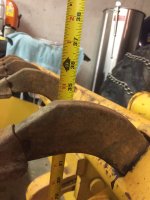
IMG_6298.JPG

I just came back up to the garage to check on it, and 3 hours later it has creeped (crept?) 3/4 of an inch. I'm happy with a quarter inch per hour :)
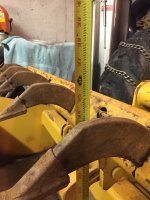
IMG_6306.JPG

I still don't understand what those small ports are for? They are a type of check valve I suppose, but looking online at parts diagrams it seems most cylinders do t even have these?

Seeing that this cylinder is never under much stress, I didn't see a need to have check valve ports protecting it.

Regardless, I'm just happy it doesn't creep down in less than 10 seconds anymore! As an added bonus, I learned quite a bit in the process.

Never stop learning. :). Thanks all.
 
   / Hydraulic Cylinder Leak Down on Box Blade??? #22  
..........I still don't understand what those small ports are for? They are a type of check valve I suppose, but looking online at parts diagrams it seems most cylinders do t even have these?........

Just a really WAG but might they have been a pressure relief to allow the scarifiers to trip if they hit a very solid object and minimize damage?
 
   / Hydraulic Cylinder Leak Down on Box Blade??? #23  
Just a really WAG but might they have been a pressure relief to allow the scarifiers to trip if they hit a very solid object and minimize damage?


Don't know but when you lower the rippers all the way down the linkage locks the bar in place. It can stop you in your tracks without releasing. That said if you do not allow the linkage to lock in the rippers will move out of the way easily.
 
   / Hydraulic Cylinder Leak Down on Box Blade???
  • Thread Starter
#24  
I think your right. Not really knowing, but I imagine that is the intent, if the cylinder is shock loaded they would allow it to retract/extend before doing damage.
In this specific case I think that is unnecessary, only because when the scarifier bar is all the way down, the linkage engages a large steel "lock" so all the stress from the scarifiers is transferred to this "lock" rather than the cylinder. I'm sure this cylinder is used for many other applications which may need the shock loading pressure relief for protection.
 
   / Hydraulic Cylinder Leak Down on Box Blade??? #25  
I still think air was in the cylinder in the video where the hoses were unplugged. I say that because if filled with oil where did the fluid go to displace the 4 inches or so of cylinder rod when it retracted. It did not compress and it did not disappear either.
 
   / Hydraulic Cylinder Leak Down on Box Blade??? #26  
I think your right. Not really knowing, but I imagine that is the intent, if the cylinder is shock loaded they would allow it to retract/extend before doing damage.
In this specific case I think that is unnecessary, only because when the scarifier bar is all the way down, the linkage engages a large steel "lock" so all the stress from the scarifiers is transferred to this "lock" rather than the cylinder. I'm sure this cylinder is used for many other applications which may need the shock loading pressure relief for protection.


Matt, you may find if you miss locking up the bar and drive forward that you will bend up the linkage with those holes plugged. Just guessing here. When you look at the design of the linkage it is made for tension not compression, if the cylinder can't extend easily reducing this compression of the linkage it would be toast.
 
   / Hydraulic Cylinder Leak Down on Box Blade??? #27  
The check valves on the piston indeed are spick check valves. Mercruiser cyls has 4 with a floating piston.
2 large ones and 2 small ones. When you hit something the unit pops up and then returns to were it was set at, that is were the floating piston comes into play. If the cyls bottoms out to hard they might get jamed up and might not come down.
 
   / Hydraulic Cylinder Leak Down on Box Blade???
  • Thread Starter
#28  
I still think air was in the cylinder in the video where the hoses were unplugged. I say that because if filled with oil where did the fluid go to displace the 4 inches or so of cylinder rod when it retracted. It did not compress and it did not disappear either.

It's entirely possible that it was just air, I just don't think it was. Here is my (not very confident :)) explanation....

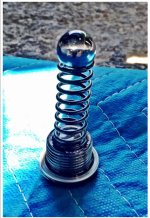
The rod end cap (the "inner" one, or whatever it's called) has two pressure relief ports in it. The pressure relief is made up of a stainless steel ball, a spring, and a set screw.
Like this...
IMG_1716.JPG

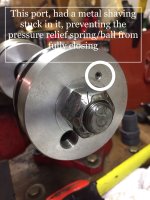
I imagine the pressure relief is adjusted by screwing this set screw in/out to compress the spring more/less. The ball seats against the backside of the small hole that you see in the picture below...
IMG_8136.JPG

Since the metal shaving was preventing the ball from seating, it was partially open all the time, allowing free communication of the hydraulic fluid to flow from one side of that cap, to the other.

Basically, it's as if I drilled a 3/16" hole in that rod end cap, leaving an easy way for the fluid to flow back and forth. This is why I think the cylinder was extending on it's own so quickly, even when the hoses were disconnected from the tractor.

I could be COMPLETELY wrong with this, but it's how I understand it.
 
   / Hydraulic Cylinder Leak Down on Box Blade???
  • Thread Starter
#29  
Matt, you may find if you miss locking up the bar and drive forward that you will bend up the linkage with those holes plugged.

I really hope that doesn't happen.
I will be very mindful of it and hopefully not make that mistake. Knowing what I know now, I think I could have simply removed that metal shaving, tightened up those set screws, and been done with it. But, I didn't know that at that time.

If I did put a large shock load on the cylinder like that, I would think the tractors relief valve would open and allow the cylinder to move?
 
   / Hydraulic Cylinder Leak Down on Box Blade??? #30  
It's entirely possible that it was just air, I just don't think it was. Here is my (not very confident :)) explanation....

The rod end cap (the "inner" one, or whatever it's called) has two pressure relief ports in it. The pressure relief is made up of a stainless steel ball, a spring, and a set screw.
Like this...
View attachment 493691

I imagine the pressure relief is adjusted by screwing this set screw in/out to compress the spring more/less. The ball seats against the backside of the small hole that you see in the picture below...
View attachment 493692

Since the metal shaving was preventing the ball from seating, it was partially open all the time, allowing free communication of the hydraulic fluid to flow from one side of that cap, to the other.

Basically, it's as if I drilled a 3/16" hole in that rod end cap, leaving an easy way for the fluid to flow back and forth. This is why I think the cylinder was extending on it's own so quickly, even when the hoses were disconnected from the tractor.

I could be COMPLETELY wrong with this, but it's how I understand it.

Just to be clear here, the rod was extending, not retracting?

As far as the safety concerns others may have regarding those relief valves, all I can say is that I have sold several replacement cylinder units that I have made up for a couple hundred $$ vs the $500+ that Woods wants for their replacement and as of yet, no one has contacted me with any sort of problems. That's not to say that there won't be, but none so far.
 
   / Hydraulic Cylinder Leak Down on Box Blade??? #31  
If I did put a large shock load on the cylinder like that, I would think the tractors relief valve would open and allow the cylinder to move?

That part is not right because the work port are closed. Everything is blocked from there back.
 
   / Hydraulic Cylinder Leak Down on Box Blade???
  • Thread Starter
#32  
Just to be clear here, the rod was extending, not retracting?

As far as the safety concerns others may have regarding those relief valves, all I can say is that I have sold several replacement cylinder units that I have made up for a couple hundred $$ vs the $500+ that Woods wants for their replacement and as of yet, no one has contacted me with any sort of problems. That's not to say that there won't be, but none so far.

The rod itself was retracting when the scarifier bar was lowering under its own weight. I think I messed up the wording in my last post.

However, with the cylinder on my bench and hoses connected, I was able to pull the rod out of the cylinder by hand. I did not need to bleed the lines at all.
 
   / Hydraulic Cylinder Leak Down on Box Blade???
  • Thread Starter
#33  
If I did put a large shock load on the cylinder like that, I would think the tractors relief valve would open and allow the cylinder to move?

That part is not right because the work port are closed. Everything is blocked from there back.

Ahhh, that makes sense.
 
   / Hydraulic Cylinder Leak Down on Box Blade???
  • Thread Starter
#34  
Just to be clear here, the rod was extending, not retracting?

As far as the safety concerns others may have regarding those relief valves, all I can say is that I have sold several replacement cylinder units that I have made up for a couple hundred $$ vs the $500+ that Woods wants for their replacement and as of yet, no one has contacted me with any sort of problems. That's not to say that there won't be, but none so far.

I really don't anticipate it being an issue, and if it is, it's clearly operator error for not having the cylinder retracted all the way which engages the lock mechanism when the scarifiers are down.
 
   / Hydraulic Cylinder Leak Down on Box Blade??? #35  
The rod itself was retracting when the scarifier bar was lowering under its own weight. I think I messed up the wording in my last post.

However, with the cylinder on my bench and hoses connected, I was able to pull the rod out of the cylinder by hand. I did not need to bleed the lines at all.

You would be able to extend the rod with the relief valves wedged open. What is so odd is the ability for the rod to retract. The only way that is even possible is if there was air in the cylinder, a LOT of air.

Here is an example that everyone can understand. Cylinder full of fluid with rod extended = a glass of water full to the top. Now if you can put your finger into that glass of water with out spilling any, then that is how the rod can be pushed back into a fluid filled hydraulic cylinder.

In other words, it is impossible for the rod to be pushed into the cylinder. It is only possible if there is a void. (air) Glass of water is not full. ;)
 
   / Hydraulic Cylinder Leak Down on Box Blade??? #36  
You would be able to extend the rod with the relief valves wedged open. What is so odd is the ability for the rod to retract. The only way that is even possible is if there was air in the cylinder, a LOT of air.

Here is an example that everyone can understand. Cylinder full of fluid with rod extended = a glass of water full to the top. Now if you can put your finger into that glass of water with out spilling any, then that is how the rod can be pushed back into a fluid filled hydraulic cylinder.

In other words, it is impossible for the rod to be pushed into the cylinder. It is only possible if there is a void. (air) Glass of water is not full. ;)

The finger in the glass of water is a good analogy. I do not recommend sticking your finger in a hot cup of coffee though.:(

The ball check will allow the cylinder to extend easily allowing the rippers to raise easily. The ball check will block the flow of oil when retracting.

I suspect that Matt will be buying the replacement cylinder at some point. While I use this same box blade frequently I do occasionally miss the latch and have the rippers raise up. When it happens to Matt he will likely bend up his linkage. He has been warned though.
 
   / Hydraulic Cylinder Leak Down on Box Blade??? #37  
I think I have an explanation as to what happened. If the box blade was not raised up off the ground the rippers and the cylinder did not have a full stroke.
 
   / Hydraulic Cylinder Leak Down on Box Blade???
  • Thread Starter
#38  
You would be able to extend the rod with the relief valves wedged open. What is so odd is the ability for the rod to retract. The only way that is even possible is if there was air in the cylinder, a LOT of air.

Here is an example that everyone can understand. Cylinder full of fluid with rod extended = a glass of water full to the top. Now if you can put your finger into that glass of water with out spilling any, then that is how the rod can be pushed back into a fluid filled hydraulic cylinder.

In other words, it is impossible for the rod to be pushed into the cylinder. It is only possible if there is a void. (air) Glass of water is not full. ;)
I see what your saying. So because of the additional volume of 'space' that the rod itself occupies, there would HAVE to be some amount of air in the cylinder in order for it to retract. So the combination of that ball check valve being stuck open, and the fact that there MUST have been air in the cylinder, is why it could retract so quickly under it's own weight.

The finger in the glass of water is a good analogy. I do not recommend sticking your finger in a hot cup of coffee though.:(

The ball check will allow the cylinder to extend easily allowing the rippers to raise easily. The ball check will block the flow of oil when retracting.

I suspect that Matt will be buying the replacement cylinder at some point. While I use this same box blade frequently I do occasionally miss the latch and have the rippers raise up. When it happens to Matt he will likely bend up his linkage. He has been warned though.
I have actually done that same thing a handful of times with my Landpride 3578 as well. I imagine that cylinder was similar and had these two ball check valves in the same fashion. Obviously the manufacturer puts those two ball checks there for a reason, and they probably aren't 'supposed' to be sealed off with JB Weld. :laughing:
Your right though, I've been warned, and when the day comes that I do bend something up, I'll be sure to let you know so you can say "I told you so". :D
 
   / Hydraulic Cylinder Leak Down on Box Blade??? #39  
We all learned something here. Under normal operation if you had air in the cylinder to evacuate you could raise the box blade up to clear the rippers and hold it for a second or two and it would purge any air from the lines. One time with the rippers fully down would do this.

Matt, I recommend you look carefully at the linkage in operation and decide which is cheaper to fix. Those parts along with the piston itself could get expensive. I would see if a new piston with valves could be purchased separately. I have never used JB Weld for anything so don't know whether you could remove it or not.
 
   / Hydraulic Cylinder Leak Down on Box Blade??? #40  
Just to be clear here, the rod was extending, not retracting?

As far as the safety concerns others may have regarding those relief valves, all I can say is that I have sold several replacement cylinder units that I have made up for a couple hundred $$ vs the $500+ that Woods wants for their replacement and as of yet, no one has contacted me with any sort of problems. That's not to say that there won't be, but none so far.

He had previously said "retracting". And by the video, it appears to be "retracting" (getting shorter). This is the scenario that several knowledgeable hydraulic members have said is impossible. I'd like some clarity on that subject as well. :confused3:
 

Marketplace Items

2007 TUG GPU 400/60 28V 60kVA Towable Diesel Generator (A59228)
2007 TUG GPU...
IRTPL 10,000 LBS TWO POST LIFT (A58214)
IRTPL 10,000 LBS...
2016 John Deere 4044R 42HP 4WD Utility Tractor (A59228)
2016 John Deere...
2018 GENIE GTH-5519 TELESCOPIC FORKLIFT (A59823)
2018 GENIE...
UNUSED FUTURE EQUIPMENT SEAT (A60432)
UNUSED FUTURE...
(2) 6 LUG WHEELS/GOODRIDE ST225/75D15 TIRES (A60432)
(2) 6 LUG...
 
Top