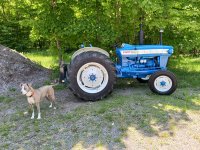
New owner of tractor (diesel engine question)

   / New owner of tractor (diesel engine question) #1  
Joined
Apr 5, 2009
Messages
36
Location
Somerville, TN
Tractor
Ford 3000 diesel
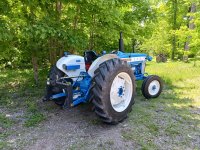
I just bought a Ford 3000 diesel (with power steering... yay!). I have never owned a tractor, other than a lawn tractor before, and I have never owned a diesel engine before. This thing is in rough shape, but I got it for $1500. I suspect there may be some engine issues. May need a re-build. IDK. So, I'm about to ask a stupid question, and I don't care if you want to make fun or whatever... I have watched about 4 or 5 videos on "Ford 3000 diesel rebuild" or something similar. I can not find a video that answers my question. Where are the "spark plug" wires? I see this guy and his son working on the injectors in one video, replacing them, and the valve cover is there, and there are no other holes in the top of the head, and no wires??? I thought diesel engines used glow plugs, which are similar to spark plugs. Somebody take me to school. Does this thing not have a distributer?
 
   / New owner of tractor (diesel engine question) #2  
There are no spark plugs, therefore no need for wires. Glow plugs only aid cold starts, i.e. below 30°F. Some diesel engines don't have them, your 3000 may be one that doesn't. If it starts and runs, but runs rough, especially at higher RPM's, injectors and injector pump rebuilds are common.
 
   / New owner of tractor (diesel engine question)
  • Thread Starter
#3  
Thank you. I thought I was taking crazy pills... That's kinda cool. No need to worry about points and advance timing!
 
   / New owner of tractor (diesel engine question) #4  
I used to use a Ford 3000 on occasion, spent hundreds of hours working on the ground next to one, as my friend skidded the logs I was felling with his 3000. Great little tractor, but his was a gasser model.

You might do well to have a diesel mechanic give the engine a once-over. As gengine mentioned, injector pumps and injectors are where it's at. But one day in a pro shop may have that thing running and starting nicer than anything you'll DIY on it, and that will pay off this winter, when the thing doesn't want to start.

Diesels hate the cold, some more than others. If it's a Wyoming tractor of that age, I assume it already has a block heater, if not also an oil pan heater. Check and verify their current draw is near expectation, as a sign that they're working well, before winter.

If it has a glow plug system to aid with cold starts, there will be an indicator on the dash for that, a light that comes on when it's cold and goes off when it's properly warmed. But assuming the indicator works is one problem, and getting the thing to actually trigger in August is another, a lot of tractors won't even switch that system on at all in this weather. Figuring out how to verify operation now will save you frustration in November or December.

Changing all fluids on any used machine I purchase is usually assumed, unless the prior owner had fastidious records of when they were last done. Even then, engine oil would be done by my own hands.
 
   / New owner of tractor (diesel engine question) #5  
I just bought a Ford 3000 diesel (with power steering... yay!). I have never owned a tractor, other than a lawn tractor before, and I have never owned a diesel engine before. This thing is in rough shape, but I got it for $1500. I suspect there may be some engine issues. May need a re-build. IDK. So, I'm about to ask a stupid question, and I don't care if you want to make fun or whatever... I have watched about 4 or 5 videos on "Ford 3000 diesel rebuild" or something similar. I can not find a video that answers my question. Where are the "spark plug" wires? I see this guy and his son working on the injectors in one video, replacing them, and the valve cover is there, and there are no other holes in the top of the head, and no wires??? I thought diesel engines used glow plugs, which are similar to spark plugs. Somebody take me to school. Does this thing not have a distributer?
The 3000 is a great small utility tractor. Practically a bullet-proof engine. You can download a free owner's manual here: https://www.ntractorclub.com/manuals/tractors/Operators Manual All Purpose and LCG Tractors 2000,3000,4000,and 5000.pdf

Basic info on features and specs here: https://www.ntractorclub.com/manuals/tractors/Ford 3000 Series Tractor Data & Spec Sheet.pdf
 
Last edited:
   / New owner of tractor (diesel engine question)
  • Thread Starter
#6  
I used to use a Ford 3000 on occasion, spent hundreds of hours working on the ground next to one, as my friend skidded the logs I was felling with his 3000. Great little tractor, but his was a gasser model.

You might do well to have a diesel mechanic give the engine a once-over. As gengine mentioned, injector pumps and injectors are where it's at. But one day in a pro shop may have that thing running and starting nicer than anything you'll DIY on it, and that will pay off this winter, when the thing doesn't want to start.

Diesels hate the cold, some more than others. If it's a Wyoming tractor of that age, I assume it already has a block heater, if not also an oil pan heater. Check and verify their current draw is near expectation, as a sign that they're working well, before winter.

If it has a glow plug system to aid with cold starts, there will be an indicator on the dash for that, a light that comes on when it's cold and goes off when it's properly warmed. But assuming the indicator works is one problem, and getting the thing to actually trigger in August is another, a lot of tractors won't even switch that system on at all in this weather. Figuring out how to verify operation now will save you frustration in November or December.

Changing all fluids on any used machine I purchase is usually assumed, unless the prior owner had fastidious records of when they were last done. Even then, engine oil would be done by my own hands.
Appreciate the thoughts. I am actually in Tennessee, so, no "harsh" winters here. And I would very rarely want or need to use the tractor in freezing weather. Probably never. As far as I can see (I was able to rotate the battery tray out to get a look), there are no glow plugs.

On the fluid changes, etc., I will before I return the tractor to use, but I'm thinking during the diagnostic period, I'm not going to fill the radiator with fresh coolant just to find out if it has a leak. I'm not going to change the oil before I determine if the block needs to be rebuilt. Just top off all the fluids until I get it operating, and then change out all the fluids for new.

One thing I need to get fixed first is cleaning the fuel tank. There is lots of sludge that I don't want to send through the fuel system.
 
   / New owner of tractor (diesel engine question) #7  
Compression ignition engines are void of ignition components, one of the blessings of a hard working engine vs gasoline. Go over the fuel tank, replace fuel filters, then bleed the fuel system after you've verified all of the tank, lines and filters are clean before attempting to start.
 
   / New owner of tractor (diesel engine question) #8  
I just bought a Ford 3000 diesel (with power steering... yay!). I have never owned a tractor, other than a lawn tractor before, and I have never owned a diesel engine before. This thing is in rough shape, but I got it for $1500. I suspect there may be some engine issues. May need a re-build. IDK. So, I'm about to ask a stupid question, and I don't care if you want to make fun or whatever... I have watched about 4 or 5 videos on "Ford 3000 diesel rebuild" or something similar. I can not find a video that answers my question. Where are the "spark plug" wires? I see this guy and his son working on the injectors in one video, replacing them, and the valve cover is there, and there are no other holes in the top of the head, and no wires??? I thought diesel engines used glow plugs, which are similar to spark plugs. Somebody take me to school. Does this thing not have a distributer?
Only stupid question is one that don’t get asked :)

Glow plugs are used to heat up the cylinders in some diesel engines prior to cold starting. Basically the heat that ignites the diesel is from the compression of the air- cold winter days don’t always have enough thermal energy when the air is compressed to ignite the diesel.

Your Ford probably doesn’t have any because of its age. Older diesel engines typically used either an overfuelling button (more common on the bigger tractors), an intake heater (which was essentially a small flame that heated the air flowing through the intake), factory ether injection systems, or block heaters. I think block heaters are the best in most instances,

All a diesel engine needs to start is fuel, compression, and timing. Your injection pump will take care of fuel and timing both.

Before you jump into a full rebuild, get a service manual and check your compression and fuel to injectors. It takes a lot of hours to wear out a diesel. If it’s running rough, try some seafoam. I’ve had good results with it regarding cleaning fuel systems.

Also, if you’re new to diesels- you’re gonna see some really black oil. That doesn’t necessarily mean abuse- diesel engine oil turns black quickly compared to gas engine oil.

I’d definitely pay a little extra for diesel rated engine oil- these tractors have flat tappets/lifters and the zinc in the diesel oil really helps them.

I have a Ford 5000, she is a phenomenal tractor. You are welcome to DM or ping me with questions and I’ll do my best to answer.

Hope this helps.
 
   / New owner of tractor (diesel engine question) #9  
I live in the same area as you. I’d be happy to give it a look if you like.
 
   / New owner of tractor (diesel engine question) #10  
I live in the same area as you. I’d be happy to give it a look if you like.
That's always the coolest thing about these forums. When you cross someone local, who's willing to lend a hand to someone new. (y)
 
   / New owner of tractor (diesel engine question) #11  
Appreciate the thoughts. I am actually in Tennessee, so, no "harsh" winters here. And I would very rarely want or need to use the tractor in freezing weather. Probably never. As far as I can see (I was able to rotate the battery tray out to get a look), there are no glow plugs.

On the fluid changes, etc., I will before I return the tractor to use, but I'm thinking during the diagnostic period, I'm not going to fill the radiator with fresh coolant just to find out if it has a leak. I'm not going to change the oil before I determine if the block needs to be rebuilt. Just top off all the fluids until I get it operating, and then change out all the fluids for new.

One thing I need to get fixed first is cleaning the fuel tank. There is lots of sludge that I don't want to send through the fuel system.
I think WinterDeere got the Wyoming from my location under my username. Take a look at that list of tractors...every single one listed has at least a block heater, the '65 3020 and the 4320 both also have oil pan heaters. We see temps of -40°F for at least two weeks every winter. My animals gotta eat so these ladies need to start when the icicles form on the beards and mustaches of those of questionable sanity, who choose to raise animals in these weather conditions.:LOL: But like you said, it's great to not have to worry about coils, points, and condensers.
 
   / New owner of tractor (diesel engine question) #12  
Also, if you’re new to diesels- you’re gonna see some really black oil. That doesn’t necessarily mean abuse- diesel engine oil turns black quickly compared to gas engine oil.
The Allis in my description taught me a lesson on black oil. It is normal to have the black oil quickly due to combustion gasses and carbon getting into the oil. But when the front seal fails on the injection pump and puts a bunch of diesel in the oil to the point of coming out of the dipstick, the next four oil changes will be golden brown after a years worth of hours. (Her clock runs faster with higher engine RPM's, so seat time at low speed may be an 8 hour day, but three hours on the clock, where at higher speeds, an 8 hour day is equal to 12 hours on the clock. So the oil gets changed once a year minimum, even though the clock shows around 40 hours.)
 
   / New owner of tractor (diesel engine question) #13  
I've always heard that the servicing or repair of diesel injector pumps is best left to professional specialist shops because of the extreme high pressures at which these pumps operate.

This is also why the cleanliness of your diesel fuel is so important. The fuel system on the engine is equipped with at least one filter to prevent crud from getting to that pump, but if you've got dirty fuel any filters could quickly become packed and thus starve your engine of fuel.

One of the problems with diesel fuel is that living things can grow in it, especially if there is any water available in the tank. This is particularly a problem in marine environments, but could become a problem almost anywhere. You can treat the fuel with special pesticides to limit this growth but the better option is to keep the dirt and water out from the get-go.

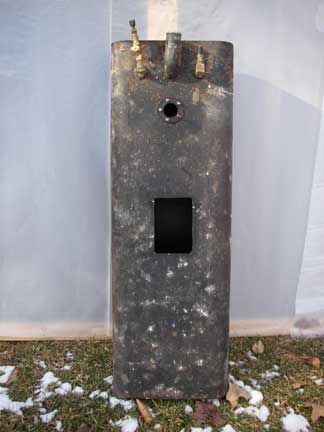
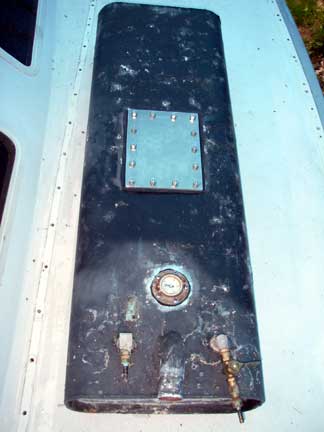
So clean your tank out however you can. I cut an access hole in the top of my sailboat's tank when re-fitting the boat so that I could get inside it. After wiping it out with rags, I took the tank to car wash and used the pressure wash with soap to get it really clean.

FuelTank.jpg

Tank.jpg

Tank.jpg
 
   / New owner of tractor (diesel engine question) #14  
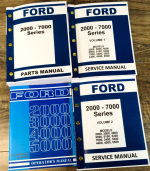
First thing I would do is get this.
Bought these manuals from Peaceful Creek and they even came in nice binders.
Reason you want manuals is there are lots of things to check on your tractor. Like if yours has the Simm's injection pump, it has it's own oil resevoir and you should change that oil before you try and run it.
Put some clean fuel filters on it too.
 

Attachments

  • 1.PNG
    1.PNG
    1.2 MB · Views: 35
   / New owner of tractor (diesel engine question) #16  
Have a good charge on the battery. Cold start is going to be the first thing to get familiar with. My Diesel in Ga. I rarely have to use a Thermal start to warm it up. I've had to before and it works. My Yanmar drips fuel on a electrical coil to create heat in the motor. I have lever that will hold the valves open and lets the Eng. start to spin super fast. In the winter your going to need a strong battery. When the oil light goes out I drop the valves while it's still spinning and it hits. My ford is gas for cold weather use mostly.
 
   / New owner of tractor (diesel engine question) #17  
lol... two pages of "cold start" advice. :ROFLMAO: Sorry, that's my fault. As @gengine guessed, I saw "Wyoming" just peaking in at the very top of my screen, and hadn't realized that was his profile name just off my screen, not the OP's.
 
   / New owner of tractor (diesel engine question)
  • Thread Starter
#18  
I live in the same area as you. I’d be happy to give it a look if you like.
I read your PM, and we are literally 2 minutes from each other. I will defiantly call! Thanks!!!!
 
   / New owner of tractor (diesel engine question)
  • Thread Starter
#19  
Only stupid question is one that don’t get asked :)

Glow plugs are used to heat up the cylinders in some diesel engines prior to cold starting. Basically the heat that ignites the diesel is from the compression of the air- cold winter days don’t always have enough thermal energy when the air is compressed to ignite the diesel.

Your Ford probably doesn’t have any because of its age. Older diesel engines typically used either an overfuelling button (more common on the bigger tractors), an intake heater (which was essentially a small flame that heated the air flowing through the intake), factory ether injection systems, or block heaters. I think block heaters are the best in most instances,

All a diesel engine needs to start is fuel, compression, and timing. Your injection pump will take care of fuel and timing both.

Before you jump into a full rebuild, get a service manual and check your compression and fuel to injectors. It takes a lot of hours to wear out a diesel. If it’s running rough, try some seafoam. I’ve had good results with it regarding cleaning fuel systems.

Also, if you’re new to diesels- you’re gonna see some really black oil. That doesn’t necessarily mean abuse- diesel engine oil turns black quickly compared to gas engine oil.

I’d definitely pay a little extra for diesel rated engine oil- these tractors have flat tappets/lifters and the zinc in the diesel oil really helps them.

I have a Ford 5000, she is a phenomenal tractor. You are welcome to DM or ping me with questions and I’ll do my best to answer.

Hope this helps.
Thank you, sir! And I'm glad you mentioned the black oil. I was no aware of that.
 

Marketplace Items

2023 GREAT DANE FLP-0024-00053 53FT FLATBED TRAILER (A59905)
2023 GREAT DANE...
Tandem Axle Rear Trailer Frame (A55851)
Tandem Axle Rear...
2014 Ford F-550 (A55973)
2014 Ford F-550...
More info coming soon! (A56858)
More info coming...
2011 Toro Workman HD Utility Cart (A59228)
2011 Toro Workman...
UNUSED DSBREAK DS140A HYD BREAKER W/ BIT (A60432)
UNUSED DSBREAK...
 
Top