Question about duty cycle

   / Question about duty cycle #21  
Terry, you do know they make a adapter to use annular cutters in a drill press. My large craftsman actually has a 3/4 chuck I can put a annular cutter into.

Yes, Bill I know. I have a Morse taper to 3/4 Weldon adapter for my big drill press. Don't think I'll bother with one for that little excuse of a drill press with "supposed" 1/4 HP motor. :)

If I lived closer, I'm sure Steve would let me break in his new mag drill. :D

Terry
 
   / Question about duty cycle #22  
Lincoln are the ones who came up weldor to distinguish the difference between a machine and the person using it. It can be confusing sometimes. It doesn't matter what duty cycle a machine has if the person using it has a lower duty cycle. ;)

Haha! I've got a cousin that between drinking beer and talking, he's only good for about 10% duty cycle while working - a welder for him could be really small and underpowered - may never even get turned on :D
 
   / Question about duty cycle
  • Thread Starter
#23  
Thanks Gary I shall never type weldor again, unless the context does not carry the meaning. Also sounds like "duty cycle" may have run its course too (at least on a tractor sub-forum).
 
   / Question about duty cycle #24  
Lincoln are the ones who came up weldor to distinguish the difference between a machine and the person using it. It can be confusing sometimes.
I read that some where too. I've also read where people had paper worked rejected by the engineer of record for using the term weldor.
 
   / Question about duty cycle #25  
Thanks Gary I shall never type weldor again, unless the context does not carry the meaning. Also sounds like "duty cycle" may have run its course too (at least on a tractor sub-forum).

I just wouldn't want something that had a 10% (or less!) Duty cycle at the amps I would use. That's probably a single rod, maybe two; then sitting there for 9 minutes, that's no fun.
 
   / Question about duty cycle
  • Thread Starter
#26  
I just wouldn't want something that had a 10% (or less!) Duty cycle at the amps I would use. That's probably a single rod, maybe two; then sitting there for 9 minutes, that's no fun.

My welder is an inverter-type, and it has a cooling fan that turns on when needed. Maybe that makes a difference. I agree that 10% might me an indicator of "something,,,,,"

I stopped by my LWS and told my Miler salesman about my experience with the 20% MultiMatic200 (that he sold me).

He repeated the general rule where with a 20% rating, you can weld for two minutes at the top power setting (3/8" thickness), then you have to let the machine cool for eight minutes.

He said that he would expect that on the settings I was using (3/16" thickness settings)- that weld time would be about 4 minutes. For example weld for four minutes then let it cool for eight minutes. He was quite surprised that I welded for 25 minutes and quizzed me hard about how much time I stopped - going to the next weld. I stopped as long as it takes to move, to the next weld, maybe 1 second or two. I was testing ya' know, like a marathon. It was pretty much 25 minutes continuous welding. I would not weld like that intentionally (except sometimes its getting dark, which seems to happen often!).

I think what Mark@Everlast wrote tells it how it is - that it's marketing driven. When you see the amount of "weight" that buyers (even hobby/maintenance) put on duty-cycle, a MFR would be foolish not to tap into that desire. You don't spend marketing money educating people, you spend it wisely by tapping into what the customer is already educated to accept. It becomes a requirement when all the other mfrs are doing it, they can't NOT do it, they must enter the arms race with the biggest number that won't cause warranty trouble.

Shield Arc mentions he hasn't come up against duty cycle problems, but he's using industrial machines. But in any case he only mentions an engine problem, not actual welder shutdown. Is anybody having duty-cycle problems with Harbor Freight machines? I believe they are 10%. If the machine does not have over-temp protection perhaps it's not wise to test it though.

I'm still interested in bona-fide duty-cycle stories, using a MODERN welding machine that has a current rating, cuz crickets are chirping!
 
   / Question about duty cycle #27  
"For example weld for four minutes then let it cool for eight minutes"

Sodo, not to get too picky (yeah, right :laughing: ) but the one constant between mfg's is that duty cycle (whether truth or lies) is based on number of minutes per 10 minute period - so 20% would be 2 minutes out of 10, 40% would be 4 minutes out of 10, etc...

I'm thinking that since western Washington is even wetter than western Ory-gun, you probably had the MM200 out in the rain, so it was water cooled :D (no wonder you never hit the duty cycle :laughing:

Seriously tho, I ran the numbers on 3/16 vs. 3/8, and actual WATTAGE output is pretty close to double - guess it's still a mystery, or maybe Miller just wasn't playing the same numbers game others do... Steve
 
   / Question about duty cycle
  • Thread Starter
#28  
If the thermal protection takes 8 minutes to reset after blowing off at 2 minutes, how does it decide to cool down in only 6 minutes after blowing off at 4? :D

Seriously tho, I ran the numbers on 3/16 vs. 3/8, and actual WATTAGE output is pretty close to double - guess it's still a mystery, or maybe Miller just wasn't playing the same numbers game others do... Steve

Whats a mystery to me, is ,,,,,, look at this welding sub-forum of a tractor forum. There's not much going on, really. Yet a significant number of members honestly think they might out-weld their machines. When? Lets see the projects then! What are you guys doing out there, are ya holding out on the forum? If y'all gonna worry about duty cycle lets see some DUTY! Hahahahahaha

Hey it would be a little more interesting than just coming to the forum to see if anybody's squabbling over something. Teach a kid some tricks. Make a tool for the shop, theres plenty to do and you guys have some wicked shops! But if ya wanna talk about duty cycle you have to build a 5th wheel trailer under the gun or something,,,,weld like a sumbitch! :D

Just kidding. You can just come here to beat down Sodo too :laughing:

Sodo don't care, whenever he's out in the woods he's having a good old time! (see those Ponderosas Steve it aint raining )
 
Last edited:
   / Question about duty cycle #29  
Sodo, I got a pretty serious project going on right now (at least for me). My problem is finding the time to actually hit the duty cycle of my welder. Right now I have been in the gathering stage. Doing some fabricating, Mostly cutting and drilling. When it comes time for the welding, I'll start posting a few pics.
 
   / Question about duty cycle #30  
Miller Is usually pretty good about having a chart with the welder in the manual or online showing the duty cycle vs amps/volts for the entire output range of the machine
 
   / Question about duty cycle #31  
A couple morethings about the duty cycles on welders. They are typically rated at 40degrees C in the US according to UL(US) standards. Lower temperatures less than than 104 degrees do greatly improve duty cycle in most cases. But every welder is different, particularly how the cooling system is designed. On demand fan systems which seem popular typically offer reduced duty cycle in many cases. It used to be US and Canadian duty cycles were rated the same. Last year, Canadian standards changed duty cycle to 47 C if I remember correctly. So units certified in CA and the US have now different duty cycle ratings unless a company wants to lowball the duty cycle rating or change the cooling system to make certification easier.

Also when a duty cycle event (interrupt or trip) has occurred, many mfgr's tell you to allow the unit to cool for at least 15 (or even 20) minutes while running without welding. This is important because residual heat is still being transferred from the electronics to the heat sinks/radiating medium and temperature may still climb even after ceasing welding before going back down. Staying under the duty cycle a wait for the balance of the 10 minute cycle will suffice.

The real problem comes where people are buying a machine for it's maximum capability and expect it to perform at that day in and day out. I know someone is going to say a "real industrial machine" should be able to take that. But I liken it to someone buying a car for it's maximum top speed and driving at that top speed day in and day out expecting it to last. Who does that? Really I think a person should buy a machine that exceeds daily maximum capacity expectations by 25% to 50%.

I frequently try to work with people who want to by a 200 amp TIG machine and they tell me they will be welding 1/4" aluminum every day and encourage them to buy a 250 or 325 amp machine instead. Sure there is a big price difference, but the extra power and duty cycle is worth the price. The same issues exist for plasma cutters. People buy them for the max cut capacity and fail to read into it that this is the max expectation and not always the best cut capacity and it does tax the duty cycle.
 
   / Question about duty cycle #32  
Miller Is usually pretty good about having a chart with the welder in the manual or online showing the duty cycle vs amps/volts for the entire output range of the machine

I agree, Mig duty cycle chart for the multimatic 200.

image.jpg
 
   / Question about duty cycle #33  
"If the thermal protection takes 8 minutes to reset after blowing off at 2 minutes, how does it decide to cool down in only 6 minutes after blowing off at 4?"

Because (theoretically) if you stay at or UNDER the duty cycle, it should NOT reset at all - the thermal reset/cutout is there for when you exceed it...

Projects - too many to mention, but not all are welding - my old hoe needs 7 more cylinders rebuilt, some hard tubing replaced, more added for high flow (2 projects that need hyd. motor) brakes redone, swing tower bushing/pin redone, QA finished for front bucket/grapple/forks/flail/brush bucket, starter solenoid/ignition switch replaced -

Then there's the other two tractors and implements - some welding, some swearing, BFH therapy...

But at the moment I'm prepping a spot downhill from the existing shop for another 40x60 - hopefully closed in before winter so I can actually work on the other stuff without waders and scuba gear :rolleyes:

Just finished shooting the site with the laser, took 3 rows of 5 elevations and found max difference of 18" - averaged the 15 points and got 80 yards of material just where the actual slab will go, about 150 yds total. Guess I'm gonna need a grading permit along with all the other crap :mad:

Duty cycle?? I'd LOVE to hit the duty cycle on my MM252 OR my old copper-wound AC-DC (Solar brand, by Century) stick machine. That one's 100% at 160 amps, tapering to 20% at 250. It's a bit heavier than an inverter though :laughing: - If I actually FOUND the cutout temp, it might mean I was making some progress :rolleyes:

Later, gotta go murder some grass (remember the zero turn deck repair? Still working :D )... Steve
 
   / Question about duty cycle #34  
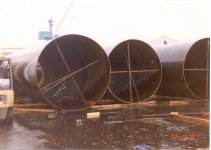
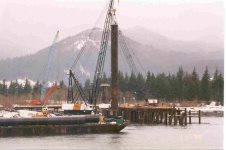
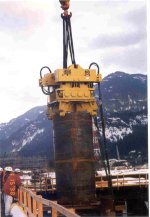
I've been on some pretty big welding jobs. Most of the time we try to have enough fitters where the welders do nothing but weld. Then again there are times when the welders have to do their own fitting.
On this job just down river of the Bonneville dam the welding crews were splicing these 1-inch wall 10-feet diameter pipe. 100% x-ray. Never had a duty cycle problem.
 

Attachments

  • 10-foot pipe.jpg
    10-foot pipe.jpg
    42.9 KB · Views: 161
  • D.B. Pacific.jpg
    D.B. Pacific.jpg
    47.1 KB · Views: 152
  • King Kong.jpg
    King Kong.jpg
    50.8 KB · Views: 173
  • DB Pacific Tent.JPG
    DB Pacific Tent.JPG
    61.4 KB · Views: 158
   / Question about duty cycle #35  
I am not an expert on Duty Cycles, and I would not make a pimple on a good Weldor/Welders backside, but I did run 6 sticks of 7018 at 125 amps on my little PA160 as fast as I could shove them into the stinger once. That was as fast and as much welding as I wanted for the moment. I put my hand on the top of the little Everlast PA160 and it wasn't even warm. Of course its fan was running, but it always does. It is supposed to be 60 percent duty cycle, but to this hobby welder, I don't think I will ever have a problem with "outwelding" the duty cycle.
 
   / Question about duty cycle #37  
A couple morethings about the duty cycles on welders. They are typically rated at 40degrees C in the US according to UL(US) standards. Lower temperatures less than than 104 degrees do greatly improve duty cycle in most cases. But every welder is different, particularly how the cooling system is designed. On demand fan systems which seem popular typically offer reduced duty cycle in many cases. It used to be US and Canadian duty cycles were rated the same. Last year, Canadian standards changed duty cycle to 47 C if I remember correctly. So units certified in CA and the US have now different duty cycle ratings unless a company wants to lowball the duty cycle rating or change the cooling system to make certification easier.

Also when a duty cycle event (interrupt or trip) has occurred, many mfgr's tell you to allow the unit to cool for at least 15 (or even 20) minutes while running without welding. This is important because residual heat is still being transferred from the electronics to the heat sinks/radiating medium and temperature may still climb even after ceasing welding before going back down. Staying under the duty cycle a wait for the balance of the 10 minute cycle will suffice.
I was going to point that out. If its 50F (10C) you will have a higher duty cycle than at the rated temperature of 104F (40C) because the machine can cool more efficiently.

Aaron Z
 
   / Question about duty cycle #38  
Duty cycles on welders and plasma cutters.

-Most systems have a wattage rating (that the duty cycle is rated at) and an ambient temperature, usually 104F (40C).

-Wattage is calculated by multiplying the output amperage x the output voltage. 200 amps x 26 volts would equal 5200 watts or 5.2 kW.

-Duty cycle is calculated after the power supply (welder or plasma) has reached it's average operating core temperature. In theory, if you started a "cold" welder up and tried to reach it's duty cycle...the very first cycle would be very much longer than subsequent cycles.....as it will take a while to reach core temp.

- With plasma (and CC welding), even with the amperage at maximum, and on a 104 F day, but you are cutting very thin material (lower arc voltage)......the duty cycle will be higher than rated because (amps x volts) the wattage is lower than when cutting the thickest rated material.

-With welding (CV), smaller rod, thinner material will use less amperage....even at the maximum voltage....and wattage will be lower, therefore duty cycle higher.

-If internal components have a few years worth of dust....expect lower duty cycles.

-It is rare to see a human welder need more than about 40-50% duty cycle. In automatic or robotic welding it is common to need 100%.

-For hobby use, 20% duty cycle is usually adequate....assuming the manufacturer has rated the unit at its max rated output (wattage) and the workplace is at or under the rated ambient temperature.

-It is very difficult to calculate the duty cycle of a given machine for a particular job based on all of the above variables. If in doubt...get a larger welder or plasma and don't use it at maximum output!

Jim Colt Hypertherm
 
   / Question about duty cycle #39  
Whats a mystery to me, is ,,,,,, look at this welding sub-forum of a tractor forum. There's not much going on, really. Yet a significant number of members honestly think they might out-weld their machines. When? Lets see the projects then! What are you guys doing out there, are ya holding out on the forum? If y'all gonna worry about duty cycle lets see some DUTY! Hahahahahaha

Maybe some individuals quit posting anything or even abandoned the forum entirely since there were certain individuals that kept criticizing everyone else and what they posted/said. Those individuals stated many times that the sub-forum of welding was not being run the way they thought it should be. No one could want to do a professional job and that there could be no expectation of doing a professional job on a welding project according to those individuals as this was a "hobby forum."
(note the difference between being a professional in the welding business and doing a professional job on a project)
They wanted it the way they wanted it and piled on folks that did not line up with their expectations.

If duty cycle is what the members want to discuss -- fine.
If welder breaker size -- fine.
Porosity in the weld and what causes it -- fine
 
Last edited:
   / Question about duty cycle
  • Thread Starter
#40  
Well it is a tractor subforum. I think everyone appreciates reading a pro's point of view but not being put down for doing things at a hobby maintenance level. I would guess there are more (far more) hobby/maintenance welders than pros on this forum. To be expected.

Glad thats over (or seems to be)!
 

Tractor & Equipment Auctions

2019 FREIGHTLINER CASCADIA TANDEM AXLE SLEEPER (A59904)
2019 FREIGHTLINER...
iDrive TDS-2010H ProJack M2 Electric Trailer Dolly (A59228)
iDrive TDS-2010H...
Amada M-3060 Mechanical Metal Shear (Japan) (A59213)
Amada M-3060...
1761 (A60430)
1761 (A60430)
iDrive TDS-2010H ProJack M2 Electric Trailer Dolly (A59228)
iDrive TDS-2010H...
Deere 310L (A53317)
Deere 310L (A53317)
 
Top