Sealer for fence posts

   / Sealer for fence posts #1  

Highsmith

Bronze Member
Joined
Mar 8, 2007
Messages
90
Location
Kingsbury, TX
Tractor
Kubota L2350DT, BCS 853
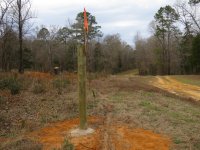
I am using treated wood posts to build a fence and would like to add a layer of sealer to protect the in-ground wood. What are you using?
 
   / Sealer for fence posts #2  
I used roofing tar as a test but I'm only a couple of years in so I have no idea if it will help or not. I will say it's so messy I'm not sure if I would do it again or not... It would really have to make a BIG difference. There was tar EVERYWHERE and I don't think it ever sets up so every time you touch it you get it on everything all over again.
 
   / Sealer for fence posts #3  
To me it doesn't seem to be so much the part in the ground, it's the transition area between the ground and above ground. I remember seeing an ad awhile back about a heat shrink boot that goes over the bottom of the post to a bit above ground. I never saw a cost but I can't imagine it being cheap.
'Nother idea I saw is charing the post.
 
   / Sealer for fence posts #5  
I used roofing tar on the posts of my first fence... I don't think it helped at all. I redid the fence a few years ago, and just sunk the ground contact posts in straight dirt. I did use dry pack concrete on the hinge side posts of a cattle gate, but that was the only one.
 
   / Sealer for fence posts #6  
If you can keep water away from the base of the post after it's installed, it will last for decades. Every post that rots will rot because of water that sits at it's base. This is where the microbes are that eat wood, and the water works at diluting the chemicals that stop the microbes from eating the wood.

I found that you cannot pack dirt around a post and expect it to shed water. The soil around the post will wash away and leave you with a low area that holds water. I made this mistake with my line posts. Now I use concrete for every post, and I build it up, so the concrete is above grade and water sheds away from the post. This is the only method that I feel is 100% effective at stopping rot at the base of the post.

IMG_0394.JPG IMG_4790.JPG
 
   / Sealer for fence posts #7  
Two methods that work:

Brush it with a mixture of used motor oil & some diesel fuel.

Burn the surface a little with a torch so it gets charred, but don't inhale any of the fumes if you are dealing with treated wood.
According to a friend of mine, Japanese have been doing this type treatment for a long time.


If in doubt, do both above methods, but do the charring part first hah!
 
   / Sealer for fence posts #8  
Forest Service
U.S. DEPARTMENT OF AGRICULTURE
MENU

Breadcrumb​

  1. Home
  2. Publications
  3. Treesearch
  4. Long-Term Durability of Pressure-Treated Wood in a Severe Test Site
T
T
T

Long-Term Durability of Pressure-Treated Wood in a Severe Test Site​

Formally Refereed

Authors:Stan Lebow, Bessie Woodward, Grant Kirker, Patricia Lebow
Year:2013
Type:Scientific Journal
Station:Forest Products Laboratory
DOI:https://doi.org/10.1520/acem20120054
Source:Advances in Civil Engineering Materials, Volume 2, Number 1, 2013; pp. 178–188.
Download (PDF 594 KB)
Cite

Abstract​

Improved estimates of the long-term durability of treated wood products are needed to guide choices about construction materials and allow estimates of design life. This report summarizes the long-term decay and insect resistance of treated wood post and lumber specimens placed in ground contact at a test site of the U.S. Department of Agriculture, Forest Service, Forest Product Laboratory in southern Mississippi. Posts treated with relatively low levels of creosote had an estimated durability of 54 years, and slightly less durability was observed in creosote-treated lumber.

Pentachlorophenol-treated posts exhibited durability in excess of 60 years, whereas lumber specimens treated to standard ground-contact retentions had no failures after 39 or 45 years. Posts treated with low retentions of copper naphthenate had an estimated 65-year longevity, but lumber specimens treated to higher retentions of copper napththenate had lower average lives of 27 to 30 years. Low-retention ammoniacal copper arsenate (ACA) posts had an estimated durability of 60 years, whereas stakes treated to retentions of 8 kg/m3 (0.5 lb/ft3) or greater with ammoniacal copper zinc arsenate (ACZA) or ACA have had no failures after 30 and 60 years, respectively. Posts treated with a range of retentions of chromated copper arsenate (CCA-C) have had no failures after 35 years, and stakes treated with CCA-A, CCA-B, or CCA-C to retentions above 7 0 kg/m3 (0.43 lb/ft3) have had no failures after 60, 61, and 40 years, respectively. As a whole, the post and lumber specimens indicate an expected durability of over 50 years for creosote-treated wood and over 60 years for wood treated with pentachlorophenol, copper naphthenate, ACZA, or CCA. Comparison of the results from this site to reports from other locations suggests that these results might underestimate the potential durability in more moderate exposures. In relating these findings to treated commodities, it should be noted that these test specimens have not been subjected to the same mechanical loads or wear and tear associated with in-service structures.


   / Sealer for fence posts #9  
Somebody did their homework!!!

Thank you!
 
   / Sealer for fence posts #10  
I did a cedar split rail fence a while back. I coated the lower part of the posts with a copper wood preservative. I made the holes over sized and packed them with gravel slightly above the ground level. 15 years and no deterioration. I'm not sold on concrete or post wrapping. I think it may result in holding moisture in. As long as it's not a swamp, gravel allows drainage.
 
   / Sealer for fence posts #11  
How does gravel allow drainage? Wouldn't gravel allow more water to fill up the hole around the post?
 
Last edited:
   / Sealer for fence posts #12  
The OP is in Texas.

Here, we just use Locust posts...

They seem to last...and last... and last.
 
   / Sealer for fence posts #13  
For my fence posts, they are a great place to drain used oil filters. When I remove one I set the open end on a post to drain.
This accomplishes 3 things, drains the filter so it can go in regular metal scrap, the used oil stains the post black while soaking the wood with oil that prevents water intrusion.
 
   / Sealer for fence posts #15  
My question with concrete around the post is how do you seal off where the post and the cement touch? To me it seems like the water would run down the post and be absorbed into the post and the be held in place by the concrete.

If you use gravel the water can at least drain away into the soil. I just go by what the power company's do in our ares. They use crushed rock to set the post. It's self tightening and it's easy to replace the post when needed. I would think that they have done their research into the most cost effective way of setting posts. From experience I know it's a lot quicker and easier then concrete.
 
   / Sealer for fence posts #16  
Forest Service
U.S. DEPARTMENT OF AGRICULTURE
MENU

Breadcrumb​

  1. Home
  2. Publications
  3. Treesearch
  4. Long-Term Durability of Pressure-Treated Wood in a Severe Test Site
T
T
T

Long-Term Durability of Pressure-Treated Wood in a Severe Test Site​

Formally Refereed

Authors:Stan Lebow, Bessie Woodward, Grant Kirker, Patricia Lebow
Year:2013
Type:Scientific Journal
Station:Forest Products Laboratory
DOI:https://doi.org/10.1520/acem20120054
Source:Advances in Civil Engineering Materials, Volume 2, Number 1, 2013; pp. 178–188.
Download (PDF 594 KB)
Cite

Abstract​

Improved estimates of the long-term durability of treated wood products are needed to guide choices about construction materials and allow estimates of design life. This report summarizes the long-term decay and insect resistance of treated wood post and lumber specimens placed in ground contact at a test site of the U.S. Department of Agriculture, Forest Service, Forest Product Laboratory in southern Mississippi. Posts treated with relatively low levels of creosote had an estimated durability of 54 years, and slightly less durability was observed in creosote-treated lumber.

Pentachlorophenol-treated posts exhibited durability in excess of 60 years, whereas lumber specimens treated to standard ground-contact retentions had no failures after 39 or 45 years. Posts treated with low retentions of copper naphthenate had an estimated 65-year longevity, but lumber specimens treated to higher retentions of copper napththenate had lower average lives of 27 to 30 years. Low-retention ammoniacal copper arsenate (ACA) posts had an estimated durability of 60 years, whereas stakes treated to retentions of 8 kg/m3 (0.5 lb/ft3) or greater with ammoniacal copper zinc arsenate (ACZA) or ACA have had no failures after 30 and 60 years, respectively. Posts treated with a range of retentions of chromated copper arsenate (CCA-C) have had no failures after 35 years, and stakes treated with CCA-A, CCA-B, or CCA-C to retentions above 7 0 kg/m3 (0.43 lb/ft3) have had no failures after 60, 61, and 40 years, respectively. As a whole, the post and lumber specimens indicate an expected durability of over 50 years for creosote-treated wood and over 60 years for wood treated with pentachlorophenol, copper naphthenate, ACZA, or CCA. Comparison of the results from this site to reports from other locations suggests that these results might underestimate the potential durability in more moderate exposures. In relating these findings to treated commodities, it should be noted that these test specimens have not been subjected to the same mechanical loads or wear and tear associated with in-service structures.


Nice suggestion - but... sodium pentachlorophenate is so expensive. One could replace the post annually for the cost of pentachlorophenol.

 
   / Sealer for fence posts #17  
My question with concrete around the post is how do you seal off where the post and the cement touch? To me it seems like the water would run down the post and be absorbed into the post and the be held in place by the concrete.

If you use gravel the water can at least drain away into the soil. I just go by what the power company's do in our ares. They use crushed rock to set the post. It's self tightening and it's easy to replace the post when needed. I would think that they have done their research into the most cost effective way of setting posts. From experience I know it's a lot quicker and easier then concrete.
I've heard this from other people and always wondered about it too. My experience as a Contractor, and also on my own farm has shown that the wood that is in contact with the concrete remains brand new looking. There is zero rot, zero deterioration, and in most cases, you can still see the green tint from the pressure treating.

A few years ago, I was reading an article in one of my farm magazines, about fence posts and why they rot. What I learned from that article is the rot is caused by the microbes living in the soil. Water alone does not rot the post, so any water that gets between the concrete and the post will just make the post wet, but it will not cause water. You have to have soil and air in that equation to make the posts rot.

They also talked about the chemicals that prevent rotting. What they are doing is making the wood taste bad to the microbes, so they do not eat it. The chemicals wear away, or fade away, at the base of the post when repeated soaking of water happens, and then the microbes in the soil begin eating away at the wood.

Keeping the dirt away from the post is just as important as keeping the water away!!!

Another observation on wood posts set in concrete compared to packing dirt around them. My backhoe bucket can handle about 6,000 pounds. For posts set in wood, I wrap a chain around them and lift them out while the engine is idling. It takes the same amount of power to pull those posts as it does T posts. A post set in concrete required me to bring the RPM's up, and even then, it's a battle to get them to break free. It's night and day different in how secure they are!!!
 
   / Sealer for fence posts #18  
My question with concrete around the post is how do you seal off where the post and the cement touch? To me it seems like the water would run down the post and be absorbed into the post and the be held in place by the concrete.
Pole barns are popular around here, and the builders "used to" cement around the post, years later they learned that the post shrunk away from the cement and held water against the post, shortening its life. That practice quit around here long time ago.

My neighbor soaked his 6x6 poles in used oil in a 55-gallon drum before building his sawmill shed. Ten years later we had a big wind go through here and the poles broke off at ground level, they had weakened in that area, and you could see it on the poles, the oil did not help.

For fence post, use cedar or locust and they will last a long time.

SR
 
   / Sealer for fence posts #19  
I have hi tensile fence that was part of a government program. Those posts are punched right in to the ground. over 20 years later I'm pulling them out and reusing and fully expect to get another 1 or 2 decades out of them or more. The rest of the fence posts are locust. There are posts that have fence attached to them that I have never seen used on the farm. That would make those posts 50+- years old and still going strong.

Use the correct posts and don't waste your time or money.

 
   / Sealer for fence posts #20  
I have hi tensile fence that was part of a government program. Those posts are punched right in to the ground. over 20 years later I'm pulling them out and reusing and fully expect to get another 1 or 2 decades out of them or more. The rest of the fence posts are locust. There are posts that have fence attached to them that I have never seen used on the farm. That would make those posts 50+- years old and still going strong.

Use the correct posts and don't waste your time or money.

These posts are yellow pines I would choose Cedar over yellow pine
 

Tractor & Equipment Auctions

WOOD GRABBER FOR MINI EXCAVATOR (A58214)
WOOD GRABBER FOR...
2020 DRAGON ESP 150BBL ALUMINUM (A58214)
2020 DRAGON ESP...
2016 Freightliner M2 106 Ambulance (A59230)
2016 Freightliner...
2016 Toro Workman HD-X 4WD Diesel Utility Cart (A59228)
2016 Toro Workman...
PALLET OF 15 4 X 8 GROUND PROTECTION MATS (A58214)
PALLET OF 15 4 X 8...
CAT 312C EXCAVATOR (A58214)
CAT 312C EXCAVATOR...
 
Top