Trailer choice before I make a mistake

   / Trailer choice before I make a mistake #1  

rickyb01

Silver Member
Joined
May 7, 2012
Messages
216
Location
Mayflower
Tractor
1976 Deutz 3006 1962 John Deere 1010
I have a 2012 super duty 6.2 gas with 3.73 gears. I purchased this truck to move my tractor which is a new Holland work master 70 with FEL. It looks like all I can pull is 12,500 with my truck. I can’t find anything that says I can pull more with a gooseneck than bumper pull. A gooseneck is going run a good 1,000 lbs more than a bumper pull.

if I purchase a 20’ deck over bumper pull trailer most of my weight will be up on front of trailer when I load my tractor and bush hog up. The bush hog actually will hang off trailer by three feet. So tractor has to go on first.

If I purchase a gooseneck than I more than likely will exceed my towing capacity of truck. Most 20’ goosenecks are 4800 lbs. looks like I either need to get a bigger truck or smaller tractor. No way I can afford an aluminum gooseneck.
My tractor weighs 5050lbs, the fel weighs 1600 lbs and bushhog weighs 1556. That’s 8206lbs and leaves me roughly 4300 for a trailer. Hard to find a gooseneck 20’ at 4300lbs.

Am I missing something here.
 
Last edited:
   / Trailer choice before I make a mistake #2  
The specs might not reflect it but a GN absolutely will handle better than a BP especially if you’re running hitch heavy.
 
   / Trailer choice before I make a mistake #3  
You need to get the weight of the tractor + FEL + mower. This will determine the size and kind of trailer that you need. Also need the info from the sticker on the door of the truck as to max front axle weight and max rear axle weight. Plus the weight of the truck. Is there a truck stop, junk yard or stone quarry that can give you the correct weights near by?
 
   / Trailer choice before I make a mistake #4  
Can you back into the trailer, detach the brush hog, then put the tractor on facing forward with the fel resting on the brush hog (or some support)? Extra steps, but may get everything on.
 
   / Trailer choice before I make a mistake
  • Thread Starter
#5  
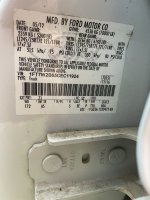
I added those weights in original post. the truck per Ford website says it weighs 6914 lbs. here is rating plate
 

Attachments

  • 1E14FB26-39C1-4A36-9612-702B550C23FA.jpeg
    1E14FB26-39C1-4A36-9612-702B550C23FA.jpeg
    2.1 MB · Views: 323
   / Trailer choice before I make a mistake #6  
It looks like all I can pull is 12,500 with my truck.

Am I missing something here.

Ya, missing the truth from the manufacturer of your truck. Basically all manufacturers lie on tow ratings. They can tow that much on a stripped truck, but those numbers are impossible to achieve properly loading & balancing the truck & trailer.

There are a few numbers that limit your tow:

Weight capacity of the front axle
Weight capacity of the rear axle
Payload (which includes fuel, tools, or anything in the truck except for a 150lbs driver).
Also, "tow capacity"

Of those, you will pretty much break every one before you get to the tow rating one they advertise.

10-15% of a bumper pull trailer weight (load + trailer) should be on the hitch.
15-25% of a gooseneck trailer weight (load + trailer) should be on the pin.

Generally you find out that hitch weight of your trailer exceeds your avalible payload capacity long before you hot your tow rating.

Bumper pull trailers are worse. They push down on the bumper & unload Weight off the front of the truck. That weight ends up on the rear axle, making it really easy to overload the rear axle.

Pay the $15 to roll your truck across a Cat scale at a truck stop, or get your local gravel pit to weigh your truck & preferably each axle. Do it with a full tank & your usual load of gear & tools Compare those numbers to your door sticker. You'll find it way higher than the listed curb weight & that will eat into the listed payload, also decreasing hitch weight you can safely/legally hitch up.
 
   / Trailer choice before I make a mistake #7  
Or use chains on the loader, or run your jobs by taking forks instead, and load the brush hog from the side of the trailer using the FEL.

You can get bumper pull 12k or 14k trailers in 22' lengths, too.

You guys, he has a super duty, he can handle a **** load of tongue weight and payload. Not a major worry for a 8200 lb tractor load.
 
  • Good Post
Reactions: JWR
   / Trailer choice before I make a mistake
  • Thread Starter
#9  
PBinWA I saw that and it looks like the gear set up I have 11,900 is it. Wish it had 4.30 that would boost it about 2000 lbs. not something I would change out.
 
   / Trailer choice before I make a mistake #10  
Private use or are you getting paid?

There are two kinds of trouble you can get into: civil and criminal.

Criminal charges are what you can get a citation or arrested for. Almost every State has laws that apply to tire and axle ratings. Most also cover the coupler, ball, etc. Most States don’t specifically list GVWR, outside of driver’s license requirements. However, some jurisdictions may see the GVWR as falling under other laws, such as reckless driving. If you’re subject to commercial DOT regulations, there are many more rules.

Civil penalties are all the things you can be sued for (generally, after a collision). The only way to limit your liability, in this regard, is to follow EVERY legal requirement AND manufacturer recommendation.

The manufacturer GCWR is not going to be part of a non-collision roadside inspection. None I have ever seen, or heard of, anyway.

From an inspection standpoint, you are legally limited by the most limiting factor. For example:

Your truck has a GVWR of 10k, a front axle rating of 5,200, and a rear axle rating of 6,100. Let us say you have a gooseneck ball rated at 25k. For this example, let’s say your tires are rated higher than your axles.

Say you buy a gooseneck that weighed 5k, empty. You put a 9k load on it. Thats’s 14k of total weight. Due to load placement, you are able to put 20% on the truck. That would be 2,800 pounds of weight, on the truck. How the truck is set up will determine how that weight is distributed, over the axles (Remember, for this example, the axles are our limiting factor, not the tires).

I don’t know what your truck weighs, empty, or how it’s axled, so I’ll make it up. I’m going to say it’s 6,500 pounds, total, with 3,500 pounds over the front axle, 3,000, on the rear. You have to check your stuff. This would leave 1,700 pounds of front axle capacity and 3,100 pounds of rear capacity. Even if all of the tongue weight, from the trailer (2,800 pounds, in this example), goes on the rear axle (it won’t), you’re still within specs.

Now, you may have noticed the axle ratings are more than the GVWR. It is best practice (and may be enforced, depending on jurisdiction) to stay under the GVWR’s. in the case of our example, our axle ratings are good. However, the 10k GVWR minus the 6,500 pound truck, alone, only leaves 3,500 pounds, total GVWR. So, we are still good, at 20% of our 14k load.

Many factors go into tongue weight. Load placement is the one you can control or at least, have the most control of. Buying the right trailer will make load placement less critical. Where the axles are, in relation to the deck, and how far apart they are matters. The same issues on your truck (tires, axles, safety chains, coupler, etc) also apply to the trailer. If the axles are too far back, this means more tongue weight and more weight in the front trailer axle.

Here are some pictures, ignore the specifics, just look at axle placement.

This trailer has the axles more forward, meaning less load moved to the truck. This would be the type that is best, for a lighter duty truck, like what you have.
22D76AF3-F0CF-4A42-96BF-5C42F8CD2092.jpeg


This trailer has the axles far back, in relation to the load carrying part of the deck. More weight on the truck. Easier to turn corners.
361B5AF4-011A-466D-80E7-27B8F52DAEDA.jpeg


This is a spread axle (with hydraulic dove, ignore for this discussion) with the axles near the center of the trailer. Easier to get more of the load evenly spread between the trailer axles, even less weight on the truck. Tougher on trailer tires, when turning tight corners.
28AE877C-F558-4C7F-A56F-7D4EE078BF9E.jpeg


Spread axles, but set further back. If the truck can’t hold the tongue weight well, it’s easier to overload the front trailer axle.
AEB94487-B275-434F-A9F1-35B0E07B5545.jpeg


A lot of F-250/2500 series trucks are traveling overweight. Especially, with Diesel engines. People think they can pull anything because their “tow rating” is higher than the weight they are pulling, but they almost never factor in the payload capacity of the truck.
 
   / Trailer choice before I make a mistake #11  
I believe the tow rating is also including the GVW of the truck over the curb weight. Look into that though.
 
   / Trailer choice before I make a mistake #12  
A Big Tex 14GN trailer 20 plus 5 foot for the ramps. 4780 pounds empty weight. According to their web page. Load is 8208 + 4780 = 12988. Transfer 15% to the hitch 12988 - 1948 = 11040 on the trailer. This is all good.
 
Last edited:
  • Good Post
Reactions: JWR
   / Trailer choice before I make a mistake #13  
I believe the tow rating is also including the GVW of the truck over the curb weight. Look into that though.

GVW stands for Gross Vehicle Weight. It’s the actual weight, at any given moment, of the vehicle. If a vehicle is on scales, it shows the GVW. The GVW can be anything, if you keep adding stuff or taking stuff away.
 
   / Trailer choice before I make a mistake #14  
GVW stands for Gross Vehicle Weight. It’s the actual weight, at any given moment, of the vehicle. If a vehicle is on scales, it shows the GVW. The GVW can be anything, if you keep adding stuff or taking stuff away.
Well, but usually when people say gvw what they really mean in gvwR, the maximum Rating of the vehicle.

what nyone was alluding to, is the gCvwr, the combined maximum rating. A number that is different than just gvwr plus tow rating (often much lower)
 
   / Trailer choice before I make a mistake #15  
GVW and GCVW is far from the same thing.
 
Last edited:
   / Trailer choice before I make a mistake #16  
GVW and GCWW is far from the same thing.

Did you mean GVW and GCWR are not the same thing? If so, you’re correct, but who are you correcting?
 
   / Trailer choice before I make a mistake #17  
I have a 2012 super duty 6.2 gas with 3.73 gears. I purchased this truck to move my tractor which is a new Holland work master 70 with FEL. It looks like all I can pull is 12,500 with my truck. I can’t find anything that says I can pull more with a gooseneck than bumper pull. A gooseneck is going run a good 1,000 lbs more than a bumper pull.

if I purchase a 20’ deck over bumper pull trailer most of my weight will be up on front of trailer when I load my tractor and bush hog up. The bush hog actually will hang off trailer by three feet. So tractor has to go on first.

If I purchase a gooseneck than I more than likely will exceed my towing capacity of truck. Most 20’ goosenecks are 4800 lbs. looks like I either need to get a bigger truck or smaller tractor. No way I can afford an aluminum gooseneck.
My tractor weighs 5050lbs, the fel weighs 1600 lbs and bushhog weighs 1556. That’s 8206lbs and leaves me roughly 4300 for a trailer. Hard to find a gooseneck 20’ at 4300lbs.

Am I missing something here.
Your missing something if critical importance here.

8200 lb machine and let's assume a 4000 lb trailer is 12200 lbs. But a goose will be designed to place approximately 20% of that 12,000 onto the truck rear axle, or 2400 lbs. That 2400 leaves the trailer, so your trailer and tractor are showing 10,600 (ish) on the trailer axles and your truck rear axle picks up 2400 lb payload.

If those numbers work with your truck, your golden. Look at RV trailers to see the extreme side of this.... my Grand Design 311BHS is a 14k gross trailer sitting on 2 6k lb axles. Why? Because they know that around 2800-3000 of that 14k will be on my truck and not on the trailer axles.
 
   / Trailer choice before I make a mistake #18  
I think a GN is just overkill here. If OP gets a 22’ bumper pull, he can place and balance the load for probably LESS rear axle weight than a goose, and 1000lbs less total tow weight, which is significant!
 
   / Trailer choice before I make a mistake #19  
Before you buy any trailer I think you need to double check the length of the tractor plus the front loader plus the mower. I have a Kubota L2501 and it is 22 feet without the bucket on the FEL and a 5 foot mower. I know the New Holland front end loader is made to reach much farther to the front then the Kubota loader. In addition your mower it more then likely bigger then mine and of course the tractor is 2 feet longer then mine.
 
Last edited:
   / Trailer choice before I make a mistake #20  
F-350 crew 4x4 here 6.2 3.73 gears. Bumper pull PJ 22' deck over tilt bed. Have hauled 14 round bales @ 900lb, grunts taking off on grade but hauled it great. Have hauled skid steers, cabbed tractors with loaders on 600 mile hilly trips.
 

Marketplace Items

2023 KRT ST900HD STAND-ON SKID STEER (A60429)
2023 KRT ST900HD...
TANK MANIFOLD (A58214)
2016 ISUZU NPRXD 14' BOX TRUCK (A60430)
2016 ISUZU NPRXD...
KENWORTH T/A DAY CAB ROAD TRACTOR (A57192)
KENWORTH T/A DAY...
2019 Chevrolet Tahoe 4X4 SUV (A59231)
2019 Chevrolet...
More info coming soon! (A56858)
More info coming...
 
Top