Squeak n Itch
Silver Member
For most of us on well systems, this is the best mini-course on the power required to get water to the house that I have read. For all of us seeking such info - THANK YOU!!
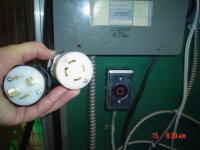
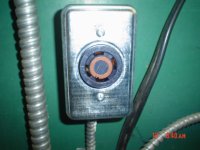
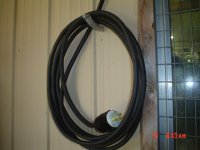
I have a disconnect box from the house wiring to the well pump. This disconnect box has a pigtail hanging out of it that the generator cord plugs in to. When the power goes out I pull the disconnect. This isolates the pump wiring from the house wiring. Then I plug the pigtail in to the generator. If the power comes back on it doesn't matter because the pump and generator are isolated from the house wiring. I had an electrician do this. It wasn't that expensive. Most folks out this way run their well pumps this way and it's easy to find an electrician that knows exactly what you are talking about when you ask him to do this.
For most of us on well systems, this is the best mini-course on the power required to get water to the house that I have read. For all of us seeking such info - THANK YOU!!
Regarding siphoning of gas from vehicles - is that still possible from a car? Last year during a huge storm and outages people were trying to figure out how to do that - I'd read supposedly in the mid 90's they put anti-gas theft devices in gas tanks so people can't siphon. I've not tried it but read elsewhere someone's comment that they were trying to figure out a way to bypass that device during our big storm last year because trucks had a hard time refueling gas stations..


Shortlid,
It sounds like you described 2 20 amp single pole breakers - correct? If so this is 220V going to the pressure switch. You also have a 2 wire pump which means the starting capacitor etc are in the pump motor.
Romex is 12-2 or 14-2 standard internal house wiring and for a 20 AMP circuit this SHOULD be 12-2 wire as 14-2 is rated to 15 amps. Then when the white and black wire are connected to the two breakers this = 220V. I dont know why you dont have a double pole 20 amp breaker in there?
In either event I would suggest you make sure the pump is on the 220V circuit by it self and the wiring is heavy enough feeding the pressure switch.
From how you are describing this I would suggest you have an electrician install the generator transfer switch to your house/well to make sure you have the wiring correct, and the loads/circuits needed balanced properly.
What you heard was the gens response to the quick high starting load imposed by the pump. The gen should immediately stabilize to the diminishing load as the pump starts. Maybe you meant, "once the pump stopped starting it quickly stabilized".I have 7000 watt/8750 starting power generator with a transfer switch. Electrician turned the well on while testing it, he flushed the toilet a few times until the tank bladder was down enough that the pump kicked in. He wanted me to hear what happens. Generator made a quick louder blip sound. But once the pump stopped it quickly stabilized. Around here we mostly have propane heat and water heaters and most neighbors have generators 5500-8000 watts (continuous). As long as we have gas to run a generator, it'll do what we need to stay comfortable.

 One suggested a THREE phase pump thru an inverter? to convert my SINGLE phase electricity to run this pump....thereby....running a smaller gauge wire. Does this sound reasonable? The well will be anywhere from 100 to 300' from house and then down 500-800'. ALOT of wire. Thanks
Under steady state pumping conditions this is absolutely true. During startup however it prolongs the high current startup phase of pump operation. There is, 1st, the very high [3 or 4 times motor rating] locked rotor current drawn, and 2nd the longer termed but lower overcurrent due to the motor being under overload while it accelerates a column of water more than a tenth of a mile long from zero to a speed of several feet per second. In combination, when other motor loads are present [particularly compressor type] this can be telling on a marginal gens ability to complete a pump startup.My well is 710 feet and I have the pump at 670, even though my water level is closer to 60', just like yours. The reason is that water levels fluctuate over time and this way I can withstand a large drop and still be OK. Also, the amount of water stored in the well bore is significant.
It requires very little extra energy to pump, only the friction losses in the extra pipe, the hydrostatic head only depends on the actual water level and is the same no matter what the pump depth.
It is a a double throw with a metal bar attaching the two 20 amp breakers. It is not the ones I have seen that has one switch for a breaker that takes up two spaces in the panel.
I checked just now it IS 12-2 wiring I guess it is SLIGHTLY larger than the regular romex going through the rest of the house. I also have a 220 plug for pottery Kiln thatthe PO used to have. But it is armored sheathing over the wiring. That and the electric water heater are the only 220v run in the house. The oven and range is gas.
So guess i will have to look through my paperwork to see what type of Gould pump is down there.

Question for Curly Dave. I too have hill top land. Drillers have said that I may have to go 700-800' to get water.

Under steady state pumping conditions this is absolutely true. During startup however it prolongs the high current startup phase of pump operation. There is, 1st, the very high [3 or 4 times motor rating] locked rotor current drawn, and 2nd the longer termed but lower overcurrent due to the motor being under overload while it accelerates a column of water more than a tenth of a mile long from zero to a speed of several feet per second. In combination, when other motor loads are present [particularly compressor type] this can be telling on a marginal gens ability to complete a pump startup.
larry