Valve lash adjustment on my F-1700

   / Valve lash adjustment on my F-1700 #1  

JC-jetro

Elite Member
Joined
Jul 16, 2006
Messages
4,069
Location
Kansas
Tractor
Ford 1700, Kubota MX-4700
:eek:


Yes, It's me again:D

I'm totally at a loss at the method recommended on the owner's manual on how to adjust intake and exhaust valve on my tractor.

It clearly states that clearance measurement and adjustment shall be done while engine is idling:eek:

What is it that I'm missing? from what I know and have done on my cars, usually get my#1 piston on TDC on compression cycle and then proceed with adjustment in order it is recommended by manufacturer that usually follows the firing order. I thought the whole idea is to have the piston position in TDC compression where both valve are totally closed or push rod and rocker arm not moved by the camshaft. In other words max gap between rocker arm and top of the valve stem. Below you'll find an excepts directly scanned off of my F-1700 owner's manual. I appreciate you all's input.

 
   / Valve lash adjustment on my F-1700 #2  
Well I learned somthing new today. After reading your post I got out my service manual and it also says to set the valves at idle. I don't think it will make a difference, but I set mine like I do my race engine. When the exhaust is at max. lift set the intake and when the intake is at max. lift set the exhaust . I don't even set hydraulic lifters with the engine running. I'm wondering why they want to do it at idle.
 
   / Valve lash adjustment on my F-1700
  • Thread Starter
#3  
Hooked_on_HP said:
Well I learned something new today. After reading your post I got out my service manual and it also says to set the valves at idle. I don't think it will make a difference, but I set mine like I do my race engine. When the exhaust is at max. lift set the intake and when the intake is at max. lift set the exhaust . I don't even set hydraulic lifters with the engine running. I'm wondering why they want to do it at idle.


I am also concerned how to physically do it when, the rocker arms are going up and down splashing oil around, while I'm trying to get my straight blade screwdriver to adjust and in the same time getting my feeler gage in there while everything is in motion. Too much multi tasking if you asked me. So far all I have done with my cars that requires lash adjustment (basically Japanese cars and dirt bikes) were done with a cold engine.:confused:

By the way I wondered if the head design is Non-interference, I sure do not want to bend a valve while I'm trying to do some good deed:(
 
Last edited:
   / Valve lash adjustment on my F-1700 #4  
I bet they have a special tool for it.
 
   / Valve lash adjustment on my F-1700 #5  
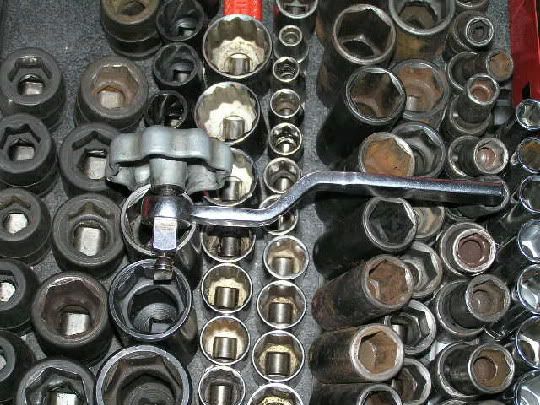
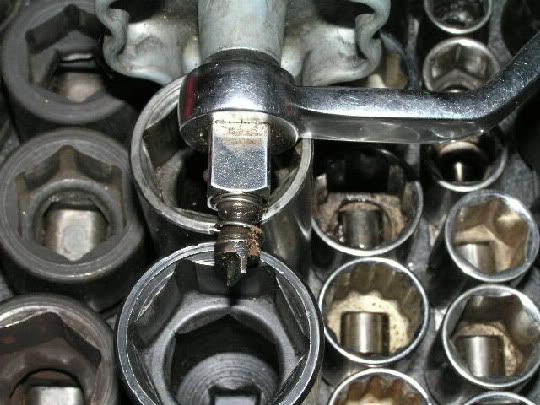
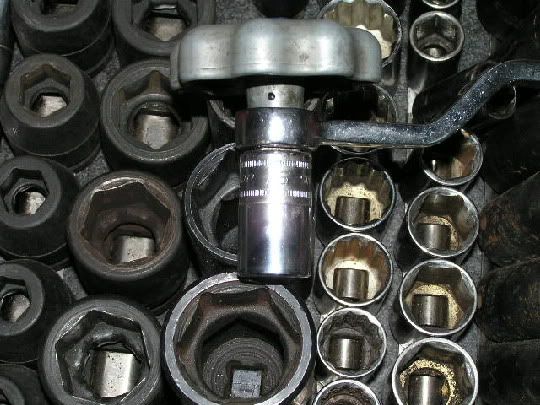
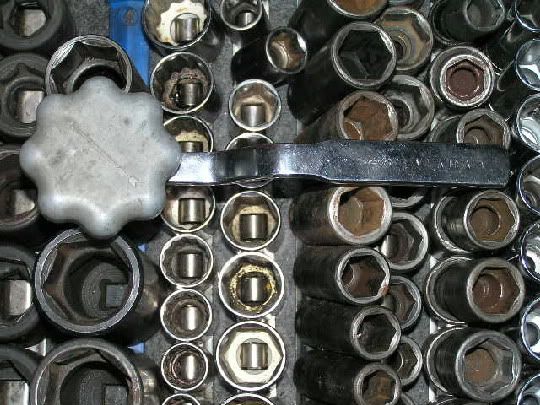
I have a Snap On V22A valve adjusting tool. Works great for this type of adjuster. Just snap on a 1/2 inch drive socket that fit's the lock nut, loosen the nut with the handle and then there is a knob on top that is attached to a screw driver tip that goes through the socket. Since the socket centers the screwdriver bit on the adjuster you don't have to worry about it slipping off. Great little tool that I bought to use on B series Cummins engines in Dodge pickups that have cramped engine compartments at the rear cylinder. Found it worked great for everything else and is one of those tools you couldn't pry from my cold dead hands. :) If I get a chance I'll run out to the garage and grab it later and take a picture of it.
 
   / Valve lash adjustment on my F-1700 #6  
This has to be a misprint. Aint no way to do it with the engine cold and idling at the same time. I'd call a dealer and ask service.
 
   / Valve lash adjustment on my F-1700 #7  
Here's the adjuster I was talking about

Without socket installed.

PC210003.jpg

PC210004.jpg


With socket installed.

PC210005.jpg


Top

PC210006.jpg
 
   / Valve lash adjustment on my F-1700 #8  
DP; neat tool for the job; like it is always stated " the right tool makes the job go easier" is true again. Question; does engine need to be running to set lash or can it be done when not runningg. Better yet; how should it be done properly. I assume manual is correct.
 
   / Valve lash adjustment on my F-1700
  • Thread Starter
#9  
DieselPower said:
Here's the adjuster I was talking about


Wow .. Great tool !! but how do you work out the feeler gage if the engine is running , The gap will be changing constantly as the camshaft is rotating while engine is at idle. You got to have a fixed target and that is when the valve is in TDC (top dead center) in compression cycle when both intake and exhaust port are closed. Any other way and you're shooting at a moving target.

When I said cold engine earlier, I did not imply that the engine should be running. Anything I have heard and done as far as valve adjustment with car engines were done with the engine off (some manufacturer recomnmmend adjustment after engine reaches operating temp but majority do it when engine is cold). It is more difficult to keep the heat on the part when you shut the engine off, conversly cold engine stays cold. Frankly I can not see it being done with engine running and being able to get the gap right. I suppose one will say you will keep moving the feeler gage back and forth till you feel certain resistance for a given gap. That will be quite subjective. We need a better answer. I'll call my local ford guy although he has been stingy with his information:rolleyes:
 
   / Valve lash adjustment on my F-1700 #10  
If your using a feeler gauge to measure lash, do it with the engine off. It is most likely a misprint where the manual says idling. I've never heard of that before and can't really visualize doing it either:confused:
 
   / Valve lash adjustment on my F-1700 #11  
Setting the valves with the engine running is not that uncommon on older engines.It is not all that difficult to do either, I have done it many times. On this engine early printed manuals state running and later manuals state engine not running. Personaly I would set the lash with the engine off.
My repair manual says "Clearance between rocker arm and end of valve stem should be checked and adjusted with engine cold and not running and with piston at TDC on compression stroke. Recommended clearance is 0.30 mm (0.012 inch) for intake and exhaust."
 
   / Valve lash adjustment on my F-1700
  • Thread Starter
#12  
Now, my engine is diesel and obviously you do not have valve timing mark on the crankshaft pulley, although there is couple of mark on the pulley that should not be mistaken for the valve timing mark. The mark on the pulley is for fuel injection pump timing to open and close diesel fuel flow to the individual injector. Since this is my first diesel, I reckon I should disconnect the battery and remove the ignition key out to avoid self injury during turning the crank shaft pulley manually. I should then take piston #1 and turn the crank shaft and make sure the pressure is off of spring on both intake and exhaust valve and try to make sure in that given position I have the widest gap possible. I reckon that should be enough indication of TDC of that cylinder. I then should proceed with measuring the gap and adjust if necessary.

Am I thinking it right?
 
   / Valve lash adjustment on my F-1700 #13  
Here's a method that I've used for years regardless if it's gas or diesel...

On a given cyl, adjust the intake when the exhaust just starts to open and adjust the exhaust when the intake is almost closed

It's never failed me
 
   / Valve lash adjustment on my F-1700
  • Thread Starter
#14  
TCBoomer said:
Here's a method that I've used for years regardless if it's gas or diesel...

On a given cyl, adjust the intake when the exhaust just starts to open and adjust the exhaust when the intake is almost closed

It's never failed me

Great , that's brilliant. that should guarantee widest gap for each valve prior to measurement and adjustment afterward. Thanks.:)
 
   / Valve lash adjustment on my F-1700 #15  
Don't forget this is a Japenese tractor. They probably wrote a Japenese manual for it. Then it was translated by a Japenese translator. Could be stopped was translated as idle. I've seen this type of thing happen on equipment we use in industry.

I would do it in the conventional way with the engine stopped.
 
   / Valve lash adjustment on my F-1700
  • Thread Starter
#16  
ccsial said:
Don't forget this is a Japenese tractor. They probably wrote a Japenese manual for it. Then it was translated by a Japenese translator. Could be stopped was translated as idle. I've seen this type of thing happen on equipment we use in industry.

I would do it in the conventional way with the engine stopped.

You may have a point there, granted this is a shibaura Japanese tractor but it was made exclusively for American market for Ford, same as Yanmar is for Deere. I think the final editor was certainly American English speaking person. The manual reads like an American would write.

I agree also that I should do adjustment with engine cold and not running. I reckon I check the gap first before deciding to adjust. The tractor seems to run just fine. As they say "don't fix if it ain't broken". There is such a wealth of knowledge at TBN that you got to bounce your ideas off of the members. At the least you may learn a thing or two.:D
 
   / Valve lash adjustment on my F-1700 #17  
I do mine just the way the manual says. You just run the tractor at idle and tighten the lifter slightly until the feeler guage won't slip in. You then back it off until the guage just slips in and tighten it. I don't try to second guess the designers on this one. This is a very quick procedure and much easier than manually bringing each cylinder into the right position.

Andy
 
   / Valve lash adjustment on my F-1700
  • Thread Starter
#18  
AndyMA said:
I do mine just the way the manual says. You just run the tractor at idle and tighten the lifter slightly until the feeler guage won't slip in. You then back it off until the guage just slips in and tighten it. I don't try to second guess the designers on this one. This is a very quick procedure and much easier than manually bringing each cylinder into the right position.

Andy

I myself wondered why they do not elaborate about bringing each piston to TDC on compression and other necessary stuff usually done on gas powered engines. Your procedure seems simple enough and if head design is non-interference I suppose you can not bend a valve. I certainly do not want to close the exhaust valve on exhaust stroke to cause rod or piston damage. I yet to talk to my friendly New-Holland dealer also. Thanks for your good input Andy
 
   / Valve lash adjustment on my F-1700 #19  
The reason they want to do it at idle might be because there isn't a simple way to tell if you are at TDC, like timing marks.
 
   / Valve lash adjustment on my F-1700 #20  
Hooked_on_HP said:
The reason they want to do it at idle might be because there isn't a simple way to tell if you are at TDC, like timing marks.


On the crankshaft pully there are to marks close together, turning the engine over with the starter, the first mark to pass the pointer is your start of injection timing mark and the second is your TDC mark. A pointer is sticking out of the front cover next to the pulley as your reference point. Valves should be adjusted with the pistion on compression stroke. If the valves are rocking, exhaust just closing and intake just onening, you are on compression stroke. Just turn the engine over till the mark lines up with the pointer again and you will be on compression stroke for that cyclinder.
JC, If you would like I can scan the page and picture for you.
 

Marketplace Items

Kubota ZG222 (A60462)
2018 FORD F-450 XL SINGLE CAB FLATBED SERVICE TRK (A59823)
2018 FORD F-450 XL...
2021 Allmand Bros Maxi-Lite II 20kW S/A Towable Light Tower (A55973)
2021 Allmand Bros...
John Deere 2640 2WD Tractor with 146 Front Loader (A57024)
John Deere 2640...
2022 CAN-AM BOMBARDIER LIMITED RTV (A59823)
2022 CAN-AM...
2012 Ford F-250 Pickup Truck (A55973)
2012 Ford F-250...
 
Top