Well Pumps - Variable Speed?

/ Well Pumps - Variable Speed? #1  

Pettrix

Platinum Member
Joined
Jan 17, 2012
Messages
622
Location
High Desert Southwest
Looking to do a well and I have a question about well pumps. I was told that variable speed pumps are the way to go vs the older single speed on/off pumps. Supposedly the variable speed pump keeps constant pressure but uses less power than the old single speed on/off pumps.

I was told to do with a 1.5 HP - 10 GPM pump.

Any input or advice?
 
/ Well Pumps - Variable Speed? #2  
I looked into them a few years back, couldn't justify the extra cost and I wasn't concerned about the water pressure fluctuating. I barely notice the difference.....Mike
 
/ Well Pumps - Variable Speed? #3  
I have gone variable for both a bore (well) and tank pump replacing older pumps. They have quite a few features that make then stand out and for me the most important is the lower current draw on startup. My wiring for the pump house where both pumps live is only 10amp, thank you previous owner, so I want to keep the startup and running current as low as possible for both pumps. I am happy with the results. Ancillary benefits are the more constant pressure and the ability to adjust the pressure. I also expect the pump life to be in excess of what the previous pumps provided. we'll see.

Yes they are more expensive.

As the the sizing, I'm not a pump guy, but if I was I would need a shedload more info. Things like how much head (never too much of that)? What you want to use the water for? How many taps in the system? Etc.
 
/ Well Pumps - Variable Speed?
  • Thread Starter
#4  
Someone else told me to get a CSV (cycle stop valve) on a standard pump. These valves keep constant pressure and reduce pump wear. This would be option #2 for me.
 
/ Well Pumps - Variable Speed? #5  
I like the NEW style pumps.

Variable speed and only run when water is used. These pump's ramp up based on the water demand and will keep up with each and every faucet that is turned on. They are similar to the on demand hot water heater. Energy cost is lower based primarily on the fact that it takes less current to 'start' when your pump begins to run.


As to why I didn't get one - they are not commonplace (used in most homes) so they are costly. If everyone purchased/had one installed price would be cheaper than the more traditional pump. There is a more involved wiring set-up and it too drives up cost - it takes single phase power and converts it to three phase. Three phase (power) is typically used in most commercial and industrial settings because it is a more efficient way to run electric motors.

I am unsure how they will perform/last using dirty energy I.E. home generator when the power goes out. Some generators like a PTO driven tractor type will vary in voltage when loads are placed on them, most electronics do not like voltage fluctuations. The more expensive permanent generators professionally installed at your home will account for voltage fluctuation and would not present a problem at all. But I am betting that most people out there are using box store simple generators to power their homes during a power outage.

Mother Nature, is ultimately why I went with a traditional pump. Lightning will take out a pump in a hurry regardless of any failsafe that is put into place. So..... that is why I just stuck to the older (cheaper to replace) pump
 
/ Well Pumps - Variable Speed? #6  
Someone else told me to get a CSV (cycle stop valve) on a standard pump. These valves keep constant pressure and reduce pump wear. This would be option #2 for me.


Take this opinion with a grain of salt - never seen this in person.

I went to the Website that makes this valve, and watched their animation showing the difference(s) between it and the traditional pump switch. The valve show's the pump running full time when water is run which would lower cycle times and reduce wear. But no matter what- when water is turned off the pump shuts off. Current draw using either type of pump switch is going to consume the same power.

If you use a lot of water, have 6 kids and they a all girls- living in the shower.... I would use this innovative valve.


Still I would use the more traditional design. Even with high demand water usage I would use a normal pressure switch. Just buy an oversized pressure tank, the bigger-the-better. I installed one and it will cycle only one time when my daughter is taking her "what seems to be 4hr shower".
 
Last edited:
/ Well Pumps - Variable Speed? #7  
I've seen variable speed pumps but only for large irrigation projects - center pivot irrigation rounds. Never seen them used for single family dwelling well.

After 32 years, I had to have my home well pump replaced last year. Its a simple single speed submersible pump - maintains plenty of pressure and I never notice any variation in pressure. I'm sure if the variable speed pump would have been better in my situation, the "pump man" would have recommended it.

I suggest you get your advice from a qualified pump replacement company. They will obtain all the necessary data and provide you with correct & appropriate answers for your situation. Any way you decide to go will be pretty darn expensive and you want the best advice available.
 
/ Well Pumps - Variable Speed? #8  
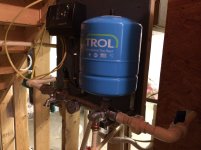
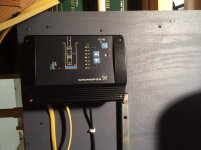
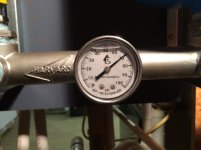
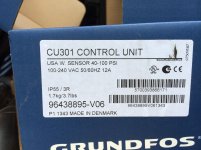
I installed a Grundfos SQE system a few month ago, I am extremely happy with it. I gained a bunch of space under my basement steps also since the system is so small.

Constant Pressure Pump | Grundfos

IMG_2774.jpg IMG_2779.jpg IMG_2780.jpg

IMG_2755.jpg IMG_2754.jpg
 
/ Well Pumps - Variable Speed? #9  
Tried this once, but my laptop rebooted itself in the middle of the note. Hate that.

I'd think they should have some brushless pump motors out for these now. That would be the way to go, and it ought to reduce the starting amperage required.

Pumps around here last a long time, as long as the wells are reasonably deep. The shallow wells are the ones requiring frequent pump pulls.

Our pump goes back to 1987/88. That's typical of this area. Almost everyone just a smidget out of town have wells and septic.

Ralph
 
/ Well Pumps - Variable Speed? #10  
Pluses: lower inrush, lower power usage, perhaps more constant pressure

Minuses: Much higher install cost, not much reserve with power loss (small holding tank), much higher failure risk to lightning, energy saving not enough to justify the purchase price

paul
 
/ Well Pumps - Variable Speed? #11  
There are VFD drives for single phase three wire pumps. Another a advantage of the VFD is that it can increase pump rpms above 60HZ for high flow, low pressure demands.depends on how well the submersable pump was sized to the application . Not unusual to find a pump with many stages installed shallow and a pump with too few stages placed too deep.
 
/ Well Pumps - Variable Speed? #12  
This VFD on a well pump is an interesting idea. There have got to be more parts to fail e.g. pressure sensor and controller. Pump should last longer due to soft starts (but well pumps last pretty long in my experience anyway). Personally it seems to me that the way to go is with the standard single speed pump with a pressure switch but add an oversized pressure tank as drajj suggested.
 
/ Well Pumps - Variable Speed? #13  
Just my personal opinion as a Tx licensed water well driller and pump installer for 20 years...

A vfd is a computer controlled device. They have advantages in some situations. A CSV is an alternative to a vfd. The electricity is a non-factor. A standard well pump does not use more than 10-15$ a month of electricity.

My advice is to use the smallest well pump that will do the job and couple it with the largest well tank you can afford. Most people use a larger pump than necessary and that causes excessive cycling.
 
/ Well Pumps - Variable Speed? #14  
Just my personal opinion as a Tx licensed water well driller and pump installer for 20 years...

My advice is to use the smallest well pump that will do the job and couple it with the largest well tank you can afford. Most people use a larger pump than necessary and that causes excessive cycling.

TheGoose

With your experience then I have a question or series of them.

Due to code I have to put a fire suppression system in the new house we are going to build.

Option A I can put a large pump set deeper and get the flow I need.
or
Option B I can put a smaller pump say 5-10 gpm set more shallow (dynamic level at 10 gpm is a little bit higher than at 50 gpm) and put in a 2000-3000 gal tank with another pump which is high gpm to supply the system.

Option A the well pump is more expensive with more copper in the hole (set deeper) but less complex as only one pump and no storage tanks.
Option B has a cheaper well pump but the extra tanks and extra high flow pump are not cheap.

Either way would have a pressure tank for the system.

Money aside which do you think is better in the case as I describe it?

Tradeoffs for certain but what is your opinion as a long time pump installer. I have had installers give me absolutely positive answers both ways.
They each think there is only one way, their way, each one being the opposite of the other.

By the way the well can support either option. Required flow is 50 gpm.
 
/ Well Pumps - Variable Speed? #15  
Just my personal opinion as a Tx licensed water well driller and pump installer for 20 years...

A vfd is a computer controlled device. They have advantages in some situations. A CSV is an alternative to a vfd. The electricity is a non-factor. A standard well pump does not use more than 10-15$ a month of electricity.

My advice is to use the smallest well pump that will do the job and couple it with the largest well tank you can afford. Most people use a larger pump than necessary and that causes excessive cycling.

I agree with this. Also install as small of a hot water tank as can get away with. Keeps the shower-time down. My wife is one of those that gets out of the shower when the hot water runs out. Each time the hot water tank needed to be replaced (been here a long time), I went one size down. She asked if I would install an instant whole house hot water heater... I declined.
 
/ Well Pumps - Variable Speed? #16  
Someone else told me to get a CSV (cycle stop valve) on a standard pump. These valves keep constant pressure and reduce pump wear. This would be option #2 for me.
I have a CSV with the pressure tank in the well casing and really like it.

I added a light that comes on when the pump runs and that has been very beneficial.

Quite aways into this thread is where the CSV is explained: http://www.tractorbynet.com/forums/rural-living/271589-water-well-pump-monitor.html?highlight=

P2080002.JPG
P3070015.JPG
 
/ Well Pumps - Variable Speed? #17  
I install residential lawn irrigation , when I get to a house with the variable speed pumps , its GREAT . Sprinkler heads work perfectly . AND they can take a shower or bath at the same time .
 
/ Well Pumps - Variable Speed? #18  
I install residential lawn irrigation , when I get to a house with the variable speed pumps , its GREAT . Sprinkler heads work perfectly . AND they can take a shower or bath at the same time .

Yes I would guess that with irrigation and sprinkler applications this technology would shine
 
/ Well Pumps - Variable Speed? #19  
. AND they can take a shower or bath at the same time .

Having a VFD on the pump alone is not going to allow the sprinklers to run and take a shower at the same time. The pump would have to be larger.
 
/ Well Pumps - Variable Speed? #20  
I agree with this. Also install as small of a hot water tank as can get away with. Keeps the shower-time down. My wife is one of those that gets out of the shower when the hot water runs out. Each time the hot water tank needed to be replaced (been here a long time), I went one size down. She asked if I would install an instant whole house hot water heater... I declined.


I would do this...... however my wife would kick my butt. You see, 'a happy woman= a happy man'. In return I get free delivery of beer and sustenance on a daily basis.
 
 
Top