will it take off?

/ will it take off? #441  
If the conveyer matches the approximate ground speed in relation to a real world takeoff speed and matches it through all the V speeds to within a few digits then in reality the plane ain't moving forward through the air. It is remaining virtually still. The wings need air velocity (as I and others stated) to produce the required lift. I still say myth busted. But what do I know I'm an audio engineer by original trade. Ask me what a Munsen curve is next time. :D We actually need to send this to mythbusters don't we?
 
/ will it take off? #442  
Tom,
I'm with you on this one. At full throttle, the plane will still be standing still with relation to the ground and its surroundings. The only thing moving is the conveyer and the wheels of the plane. The conveyer may be moving at 500 mph though. Without the plane moving there is no way for air to move accross its wings at the speed needed to create lift.

For example, on take off. The plane starts out at full throttle but does not magically lift into the air until there is enough airspeed moving accross the wings.
 
/ will it take off? #443  
Well Tom,

I'm sorry to say I retract my last post after discussion with a friend of mine, I'm now in the "it will fly category"

It doesn't matter how fast the conveyor is moving. The wheels on the plane are free spinning. Therefore, regardless of how fast the conveyor is moving, thrust from the plane will move it forward. The plane will not remain in place regardless of the speed of the conveyor. It will move forward, gain speed, and either leave the conveyor, or if the conveyor is say 4000' long, will travel the distance needed along the conveyor to gain proper air speed and take off. The only thing the conveyor will do is make the wheels spin faster at the point it leaves the ground. Looks like spark man was right clear back on post #4, I just didn't read his post close enough. I just couldn't get over the vision in my head of the plane sitting still due to the conveyor when in reality, there's no way the conveyor can keep the plane from moving forward in increasing speed just like a normal takeoff.

I'm laughing now. I bet you guys in the "it will fly" category are just getting a kick out of us in the "it will not fly" category.

jk
 
Last edited:
/ will it take off? #444  
jk96 said:
Tom,
I'm with you on this one. At full throttle, the plane will still be standing still with relation to the ground and its surroundings. The only thing moving is the conveyer and the wheels of the plane. The conveyer may be moving at 500 mph though. Without the plane moving there is no way for air to move accross its wings at the speed needed to create lift.

For example, on take off. The plane starts out at full throttle but does not magically lift into the air until there is enough airspeed moving accross the wings.

No. The conveyor can't move at 500 without the plane moving forward at 500. The problem states the conveyor matches the plane's forward speed. One of two things will probably happen.

1. There will be a tremendous humming sound (think power applied to an electirc motor that cannot turn) until the struts get ripped off the plane, or:

2. The conveyor and plane will spin at opposite directions to infinite speed instantly (think starship Enterprise leaving in a flash). Both will probably disentigrate (sp?).
 
/ will it take off? #445  
I think the problem here is everyone has a problem getting over the idea that the plane is stationary. It's the same problem I had. I've been racking my brain trying to fine a way to illustrate this visually to show that the plane is moving. I the best way I can think of is a helicopter. I've crudely attached a set of wheels to the drawing to show this.

Let's say the helicopter begins lifting off of the ground at 5 miles per hour. The belt that the wheels are touching moves in the opposite direction at 5 miles per hour. Does anyone think that the helicopter will remain on the ground? Of course not, it will fly regardless of what the belt is doing.

copter1.jpg


Now let's put some weight on the wheels. Please dont give me some long explanation that the helicopter couldn't balance at this angle, etc. Its for illustration purposes only. Will the helicopter still move off of the ground.
copter2.jpg


Now you probably know where I'm going with this last image. On end, the helicopter cannot remain in the same place, it will travel along the runway and eventually off of it. No differenty than if it was verticle, and no different than an airplane. The plane will fly
copter3.jpg
 
Last edited:
/ will it take off? #446  
JK,

Thanks for the illustrations. I think you proved the point perfectly. Now about your artwork.....:eek: :D J/K it was a great idea...
 
/ will it take off? #447  
Rback,

Yeah I know, the artwork could use a little work. Hopefully the illustration makes up for my stupidity on post #442 though.

One other note on this subject. One person I talked to had a good point. There have been several people converted from the "no fly" to the "fly side", but no one I know of has been converted from the "fly side" to the "no fly" side.

jk
 
/ will it take off? #448  
Well, I've watched this thread for a couple weeks, and must say I've not responded because of the great arguments from all camps. I have to say, that as a pilot, and of course reading the question a few times, that I am in the "will fly" camp.

The question states that the plane begins to move forward, the belt moves backwards at the same speed. Therefore plane moves 5 mph forward, conveyor moves 5 mph backwards, the wheels spin at 10 mph. We still have 5 mph winds going over the wings. The situation escalates as the speed of the plane increases, so at 70 mph forward airspeed, belt is 70 mph backwards, wheels are spinning 140 mph.........a small plane would be lifting off at this point. Somewhere way back, someone gave the example of a float plane lifting off on water, going against the current-this was a great example. Of course, everyone knows that helicopters are the way to go:) My 2 cents.
 

Attachments

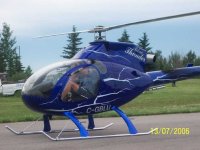
  • BLU Start-up.jpg
    BLU Start-up.jpg
    37.6 KB · Views: 104
/ will it take off? #449  
Is there some way to take a poll and put the results in one post? How many (and who) are in each camp?

If someone knows how to do it, put me in the "Will fly" crowd.
 
/ will it take off? #450  
So long as you can have the magic in the MCB you can have magic wheels and bearings that can witstand spinning at relativistic speeds. So as long as the MCB can accelerate as required to continuously provide a counterforce to the thrust of the Aircraft (propellor, pure jet, turbo prop, rocket, series of small A-bombs set off in a strong (magic) dish mounted at the tail... it just doesn't matter how propelled so long as the propulsion is by thrust not by rotating the wheels) by definition the plane will remain stationery.

Why? Because the MCB accelerates as required to couple rearward force onto the aircraft through imparting kinetic energy to the spinning wheels (and using the frictions available) in exactly the same amount as the propulsive thrust applied to the aircraft by the engine(s) so as to cancel the thruyst with equal and opposite force.

Most folks with a modicum of mechanical understanding or training in elementary physics should agree to the above, in principal.

Now, as the MCB accelerates faster and faster the aerodynamic drag on the MCB's contact with the air causes the air nearest the MCB to be accelerated rearward. There will be some shear which will reduce the speed of this accelerated air depending on how far above the MCB you test. Still at some point as the MCB approaches the speed of light sufficiently the air at the elevation of the wings of the aircraft will eventually be accelerated in excess of the minimum needed to produce lift equal to the weight of the plane. Then the plane will rise above the MCB and accelerate forward with respect to the ground the MCB is sitting on.

What happens next is not well specified in the problem statement as we know little of the A/C characteristics or the length of the MCB. There are various possibilities. If the MCB controller were "perverse" it might immediately brake the MCB to a halt as soon as the weight of the A/C was sensed to be removed. The moving air current would stop and the A/C would most likely fall immediately back down on the MCB. If the MCB were short (not extending too far in front of the plane) as the plane accelerated forward after lifting off it would rapidly leave the zone of accelerated air and again stall and settle back to the ground or the MCB. If it made it past the end of the MCB it could then make a normal takeoff, assuming available runway and no obstructions.

So, what do we know for sure? The A/C will eventually take off (it will rise above the MCB at least a little bit for a little while) but we don't have enough given information to predict what happens next.

I got lost in a bunch of stuff about chocks and other red hearings that don't seem to have come from the problem statement and only provide more confusion which was already available in excess.

Pat
 
/ will it take off? #451  
Pat,

you just don't get it. As illustrated in my post #445 with the helicopter, the conveyor belt has no effect on the function of the airplane. None, zero, zip, nada. I don't know how it can be shown any clearer.

If during normal takeoff, it takes an airplane 20 seconds to travel 1000 feet, and our MCB is 1000 feet long, starting at the begining of the MCB, the airplane will travel the length of the entire MCB in 20 seconds regardless of how fast the MCB is moving in the opposite direction.

Please tell me how the example of the helicopter is wrong. Look at the first picture I posted with the MCB running vertically. Now let pretend the helicopter is in a hover. Increase the speed of the MCB now to 500 mph. Do you think the helicopter will fall to the ground or will it continue to hover with the wheels spinning at 500 mph? Now look at the last pic with the helicopter on end and the MCB running horizontal. How will it react differently? It won't. It will pull itself accross the MCB just like the airplane.

One last example then I give up.

Let's say that in the middle of a runway is an MCB 100 feet long that is moving in the opposite direction as the take off. During the take off, the plane hits the MCB going 200mph. When the airplane hits the MCB, the MCB is moving in the opposite direction as the plane at 200 mph.

Do you think the plane will instantly stop on a dime when it hits the MCB? 200 mph to zero in less than a second?
or
Do you think the planes tires will smoke and squeel for a split second as they increase thier speed to 400mph and the plane continues to accelerate accross and over the MCB toward its take off?
 
/ will it take off? #452  
JK96, I tell you what. I'll carefully read and honestly critique your post if you will do me the courtesy of the same, pointing out where there is a flaw.

I would like to stick within the bounds of the original problem statement and DIRECT extensions such as the air "pumped" by the moving conveyor. I would not wish to enlarge the problem space to include wheel chocks or helicopters or bottle rockets or ...

OK?? I am off to read your post. Oh, and by the way, there may be a few pretty bright guys out there who think that you just don't get it. An argumentum ad hominem or comment getting pretty close to same really have no good place here.

Pat
 
/ will it take off? #453  
Pat,

sounds like a deal. I'll wait for your reply to my earlier post. As to the "just don't get it" part, I did not mean any offense or in any way a judgment on intelligence, only that people are making this much more complicated than it is. I didn't get it either. If you look at my first post, I was in the no-fly category. I've since realized my errors and corrected my stance.

jk
 
/ will it take off? #454  
JK96 said, "I think the problem here is everyone has a problem getting over the idea that the plane is stationary."

I don't agree, the problem is we do not all have the same understanding partly due to different backgrounds and experiences.

96 also said, "I've been racking my brain trying to fine a way to illustrate this visually to show that the plane is moving."

First it would be good to show how the plane got moving. It was at rest when the problem started. The MCB, as many have described prevents the A/C from moving with respect to the ground on which the MCB rests.

I fail to see the advantage of entering a helicopter or a hummingbird or a winged serpent into the problem space.

Here are further comments by 96:

Let's say the helicopter begins lifting off of the ground at 5 miles per hour. The belt that the wheels are touching moves in the opposite direction at 5 miles per hour. Does anyone think that the helicopter will remain on the ground? Of course not, it will fly regardless of what the belt is doing.

Why 5 mph, many choppers will lift off wilth zero forward airspeed. Of course the helo will lift off but so what, so would a hummingbird or a bottle rocket. While it is true that the helo could lift off it has NO BEARING on the problem as stated.

96 said, "Now let's put some weight on the wheels. "

I'm sorry but this, as interesting and clever as it may be, has no bearing on the problem as stated.

Until or unless you can explain to me the flaws in the post that elicited your YOU JUST DON"T GET IT remark, we will just have to agree to disagree.

The A/C at time zero in the problem is at rest. If the MCB accelerates as required it will generate a reactionary force due to the inertia of the wheels and the various frictions to be equal and opposite in direction to the thrust of the A/C's propulsion. Because of this the A/C will not move forward through the air mass and so will generate no lift.

If there were a perfect lubricant (not in the original problem statement but introduced here to make a simple point) that could completely elliminate traction and the crew chief sprayed it on the tires then the MCB would be a big failure and the A/C would accelerate normally toward a takeoff.

Simple Newtonian physics explains the concept of the reactionary forces generated by the inertia of the wheels and the roling friction of the tires and the wheel bearing friction. Again simple consideration of the addition of two vectors, aimed in opposite directioins and of equal magnitude, shows how the reactionary forces equal thrust and the net force on the A/C is zero so it does not move.

If in fact this is over anyone's head and needs to be broken down into smaller more easily digested chunks, please identify the part that is not clear and I will try to explain it in simpler terms.

If on the other hand, as stated, I just don't get it, then please explain in simple terms which part of my explanation is flawed or in violaton of the problem as originally stated. Please be detailed, concise, and complete. If I am wrong on so simple an analysis, I want to be set straight right away.

If at all possible do not introduce any additional deux ex machina, the MCB was about enough.

Pat
 
/ will it take off? #455  
Now I am getting really confused!:confused: :confused:

I beleive someone indicated lift would created by air flowing over the wings.

Well, today I drove to Halifax and back with lots of air flowing over the right and left wings of my truck. Even at speeds in slight excess of the posted limit I did not notice any lift occuring.:confused: :confused:
 
/ will it take off? #456  
patrick_g said:
First it would be good to show how the plane got moving. It was at rest when the problem started. The MCB, as many have described prevents the A/C from moving with respect to the ground on which the MCB rests.

Pat

I agree that this is the key. I think everyone would agree that if the plane begins moving, it will continue to move.
First off, if the plane does not move, then the whole aguement is null and void because the MCB only matches the movement of the plane (as stated by the original question). If the plane does not move, the conveyor will not move, the wheels do not turn, the plane just sits still motionless on a motionless MCB with its prop beating the air. I dont see any way this situation is conceivable but thats the only way "no movement" can happen. Just this situation should make the "no fly" bunch reconsider their position that the conveyor and wheels spin but the plane does not move.

So, I guess what Im asking for is someone to explain to me how the conveyor even started moving if the plane can not? (remember, the conveyor only does what the plane does).
 
/ will it take off? #457  
Ok Pat,

I’ll take one more stab at it as I promised I would.

Here are the general ideas that I am assuming.
1. The plane is being propelled by thrust, i.e. jet engine, or by propellers.
2. The wheels on the plane are free spinning, no brakes applied, similar to a bicycle.
3. The plane is attempting to take off just like a normal takeoff, from a stop, full thrust applied until it begins to move with enough air speed to create the required lift to fly.
4. The plane needs 2000 feet to gain a speed of 200 mph, the required air speed on a normal runway for this particular model plane X to fly.
5. The MCB is 3000 feet long and the plane is at one end of the MCB.
6. The question “Will it take off, means will it leave the ground and remain in the air.

Now, with these assumption made, the only way for our plane to take off and remain flying is for it to travel, or move, from the start of the MCB toward the opposite end of the MCB, all the while gaining speed until it reaches 200 mph with relation to the ground. If it remains in one place on the MCB, I think we can assume it will not take off and continue to fly.

Now, the original parameters state – “as the plane moves the conveyor moves but in the opposite direction.the conveyor has a system that tracks the speed of the plane and matches it exactly in the opposite direction”

As thrust is applied by the engines, they begin to push the plane forward along the MCB. The only way to stop the plane from moving is to apply an equal amount of force against the plane in the opposite direction. Now, lets factor in the movement of the MCB. Our plane is moving forward at 10 mph using X amount of force from the engines. Our MCB begins moving in the opposite direction as the plane at 10mph. The planes wheels are now spinning at 20 mph, but what force has been applied to the plane to slow it down. The only force is the amount of friction created by the moving wheels. There's nothing else on the MCB creating force against the airplane to slow it down. I think it’s safe to say that the amount of friction from the wheels is less than the X amount of force applied from the engines. In fact, the friction of the wheels would be minimal. Therefore the plane will continue to move forward. Since max thrust is being applied, the plane continues to gain speed and move toward the other end of the MCB. As it approaches 200 mph, the conveyor is moving at 200 mph in the opposite direction, but little or very little additional force is being applied against the airplane. It cannot and will not stay in place due to the movement of the MCB.

Here’s another real world example you could actually test. Take a remote controlled airplane. Let’s assume is has a max flying speed of 20 mph. Place it on a treadmill going 30 mph in the opposite direction the plane is flying. Hold it in place on the treadmill with your hand so that the wheels are touching and moving with the treadmill. It takes virtually no effort to hold it in place. Now apply the engine at full throttle. You will feel the plane start to pull forward. Let go, it will move up the treadmill even though the treadmill is moving in the opposite direction faster than the ability of the plane to fly.

As for your theory, I'm sorry but I'll admit, your way over my head on most of it. Sorry for the long post, but this is my last shot at this.
jk
 
/ will it take off? #458  
Egon said:
Now I am getting really confused!:confused: :confused:

I beleive someone indicated lift would created by air flowing over the wings.

Well, today I drove to Halifax and back with lots of air flowing over the right and left wings of my truck. Even at speeds in slight excess of the posted limit I did not notice any lift occuring.:confused: :confused:

An airfoil (wing, prop) is shaped so that the upper surface is wider (from the leading edge to the trailing edge) than the lower surface of the airfoil. As the airflows around the airfoil, the air going over the wing has to travel faster than the air under the wing so that it meets back at the same time at the trailing edge. Bernoulli's principle states that as velocity increases, pressure decreases and as velocity decreases, pressure increases. That means that the faster moving air going over the wing has a lower pressure than the slower moving air going under the wing. Low pressure on top and higher pressure on bottom means that the wing is "lifted" towards the low pressure area. The faster the air moves around the wing, the greater the pressure diffference, the more lift is created.
Thats lift in a nutshell.

EDIT: Heres a bonus:
Stall= A stall occures when the angle of attack of an airfoil is too great and causes turbulance on the top of the airfoil. This turbulance slows the airflow down so it is no longer moving faster than the air going under the wing. When the pressure under and over the wing equalizes, you lose lift and fall out of the air.
 
/ will it take off? #459  
It all comes down to the no-fly crowd either ignoring the thrust being developed by the engine or specifying a massive amount of friction that would soak up that thrust.

As to the helicopter illusstration: Great! right on and it is quit apropos this problem. As it is rotated from verticle to horizontal it just takes on more and more of the attributes of a plane and when the MCB is horizontal it very graphically shows the force of the thrust.

Harry K

I vote this whole thread be put to bed.
 
/ will it take off? #460  
Hmmmnnnn a horribly revolting thought just came to me. what is this were a float plane and it was in a river and the river could match the speed of the plane?
 

Marketplace Items

New/Unused Landhonor 20,000lb Electric Winch (A61166)
New/Unused...
2018 KUBOTA L47 BACKHOE (A62129)
2018 KUBOTA L47...
2025 Pabreak 80in. Hydraulic Dual Cylinder Grapple Bucket Skid Steer Attachment (A61567)
2025 Pabreak 80in...
New/Unused 20x30 All Steel Carport (A61166)
New/Unused 20x30...
2005 Kubota L3130 (A60462)
2005 Kubota L3130...
2013 Ford F-250 Ext. Cab Pickup Truck (A61568)
2013 Ford F-250...
 
Top