Your last generator Maintenance Run

/ Your last generator Maintenance Run #2,721  
That water seems to roll around like mercury in there. I guess even with generator vibration it should make its way into the sump. The good thing is that you could make the sump sturdy, out of pipe and plate, so it would never rust out.

My 3 foot long Rochester Manual Fuel gauge was picked up for me yesterday, so my tank build should start shortly. Now that I say that, I realize I don't know if I can make the tank shorter on account of that spiral type fuel gauge. The gauge could go into the sump, but not sure if I want it sitting in water.
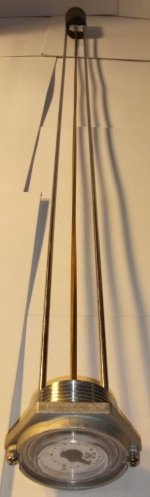
gauge.jpg
 
/ Your last generator Maintenance Run #2,722  
Tilt the bottom plate by 3/8", raise the screw in bung for the gauge 3/8"
 
/ Your last generator Maintenance Run #2,723  
That water seems to roll around like mercury in there. I guess even with generator vibration it should make its way into the sump. The good thing is that you could make the sump sturdy, out of pipe and plate, so it would never rust out.

My 3 foot long Rochester Manual Fuel gauge was picked up for me yesterday, so my tank build should start shortly. Now that I say that, I realize I don't know if I can make the tank shorter on account of that spiral type fuel gauge. The gauge could go into the sump, but not sure if I want it sitting in water.

View attachment 605103

Thats a nice reliable looking gauge, we have a similar one in the Farmall 400
 
/ Your last generator Maintenance Run
  • Thread Starter
#2,724  
Good discussion on tank design.

Short of desert conditions, tank condensation is an issue for most everybody else.

Rgds, D.
 
/ Your last generator Maintenance Run #2,725  
Your fuel pickup should be an inch off the bottom of the tank which will allow draining water off before it ever reaches the drop tube even with a flat bottom tank. I’d put a drain on the bottom plate though.

Also, cut the end of the drop tube at a sharp angle so it can’t easily pickup rust scale from the bottom of the tank when it inevitably forms.

The best drop tube is steel tubing, drill out a compression fitting so the tubing will pass all the way through to the bottom of the tank. Infinitely adjustable and no hidden joint under the scully to let air in. Put another compression fitting on the top to adapt to pipe thread or better yet run a one piece tube all the way to the engine.


I’ve seen at least a dozen let air in at this joint and techs change out an entire fuel system trying to fix hunting or hard starting. And note that I did not say copper tube.
 
/ Your last generator Maintenance Run
  • Thread Starter
#2,726  
We've had enough good points raised in the last page or 2..... probably worth a tank-build wiki right there :thumbsup:

Pain+Time can be a good teacher.... if you are paying attention :).

Plumbing....... as an older friend said years ago "I can make 3 plumbing connections, and end up with 4 leaks". He was actually excellent at fabbing pretty much anything, and a decent hand at plumbing, but that comment sums up how hard it can be to do well.

Suction-side...... too bad it is often hard to pressure-test a suction-line after installation...... great points CM about the wisdom of a KISS approach....... every connection adds a potential failure point.

Rgds, D.
 
/ Your last generator Maintenance Run #2,727  
Pressure testing is one of the biggest misses testing a suction line. It should be tested with vacuum.

Pressure testing will not find one of the most common sources of air...

Gate valves should not be used on the supply line as they are designed to seal against pressure, not vacuum. If you look at the packing around the valve stem it is vee shaped and provides a tighter seal the more pressure in the valve. Vacuum has the opposite effect and actually unseats the packing. This is also an extremely common source of air in diesel fuel supplies and hard to identify.

Only ball valves should be used in the supply and no valves should be installed on the return.
 
/ Your last generator Maintenance Run #2,728  
I resurrected a neglected sail boat and it had a tank made of Monel and fiber glassed in...

The reason for Monel is because it was never coming out.

Boat would motor fine in calm water but not the case when it got choppy.

The solution was using a portable fuel pump as a vacuum to clean out the bottom of the tank... I was amazed at all the junk in a 30+ year old sailboat tank moored in SF Bay...

After I spent a morning flushing and sucking... end of problem.

At first I had put on a super filter set up... but it didn't solve the problem of the pickup getting clogged.
 
/ Your last generator Maintenance Run
  • Thread Starter
#2,729  
Pressure testing is one of the biggest misses testing a suction line. It should be tested with vacuum.

Pressure testing will not find one of the most common sources of air...

Gate valves should not be used on the supply line as they are designed to seal against pressure, not vacuum. If you look at the packing around the valve stem it is vee shaped and provides a tighter seal the more pressure in the valve. Vacuum has the opposite effect and actually unseats the packing. This is also an extremely common source of air in diesel fuel supplies and hard to identify.

Only ball valves should be used in the supply and no valves should be installed on the return.

After I typed that, I was thinking "pressure is easier to come by (for most backyard wrenches) than vacuum, but this is really a vac deal". I can see that vac pump + meter is the way to go...... pressure + soapy water is easier/cheaper for me on other things that I don't do for a living, or often.

Devil in The Details..... a lot of guys skate along ignoring application specs, but your point about gate valves is a good example of the major headaches you can create doing that..... I learned that lesson years ago, ignoring an installation requirement on a Bosch electrical part, that didn't initially make any sense to me.

Rgds, D.
 
/ Your last generator Maintenance Run
  • Thread Starter
#2,730  
I resurrected a neglected sail boat and it had a tank made of Monel and fiber glassed in...

The reason for Monel is because it was never coming out.

Boat would motor fine in calm water but not the case when it got choppy.

The solution was using a portable fuel pump as a vacuum to clean out the bottom of the tank... I was amazed at all the junk in a 30+ year old sailboat tank moored in SF Bay...

After I spent a morning flushing and sucking... end of problem.

At first I had put on a super filter set up... but it didn't solve the problem of the pickup getting clogged.

I knew the name Monel, but had to look up the composition. A few traces of other things, but it's mostly nickel and copper - like my favourite brake line material NiCopp.

On-water, with less than a full tank much of the time, and probably a low rate of consumption...... I could see that getting messy after not that many years.

I think that's part of why diesel is not such a good fit for many N. American consumers..... needs a bit more of a maintenance program than gasoline.

Boat application like that...... regular prophylactic use of biocide might have helped, esp. now with ULSD.

Rgds, D.
 
/ Your last generator Maintenance Run #2,731  
Wouldn’t you know, I just finished installing the generator I repaired from a lightning strike on my neighbors house, and we had a huge wind, lightning and rain storm come thru. I thought we’d get a good test of the System, but no power was lost. Goes to show you that once you install a backup system..... you never lose power.
 
/ Your last generator Maintenance Run
  • Thread Starter
#2,732  
I think you've been 10 for 10 on that No Lost Power-Line Events with quite a few of these customers grs !

Rgds, D.
 
/ Your last generator Maintenance Run #2,733  
I think you've been 10 for 10 on that No Lost Power-Line Events with quite a few of these customers grs !

Rgds, D.
yup. But this storm came in same day I finished job.
 
/ Your last generator Maintenance Run #2,734  
After I typed that, I was thinking "pressure is easier to come by (for most backyard wrenches) than vacuum, but this is really a vac deal". I can see that vac pump + meter is the way to go...... pressure + soapy water is easier/cheaper for me on other things that I don't do for a living, or often.

Devil in The Details..... a lot of guys skate along ignoring application specs, but your point about gate valves is a good example of the major headaches you can create doing that..... I learned that lesson years ago, ignoring an installation requirement on a Bosch electrical part, that didn't initially make any sense to me.

Rgds, D.

It’s actually easy. Mityvac pump and a little clear line. Look for the bubbles and loss of vacuum.

Saved customers literally tens of thousands of dollars this way. Often only involved after they’ve spent the money and end up calling another company though.
 
/ Your last generator Maintenance Run
  • Thread Starter
#2,735  
It痴 actually easy. Mityvac pump and a little clear line. Look for the bubbles and loss of vacuum.

Saved customers literally tens of thousands of dollars this way. Often only involved after they致e spent the money and end up calling another company though.

Simplify..... Simplify..... like it ! (Pro-wrench buddy reminds me once in a while "You're over-thinking this". :)).

Despite all the modern sensors/controls, start with Fuel, Air........ I can see all sorts of parts getting swapped, just for the air leaks you describe.

When you posted about those leaks, I was thinking "Run a temporary one-piece test line" (bypass existing line).... but that requires stepping back from the "parts problem" to get the same perspective.

Rgds, D.
 
/ Your last generator Maintenance Run #2,736  
Ive run temporary lines several times to prove the issue. I’ve also had to do that to convince engineers that their pipe routing was contributing to the problems. Engineers and contractors will both tell you it can’t be an issue they’ve been doing it (wrong) that way for 30 years. Usually the issues show up after several years when they are out of the picture. Brand new gate valves will usually seal well enough the small amount of leakage isn’t noticed at first.

I guess I should’ve just put everything in the first post I guess...

You also need to avoid any elevated horizontal runs as they collect air over time and can never be fully bled - think of it like a sewer pipe with the liquid running along the bottom. There is always a small amount of air in the fuel from filling the tanks, return fuel splashing etc and when there is a surge of flow when starting or load application some of that air gets carried into the engine.

Also applies to liquid propane lines but even more important if they are in the sun. The heat of the sun will vaporize some of the LPG in the line and it will collect in the high spot but can never condense back to liquid in the lines. When it hits the liquid regulator it wont open the reg and blocks the liquid fuel.
 
/ Your last generator Maintenance Run
  • Thread Starter
#2,737  
Stop by for a brief chat, get hit with lots of pesky questions - for free ! :D

Better with sloped horizontal lines to deal with those factors (direction ?), or do you need to implement other measures to deal with those air or vapour problems ?

Rgds, D.
 
/ Your last generator Maintenance Run #2,738  
Sloping the line just moves the problem to one end. That works for keeping liquid from pooling in a line like a crankcase breather though... If you run the crank vent out of an enclosure be sure to keep a constant slope so it can’t pool, block the flow and pressurize the engine. If you slope it up and use black iron pipe it will condense a lot of the oil vapour and return it to the engine so you use less oil. Not a good idea on a Nat gas or propane engine since you are also trying to purge a large amount water vapour through the crank vent.

The proper solution is running fuel lines on the ground and keeping the elevated horizontal section out of the top of the tank as short as possible.
 
/ Your last generator Maintenance Run #2,739  
I knew the name Monel, but had to look up the composition. A few traces of other things, but it's mostly nickel and copper - like my favourite brake line material NiCopp.

On-water, with less than a full tank much of the time, and probably a low rate of consumption...... I could see that getting messy after not that many years.

I think that's part of why diesel is not such a good fit for many N. American consumers..... needs a bit more of a maintenance program than gasoline.

Boat application like that...... regular prophylactic use of biocide might have helped, esp. now with ULSD.

Rgds, D.

I came across Monel .625 dia. rods for next to nothing at a plant auction... made a lot of "Lifetime" Model A Ford water pump shafts with it...

Original shafts are plain steel... OK when in use but not so good when a car might sit unused for most of the year.
 
/ Your last generator Maintenance Run #2,740  
Today was my monthly test day. Ran it for an hour with a 42 amp load. All good!
 

Marketplace Items

2015 Toro Z Master 6000 Series 60in Zero Turn Commercial Mower (A59228)
2015 Toro Z Master...
2009 Ford F-750 Manitex 1770C 17 Ton Straight Boom Crane Truck (A59230)
2009 Ford F-750...
2018 MACK GU813 DUMP TRUCK (A59823)
2018 MACK GU813...
Truck Mounted Carpet Cleaning Extraction Machine (A57454)
Truck Mounted...
UNUSED IRANCH MINI EXCAVATOR WOOD GRAPPLE (A60432)
UNUSED IRANCH MINI...
SULLIVAN PATEK AIR COMPRESSOR (A58214)
SULLIVAN PATEK AIR...
 
Top