Solar power & Wind Power for residental use

Status
Not open for further replies.
   / Solar power & Wind Power for residental use #1  

Terry1040

Silver Member
Joined
Apr 4, 2014
Messages
118
Location
Scottsbluff, Ne
Tractor
John Deere 1030
:cool2: We installed a wind power tower late in 2015. This replaces the one that my father put in about 30 years ago. That one long ago was blown down by the wind. I know that the cost of solar installs have greatly decreased to the point that solar now is much more cost efficient. We live in an area that our power company has declared solar to be a great choice. On my residence in town, our power company is going to provide an option for homeowners to elect solar power. This means that I might be paying a slightly higher cost, if the solar does not fully self pay, for the large unit that the power company is planning to install. However separately, I intend to add solar for other farm buildings. Part of my motivation is the continual increase in rates from the power companies. I have signed wind power leases on several farms to developers, but that is a very slow process. I would encourage anyone with working solar to respond as to their experience. Also, I would consider others to consider if it might be right for them to reduce their public power dependence by using solar or wind. Happy New Year.
 
   / Solar power & Wind Power for residental use #2  
Where would wind, solar and NG turbines be without the rate payer and tax payer subsidies ?
Are solar panels made from pixie dust, manufactured in Fairy Land the transported by Unicorns.
How do you propose backing up power for when it's dark and not windy . Please do not waste our time saying pumped hydro electric or next generation batteries .
 
Last edited:
   / Solar power & Wind Power for residental use #3  
Where would wind, solar and NG turbines be without the rate payer and tax payer subsidies ?
Rhetorical question isn't it? Wind makes sense where the wind blows a lot so maybe the OP (Nebraska flat lands) can make it work...it would never be affordable here without (and perhaps even with) government subsidies. Solar...same thing (sun sets pretty low in the north this time of year)...I saw something recently that said even "green" Germany only gets 7% of its power from "green" energy after spending billions (trillions?) on it and is actually considering scaling back purely on a cost/benefit basis. For those that don't care about cost then I say have at it. I'll continue to pay my utility company and not have to deal with the ugly solar panels and the frequent and expensive maintenance of wind towers.
 
   / Solar power & Wind Power for residental use #4  
Personally I like this,
View attachment chp article.pdf
You would have to have a need for the hot water. Basically you are generating your own electricity, then using the heat from the engine to make hot water, either using the electricity on sight or selling it back. The pay back it the hot water. If they could come up with a small residential unit i would consider it. I think it has less carbon foot print than the solar and wind. All that glass in those solar panels don't make its self, nor does the concrete steal and aluminum in those wind turbines. Not to mention having to get the power lines to where the wind turbines are. Its funny no one what to figure the emissions that are emitted in producing the wind turbines and solar panels. They just want us to think they produce electricity and produce no carbon emissions in the process.
 
   / Solar power & Wind Power for residental use #5  
Check out the Ontario Auditor General's report on Green Power. Billions wasted to date.
 
   / Solar power & Wind Power for residental use #6  
How do you propose backing up power for when it's dark and not windy . Please do not waste our time saying pumped hydro electric or next generation batteries .

"Whether you think you can, or you think you can't - you're right."
Henry Ford

People have been living aboard cruising sailboats for years and don't get any subsidies. They use wind power, towed gensets, solar or all of the above to recharge batteries that are generally "old tech" deep cycle batteries. And think nothing of it. I've always maintained that the average cruising sailor makes the average "prepper" look foolish, because it's their mindset and skills more than the gear.

With LED lighting and wood, pellet, or propane heat, more and more people who are building "near off-grid" systems, because they want to be independent.

A local business https://www.altestore.com/store/ has a good business setting up small scale (un subsidized) off-grid systems. I know several people who have set up their camps or cabins with this gear, including water pumps, lighting, radios, and electric assist for heat. They don't typically have washers and dryers, for example, but lots of people are going to passive systems rather than running gensets all day and night.

Only the devoted are living this way full time, but it's getting easier and cheaper to do.
 
   / Solar power & Wind Power for residental use #7  
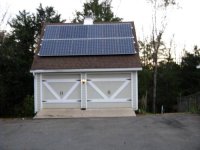
Our local town had a SolarizeCville push. They assembled 3 or 4 solar contractors and let us request a bid. Our 3.18 kw panel system came in at just under $10k. With the 30% tax rebate this year (and through next to any next year), it's a 7 to 9 year payout, about $54/mo. Ours went in about mid December.

Our Dominion Electric only gives us credit for any excess power within the first 30 days. Normally, it just goes into the system via a net meter and is used overnight.

The electric car company now is providing NiHydride batteries that can be charged and then be used to power the house later. They'd possibly pay out if you live in an area where electricity during sunshine periods is more expensive than at night. Not so here in Virginia.

The size of our array is pretty close to what our average usage is overall each day for the year.

Ralph
 

Attachments

  • Solar Panels 4Nov2015.JPG
    Solar Panels 4Nov2015.JPG
    47.9 KB · Views: 330
   / Solar power & Wind Power for residental use #8  
Rhetorical question isn't it? Wind makes sense where the wind blows a lot so maybe the OP (Nebraska flat lands) can make it work...it would never be affordable here without (and perhaps even with) government subsidies. Solar...same thing (sun sets pretty low in the north this time of year)...I saw something recently that said even "green" Germany only gets 7% of its power from "green" energy after spending billions (trillions?) on it and is actually considering scaling back purely on a cost/benefit basis. For those that don't care about cost then I say have at it. I'll continue to pay my utility company and not have to deal with the ugly solar panels and the frequent and expensive maintenance of wind towers.

We have hundreds of wind turbines here in Kansas where we are no stranger to wind. Many time the hundreds of acres of turbines are sitting idle. Not enough wind to turn rotors that are close to 300ft in diameter.
There seems to be no end to the number of generators being put up. Electricity is not efficient transported over long distances. Move it 100 miles and loose half of it. So you have to produce two to three times as much to get it where you need it.
If you want it to be effective build them close to the towns or industrial areas that need the power. 500 turbines in west central Kansas have to transport the energy at least 200 miles to a major metropolitan area. Not a lot of population out in that area.
A LOT of money is being wasted with no real payback or benefit.
 
   / Solar power & Wind Power for residental use #9  
Electricity is not efficient transported over long distances. Move it 100 miles and loose half of it. So you have to produce two to three times as much to get it where you need it.
Hydro Quebec provides a lot of power to New England. Much of their power is generated from James Bay in NW Quebec. The rest of it comes from Churchill Falls, Labrador. Those are 700 to over 1,000 miles from Boston.

Quebec Hydro states the power losses as 4.5 to 8%.
 
   / Solar power & Wind Power for residental use #10  
Hydro Quebec provides a lot of power to New England. Much of their power is generated from James Bay in NW Quebec. The rest of it comes from Churchill Falls, Labrador. Those are 700 to over 1,000 miles from Boston.

Quebec Hydro states the power losses as 4.5 to 8%.

I think someone needs to do the math again. Simple math equation. Having worked for a utility company I know well the line loss on high voltage transportation. The reason we build the coal plants close to the metro areas we serve.
 
   / Solar power & Wind Power for residental use #11  
We have hundreds of wind turbines here in Kansas where we are no stranger to wind. Many time the hundreds of acres of turbines are sitting idle. Not enough wind to turn rotors that are close to 300ft in diameter.
There seems to be no end to the number of generators being put up. Electricity is not efficient transported over long distances. Move it 100 miles and loose half of it. So you have to produce two to three times as much to get it where you need it.
If you want it to be effective build them close to the towns or industrial areas that need the power. 500 turbines in west central Kansas have to transport the energy at least 200 miles to a major metropolitan area. Not a lot of population out in that area.
A LOT of money is being wasted with no real payback or benefit.
Driving in SD a few months ago I saw the pieces of a wind tower in transit. Looking at them in place one does not get an idea of how big those things are. As for the lack of "spinning" they might be locked for maintenance which I understand is frequent and expensive. I've seen some studies for around here and they might make sense in some spots like off the shore of Lake Michigan. Unfortunately nobody wants to see them there (nimby). There is huge array outside of Indianapolis and I guess it might make sense there. Rockford has a smaller array also. But to an earlier point their economics are heavily dependent on subsidies.
 
   / Solar power & Wind Power for residental use #12  
I make my living as a boilermaker and I hate wind turbines!. They have them up in the fox valley here but every time I drive by there not Turing and they are supposed to be cleaner then COAL B.S!. That the Gov't pipe dream! just like ethanol, boiler today are a lot cleaner then years ago there are SCR and scrubbers to take to heavy metal out before the stack. The W.T will not give you the BTUs and keep the lights on like a coal fired boiler does .
 
   / Solar power & Wind Power for residental use #13  
I think someone needs to do the math again. Simple math equation. Having worked for a utility company I know well the line loss on high voltage transportation. The reason we build the coal plants close to the metro areas we serve.

So; is it cheaper to transport coal then transfer electricity.

DC transmission lines in the future?
 
   / Solar power & Wind Power for residental use #14  
So; is it cheaper to transport coal then transfer electricity.

DC transmission lines in the future?

There are a dozen factors that effect line lose in transmission, sub-transmission and distribution.
The cost of building wind turbines for a field of 100 generators equals or exceeds the cost of a coal plant. Coal is available 24/7/365. Running one coal plant can produce hundreds of megawatts at a very low cost. Running both raises the cost of each persons living expense. Pay as much as you want but the pollution from manufacturing, transporting, erecting and maintaining wind will quickly exceed coal.
 
   / Solar power & Wind Power for residental use #15  
"Whether you think you can, or you think you can't - you're right."
Henry Ford

People have been living aboard cruising sailboats for years and don't get any subsidies. They use wind power, towed gensets, solar or all of the above to recharge batteries that are generally "old tech" deep cycle batteries. And think nothing of it. I've always maintained that the average cruising sailor makes the average "prepper" look foolish, because it's their mindset and skills more than the gear.

With LED lighting and wood, pellet, or propane heat, more and more people who are building "near off-grid" systems, because they want to be independent.

A local business https://www.altestore.com/store/ has a good business setting up small scale (un subsidized) off-grid systems. I know several people who have set up their camps or cabins with this gear, including water pumps, lighting, radios, and electric assist for heat. They don't typically have washers and dryers, for example, but lots of people are going to passive systems rather than running gensets all day and night.

Only the devoted are living this way full time, but it's getting easier and cheaper to do.

You stated it yourself that a solar and wind system can not replace electric. What kind of a system would be required for my electric stove, two electric refrigerators, electric freezer, dish washer, electric water heater, electric well pump, electric furnace and water pipe heat trace.
When looking at the so called solar green energy homes. I see a fossil fuel powered home with solar lights & tv. Everything else LP, NG, kerosene ,gasoline or diesel. That folks is not a green renewable energy home.A wood stove does qualify.
 
   / Solar power & Wind Power for residental use #16  
You stated it yourself that a solar and wind system can not replace electric. What kind of a system would be required for my electric stove, two electric refrigerators, electric freezer, dish washer, electric water heater, electric well pump, electric furnace and water pipe heat trace.
When looking at the so called solar green energy homes. I see a fossil fuel powered home with solar lights & tv.
That's your perspective. As a friend of mine says, "People are Ecologists until they become Economists."

There are lots of people making choices with their housing to live off grid, or with minimal requirements for grid power. The technology and price-performance is advancing rapidly. As one example, there are now low voltage DC well pumps available although their performance is limited. Our well is 30' deep and our neighbor is 175'. He's not going off grip anytime soon.

There are also lots of people with electric stoves, electric heat, electric dish washer, electric washer and dryer, well pump, freezer, jacuzzi, hot tub, and swimming pool. They are definitely not going to be living off-grid anytime soon.

That doesn't mean the first group doesn't exist. Look at the tiny house movement and many of them are self-contained. Lots of new technology.
 
   / Solar power & Wind Power for residental use #17  
Our well is 30' deep and our neighbor is 175'. He's not going off grip anytime soon.They are definitely not going to be living off-grid anytime soon.

175' is a breeze for better quality solar powered pumps. Our well pump is sitting at 400' and the four panels have no problem supplying it with enough power to pump.
 
   / Solar power & Wind Power for residental use #18  
I make my living as a boilermaker and I hate wind turbines!. They have them up in the fox valley here but every time I drive by there not Turing and they are supposed to be cleaner then COAL B.S!. That the Gov't pipe dream! just like ethanol, boiler today are a lot cleaner then years ago there are SCR and scrubbers to take to heavy metal out before the stack. The W.T will not give you the BTUs and keep the lights on like a coal fired boiler does .
A friend of mine is in the commercial HVAC/plumbing business. He told me that one of the WI state facilities (prison I think) $$$ to install solar panels to "preheat" the boiler intake water. Managed to raise it 1 degree C. I asked about "payback period" and he just laughed (it was a long time IF the equipment never needed maintenance). Probably better results in the southwest deserts but we live pretty far north.
 
   / Solar power & Wind Power for residental use #19  
Very happy with our solar. We installed on our business. We have net metering and have not paid an electric bill in the two years since install. Average bill before install was 6-7k per year. We had some pretty incredible subsidies from the utility on top of the federal tax rebate that made for a two year payback. Would love to do it for our home but the subsidies have since gone away.
 
   / Solar power & Wind Power for residental use #20  
If one lives in an area with a large population or close to a major road, chances are that the cost of connecting to the grid and buying power from a utility are reasonable. The higher the energy consumption of your property, the more reasonable it is going to look since people who use very little pay disproportionally high "fixed" charges relative to their actual consumption.

On the other hand, if you live in a sparsely populated area, especially a long way off paved roads, it might cost $120 - $250k to get service (just electricity, forget about natural gas), and usually the utilities have no plan for going in those areas anyhow. So if you live in those circumstances, then the cost of a photovoltiac system and associated inverter, charge controller and storage batteries is today less than the typical home-owner spends on the kitchen cabinets or the master bathroom.

If one approaches the building of a new home from the point of view that you are likely never to have grid power, then one makes appropriate decisions regarding insulating the building envelope, orientation to the sun, position of glazing, use of mass for passive solar benefits, use of low wattage lighting, placement of items like the refrigerator. One does all of those things that ordinary home-owners seldom pay much attention to, since if one does not, you are going to pay for those mistakes every season for the life of the building.

There is nothing fundamentally wrong with the renewable energy concept, the rot starts when politicians try to line their pockets by awarding contracts to their "friends" or raising taxes as per the Al Gore scheme. In most of the rest of the world petroleum based fuel is a luxury that ordinary people can't afford much of and electricity infrastructure cannot carry the needed power to the masses and of course the funds to upgrade infrastructure are not simply going to appear at the end of the rainbow. In the case of the US, a lot of the infrastructure is very very old and someone (those connected to the system) are eventually going to have to pay for that infrastructure to be upgraded.

Right now, I am living in a 1300 sqft home in SE Michigan and my utilities run about $80/month of which more than half is fixed costs. In the summer when the heat and humidity finally hit, that will go up to $180/month and the main reason is the ineffective air conditioning which utilizes the heat ducts in the floor, where a good AC system will have overhead ducts that allow the cold air to fall by gravity and promotes better heat distribution without constantly having to run ceiling fans in every room. This is in a 20 yr old home of stick built construction with 2x3 walls. Thus in a new construction with 2x6 or 2x8 walls, spray foam insulation etc, the energy consumption could be further reduced. And I should mention that the home is placed on site facing the road with just 2 tiny windows facing south. But at least the major glazed façade does not face directly into the westerly sun.....
 
Status
Not open for further replies.

Tractor & Equipment Auctions

ALLISON TRANSMISSION (A55745)
ALLISON...
2014 Magnum 7696BLA Light Tower (A59213)
2014 Magnum...
1986 Ford LNT9000 Dump Truck (A56438)
1986 Ford LNT9000...
2014 MERCEDES 2500 CARGO VAN (A59904)
2014 MERCEDES 2500...
2015 Peterbilt 367 T/A Wet Kit Sleeper Cab Truck Tractor (A56858)
2015 Peterbilt 367...
500 BBL FRAC TANK (A58214)
500 BBL FRAC TANK...
 
Top