jrepp44
Bronze Member
Typical prefabricated roof trusses (2 x 6). Spacing is 29" on center in the shop area. If I temporarily place 3/4" plywood on top of the bottom chord would it be safe to walk on?
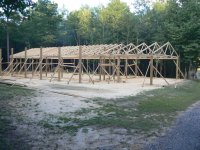


Yes, it will be fine,but for the effort involved in getting plywood up there, I would just use long 2x6's.
For just "walking around"...running wires etc it will be fine...but unless specified when the trusses were built...the bottom chords are not designed to carry any live loads...over time, even a minor load on a single unfortified truss member will cause it to sag...

The weight of a ceiling etc., etc...is considered "dead load" NOT live load...and dead load is figured into the size of the gusset plates...Also with a sheetrock etc. ceiling the weight is distributed quite evenly across the (generally 2') span where applicable...with the spacing cited by the OP...there is no way to realistically distribute loads to more than a single truss...That must be why so many trusses specify that they don't reach rated load capacity unless you hang thousands of pounds of drywall from the bottom of them.
The weight of a ceiling etc., etc...is considered "dead load" NOT live load...and dead load is figured into the size of the gusset plates...Also with a sheetrock etc. ceiling the weight is distributed quite evenly across the (generally 2') span where applicable...with the spacing cited by the OP...there is no way to realistically distribute loads to more than a single truss...
...over time, even a minor load on a single unfortified truss member will cause it to sag...
You said:
You said:
Quote Originally Posted by /pine View Post
...over time, even a minor load on a single unfortified truss member will cause it to sag...
Usual is 10psf dead load on the bottom chord. That is over twice what is needed to carry 5/8" standard weight drywall and full insulation. Hardly a minor load and trusses are designed to not sag under that load.
Heavier you load a truss the less likely the bottom chord will sag, it is a tension member and wants to be tensioned.
I'm not talking about live loads in any way shape or form. I'm addressing that you said "minor" loads cause a truss to sag, they don't.
Gusset plates have nothing to do with it, they are part of the design and therefore part of the rating for the truss.
I'm also not saying anything about the spacing, that again has nothing to do with the rating since it is part of the truss package.
For the sake of your pathetically ignorant argument
For the sake of your pathetically ignorant argument you continue to misrepresent what I have stated...Here is what I said: "...over time, even a minor load on a single unfortified truss member will cause it to sag..." this was in the context of live loads...Doh!
Another factor is trusses have a camber built into the bottoms to allow for natural and imposed forces (loads)...the weight of the truss itself will cause it to sag "over time"...!

You said:
Usual is 10psf dead load on the bottom chord. That is over twice what is needed to carry 5/8" standard weight drywall and full insulation. Hardly a minor load and trusses are designed to not sag under that load.
Heavier you load a truss the less likely the bottom chord will sag, it is a tension member and wants to be tensioned.

:thumbsup:
You mean it holds the walls together and upright with proper bracing!
Always liked figuring out the stresses in truss members. ( log table, slide rule days ) might even have gotten one right on a test!


