My shop build

   / My shop build
  • Thread Starter
#101  
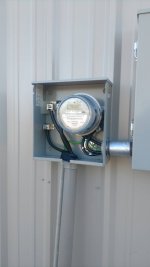
Meter was set this morning, it's glorious to have power and not need the generator.

IMG_20170221_094606409.jpg

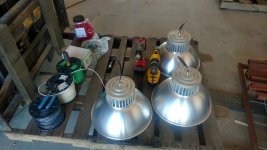
Installing one bank of lights today so I can get back to paying work.

IMG_20170221_125127660_HDR.jpg
 
   / My shop build #103  
I am thinking about tacking a similar project. How many days do you think it took for the assembly and skin?
 
   / My shop build
  • Thread Starter
#104  
I am thinking about tacking a similar project. How many days do you think it took for the assembly and skin?
I'd say about 60 to 70 man hours. I could do it in less time now that I know what's expected. The roof and trim took an additional 40 man hours or so.
 
   / My shop build #105  
I'd say about 60 to 70 man hours. I could do it in less time now that I know what's expected. The roof and trim took an additional 40 man hours or so.

Correct me if I'm wrong, that doesn't include site preparation and concrete. Just assembly hours?
 
   / My shop build
  • Thread Starter
#106  
Correct me if I'm wrong, that doesn't include site preparation and concrete. Just assembly hours?
Absolutely. It took me 2 months to build the pad and get the slab done. The foundation isore than 1/2 the job.
 
   / My shop build #107  
Absolutely. It took me 2 months to build the pad and get the slab done. The foundation isore than 1/2 the job.

Not picking on you my friend, just clarifying.

If this thread is followed to conclusion a prospective builder will also learn that when the building is standing there skinned it's just a shed. There will be many hours of finish work done inside wiring, plumbing, etc.

I'm enjoying this thread mostly because STx is brutally honest in his postings. Even when it doesn't shed a favorable light on himself. Kudos. :)
 
   / My shop build
  • Thread Starter
#108  
I don't take anything personally and don't have any problems sharing my mistakes, I learn from other peoples screw ups, not reason not to help others learn from mine.

I figure it'll take me close to a year to get it fully completed. I've still got septic tanks to install (one for black and one for gray), irrigation off the gray water tank, bathroom and office build out, mezzanine construction in part of the shop, wiring, lights, vehicle lift, A/C (hopefully before summer), about 600 - 1,000 yards of caliche to dig and spread for the shop yard, asphalt to do up front so I can drive the forklift out to load/unload trucks, gates to install, fencing to build and on and on. Somewhere in there, I've got to find time to build my wife a 350 sq/ft addition on the little building we're living in so she can have a proper kitchen, laundry room and closet. Seems only fair though, since she told me to build the shop before a permanent house, she's a good wife!

The wife and I installed 3 of my high bay LED lights to get enough light so I can work. It's barely enough just in the welding area, I have 3 more to install but will be adding an additional 12 for a total of 18, the space needs a LOT of light. These are pretty cheap Chinese LED fixtures though ($50/ea) so I want to give this 6 a couple of months before I commit on another 12 of them in case there are quality issues. The light is a little cooler than I'd like but, at least 1/2 my time in the shop is under a welding hood so, it doesn't really matter that much, as long as it's bright.
 
   / My shop build #109  
I'm a little late to the party on this thread... Nice work! And a lot of it... I am right there with you on how much time it takes from building my own shop and house. I'm not familiar with your part of Texas, so perhaps heating is not a big deal for you but putting tubing in the floor for heat is fantastic. Obviously too late, but something to think about for any future buildings. It is only a couple hundred bucks for most spaces but it is something you just cannot do later on. There is one downside though - if you drill a lot of holes in your slab to secure things, then tubing is a big PITA as you REALLY don't want to hit one of those tubes...

I did notice in your pics of the panel in post #92 that you do need to put some electricians putty in the opening where the conduit feeds the supply wires to the panel in through the wall. It helps seal out critters and condensation and is required by NEC. I know a lot of Texas has no code enforcement, but NEC is still generally "a good idea" to follow. It is just like plastic clay. Just knead it a bit and stuff it in there around the wires to fill up all the air gaps. You should also have a plastic anti-short bushing on that pipe nipple for the feeders. Since it is after the fact, you can still make it work if you just cut one and then work it on around there. You don't want that insulation getting worn through over the years (and yes, it is also code...)

Looking forward to updates!
 
   / My shop build
  • Thread Starter
#110  
I'm a little late to the party on this thread... Nice work! And a lot of it... I am right there with you on how much time it takes from building my own shop and house. I'm not familiar with your part of Texas, so perhaps heating is not a big deal for you but putting tubing in the floor for heat is fantastic. Obviously too late, but something to think about for any future buildings. It is only a couple hundred bucks for most spaces but it is something you just cannot do later on. There is one downside though - if you drill a lot of holes in your slab to secure things, then tubing is a big PITA as you REALLY don't want to hit one of those tubes...

I did notice in your pics of the panel in post #92 that you do need to put some electricians putty in the opening where the conduit feeds the supply wires to the panel in through the wall. It helps seal out critters and condensation and is required by NEC. I know a lot of Texas has no code enforcement, but NEC is still generally "a good idea" to follow. It is just like plastic clay. Just knead it a bit and stuff it in there around the wires to fill up all the air gaps. You should also have a plastic anti-short bushing on that pipe nipple for the feeders. Since it is after the fact, you can still make it work if you just cut one and then work it on around there. You don't want that insulation getting worn through over the years (and yes, it is also code...)

Looking forward to updates!

Thanks for the input. I'm so far South that I can get to Mexico faster by going West than I can by going further South. We get some cold nights but, even when you wake up to temps in the 20's, you're usually in the mid 60's and short sleeves by the end of the day. The common cycle here is to run the heater in the house at night and turn the A/C back on around noon. For us, heat is not something that's needed often and almost never all day. A/C on the other hand...can't live without it. We'll be 90 today and are forecast for 95 tomorrow. It's been an unusually warm winter for us but, you get the idea.

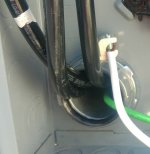
I have a friend that is a licensed and practicing electrician in Houston where he does have to get everything inspected. He looked over the photos of the electrical work and never mentioned the putty but, it's not a bad idea if for no other reason than to stop air movement through that pipe. I've usually just used expanding foam to seal those up inside but, the putty sounds removable and reusable so thanks for that tip. On the bushing, if you zoom in, you'll see I have an insulated metallic bushing with a ground lug on it that has the plastic inside of it. All the boxes are connected with metallic pipe (required by my PoCo) and that pipe is grounded with the bushing on the inlet side of each box (except the meter can that is fed through PVC). I do still need to add some green tape to the white wire running from the ground bar to the bushing, I would have used green wire like the rest of it but, I've got to drive 2 hours round trip to Corpus Christi to get that or order it online. They had some white #6 at the local McCoy's so I just got that and ordered some green tape. I do generally try to make sure the electrical and plumbing meets code, even though there's nobody here to make me do it. I don't want to get electrocuted and most of the rules make sense once you understand the reasoning. You'll notice I did do the little stuff like painting white on my neutral wires, isolating the ground past the bonding in the meter can, etc.

Please don't think I'm being defensive of your suggestions, I'm really not and I will add the putty.
 
   / My shop build #111  
Nice project, and finish work. Can't see any defects from here, and once you've graded and asphalted, etc. the building perimeter only you will know what isn't perfect. Considering the wind factor and other site specific issues everything turned out well.Who was/is the 'safety dog'; some sort of inspector?
Good on renting a man lift. I didn't like seeing the man on the top of the 10 rung folding ladder, even with the 2 helpers holding it. I know contractors who've worked for me who have died from falls, and one never wants to see that type of thing happen.

One thought on going bigger than the initial building. You could expand by setting columns on concrete sono-tube based piers, or the type that are pyramid shaped preformed post bases, then construct your addition, walls, roof etc., later adding a slab inside over a compacted stone base. In the meantime you would have extra space to use, and could pour your floor as it became affordable; or never if you could use the stone base for certain things like I did with my boat, ATVs, lawnmowers, ladders, etc.
And you could add solar panels to your roof to cut your AC/electric costs. I just did 30 panels and a German manufactured battery storage system, (16kW), which gets primary use, and keeps me off the grid. So my power company gives me a credit of 5.3 cents over what I pay per/KWh, AND I still get to use the power generated by the PV panels! So the solar credits can be used for any $ owed during the winter months, (read snow covering the panels, etc.), and the rest of the time the batteries store the power generated by the PV cells, and they get drawn down with use. AND I got a 30% tax credit from the project's install cost, including all electrical wiring to tie the PV and batteries into my existing house, barn, 2 sheds, etc. to use against any gains that I might have to otherwise pay uncle sammy. With the amount of sunlight you have down there you'd be golden.
 
   / My shop build
  • Thread Starter
#112  
Nice project, and finish work. Can't see any defects from here, and once you've graded and asphalted, etc. the building perimeter only you will know what isn't perfect. Considering the wind factor and other site specific issues everything turned out well.Who was/is the 'safety dog'; some sort of inspector?
Good on renting a man lift. I didn't like seeing the man on the top of the 10 rung folding ladder, even with the 2 helpers holding it. I know contractors who've worked for me who have died from falls, and one never wants to see that type of thing happen.

One thought on going bigger than the initial building. You could expand by setting columns on concrete sono-tube based piers, or the type that are pyramid shaped preformed post bases, then construct your addition, walls, roof etc., later adding a slab inside over a compacted stone base. In the meantime you would have extra space to use, and could pour your floor as it became affordable; or never if you could use the stone base for certain things like I did with my boat, ATVs, lawnmowers, ladders, etc.
And you could add solar panels to your roof to cut your AC/electric costs. I just did 30 panels and a German manufactured battery storage system, (16kW), which gets primary use, and keeps me off the grid. So my power company gives me a credit of 5.3 cents over what I pay per/KWh, AND I still get to use the power generated by the PV panels! So the solar credits can be used for any $ owed during the winter months, (read snow covering the panels, etc.), and the rest of the time the batteries store the power generated by the PV cells, and they get drawn down with use. AND I got a 30% tax credit from the project's install cost, including all electrical wiring to tie the PV and batteries into my existing house, barn, 2 sheds, etc. to use against any gains that I might have to otherwise pay uncle sammy. With the amount of sunlight you have down there you'd be golden.
This is safety dog, she is fine with the propane forklift but, when the diesel loaner showed up, she objected. At first, she'd just vocally complain, once she climbed into the cab with my wife though, we knew we had to do something. The last thing we needed was her jumping in and hitting control levers.

IMG_20170202_165341248.jpg
 
   / My shop build #113  
Good doggie! She's smart :)
 
   / My shop build #114  
Thanks for the input. I'm so far South that I can get to Mexico faster by going West than I can by going further South. We get some cold nights but, even when you wake up to temps in the 20's, you're usually in the mid 60's and short sleeves by the end of the day. The common cycle here is to run the heater in the house at night and turn the A/C back on around noon. For us, heat is not something that's needed often and almost never all day. A/C on the other hand...can't live without it. We'll be 90 today and are forecast for 95 tomorrow. It's been an unusually warm winter for us but, you get the idea.

I have a friend that is a licensed and practicing electrician in Houston where he does have to get everything inspected. He looked over the photos of the electrical work and never mentioned the putty but, it's not a bad idea if for no other reason than to stop air movement through that pipe. I've usually just used expanding foam to seal those up inside but, the putty sounds removable and reusable so thanks for that tip. On the bushing, if you zoom in, you'll see I have an insulated metallic bushing with a ground lug on it that has the plastic inside of it. All the boxes are connected with metallic pipe (required by my PoCo) and that pipe is grounded with the bushing on the inlet side of each box (except the meter can that is fed through PVC). I do still need to add some green tape to the white wire running from the ground bar to the bushing, I would have used green wire like the rest of it but, I've got to drive 2 hours round trip to Corpus Christi to get that or order it online. They had some white #6 at the local McCoy's so I just got that and ordered some green tape. I do generally try to make sure the electrical and plumbing meets code, even though there's nobody here to make me do it. I don't want to get electrocuted and most of the rules make sense once you understand the reasoning. You'll notice I did do the little stuff like painting white on my neutral wires, isolating the ground past the bonding in the meter can, etc.

Please don't think I'm being defensive of your suggestions, I'm really not and I will add the putty.

No worries - it's an internet forum. You are welcome to take or leave any advice offered, especially given the price! :D I like the use of EMT for all the wiring, as there is no good way to do an open building like that without conduit. A bit surprised that the PoCo cares what is on the other side of the meter. Around here, their responsibility stops at the meter. What is inside is between you and the inspector. And yes it does seem like you are doing very nice quality work on the electrical from what I can see. I zoomed in but could not tell if there was a bushing on the incoming conduit stub, thus my comment on that. Around here even Home Depot carries the putty, so it should be easy to find.

Looking forward to your progress updates!

-Dave
 
   / My shop build
  • Thread Starter
#115  
No worries - it's an internet forum. You are welcome to take or leave any advice offered, especially given the price! :D I like the use of EMT for all the wiring, as there is no good way to do an open building like that without conduit. A bit surprised that the PoCo cares what is on the other side of the meter. Around here, their responsibility stops at the meter. What is inside is between you and the inspector. And yes it does seem like you are doing very nice quality work on the electrical from what I can see. I zoomed in but could not tell if there was a bushing on the incoming conduit stub, thus my comment on that. Around here even Home Depot carries the putty, so it should be easy to find.

Looking forward to your progress updates!

-Dave
IMG_20170217_135545243.jpg

This pic should show it better, it's the black plastic ring inside the grounded bushing.

The PoCo cares about 2 things after the meter here, that you have a main disconnect outside, a rule I don't like and don't really see the point in, they say it's to protect the lineman from an arc flash when setting a meter but, I'm the only one on this transformer so they could, and probably would, just pull the fuse at the pole. The other rule is that the outdoor disconnect has to be connected with metallic pipe no shorter than 2". I believe this one is to make sure that the box their linemen will touch is properly grounded but, although code requires it, they don't check that box or the metallic conduit for a grounded bushing so, if things settle weird and the concentric knockouts pop out, the ground path they were counting could be broken. I get frustrated dealing with them because the rules seem kind of arbitrary and the ones that do make sense seen incomplete to accomplish what they're actually after. They've got the power though, so I do what they ask and then make sure it's fully correct for my own peace of mind.

I am using EMT inside for the reason you mention. It's my first time doing so and there's been a little bit of a learning curve getting the bends just right and keeping things perfectly straight, especially on the ceiling. Fortunately, I need more light up there and the parts that are a little wonky are going to have to be redone when I add that.

I got a good bit of work done yesterday, it sure was nice to have a flat, level floor again with walls and a roof. I'd forgotten how much easier it is to work like a civilized human. This is 8 box traps and 4 corral traps all cut and ready to start welding this morning and a welding table with all the rust brushed off.
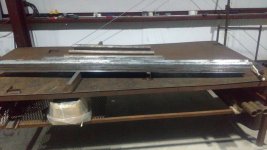
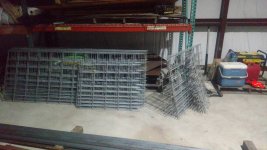
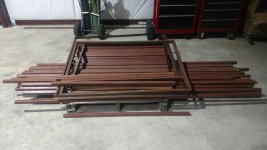
IMG_20170222_154225927_BURST001.jpg. IMG_20170222_154234045_BURST001.jpg. IMG_20170222_154243755_BURST000_COVER_TOP.jpg
 
   / My shop build #116  
I don't want to in any way distract from this build thread, but, I'm interested in the traps you build?? When you get started with production again post some pics and descriptions if you don't mind. I'm not shopping, just curious what it is that you produce and sell?? Thanks!!!

P.S. A good shop is also good for a Man's Soul. :)
 
   / My shop build #117  
I would also enjoy seeing your traps. Especially the corral traps.
 
   / My shop build
  • Thread Starter
#118  
Easiest way is to check my website, Home - Texas Hog Traps. I've got some neat stuff, including a trap that you monitor and close via your cell phone. There are a couple of videos on that and one of the corral trap setup on the site.
 
   / My shop build #119  
Easiest way is to check my website, Home - Texas Hog Traps. I've got some neat stuff, including a trap that you monitor and close via your cell phone. There are a couple of videos on that and one of the corral trap setup on the site.

Excellent, thanks for the link. I'll check em out!!!! Back to shop building. :)
 
   / My shop build
  • Thread Starter
#120  
I would also enjoy seeing your traps. Especially the corral traps.
Eddie, you should be a distributor, I need someone in that part of the state and it'd be a little extra scratch for you. ;)
 

Tractor & Equipment Auctions

New/Unused Quick Attach Bale Spear (A57454)
New/Unused Quick...
2018 Ford F-550 4x4 Altec AT37G Forestry Chipper Bucket Truck (A59230)
2018 Ford F-550...
large capacity skid steer bucket (A56857)
large capacity...
2018 KOMATSU PC138USLC-11 EXCAVATOR (A60429)
2018 KOMATSU...
1999 GMC C7500 S/A Dump Truck (A59230)
1999 GMC C7500 S/A...
DOOSAN G25KW GENERATOR (A58214)
DOOSAN G25KW...
 
Top