Loader BX25 Loader bucket position while using backhoe?

   / BX25 Loader bucket position while using backhoe? #1  

Rock Crawler

Veteran Member
Joined
Aug 15, 2017
Messages
2,243
Location
Pittsburgh, Pa.
Tractor
2021 Kubota L3560 HSTC, 2011 Craftsman Excellerator GT (680hrs), 2018 Husqvarna TS354XD, 2017 Husqvarna HU800AWD, 2019 Kawasaki Mule Pro DX (Yanmar)
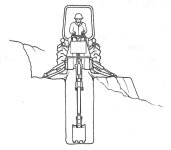
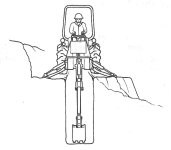
My father owned a home construction for years and used large equipment, one item was a large old Case loader/backhoe that they used on job sites. So when I picked this little Kubota BX25 up, he was happy to come over and show me how to use it. He told me that they always put the loader bucket down with the blade into the dirt to help hold the tractor into position because you would otherwise easily pull the outriggers through the dirt, it was just another added resistance added to help allow you to do more work with the available backhoe strength.

So I posted on Facebook a photo of my son using the backhoe to dig out small tree root balls, and someone commented pretty quickly that I should lay the bucket on the loader down flat because I will damage the loader curl cylinder using it in this position. That confuses me a bit... This is the cylinder that I use as I am spinning tires forward in 4x4 to curl the bucket up if I stop moving (and still spinning tires) or add more downward curl once it starts moving again. That digging should be putting a heck of a lot more stress on the cylinder than it is in this position and simply being at rest (in respect to hydraulic input) with the blade being use for positional stability.

Is there something that I'm missing here? The hydraulic ram is intended for digging, curling, taking stress loads and such. I can't imagine that the ram will fail from this, and I don't expect it to fail from digging. Isn't that why they build and sell these things to us? My expectation is that the build is such that you can use the machine up to it's limitations with minimal fear of damage outside of normal wear and tear with resulting periodic maintenance and repair.

 

Attachments

  • Troy Stump Removal 2.jpg
    Troy Stump Removal 2.jpg
    614.6 KB · Views: 913
   / BX25 Loader bucket position while using backhoe? #2  
Your father is exactly right. If you just lay the FEL bucket flat, you can easily pull the tractor backward while dragging the stabilizers thru the dirt. Folks will tell you that will damage the stabilizers also and that is more likely the case than damaging the bucket cylinders. I have accidently tried to drag my stabilizer in the dirt sometime by moving the tractor and forgetting to raise the stabs. but so far no damage to those either.

I put my FEL down with the blade in the dirt just like you all the time and still drag it backward sometimes. Never done any damage to the cylinders. I also use it that way to drag dirt back from a pile when I need to load. I will lower the FEL into a hard dirt pile, back up and let the blade cut off a chunk of it that I can then scoop up.

Lots of folks will tell you that you can damage a cylinder that way too but I never have. I do wonder if anyone has ever actually damaged a cylinder or if it is just internet myth. I do hear of the internal nut coming off sometimes, but I think that is likely bad fabrication and not an issue of how the cylinder has been used.

If I do damage mine, then I will replace the cylinder and keep on doing what I have been doing because otherwise the uses of the backhoe are pretty limited. Much of the internet "don't do this or xxxx will happen" has much to do with a weak design of equipment rather than an actual reason for not doing it. My B26 is considered an industrial design and your BX may not be as strong, but I doubt you will harm it by continuing to do just what your father said.
 
   / BX25 Loader bucket position while using backhoe? #3  
Your Father has given good advice. It's quite easy to lift/drag the outriggers when working the backhoe.
 
   / BX25 Loader bucket position while using backhoe? #4  
Internet advice is generally worth what you pay for it but facebook advice is often worth paying not to get:rolleyes:
 
   / BX25 Loader bucket position while using backhoe? #5  
That's how I always did it unless I was digging on grass.
 
   / BX25 Loader bucket position while using backhoe? #6  
I use my bucket the way Gary does and I use it to stabilize my backhoe as well. I've put plenty of pressure on the bucket in lifting things including single point lifts and have bent the bucket, but have never damaged the cylinders. The one thing I am careful about is the down pressure on the bucket and possibly twisting the loader arms when I'm on a hill.
 
   / BX25 Loader bucket position while using backhoe? #7  
As far as I know and understand, the way you are using it is perfectly fine and the way that I use mine (heck I even lift the front wheels off the ground and then the rear ones using the stabilizer bars).

The issue on bent cylinders comes from tractors that are too big to be lifted or not made for said work.

For example a big 100hp farm tractor with a backhoe and loader, you can lift the whole thing up but all of the stress and weight are on the "frame" and cylinders.

Seeing how most big tractors don't have "frames" it can cause them to break in half.. the big "yellow cat or John deeres" have an actual frame where the backhoe is bolted to the tractor as opposed to being on the 3ph..
 
   / BX25 Loader bucket position while using backhoe? #8  
As far as I know and understand, the way you are using it is perfectly fine and the way that I use mine (heck I even lift the front wheels off the ground and then the rear ones using the stabilizer bars).

Do you find that more stable then leaving the tires on the ground?
 
   / BX25 Loader bucket position while using backhoe? #9  
It depends on the terrain, but figure that all of the weight on the tractor is concentrated on 3 points which are somewhat small. The loader when angled perpendicular to the ground acts like a brake that prevents the tractor from going forward and back while the stabilizers prevent the side to side movement while also making the setup more rigid which helps "increase" digging power since there are less losses (mostly due to flex).

Tires are soft and because they have a higher footprint (it means less pressure on a given point) tend to float over the surface.

Not to mention if you have your tires on the ground, they provide close to no support back and forth as they roll and side to side due to flex.

The only way they limit your back and forth movement is if you apply the brakes which to me is just "another thing involved that can break/wear".

On things like gravel , rocks, asphalt the tires help as they provide some anti skid properties. Tires also help in muddy /softer terrain as it prevents the tractor from sinking in , but if your stabilizers are sinking in then they are not really doing anything to begin with.

While on sand, earth, turf I find that it helps to have them in the air as the tractor will only damage 3small patches as opposed to 7 (tires and stabilizer and loader).

All big equipment with outriggers is usually just on its outriggers when working since that provides the most rigid frame possible. (Think cranes, boom lifts, sky jacks, wheeled excavators, etc).
 
   / BX25 Loader bucket position while using backhoe?
  • Thread Starter
#10  
Do you find that more stable then leaving the tires on the ground?

Absolutely, without a doubt. It also makes the vehicle able take your pushing/pulling from the backhoe better and deliver more power into the dig compared to just the outriggers. I point the bucket down, just barely lift the front tires from the surface, then spin and lift with the outriggers until the rear tires leave the ground, then finally tweak to level the machine if your on a side slope. It's a good bit more stable and provides a good bit more power transfer into the dig than tires down and just outriggers for motion cessation.
 
   / BX25 Loader bucket position while using backhoe? #11  
My father owned a home construction for years and used large equipment, one item was a large old Case loader/backhoe that they used on job sites. So when I picked this little Kubota BX25 up, he was happy to come over and show me how to use it. He told me that they always put the loader bucket down with the blade into the dirt to help hold the tractor into position because you would otherwise easily pull the outriggers through the dirt, it was just another added resistance added to help allow you to do more work with the available backhoe strength.

So I posted on Facebook a photo of my son using the backhoe to dig out small tree root balls, and someone commented pretty quickly that I should lay the bucket on the loader down flat because I will damage the loader curl cylinder using it in this position. That confuses me a bit... This is the cylinder that I use as I am spinning tires forward in 4x4 to curl the bucket up if I stop moving (and still spinning tires) or add more downward curl once it starts moving again. That digging should be putting a heck of a lot more stress on the cylinder than it is in this position and simply being at rest (in respect to hydraulic input) with the blade being use for positional stability.

Is there something that I'm missing here? The hydraulic ram is intended for digging, curling, taking stress loads and such. I can't imagine that the ram will fail from this, and I don't expect it to fail from digging. Isn't that why they build and sell these things to us? My expectation is that the build is such that you can use the machine up to it's limitations with minimal fear of damage outside of normal wear and tear with resulting periodic maintenance and repair.

I have used mt LSmt125 the same way to dig a 800 sq ft septic system (6' down, 2' wide)trenches w/o any problems or damage to the cylinders. Matter of fact, if I didn't dig the bucket in, I would just pull the tractor backwards. I only dig the bucket in an inch or two, not lifting the front end off the ground. I do set the parking brake and keep it in 4wd. I have abused the loader lifting 4-6" rock for the septic beds (shoving it into the pile and lifting an overfilled bucket) without any damage. My opinion is to keep using it as you are.
 
   / BX25 Loader bucket position while using backhoe? #13  
Absolutely, without a doubt. It also makes the vehicle able take your pushing/pulling from the backhoe better and deliver more power into the dig compared to just the outriggers. I point the bucket down, just barely lift the front tires from the surface, then spin and lift with the outriggers until the rear tires leave the ground, then finally tweak to level the machine if your on a side slope. It's a good bit more stable and provides a good bit more power transfer into the dig than tires down and just outriggers for motion cessation.

Youæ±*e STABALIZERS are there to stabilize so the tractor doesn稚 tip over, the forward and backward motion goes against the weakest part of the stabalizers. The FEL is built for strength along the axis of travel not laterally. All you should do with the FEL and stabilizers is take load off of the tires to get good purchase not support the tractor with them.
 
   / BX25 Loader bucket position while using backhoe? #14  
Youæ±*e STABALIZERS are there to stabilize so the tractor doesn稚 tip over, the forward and backward motion goes against the weakest part of the stabalizers. The FEL is built for strength along the axis of travel not laterally. All you should do with the FEL and stabilizers is take load off of the tires to get good purchase not support the tractor with them.

Real backhoes are strong enough to pull the entire machine off the ground pivoting against the stabilizers. Pretty much everyone has lifted the machine with the stabilizers. Some people myself included do it almost every time. Yet stabilizers getting torn off isn't a big problem. Bending the loader curl cylinders with the bucket at maximum dump angle is a problem.
 
   / BX25 Loader bucket position while using backhoe? #15  
What 4570 said. The operator's manual would probably indicate to plant the lip of the bucket slightly in the ground for stability, even on a little BX 25. It might also say to keep the bucket mildly angled down, not curled down all the way, because, as with any hydraulic cylinder, the curl cylinders are most vulnerable to bending when they are fully extended. The backhoe exerts the greatest leverage on the tractor doing a bucket curl, as when scooping dirt or prying on an embedded object. If you use some caution when doing this, you should be able to judge whether you are working the unit too hard.
 
   / BX25 Loader bucket position while using backhoe? #16  
As has been said ad-nauseum, the stabilizers should be planted, but the rear end of the tractor should not be lifted up in the air (an inch won't hurt) and wheels down provides some friction against the BH moving the tractor (surface dependent). I do the same with the loader bucket, since more contact points on/in the ground the more stable the work.

Does a BX have spiked stabilizers? On the GC1710s and GC1720s the stabilizers can be rotated ~180 on the pins and are formed with 'turf spikes' to get a better bite. If you don't flip them, then you have the smooth steel foot for street use, but they have no pads. A rubber covered steel shoe set is available, but I have determined that IF I ever to work on a paved surface, highway alligators cut to fit would provide more pad/traction.
 
Last edited:
   / BX25 Loader bucket position while using backhoe? #17  
I don't have a BX, but my backhoe manual states, "Do not lift the tractor rear wheels by stabilizers. Also, be sure the stabilizers are seated on hard ground to support." I have operated mine pretty much how LS mt125 owner, sea2summit, and coldsteelva describe. My biggest problem with pulling the tractor backward is when I lift the back end off the ground while curling into hard soil or clay. Then it is just the edge of the bucket up front holding me in place. The bucket just drags across the surface and the tractor is pulled back.
 
   / BX25 Loader bucket position while using backhoe? #18  
Remember, if you're using a backhoe the ground is probably not flat or level. Also, if you're pulling and pushing with the backhoe your brakes will not work.

OK Here's a verbatim quote from the BX manual which could not be more clear.

manual Page 55 Operating the Backhoe
PLACING THE STABILIZERS

CAUTION
To avoid personal injury:
o When working on slopes, one stabilizer may be lower than the other.
o When digging on a hillside, always dump the bucket on the uphill side of excavation.
o To reduce the risk of overturn on a slope, place the spoil to the high side of the excavation.

1. Lower the stabilizers and remove the weight of the backhoe from the rear wheels. However, one or both rear tires should remain in light contact with the ground. This will give the backhoe the widest possible stance and the lowest center of gravity. (thus optimum stability. If the tractor is positioned on a cross slope its best not to have any wheel in ground contact)
If the rear wheels are raised too high, digging depth will be reduced and undue stress will be exerted on the backhoe frame components.
If the slope is unusually steep, cut a level surface with the loader and pile the spoil on the downhill side. Backdrag and pack the spoil so it will support the Stabilizer on the low side. This procedure is recommended when a wall, tree line or other obstruction prevents placing backhoe spoil on the high side of the excavation.
2. The loader bucket should be lowered to give the backhoe unit a "tri-pod" stance. With the loader bucket in ground contact, front tire bounce (or front axle pivot) will not be a factor overall control. When possible, the loader bucket cutting edge should be lowered vertically into the ground surface. This will assist the stabilizers, not allowing the unit to shift, while excavating. However, on a slope, the bottom of the bucket should be used, and only the side that contacts the uneven terrain. (This I do not agree with) Too much loader down pressure, on a slope, will restrict the unit from being correctly leveled and will place an undue twist through the loader bucket and lift arms. [End Quote]
There is also an image in the manual showing a rear view of the tractor with both wheels well clear of the ground.

If the ground is not level its always best and safest to level it with the FEL bucket first. Having owned and used my BX23 since January 2011 no issues or damage to the bucket rams or FEL structure have resulted from operating the Backhoe as described above with all four wheels off the ground. In fact I have had no problems at all with this brilliant little machine. It will go where others cannot.bx23bhoe c.jpg :)
 
   / BX25 Loader bucket position while using backhoe? #19  
Remember, if you're using a backhoe the ground is probably not flat or level. Also, if you're pulling and pushing with the backhoe your brakes will not work.

To clarify, the BX23 brakes only work on the rear wheels. If 4WD is selected they will also effectively brake the two front wheels through the transmission as a pair, but not individually. If the rear wheels are off the ground they will have no braking effect so it is vitally important BEFORE you lower your stabilisers to have 4WD selected and the foot parking brake engaged. Otherwise, if you're on a rearward slope you could end up in the hole you just dug.
 

Attachments

  • bx23bhoe c.jpg
    bx23bhoe c.jpg
    67.8 KB · Views: 131
   / BX25 Loader bucket position while using backhoe? #20  
Remember, if you're using a backhoe the ground is probably not flat or level. Also, if you're pulling and pushing with the backhoe your brakes will not work.

To clarify, the BX23 brakes only work on the rear wheels. If 4WD is selected they will also effectively brake the two front wheels through the transmission as a pair, but not individually. If the rear wheels are off the ground they will have no braking effect so it is vitally important BEFORE you lower your stabilisers to have 4WD selected and the foot parking brake engaged. Otherwise, if you're on a rearward slope you could end up in the hole you just dug.

Wow Yowie that's all good solid info.
 

Tractor & Equipment Auctions

(APPROX. 20) 4' X 8' X 3/8" SHEETING (A52706)
(APPROX. 20) 4' X...
2019 CATERPILLAR 320 GC EXCAVATOR (A60429)
2019 CATERPILLAR...
2010 CATERPILLAR 303.5C CR EXCAVATOR (A60429)
2010 CATERPILLAR...
2018 Chevrolet Trax SUV (A59231)
2018 Chevrolet...
2017 FREIGHTLINER CASCADIA TANDEM AXLE SLEEPER (A59904)
2017 FREIGHTLINER...
2020 MACK P164T (A58214)
2020 MACK P164T...
 
Top