How to transition to MIG?

   / How to transition to MIG? #21  
FYI - there is a big difference between a Red Lincoln AC buzzer and a Red Lincoln Tombstone AC/DC unit for sure. Anything DC will weld better most all the time hands down.

i love mig for pretty but for down n dirty farm stuff so you can get back to work with cobbled up old rusty crap bring on the stick
 
   / How to transition to MIG? #22  
FYI -

i love mig for pretty but for down n dirty farm stuff so you can get back to work with cobbled up old rusty crap bring on the stick

Agreed
 
   / How to transition to MIG? #23  
Have you thought about a machine that's capable of doing more than one type of welding? I have a Lincoln powermig 255 and it does everything I want as far as mig welding goes. But there are times when I would like to do tig welding. If I had to do it again I think I would find something that can do AC TIG welding and think of it as a machine I would never have to upgrade. You'll spend more but you're not going to say 5 years from now I want to be able to weld Aluminum (which a spool gun for a mig will allow you to do but not was well as a tig).

You will want a mig that has shielding gas. Flux core is fine in some cases but you can't easily make multiple passes without stopping.
 
   / How to transition to MIG?
  • Thread Starter
#24  
Mine is the AC only Lincoln.

I can do semi-decent welds in good conditions but sometimes, especially interior right angles I just can't get the settings and technique right with stick. The picture of the hydraulic cylinder bracket below is an example of the bad stuff. The other part is something I was practicing on.

20171116_113604-X3.jpg

20171216_125842-X3.jpg


Rob
 
   / How to transition to MIG?
  • Thread Starter
#25  
Have you thought about a machine that's capable of doing more than one type of welding? I have a Lincoln powermig 255 and it does everything I want as far as mig welding goes. But there are times when I would like to do tig welding. If I had to do it again I think I would find something that can do AC TIG welding and think of it as a machine I would never have to upgrade. You'll spend more but you're not going to say 5 years from now I want to be able to weld Aluminum (which a spool gun for a mig will allow you to do but not was well as a tig).

You will want a mig that has shielding gas. Flux core is fine in some cases but you can't easily make multiple passes without stopping.

This thread really isn't about choosing a machine. I'm mainly looking to understand what the knowledge and technique info I would need to MIG weld, as compared to stick welding. As some have pointed out, wire speeds, voltages, rusty parts, wind, etc. are all factors with MIG that aren't the same as stick. Going to try to watch some youtube videos one of these evenings.

Thanks,
Rob
 
   / How to transition to MIG? #26  
It seems as thought the Hobart Handler 190 MIG (220V only) might be a more cost effective option for the OP.
TSC lists it at $649.99, and it is a great machine.
Lots of very poisitive reviews!

True... BUt the 210 MPV gives you a portability to where 240VAC may not be available...

Dale
 
   / How to transition to MIG? #28  
FYI - there is a big difference between a Red Lincoln AC buzzer and a Red Lincoln Tombstone AC/DC unit for sure. Anything DC will weld better most all the time hands down.

i love mig for pretty but for down n dirty farm stuff so you can get back to work with cobbled up old rusty crap bring on the stick

Yes. Very big difference.
 
   / How to transition to MIG? #29  
At a company that I used to work I talked the owner into buying a 250 class MIG. All they had was a couple stick machines.
A week or so later first thing in the morning the foreman calls the owner over and announces "that thing is a piece of junk!" as he pointed to some bird poop globs on a piece of metal that he tried to weld.
I casually turned the machine on, picked up the torch and with my hand shielding my eyes (not even looking) I ran about a 2" bead that was near perfect looking!
I then announced You have to turn the gas on!!!
If he would have just ask me what was wrong I would have showed him but when he tried to make a scene game over!
I have had a MM210 for 20 years, 6 years ago the board went out and I had to have a welder right then in my business so I bought a Hobart 190.
The 190 does such a great job I still haven't fixed the 210!
Back about 1971 I got to use a MIG for the first time after using stick for a few years.
It took me about 15 minutes to get the hang of it. I would compare it to using a caulking gun, it's that easy to weld with.
 
   / How to transition to MIG? #30  
I started stick welding in high school and can't say I ever fell in love with it. I got a mig a couple years ago and I only use flux-core wire with it (it is gas capable, but never set that up). It's super easy to use and has worked out well. I'd say it is an easy transition and you might not want to go back to stick (but I suppose it has its place).
 
   / How to transition to MIG? #31  
Have to remember that a mig starts cold. When doing thicker material with a stick, you can hold a long arc without metal transfer to warm up to welding temp.
 
   / How to transition to MIG? #32  
I like having my Miller 140 (110V) with .024 wire and my Lincoln Power Mig 250 with .035. I don't have to change the wire on either machine when welding lighter or heavier material.
 
   / How to transition to MIG? #33  
This thread really isn't about choosing a machine. I'm mainly looking to understand what the knowledge and technique info I would need to MIG weld, as compared to stick welding. As some have pointed out, wire speeds, voltages, rusty parts, wind, etc. are all factors with MIG that aren't the same as stick. Going to try to watch some youtube videos one of these evenings.

Thanks,
Rob
You will love MIG... it is easier than stick so you are ahead of the learning curve already. You will want gas and a wind block if you move outside your indoor shop. Grind and wipe your weld joints prior and go for it. I am pretty sure that once you give it a try it will come extremely fast. Practice pushing and pulling on horizontal and vertical and see the difference. I watched a bunch of YouTube vids but playing on scrap is the fastest way to learn. For YouTube, Jody's tips and tricks channel is superb.

The cheater charts that are on the inside cover of some machines (I have a Miller 211MVP transformer) make it really easy to dial in your settings depending on wire thickness, metal type, and thickness. the 'autoset' function if you have it, is usually very good. I tend to set from the chart and tweak the V and A if not super happy with the bead.
 
   / How to transition to MIG? #34  
I used a Miller AC/DC box for decades. Made the shift to MIG a few years ago. It took about 15 minutes. I use the autoset on a Miller 211. I usually set it a bit higher than the dial calls for. I have used it on 1/16" to 1/2" steel. Have not touched the old AC/DC box since I got the 211.
 
   / How to transition to MIG? #35  
I am an old SMAW fan as that is what I learned on in high school and continued into work as an industrial pipe fitter/welder where I certified on power piping and pressure vessels. Worked as a fitter for MIG (all shield gas) welders mostly in the fab shop environment. MIG was never used outside. I asked them about MIG welding and the learning curve. They all told me that the biggest problem with beginning was getting penetration. Vertical and overhead positions were avoided with a passion. For a lot of repair work you must be proficient in positions other than flat. Easy to lay a nice looking bead but hard to get in the root weld that gave full penetration. Once a solid first pass was in on schedule 40 they could then finish out with only one more pass but ti took lot of amps a slow to allow the build up. All the MIG welders were also SMAW welders.

What I see today is folks trying to MIG with small amp output and doing one pass. Looks good but weld is weak and will snap under any stress. You still have to follow all the same prep; bevels, clean, solid root pass that provides full penetration showing a small bead on the back side same as with SMAW. The little 90 amp units won't cut it on thicker than 1/8" with out more several passes to fill up the bevel. 1/2" material will take many passes where where SMAW is a three pass job with the right rod. If I was going to buy one it would be at least 150 A capable and be gas shield. I will probably stay with SMAW till I die.

Bottom line: in my humble opinion; MIG will not make a poor welder into a good welder without the same learning curve to be a decent SMAW welder. I burned 100# of 1/8" 6010 just preparing to being an acceptable welder in the trade. Many nights at the my Union's welding school shop.

Several of the implements I have purchased were all MIG welded and had welds that failed at stress points. !/4" stock not beveled and zero penetration. They all looked perfect hut had to grind them out bevel and re-weld. Mostly right angle fillet welds.

Ron
 
Last edited:
   / How to transition to MIG? #36  
Ron, solid info from a seasoned pro! Yes, it is easy to lay down a good looking weak bead with MIG but I have found it is not hard to get decent penetration running it a little 'hot' at least for the jobs I need it to do. I don't build road worthy or life depending welded stuff though either but I think a MIG weld can be just as good as a stick or even better in the hands of a good welder.
 
   / How to transition to MIG? #37  
Once you start down the MIG road it seems it never ends. One gas is not enough, you start wanting multiple bottles so you can spray or weld different metals. I think the Hobart 210MVP is a good start.

I took a stick welding class in about 1980. I used stick for years. I picked up a used Hobart 2510 welder a few years ago which is basically a Miller 250. I had a lot of trouble figuring out the settings on my MIG welder. Sometimes I would run a good bead and other times I missed. I finally took a MIG welding class at my local college. They put me through the mill and I am a better MIG welder now. I am still no pro but I can MIG weld 5/8" plate vertical and put it through a bend test.

MIG looks pretty if you use gas, which C25 is what you start with. The problem is you can not use it out in the open because of wind. Gas MIG needs to be used in a garage or shop. So I recommend taking a class if you really want to learn to MIG weld.

If you are going to weld any kind of heavy plate dual shield seems to be the way to go. I like it any way. But it takes a high end MIG welder. I would think you need a least a 250 amp MIG welder.

I guess the question is do you really need MIG if you have a stick welder. I don't know. I am retired and it was fun to take a MIG class. Pipe welding would be the next class if I get an urge. I had a hard time on pipe in some positions. Nothing bigger than about 10 inch.
 
   / How to transition to MIG? #38  
This thread really isn't about choosing a machine. I'm mainly looking to understand what the knowledge and technique info I would need to MIG weld, as compared to stick welding. As some have pointed out, wire speeds, voltages, rusty parts, wind, etc. are all factors with MIG that aren't the same as stick. Going to try to watch some youtube videos one of these evenings.

Thanks,
Rob

MIG is great. It's easy to learn and for doing big jobs it's fast. Unlike stick you're not always stopping because you've used up your rod. I got my MIG because Costco was selling a baby Lincoln (100a) welder for a good price. But it was flux core only and I eventually tried a friends SP-125 with shielding gas. As I was building roll cages at the time and didn't like cleaning up the flux I stepped up to the 255. back then it wasn't a huge jump in price. I think most of the basics have been covered here of what you need to know. I personally think MIG is the easiest to pick up and weld when you haven't had a need in months or even over a year. There's no trying to strike an arc or moisture in the rods causing issues to worry about.

My only point about finding a machine that can do more than just MIG was simply to make you think if down the road this might be something you could want to do. TIG is harder and very slow. For most average welders it's not something they will need. As for a stand alone MIG I would look at how much it'll cost to add a spool gun if welding aluminum might be something you'll try in the future. Again if it's not something you think you will need then it's a non issue.
 
   / How to transition to MIG? #39  
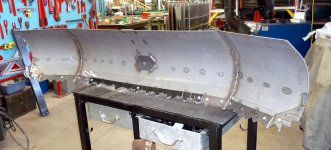
I eat, drink and bleed MIG. Many of my projects are dirty or painted, so the grinder is your friend. Have not stick welded anything for many, many years.
 

Attachments

  • P1030737.jpg
    P1030737.jpg
    158.9 KB · Views: 156
  • UTV blade teeth.II (DL).jpg
    UTV blade teeth.II (DL).jpg
    128.8 KB · Views: 162
   / How to transition to MIG? #40  

Tractor & Equipment Auctions

2022 Schulte 2500 Giant Rock Picker (A56436)
2022 Schulte 2500...
light tower (A56857)
24in excavator tooth bucket (A56438)
24in excavator...
2012 Vermeer V500LEHD Vacuum T/A Towable Trailer (A55973)
2012 Vermeer...
Toro hr:2213.5 (A56859)
Toro hr:2213.5...
2013 Haulotte 4527A (A57148)
2013 Haulotte...
 
Top