New Home HVAC System

/ New Home HVAC System #21  
I like the idea of each room/area temperature being controlled independently. I also like the idea of no duct work as well.

With ductless mini splits, generally (and Mitsubishi for certain unless you're using the Kumo cloud which is a whole set of other variables to deal with), the system is either in heating or cooling mode, not both. What sucks is if you have temperature swings in spring and fall (such as I think Tenn would have), the master unit dictates if the system is in heating or cooling, and you either have to shut the system completely off to change the "master" if you want to change the mode or your stuck with the mode it's in. Some other brands do have a auto setting, but in general people complain on how long they take to switch modes (genearlly 15-30 minutes).

I do a lot of mini splits and highly recommend them for certain applications, but doing a complete home isn't one of them for various reasons (service to clean indoor units can add up depending on the quality of indoor air as well).

Ironically enough, I installed a dual fuel system (heat pump with gas furnace) in my own attic when I had to replace the old lennox gas/ac system, and I have a LP fireplace for the living room (straight heat pump for first floor located in basement).

If you're building, try to include a basement with mechanical room, and run the ductwork in the basement for both floors. Point being, even if doing an attic and that's where the equipment is going, give yourself enough room for the equipment access and ductwork. This is where mini splits shine due to space and installation, but for a whole home, genearlly a whole home mini split system will cost more than a standard split system with dutwork.
 
/ New Home HVAC System #22  
We have mini-split system and love it. Our house is small, it costs about $1/day for heating in the winter, until temps get below 20dF then we go to the wood stove. Ours is one of the older Mitsubishi Mini-splits that the efficiency drops off fast below 20dF. New ones are good to below -5dF. In the summer it costs about $0.50/day for cooling. If I was building new, Geothermal would be my first choice, mini splits second, central air heat-pump last. Biggest issue with Mini splits is the WAF of the interior units. At least one of the mini split makers has units that recess into the ceiling and don't look any different than a central air duct.
The Mitsubishi I have install will output 70 degree heat down to -13. Right now ín Iowa been really putting it to a test and so far been great.
 
/ New Home HVAC System #23  
The Mitsubishi I have install will output 70 degree heat down to -13. Right now ín Iowa been really putting it to a test and so far been great.

I'd like to see the indoor remote reading with the outdoor temp side by side with that claim. I'm very familiar with Mitsubishi technical literature, and no where does it state what you just claimed. I just looked, a new FS18 k model (single zone) will give you 17,100 BTU/h of heat at -13.

The question becomes, when it's below 40F outside, what is the remote set to per desired temp and what is the actual temp in the room?

If you want higher heating output with Mitsubishi, you have to use their "hyperheat" system. By the same token, other manufacturers can do the same thing. On the other hand, higher heating performance systems cost much more.

I was lucky enough to have a disgruntled homeowner where I had to get involved because the at the end of the day, the installing contractor screwed up and didn't do a load calc for the basement. To most, he had "plenty" size of system, but anytime it got below 30F, his system couldn't keep up with a 70F setting. Because the homeowner was an engineer by trade, I was lucky enough to make a deal with him to get me actual readings, which made him giddy like a kid on Christmas morning LOL

I only point this out because some mini splits have a "high heating performance", but at the end of the day, most homeowners don't know what to ask, and they assume they are getting a system sized appropriately for thier home for heating. AC is generally not the problem because thats what the nomenclatuer represents, cooling at 95F outside air temp. The issue with mini splits has always been heating.
 
/ New Home HVAC System #24  
I'd like to see the indoor remote reading with the outdoor temp side by side with that claim. I'm very familiar with Mitsubishi technical literature, and no where does it state what you just claimed. I just looked, a new FS18 k model (single zone) will give you 17,100 BTU/h of heat at -13.

The question becomes, when it's below 40F outside, what is the remote set to per desired temp and what is the actual temp in the room?

If you want higher heating output with Mitsubishi, you have to use their "hyperheat" system. By the same token, other manufacturers can do the same thing. On the other hand, higher heating performance systems cost much more.

I was lucky enough to have a disgruntled homeowner where I had to get involved because the at the end of the day, the installing contractor screwed up and didn't do a load calc for the basement. To most, he had "plenty" size of system, but anytime it got below 30F, his system couldn't keep up with a 70F setting. Because the homeowner was an engineer by trade, I was lucky enough to make a deal with him to get me actual readings, which made him giddy like a kid on Christmas morning LOL

I only point this out because some mini splits have a "high heating performance", but at the end of the day, most homeowners don't know what to ask, and they assume they are getting a system sized appropriately for thier home for heating. AC is generally not the problem because thats what the nomenclatuer represents, cooling at 95F outside air temp. The issue with mini splits has always been heating.
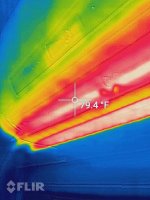
Checkout the MsZ-FE12na. When it's been minus outside temperature the bedroom remote is set for 68 , fan at low and the unit keeps it at 68. We keep it at 68 becaúse of wife. Besides using a thermometer that's in the room AIso I've my Flir camera to check the output temperature of the unit. If you check Iowa temperature you'll see that were in the minus most of February.
 
Last edited:
/ New Home HVAC System #25  
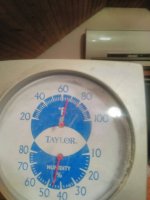
Right now outside temperature is 2 degrees and you can see the pictures. I'll post another when it down in the minus range
Check out KCRG weather. flir_20210211T190742.jpegIMG_20210211_190840.jpeg
 
/ New Home HVAC System #26  
You'll never get the efficiency with a ducted system compared to a ductless system
 
/ New Home HVAC System #27  
You'll never get the efficiency with a ducted system compared to a ductless system

A 2-4 indoor zone ductless multi zone system (by Mitsubishi and everyone else) will get you about 18 SEER.

A zoned Geothermal system is a whole heck of a lot more efficient, and even ducted inverter systems by most unitary split HVAC manufacturers (Trane, York, Lennox, Rheem...) are pushing a higher SEER/EER/HSPF rating than ductless multi zone systems.

The simple reason single zone mini split systems have such higher efficiency ratings is because there is no ductwork involved.

Take a look at ductless systems which use their ducted indoor units and the efficiency drops like a rock.

Don't take my comments as being negative towards ductless, because I do like mini splits for what they are designed for, not having to use ductwork. Just laid out a 2 system 9 indoor head system because at the end of the day, it's the only thing that really will work without having to do some major structural work.

That said Ken, I know you love your multi zone system. But I do think you had an advantage over most of the general population:D Found something new the other day, a "electronic air cleaner" designed for ductless. Just put one in on a job that has some indoor air quality issues that needs the indoor serviced annually and curious to see how it helps the blower wheel.
 
/ New Home HVAC System #28  
Right now outside temperature is 2 degrees and you can see the pictures. I'll post another when it down in the minus range
Check out KCRG weather.View attachment 686159View attachment 686160

Got to ask, what kind of FLIR unit are you using? I bought one that I can use off my phone and like it a lot for the price point.

Honestly, wasn't trying to be a smart butt by asking to see a picture, and the truth is I mis read your post. I thought you refering to keep the indoor temp at 70 not the discharge air temp.

If homeowner spends good coin on a heating system, they need to understand how hot or cold they can get it indoors. My father who lives in the basement with us generally keeps the t-stat set on a minimum of 75/77F with the forced air system in the basement (and that's with a gas furnace). When he had his oil fired boiler up north, 70F was more than fine for him (when I went up to sell his house couple years ago in the winter, I forgot how comfortable hydronic heat feels compared to force air). We do keep the first floor around 70F in the winter, and I need to turn it up for dinner time or he freezes his butt off at 70 with a forced air heat pump LOL).

Even in my area of NC, a 3 ton AC system may be enough for cooling, but most people don't realize that a house requiring 3 ton of cooling can easily require 40,000-60,000 BTU/h of heat.

The only way to ensure you have enough heat using a ductless system is either to do a load set to a indoor design temp vs what outdoor temp the homeowner is looking for, or oversize the unit on the AC side (where you do have a a lot of leeway with a inventer mini split at least). The issue is most contractors think a 18k mini split will give you 18k of heat at 17F, 14F or 5F outside air temp (which is generally not the case, because everyone looks at price as well), and only worry about the efficeny ratings on the ductless system from my experiences.

A standard 3 ton mitsubishi multi zone system will give you around 23,000 BTU/h of heat at a 5F outside air temp (genearlly not a issue in Texas or Florida, but even an issue in west part of NC). A Mitsubishi "Hyperheat" 3 ton multi zone system will give you 45,000 BTU/h of heat at 5F. Thing is, I prefer another line because with the Mitsubishi hyperheat multi zone system, you have to use a indoor branch box which can cause a whole of other PITA factors which affects price.

The only place I can think of a mini split for my own home is in my fathers bedroom. I'd put a high temp unit in to offset having to run the gas furnace for him at night when he's sleeping, but he tells me he will disown me if I put one in his bedroom just because he's living there LOL
 
/ New Home HVAC System #29  
Checkout the MsZ-FE12na. When it's been minus outside temperature the bedroom remote is set for 68 , fan at low and the unit keeps it at 68. We keep it at 68 beca?e of wife. Besides using a thermometer that's in the room AIso I've my Flir camera to check the output temperature of the unit. If you check Iowa temperature you'll see that were in the minus most of February.

Missed this one, apologies.

Very familiar with the FE series. It's the older hyperheat single zone system from Mitsubishi that's been replaced by two different models at this point in time. It's a GREAT unit, their top of the line at the time.

Thing to remember is with a "whole house" multi zone system, the capacity can change dramatically sepnding on size/capacity (it's kind of unfair to compare a single zone ductless vrs a multi zone ductless for various reasons).

What I would sincerely be curious about is if you changed the t-stat to 71F indoor, would it keep it at 71F indoor when the outdoor temp was in the negative range? I honetsly don't know.

Now, that said, 68F indoor temp would freeze my fathers butt off LOL This is the part where the contractor has to know their customer, the customers expectations, and what they can provide at what price point.

Even though I don't think highly of ductless mini splits for whole house applications, I do think one aspect they are great for is bedrooms (particularly the master, and if applicable, where the master t-stat is located for the whole home if there is an existing split ducted system).
 
/ New Home HVAC System #30  
If you are planning on living in this house the rest of your life, I would still factor in what resale value will be if something comes up in your life that you never imagined happening. It happens a lot. How much money will you lose when selling the house because of the mini split systems over a central HVAC system?

Agreed. Also, if a ductless mini split is over 10 years old, depending on the brand, you may be lucky to find a part in stock in the United States, which means if it's a critical service part to keep the system running, you may end up replacing the system. Generally with unitary split systems, you have about 15-20 years before you run out of "expired parts" vs 5-15 years on mini splits depending on brand name. Back around 1998 I still remember having to track a compressor from Japan on a "slow boat" that took about 6 months to get in (off a boat in california is no fun tracking is something else I remember) LOL

Long time ago sold a CHEAP Chinese system, and needed a new remote control 12 years later. Ended up dealing litterally with a guy with a Chinese email signature line in his e-mail, and when I called, I would be lucky to get someone who spoke English. NEVER will I go through that again.

Daikin, Fujitsu, Mitsubishi. 3 of the original Japanese units sold decades ago in the US, good support, and wouldn't look at anything else in the US. If someone is going to have a old part available for sale, it will be one of those 3.

The issue is the United States is the one country in the world that doesn't use ductless as "standard equipment", and every manufacturer is trying to now capitilize in the US market now because they see the market share increasing.
 
/ New Home HVAC System #31  
The FLIR is build into my CAT S60 phone, I'm really hard on phones and I need a phone that could take it and could help me find issues with the house, this phone fit the bill. The house is a story and half refurnished 3 bedroom farm house that we brought and they didn't or couldn't run duct work to the main bedroom above the two car garage they added, they installed two baseboard heaters and no air. The rest of house is covered by regular ducts and heat and air by a Trane system using propane.
I did make an error in the temperature setting of the room last night, wife had turned the remote down to 65 during the day. I wish I could see what the outside model number is, but to much snow and right now -8 and heading for -20+ over weekend and not covering the wind chill.
Most of the time we keep the rest of the house at 68 degrees and at times it'll get bumped to 70 like now. To warm and wife asthma can be a problem.
In your case I'd think it would be a perfect fit for him, we mounted ours up high and out of the way and best of all its quiet.
 
/ New Home HVAC System #32  
In your case I'd think it would be a perfect fit for him, we mounted ours up high and out of the way and best of all its quiet.

It would be a perfect fit for him I know, but my dad is stubborn. He doesn't want to spend money, and if I did it, he'd pay me or they're would be haydes to pay. Thing is, he doesn't want it, and if I did it, he'd be pissed at me because he'd feel like he has to pay me. Keep in mind, my dad lived with a 30 year old T87 dial thermostat in his old home, and that's ALL he needs LOL

Ironically enough, that 2 system 9 indoor head job I laid out was for an older refurbished farmhouse. As mentioned, ductless can be a perfect fit for certain applications.

Issue is, most bedrooms in NC above grade are only 8' high (7-7.5' if you're lucky enough to have a basement). You need clearance off the top of the indoor unit to the ceiling, and depending on the install instructions per height off the floor and and how tall the indoor unit is, well, if it's 6.5' or 7.5' off the floor you're lucky. My dads bedroom basement ceiling is only 7.5' high.

What I'd really be curious about with that older FE unit you have is if you set the indoor remote to 70, at zero or below outside air, what does the indoor temp maintain at? (in the previous pic where the thermometer was 66, was the indoor remote set at 65F? The other variable is what size is the bedroom and if you have a master bathroom, the size of the bathroom and how is conditioned air brought into the bathroom (another potential headache to deal with on mini splits).

Is the master bedroom the one with the baseboard heat? Assuming if it is it's electric and how ofter do you run it with the mini split? (if my assumption is correct).

Every house is laid out differently, and it that reguard, this is where ductless systems can really come into play.

Thing is, if a new house is built and heating and air is taken into consideration in the design and build, a ductless system is rarely needed. Ductless manufacturers are aware of this, which is one reason why they are teaming up to offer ducted systems with American HVAC manufacturers. If building a new home and you can afford it, Geothermal is the way to go IMO. At least in NC, majority of new builds are not geo.
 
/ New Home HVAC System #33  
If your pre-construction regardless of the system you go with you should really focus on air leaks and insulation. When we built ours we used closed cell spray foam for insulation for both walls and ceilings including basement walls. The underside of our roofline is sprayed as we have almost no attic space. All of the ductwork is in conditioned space. We also did a blower door test to locate all possible air leaks into and out of the home. Make sure you blower door test before the sheetrock goes on so you can address any problem areas. One additional thing I did during the blower door was a fog test. We did it on calm day with little wind. I used a theatrical fogger to fill the house with fog then reversed the blower door to pressurize the home. You could walk around the outside of the house and easily see everywhere that fog was escaping through cracks. A well sealed home with an air exchange system will return benefits year after year. Just make sure your HVAC hits the mark on your load calc. Ours missed it by a mile and we spent a lot of extra money on HVAC we didn't need and had to make adjustments for short cycling. We are heating and cooling 4,500 sq/ft including the basement. Our contractor used a standard load chart without factoring in closed cell insulation and air sealing I had done. He installed two 4 ton units, one on each end of the house along with backup heat strips for the geo. I ended up having to adjust the units so they never go into stage 2, only run in 1st stage to prevent short cycling which reduces them to about 4.8 tons total. Heat strip breakers have never been turned on. Even with this mornings temps at -3 the units are still cycling on and off in a reduced stage 1 only.
 
/ New Home HVAC System #34  
Ours missed it by a mile and we spent a lot of extra money on HVAC we didn't need and had to make adjustments for short cycling. We are heating and cooling 4,500 sq/ft including the basement. Our contractor used a standard load chart without factoring in closed cell insulation and air sealing I had done.

I would guess at least 75% of HVAC contractors for retrofit applications do not do a full manual J load (at best, perhaps a block load).

On new constsruction homes, you hit the nail on the head if you don't do a full manual J load per the actual insulation material and build type. The insulation/build type (along with window footage/type) can have a huge effect on load changes.

Biggest issue I've seen is builders don't like the subs (such as HVAC) deal directly with the homeowner, and a lot of important information can get missed or overlooked due to lack of communication. HVAC contractor gets one set of plans, it's changed 3 times after the fact, and the HVAC contractor doesn't have the update plans.

That said, for whatever reason, on a new build, the homeowners ALWAYS wants to ensure they are getting what they want in a bathroom or kitchen, but when it comes to ductwork and HVAC equipment along with controls, nobody seems to gives a rat's butt because it's something you generally do not see. People just assume the HVAC is done right, but got forbid if the tile in the kitchen or bathroom isn't what you wanted LOL

On a sidenote, even though blower door tests are technically required in NC, the reality is few actually do it. The issue comes down to time and money and no one wants to do it. If you have a 30-50 year old home, no one wants to update their ductwork. This is why if you have a 30 plus year old home, at the end of the day, a new 20 SEER system may only be 15 -16 SEER if you're lucky, because the ductwork could cost as much as the HVAC equipment.
 
/ New Home HVAC System #35  
I would guess at least 75% of HVAC contractors for retrofit applications do not do a full manual J load (at best, perhaps a block load)./QUOTE]

Ours actually did a manual J. Came out to 7 tons. Upgraded to 8 he said for airflow. After the fact he did admit he had not done many homes with spray foam. Also the cathedral ceiling (26 ft) and all the windows throughout the home threw him off as well. He seemed shocked we were only running stage 1 and no backup heat in zero temps the first winter. In reality we probably needed 5 tons without heat strips or 3.5 to 4 tons with heat strips on sub zero temps.

2021-02-12_11-19-09
 
Last edited:
/ New Home HVAC System #36  
If your pre-construction regardless of the system you go with you should really focus on air leaks and insulation. When we built ours we used closed cell spray foam for insulation for both walls and ceilings including basement walls. The underside of our roofline is sprayed as we have almost no attic space. All of the ductwork is in conditioned space. We also did a blower door test to locate all possible air leaks into and out of the home. Make sure you blower door test before the sheetrock goes on so you can address any problem areas. One additional thing I did during the blower door was a fog test. We did it on calm day with little wind. I used a theatrical fogger to fill the house with fog then reversed the blower door to pressurize the home. You could walk around the outside of the house and easily see everywhere that fog was escaping through cracks. A well sealed home with an air exchange system will return benefits year after year. Just make sure your HVAC hits the mark on your load calc. Ours missed it by a mile and we spent a lot of extra money on HVAC we didn't need and had to make adjustments for short cycling. We are heating and cooling 4,500 sq/ft including the basement. Our contractor used a standard load chart without factoring in closed cell insulation and air sealing I had done. He installed two 4 ton units, one on each end of the house along with backup heat strips for the geo. I ended up having to adjust the units so they never go into stage 2, only run in 1st stage to prevent short cycling which reduces them to about 4.8 tons total. Heat strip breakers have never been turned on. Even with this mornings temps at -3 the units are still cycling on and off in a reduced stage 1 only.

That's great! I think that your construction process is definitely the way to go.

If you are going to be in a home for any length of time, rather than flipping it, going with extra insulation and air tightness is the way to go. It makes homes more comfortable and less costly in the longer term. Often, not so longer term for payback. Don't forget to add a system to cycle in fresh air though.

I have had both ductless mini splits and central HVAC, and I agree that they both have their uses. My preference is to use the mini splits in retrofits, where they can be very cost effective and efficient. I do think that many homeowners don't appreciate how little heating capacity most mini splits have, or the cost of using heaters to get the heating capacity. I do think that central HVAC, especially with zoning, has real advantages in terms of air quality and servicing. As others have mentioned, over sizing the evaporator will give additional gains in efficiency at a cost in humidity control. For most people the difference is humidity control isn't an issue, but it may matter to you. I love that our central air system virtually eliminates dust in the house. Even with filters, the mini splits we had didn't remove much from the air, and changing/cleaning the mini splits filters are a pain.

In your home design, you might also want to consider energy efficient wiring (oversized), energy efficient windows, solar water heating, and roof overhangs to allow winter sun, but not summer sun, for passive heating / cooling gains. Personally, I am a huge fan of in floor radiant heat, but that is a whole other discussion.

All the best,

Peter
P.S. that's a gorgeous great room.
 
/ New Home HVAC System #37  
The outside unit is a single R410A . The bedroom is build above the garage, peaked roof with 4' high knee walls on both sides so its about 25 feet long and about 12 feet wide and ceiling is about 7 1/2 feet. Wife had set the remote at 65 yesterday afternoon down from the normal 68 and the outside was between 2 & 3 degrees for the high, last night the bedroom was at 66. The unit doesn't run all night she likes it turned off about 1am, benefits of sleeping on a waterbed and two cats. The bathroom has a single floor register. They took the attic and converted it into a living area, sitting area and bathroom. Then added the garage which makes the bedroom not at the same level as the other part, about 2 feet higher.
I removed both baseboard heaters completely when the Mitsubishi was installed, ir really depends just depends on the weather and this month has been unusual as normally the unit only gets turned on in the evening but being this cold had wife keep it on longer. This morning outside was -3 and before the unit was turned back on the bedroom was at 56.
 
/ New Home HVAC System #38  
This picture of the backside might help total footage is around 2500.IMG_20190426_150942.jpeg
 
/ New Home HVAC System #39  
Don't forget to add a system to cycle in fresh air though.

Personally, I am a huge fan of in floor radiant heat, but that is a whole other discussion.

We do have an air exchange tied to the ductwork along with humidifier for winters. Nice thing about duct inside the conditioned space is there is no loss into unconditional attic areas. I would have loved to have installed radiant however my wifes feet get hot easily and puts her in a bad mood. That idea was quickly axed. Lol.
 
/ New Home HVAC System #40  
my boiler and hot water baseboard cant quite keep up below 0 in our house, the Mitsubishi is running and heating to keep up. you can still use a mitsu heat pump and have a combination of forced air and wall or ceiling units. This is what I would do in a new build. very effecient, keeps some air circulation and integrates nicely with a proper ERV.
 

Marketplace Items

2005 Wacker Neuson PDT3A Portable Diaphragm Pump (A59228)
2005 Wacker Neuson...
(1) 300 GALLON & (1) 330 GALLON POLY TOTES W/CAGES (A60432)
(1) 300 GALLON &...
(1) WHIRLPOOL WASHING MACHINE (A60432)
(1) WHIRLPOOL...
2012 UNVERFERTH 13-INCH REAR SPACERS FOR 10 BOLT HUB (A55315)
2012 UNVERFERTH...
2019 CATERPILLAR 305.5E2CR EXCAVATOR (A60429)
2019 CATERPILLAR...
Enclosed Service Truck (A55788)
Enclosed Service...
 
Top