Culvert fail

   / Culvert fail #1  

Pixguy

Super Star Member
Joined
Oct 16, 2010
Messages
14,865
Location
By the lake in NH & FL
Tractor
2011 MF 2410 TLB
To eliminate a sharp hill and rock lined ditch which was a nightmare for mowing, I installed a 12" culvert. I dug out all loam and dark soil lined with sand and installed top just 4-6" below surface. I know it's not below the NH frost line and expected some heaving but thought it'd just rise a couple inches and drop down in spring. The top 1/3 is fine and the bottom third is worst.

I will pull apart I guess and see why it isn't dropping

Your thoughts?
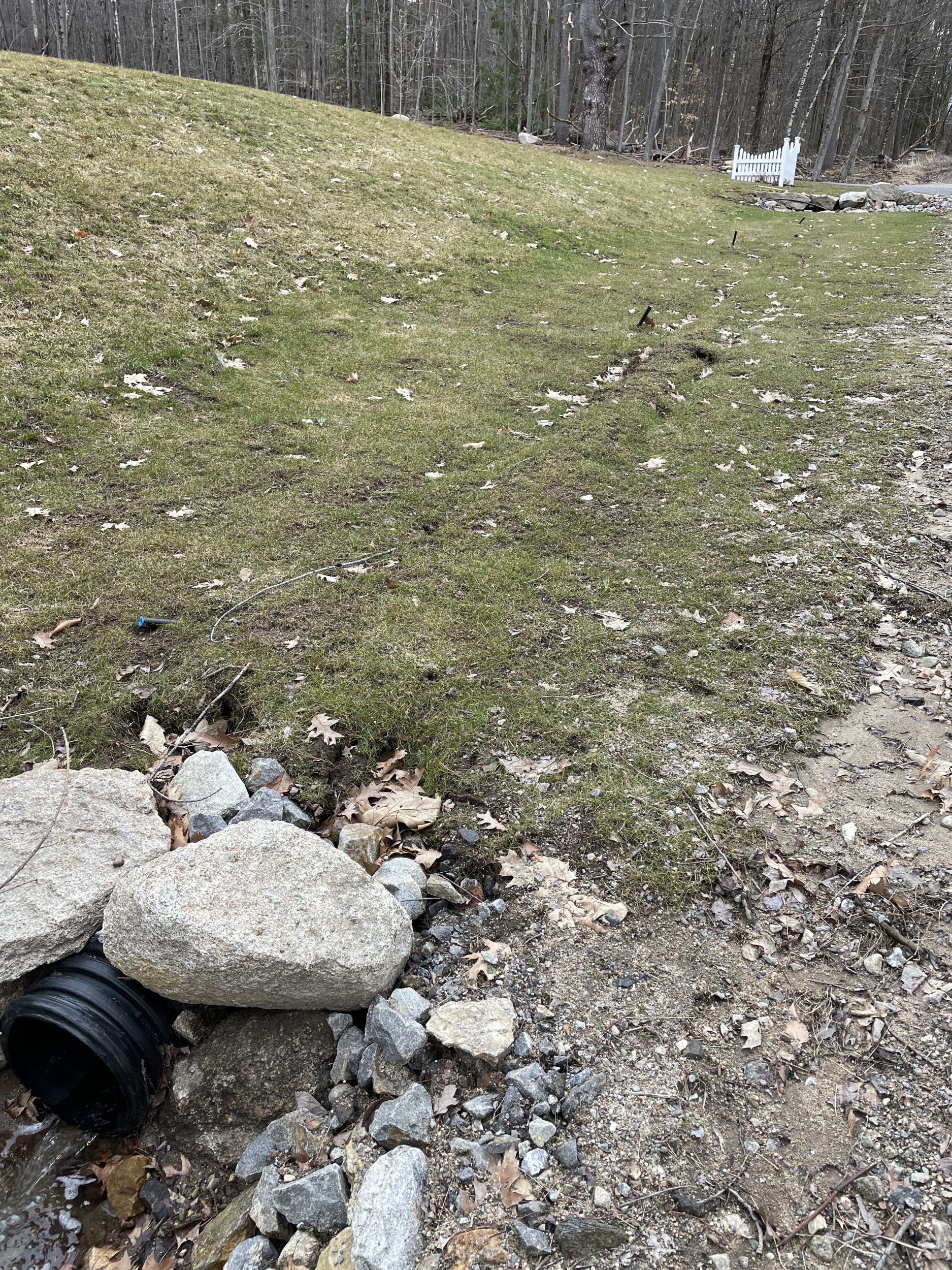
6E9DE842-A86F-44C4-B182-7D0259C81845.jpeg
 
   / Culvert fail #2  
I’m a retired land surveyor and worked for an engineering company for 36 years. We always liked to see a minimum amount of cover over a pipe which you probably don’t have. We always specified sand under streets because it obtains density quicker but this was in a deep trench and not around the pipe but it can also wash out easier. We usually had gravel put in around the pipe and under it a little bit aNd several inches above it.
 
   / Culvert fail #3  
Looks pretty!

While freeze thaw is always going to be working against a shallow culvert, especially one without rock on top, my first thought/question is;
how much compaction did you do over/around the culvert when you put it in?

When you dig it out, I would place it deeper, either with more cover or deeper in the existing site, and cover it with at least 6-8" of crushed rock, compacted every 4", preferably more. You need weight on top of it that won't move readily to keep it down.

Like frost heaving rocks, the culvert is going to float up, not up and down. More mass holding it in place will slow the rise, but yes, only being below the frost line would be permanent.

If you don't have a ton of water, there is also putting in a deep French drain, with geotextile on top, and soil on top of that.

All the best,

Peter
 
Last edited:
   / Culvert fail #4  
Everyone likes to install there culverts with to little materiel on the top!! Like others have stated, deeper is better and you need to properly compact the material on its sides and top.
 
   / Culvert fail
  • Thread Starter
#5  
Another angle and more recent. I mowed with riding mower which made ruts.

Thanks all for your thoughts.

Ponytug, what do you mean by water tone?

4DDA91E5-84BC-4CB8-B50F-E37F0044328E.jpeg
 
   / Culvert fail #6  
Water tone...typo "ton of water" My bad sorry! I didn't catch the auto correct.

All the best, Peter
 
   / Culvert fail
  • Thread Starter
#7  
Water tone...typo "ton of water" My bad sorry! I didn't catch the auto correct.

All the best, Peter
Thanks, that get lots of water draining down road and down my driveway. Tonnage? A guess during storms 50gpm?
 
   / Culvert fail #8  
Looks pretty!

While freeze thaw is always going to be working against a shallow culvert, especially one without rock on top, my first thought/question is;
how much compaction did you do over/around the culvert when you put it in?

When you dig it out, I would place it deeper, either with more cover or deeper in the existing site, and cover it with at least 6-8" of crushed rock, compacted every 4", preferably more. You need weight on top of it that won't move readily to keep it down.

Like frost heaving rocks, the culvert is going to float up, not up and down. More mass holding it in place will slow the rise, but yes, only being below the frost line would be permanent.

If you don't have a ton of water, there is also putting in a deep French drain, with geotextile on top, and soil on top of that.

All the best,

Peter

You will have a french drain if using crushed rock to bed a culvert. Layered compacted fill dirt to grade and cap inlet. Lots of culverts fail using rock.
 
   / Culvert fail #9  
Most culverts going under roads will extend past the road bed and be back filled with dirt, this will stop the French drain affects. In this case I agree, that shallow of a culvert rock would act as a French drain. I was going to suggest building it up with dirt but the last pic shows that’s not possible because the road is close and not much higher as is.
 
   / Culvert fail #10  
With 50gpm, I doubt that you are going to be happy with a French drain unless it is enormous. It looks to me like you also have drainage off of the road and the hillside as well.

I would bury the culvert as deep as you can, compact around it and above it. I have experience with crushed rock being an issue for metal culverts, but not for polyethylene. I am talking about 2"-, with 3/8"- on / bedding the culvert itself.

As an alternative, you seem have the slope and space to add some soil on top and see how it goes. It might be the lazy way, but it might be all that you need.

All the best,

Peter
 
   / Culvert fail #11  
I've had good luck with french drains that do NOT have soil on top. Dig the trench, add a 4" perforated pipe, then fill the trench with 1" washed stone.

I have found that this will move plenty of water, and it does a better job at collecting surface water, so you don't have the squishy soil when mowing.
 
   / Culvert fail #12  
Since NH known for growing rocks :rolleyes: frost might have started push some rocks up.

 
   / Culvert fail #13  
I've had good luck with french drains that do NOT have soil on top. Dig the trench, add a 4" perforated pipe, then fill the trench with 1" washed stone.****

I have found that this will move plenty of water, and it does a better job at collecting surface water, so you don't have the squishy soil when mowing.
****AND geotextile to filter out any fine silty material. would help a lot.
 
   / Culvert fail #14  
****AND geotextile to filter out any fine silty material. would help a lot.

Where would you put the geotextile material? I have heard of using that on top of the stone, if you are covering the drain with soil.

I do purchase the drainage line that is covered with a "sock" material. So far, my drainage lines have been working pretty well for the last twenty years. 🤞
 
   / Culvert fail
  • Thread Starter
#15  
I've had good luck with french drains that do NOT have soil on top. Dig the trench, add a 4" perforated pipe, then fill the trench with 1" washed stone.

I have found that this will move plenty of water, and it does a better job at collecting surface water, so you don't have the squishy soil when mowing.
There's no way a 4" perked pipe would take the gpm i get at times but I get your point.
I did wonder if water was getting under the culvert at some point and washing out the sand I had under it as there's lots of sand at the end pool.
Im agreeing that I need to dig out deeper, compact stone under it and just not sure I need stone on top other than to weight it down.
 
   / Culvert fail #16  
I don't know if it helps, but the way I look at it, I think of culverts "floating" in soil, because they aren't as dense as soil since they are mostly filled with air. I think of having material on top of the culvert as weighing it down to keep it from floating up.

Compaction both increases the density and locks the material together to keep it from shifting and allowing the culvert to move. It also makes washouts less of an issue because there is less of a path for ground water.

If you have had material wash out, you might want to consider putting in an inlet of concrete or plastic to capture water and funnel it into the culvert.

All the best, Peter
 
   / Culvert fail
  • Thread Starter
#17  
I don't know if it helps, but the way I look at it, I think of culverts "floating" in soil, because they aren't as dense as soil since they are mostly filled with air. I think of having material on top of the culvert as weighing it down to keep it from floating up.

Compaction both increases the density and locks the material together to keep it from shifting and allowing the culvert to move. It also makes washouts less of an issue because there is less of a path for ground water.

If you have had material wash out, you might want to consider putting in an inlet of concrete or plastic to capture water and funnel it into the culvert.

All the best, Peter
Yes, I thought the same about the inlet and added a bag of concrete I had left over at the mouth (mostly covered by leaves now) but still continued to get sand at the end. Thank you for everyones comments so far.

50E833CA-7960-4BDF-906B-61166CB74CFD.jpeg
 

Marketplace Items

Honda EM3500S Portable Gasoline Generator (A59228)
Honda EM3500S...
2019 CATERPILLAR 304E2 CR EXCAVATOR (A60429)
2019 CATERPILLAR...
500 BBL FRAC TANK (A58214)
500 BBL FRAC TANK...
2016 John Deere 4044R 42HP 4WD Utility Tractor (A59228)
2016 John Deere...
2017 Subaru Impreza AWD Hatchback (A59231)
2017 Subaru...
2370 (A60432)
2370 (A60432)
 
Top