Glulam Beam - Checking Problem

   / Glulam Beam - Checking Problem #41  
It seems to me that since you paid for a highly strengthened glulam, then anything less that they would give you back is ripping you off……
 
   / Glulam Beam - Checking Problem #42  
They pay for, labor, epoxy, lag bolts, possible sister, and the original cost of the beam. With a contract that the beam will not fail as repaired. I don't see that big of a problem with this beam. It seems a bit over engineered in the first place. What was the building spec for this? Is it decorative, to be so large? Other wise, you'll probably have to sue, and get nothing.
 
   / Glulam Beam - Checking Problem #43  
So you are saying that you would accept a welded block on a new truck??
 
   / Glulam Beam - Checking Problem #45  
Not me, if the manufacturer screwed up, I’m getting a new block
 
   / Glulam Beam - Checking Problem #46  
Two smaller beams are weaker than one large beam. The bending strength of a beam depends on the depth of the beam, and slicing it lengthwise only weakens it. Look at an extreme case where you slice the beam into 3/8" lath thicknesses. It would hold up very little.

That's interesting example. Very visual, too. It becomes pretty intuitive that a stack of laths will bend easier than a solid beam the same size, but how about shearing strength? Did that change as well?

And what happens if we take that stack of 3/8" laths and just glue them together real well at the ends? Is there any advantage to doing that?
 
   / Glulam Beam - Checking Problem #47  
My beams in the basement supporting the 36ft long floor trusses, have a cross section made from osb type material. Of the same sizes, is the 2x glulam stronger than the osb beam, or other way around? Just wondering. Jon
 
   / Glulam Beam - Checking Problem
  • Thread Starter
#48  
If the roof was not on the house, I would opt to replace the beam. The roof would have to be destroyed in order to remove it. We are talking about $80k+ in costs, labor, new roof panels, etc. Not feasible.

If the engineering says it can be repaired and made whole. Then I am good with that. I know the beam is oversized by 70% so let's say the beam loses 20% of it's strength, I am sill 50% over sized in terms of strength.
 
   / Glulam Beam - Checking Problem
  • Thread Starter
#49  
They pay for, labor, epoxy, lag bolts, possible sister, and the original cost of the beam. With a contract that the beam will not fail as repaired. I don't see that big of a problem with this beam. It seems a bit over engineered in the first place. What was the building spec for this? Is it decorative, to be so large? Other wise, you'll probably have to sue, and get nothing.

It is for a house SIP roof. The house has 5 glulam beams supporting a SIP (polyurethane) roof. The walls are ICF/concrete.
 
   / Glulam Beam - Checking Problem #50  
My beams in the basement supporting the 36ft long floor trusses, have a cross section made from osb type material. Of the same sizes, is the 2x glulam stronger than the osb beam, or other way around? Just wondering. Jon
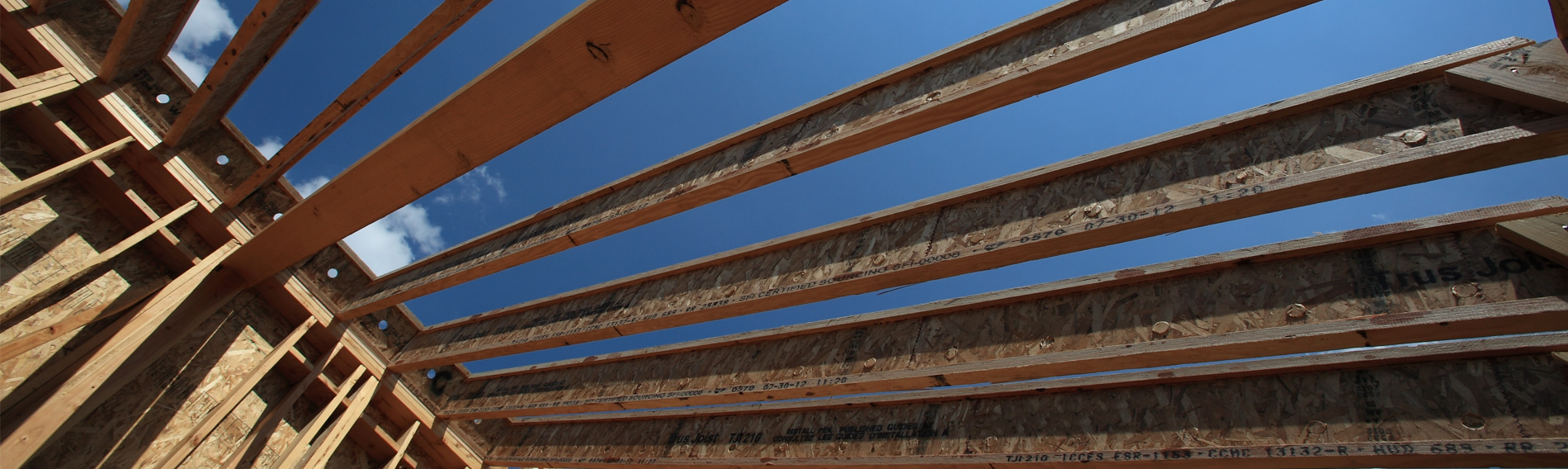
The engineered joists ("I-joists") are less likely to warp or change dimension compared to a 2by, but they are engineered to be the same strength, which is a lot in the vertical, and not so much horizontally. That makes the great for floors, where almost all of the load is vertical.

Gulam beams have relatively more strength to torsion and bending, due to the width of the glued area and the width of the beam, but they are used in places like roof support where those forces are more common.

So, different horses for different courses. Both are up to their task at hand.

@rScotty you can answer the question by making a stack of narrow paper strips and stapling just the ends together. Then try a glued stack. That's the difference between a stack of 2bys, fastened at the ends, and a glulam beam. Years ago, I built a Gudgeon Brothers type wood/epoxy laminated ice boat that ended up being incredibly strong and light. The strength of well epoxied wood is, I think, impressive. You could lift the main hull with one hand.

All the best,

Peter
 
   / Glulam Beam - Checking Problem #51  
@ponytug, clarification. Floor joists are engineered I joists from a v4eetical OSB with flnges of 2x material. Those are held up by a 5.5" wide x 11.75" tall LVL. That LVL is made of 11.75" vertical strips of plywood, not OSB (my mistake on earlier post). My question is the OP's glulam or my LVL for the same dimensions stronger?
20230731_095225.jpg
20230731_100519.jpg
 
   / Glulam Beam - Checking Problem #52  
No, LD1 is correct. Any beam simply supported like this is ALWAYS in tension on the bottom and compression on the top, even just from its own weight. Of course the applied load will be far greater than the weight, but it does not matter if the load is directly in the center as you noted, or distributed (which is most common).

I have a giant glulam in my great room that spans like 30' and it has never cracked the slightest bit. It sounds like from the OPs last post that they are beyond investigating and actually planning to make repairs which is good. This does not look like anything I would let go, IMO.

Here is my glulam beam. Before finishing and after
View attachment 813447View attachment 813448
A beam will have differnet compression/tension points depending on where the load is. You can't unphysics that. The beam will act very different depending on if the load is on the center or the two sides.

In a very basic sense, without any concern given to loading, yes...tension on the bottom and compression on top.

But how many beams are put up without a concern to load types?
 
   / Glulam Beam - Checking Problem #53  
But how many beams are put up without a concern to load types?

Good question. My guess - just a guess - is that it depends on the era. In the post-WWII building boom of the 50s, 60s, and 70s there was a lot of surplus buildng material available, engineering calculations were laborious and expensive, and there wasn't much state and local building regulation. So my guess is that for home builders back then a lot of beams were used without much concern. I know I sure see some weird ones..... :)

Today the internet has brought the ability to do beam calculations into everyone's home computer. Builders and building inspectors are everywhere and have easy access to technical articles on the types of loading factors to consider - and these are articles are written for high school level physics and math. Basic beam programs or the manufacturer handles the stuff the engineer used to do. This is an era where the traditional ways are changing rapidly. Better or worse is something we can debate, but we won't really know for years yet.

It's like SIP roofs and ICF/concrete walls. Stronger in some ways and weaker in others.

rScotty
 
Last edited:
   / Glulam Beam - Checking Problem #54  
@ponytug, clarification. Floor joists are engineered I joists from a v4eetical OSB with flnges of 2x material. Those are held up by a 5.5" wide x 11.75" tall LVL. That LVL is made of 11.75" vertical strips of plywood, not OSB (my mistake on earlier post). My question is the OP's glulam or my LVL for the same dimensions stronger?View attachment 813688View attachment 813689
When I last checked, the recommended uses for the I-joists, the OSB versions;
imagehandler.aspx

was for floors. You can see why in the above photo.

If you are talking about glulam beams that are basically plywood veneers stacked and glued, those are stronger than glulam 2bys. More glue, reduced impacted of wood imperfections. However, and it is not trivial, they weigh considerably more. That can make them less attractive for long spans because of their own weight, but the engineering choice will factor in what the load is like and it may be effective.

I would comment that there are a bunch of different composite wood beam products, and they have similar, but not identical properties. A great deal will depend on what is readily available where you intend to build. (Importing a beam from the Netherlands isn't going to be cheap in Nevada...)
iu


Carpenters built Norte Dame out of two hundred plus year old oak beams, some of them spliced. I think a lot of the composite beams were developed to make a more uniform beam from younger trees.

You can even glue up your own custom shaped beams if you want, or have someone else do it.
The Anaheim ice center went over budget on steel beams and was redesigned for wood;
Disney+arena1.jpg


Horses for courses.

All the best,

Peter
 
   / Glulam Beam - Checking Problem #55  
The Anaheim ice center went over budget on steel beams and was redesigned for wood;
That's a good looking structure, it's got some style to it.
 
   / Glulam Beam - Checking Problem #56  
That's a good looking structure, it's got some style to it.
There is something about hockey / ice arenas that seems to bring it out. My favorite is probably Yale's Ingalls rink;
1690896461183.jpeg

2b6300ed2073f08274638325c95cd50c.png


Yale Ingalls Hockey Rink | by oono.yusuke


Designed by the great Eros Saarinen. (1958)

All the best,

Peter

t7cor8r7ktt31.jpg


Richmond-Olympic-Oval-RIM-0455.jpg
 
Last edited:
   / Glulam Beam - Checking Problem #57  
@ponytug, clarification. Floor joists are engineered I joists from a v4eetical OSB with flnges of 2x material. Those are held up by a 5.5" wide x 11.75" tall LVL. That LVL is made of 11.75" vertical strips of plywood, not OSB (my mistake on earlier post). My question is the OP's glulam or my LVL for the same dimensions stronger?View attachment 813688View attachment 813689
I am gonna say in this case....the LVL is probably stronger.

Two "numbers" basically define the strength of the beam. Thats the modulus of elasticity and the Fiber stress when bending.

Both of these numbers are usually given for engineered wood products. In your case, its stamped right on the beam. Fb (fiber bend stress) is 2900psi. And the modulus of elasticity is 2.0e....(2 million psi)

In laymans terms......the "E" value (modulus of elasticity) is basically how "stiff" the board is. How much it will bend (or resist bending) with a given load applied. The higher the number, the "stiffer" the board.

Fb is how much stress the extreme fibers can withstand. So when a beam has a load applied, and it deflects....you are stressing the extreme fibers. (bottom of beam fibers are trying to rip apart). Similar to tensile strength in steel.

Higher numbers are also stronger.

So lets say two beams....both with the same Fb of 2900.....means those extreme fibers can withstand the same stress. But one beam is 2.0e and the other is 1.8e......the 2.0 can handle higher load. Because it is stiffer and will deflect LESS....and LESS deflection is LESS stress on the fibers.

ALSO.....lets say you have two beams and they are both 2.0e......but one has a 2900Fb and the other is 2500Fb......again...the 2900Fb will be stronger because they are allowing for more stress....and more load.

The trick is when comparing two beams....lets say a one is a 2.0e with a 2500Fb and the other is a 1.8e with 2900Fb.

Gotta take things on a case by case basis and there is always more than one way to skin a cat. Design, headroom, cost, availability, etc are all deciding factors. Your beam being a 2.0e and 2900Fb is near the top of wood strength for engineered lumber. Dont see numbers much higher than that. But do see 1.8e and 1.9e stuff and 2700-2750Fb beams. Would obviously be weaker. Dont mean they wouldnt work though.....maybe go up to the next size (depth). Or maybe go down a size but add a ply (make it thicker).

Designs and engineers usually spec the minimum allowable. And due to above reasons....you can always go stronger (which dont always mean bigger). Plenty of charts and load tables out there for LVL's and Glulams.

But like LVL's.....gluelams can come in different specs. But most commonly 1.8e or 1.9e and 2400Fb....which makes them weaker than most LVL's of equal size.

For comparison....most "lumber" calculators for dimensional lumber....#1 and #2 grade usually use ~1.2e and 1200-1400Fb. But some MEL or MSR lumber can have numbers even higher than LVL's. Which size for size would actually be stronger.

I think I am just rambling on now and probably lost everyone....lol. But basically....when it comes to wood, beams, headers, etc....there is ALOT that goes into it beyond just throwing up some wood and driving nails.
 
   / Glulam Beam - Checking Problem #58  
I think most everyone is over reacting. That doesn't mean I wouldn't follow through with the manufacturer checking it out. But I doubt it is anything more than a cosmetic problem that can be easily remedied. Lags in the bottom would bring it up to its original design strength characteristics and the lags could be covered to make them un-noticable. I suspect that gluelam has a incredibly large safety factor. Replacing it would be overkill and far worse than leaving it alone or repairing it.

 
   / Glulam Beam - Checking Problem
  • Thread Starter
#59  
I think most everyone is over reacting. That doesn't mean I wouldn't follow through with the manufacturer checking it out. But I doubt it is anything more than a cosmetic problem that can be easily remedied. Lags in the bottom would bring it up to its original design strength characteristics and the lags could be covered to make them un-noticable. I suspect that gluelam has a incredibly large safety factor. Replacing it would be overkill and far worse than leaving it alone or repairing it.

It appears that is what the engineer will require. Running long lag/timber bolts through the bottom to bring that bottom glulam back to where it was and prevent any future issues. It did NOT delaminate (which is a different problem all together) but the bottom board was initially glued into place and it checked so it will be mechanically connected with the lags/screws.
 
   / Glulam Beam - Checking Problem #60  
I’m just glad it’s not my project. I would be having a frikkin fit!
 

Tractor & Equipment Auctions

2018 CATERPILLAR 326FL EXCAVATOR (A60429)
2018 CATERPILLAR...
2017 Ford F-550 Service Truck (A59230)
2017 Ford F-550...
2015 Kia Sorento AWD SUV (A56859)
2015 Kia Sorento...
2005 MACK TRI AXLE DUMP TRUCK (A52707)
2005 MACK TRI AXLE...
DEUTZ MARATHON 60KW GENERATOR (A55745)
DEUTZ MARATHON...
Year: 2017 Make: Ford Model: Fusion Vehicle Type: Passenger Car Mileage: 101,691 Plate: Body Type... (A55853)
Year: 2017 Make...
 
Top