John Deere 430 I just bought

   / John Deere 430 I just bought #41  
That sums it up.
 
   / John Deere 430 I just bought
  • Thread Starter
#42  
I'm talking about the 430 as a useful tool that has a future. I'm not talking about buying one as a hobby so you can enjoy searching for parts and looking for workarounds when the machine breaks down and your grass grows for weeks.

It WILL break down. Every machine does. Then comes the realization that proprietary parts are being discontinued.

A lot of people love working on old machines that aren't practical any more. I get that. But there are guys who listen to old JD fanbois who think the gates of heaven are green, and they don't all know about the problems they are buying, because the fanbois don't talk about them.

Brand loyalty is a state of delusion.

"They run forever!" No, they don't. Not without parts. My tractor needed a rockshaft (discontinued), a grille (discontinued), an exhaust pipe ($160 for a $50 part), a fuel line, an alternator (an incredible $600), and a muffler (over $400). Thank God I was not stupid enough to buy a rebadged JD alternator.

I'm looking forward to dumping this thing (just as John Deere has) and having a mower that works for me instead of having it the other way around. I really want to unload it before I have to pull the deck out again. It will be so nice, working on a modern machine that makes things easier and cuts much better to boot.

Like I said in post #1 of this thread, I wanted a similar size Diesel powered garden tractor to replace 1976 JD 300 which I have used for over 30 years and will most likely end up keeping anyway.

We have 60" and 72" front deck Diesel powered commercial mowers and JD 430 is not really needed for mowing except occasionally.

So far I have not had any problems getting new or used spare parts for either, but I am sure it will get more difficult as years go by.

I can live with that.
 
   / John Deere 430 I just bought #43  
As long as it fulfills your needs, and you can get parts for it, ignore the naysayers and keep using it.
 
   / John Deere 430 I just bought
  • Thread Starter
#44  
Update

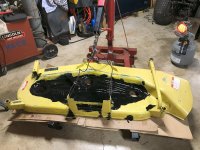
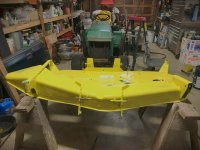
As mentioned in earlier post #24, I bought a used 60" JD400 mower deck in October and instead of using it as is decided recently to take it apart & overhaul completely.

Underneath the deck is in excellent condition and practically does not need any work, but it had some surface rust up on top where the safety shield was.
Under the shield there had been some (wet) grass clippings, hidden from the previous owner!

Here it is after surface prep and coat of Por15 paint:
IMG_7587.jpg


After surface prep and a new coat of top paint:
IMG_7599.2.JPG

I will probably delete the shield...

Overhauling the spindles & refitting new idlers, wheels etc. is in progress now.
 
   / John Deere 430 I just bought #46  
If you rebuild the spindles, they use generic bearings you can get from a local bearing house. Check their prices before you buy them from JD.
 
   / John Deere 430 I just bought #48  
Be careful with 'generic' bearings as they may be inferior if made over there.
5030 you make me laugh. I'm pretty sure most bearings are made "over there".

My bearing supplier asks me what the intended use of the bearing is and sells me a higher quality bearing if the intended use warrants it. According to my bearing guy the basic difference between the quality bearing and a cheaper one is the addition of one extra ball in the bearing race.
 
   / John Deere 430 I just bought #49  
I agree to a point and that is, I prefer to use European made bearings over China made ones. and some like Timken are still made here. I get all my bearings from Detroit Ball and I can choose country of manufacture. One place I never would consider buying from would be Amazon simply because you can rest assured they will come from 'there'.
 
   / John Deere 430 I just bought #50  
I worked on the 430 when I first transferred to JD Lawn & Garden in '93. It was already in production then and my group was just launching it's replacement: the 455. The 420/430 still required engineering support though.

From memory, it had a Sundstand 90 transaxle and Yanmar 3TN72 diesel. It was one of the first garden tractors to get a diesel so air management was key (large amounts of cooling required in a small package). The Sundstand transaxle design dictated the engine rotation and thus orientation. It sucked cooling air in from the front and discharged below. The nose was extended out to add intake air surface. Too little screen and you build a vacuum cleaner that sucks airborne debris TO the machine. The engine was flipped on the new 455 and sucked cooling air in at the pedestal (the Kanzaki 90 transaxle was designed in conjunction). It too had minimal air intake area but brought air in closer to the operator. The debate still rages about which is better... you decide.

The 430 has proven itself to be a great tractor. What to look for though: 430 has Ackermann steering geometry controlled by a frame mounted steering cylinder... so the steering cylinder pushes the axle forward/back to facilitate turning. As steering components wear though, user inputs to the system get less and less precise creating steering that can feel "wonky". I don't remember if the 430 had axle outriggers for support (455 did). New bushings to tighten steering will fix.

I remember some (not crazy) muffler warranty! (because it was assigned to me!) Design guidelines always warn about mounting mufflers and intake canisters directly to engines... especially diesels! But in small packages (compacts on down) you have to. I recalled some failed warranty parts and saw the muffler failures: cracks at the header-to-can joint. I had Test order in some snazzy high temp stain gages and gaged up a new muffler. Installed on the several 430's we owned in Engineering... quiet. Low strain, no issues. WTH? A guy in Experimental told me though, his personal 430 had already cracked several. So with his backing, I had his machine picked up and brought to JD, gaged muffler installed, and tested. You guessed it... that stupid thing lit up like a search light! I had the engine guys go over it too... nothing wrong! Turns out, some desiels have a certain shake that others don't. I reinforced the muffler design as much as possible but a small percentage of machines could still fatigue one within their life.

Mower decks (especially the 60) on this machine were old designs and not considered great cutters. That's it... all I remember. I'm old.
 
   / John Deere 430 I just bought
  • Thread Starter
#51  
Be careful with 'generic' bearings as they may be inferior if made over there.
We will see how long my replacement "Rocky Mountain Bearings" will survive in this mower?

Their name is on these bearings so at least I know the brand when it's time to replace next time...(They were certainly made "there").

Rocky Mountain Bearings
 
Last edited:
   / John Deere 430 I just bought #52  
Ah yes, made 'there' and carried here by a container ship. Again, I prefer Japanese or European made (as in Europe not Asia) bearings or made domestically bearings. That especially holds true for the ABECC high precision spindle bearings used in my machine tools.
 
   / John Deere 430 I just bought
  • Thread Starter
#53  
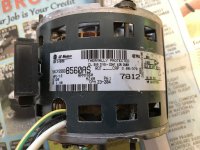
Here is a SKF, a well known European (Swedish) bearing manufacturer's small OEM ball bearing from a small GE electric fan motor in a Canadian made HRV unit:


IMG_5930.JPG


Original GE Motor.JPG


I know nothing about Argentinian bearing manufacturing or quality controls, but this shows how many well known brands have had to spread some manufacturing out to lower cost countries in order to stay competitive.
 
   / John Deere 430 I just bought
  • Thread Starter
#54  
I worked on the 430 when I first transferred to JD Lawn & Garden in '93. It was already in production then and my group was just launching it's replacement: the 455. The 420/430 still required engineering support though.

From memory, it had a Sundstand 90 transaxle and Yanmar 3TN72 diesel. It was one of the first garden tractors to get a diesel so air management was key (large amounts of cooling required in a small package). The Sundstand transaxle design dictated the engine rotation and thus orientation. It sucked cooling air in from the front and discharged below. The nose was extended out to add intake air surface. Too little screen and you build a vacuum cleaner that sucks airborne debris TO the machine. The engine was flipped on the new 455 and sucked cooling air in at the pedestal (the Kanzaki 90 transaxle was designed in conjunction). It too had minimal air intake area but brought air in closer to the operator. The debate still rages about which is better... you decide.

The 430 has proven itself to be a great tractor. What to look for though: 430 has Ackermann steering geometry controlled by a frame mounted steering cylinder... so the steering cylinder pushes the axle forward/back to facilitate turning. As steering components wear though, user inputs to the system get less and less precise creating steering that can feel "wonky". I don't remember if the 430 had axle outriggers for support (455 did). New bushings to tighten steering will fix.

I remember some (not crazy) muffler warranty! (because it was assigned to me!) Design guidelines always warn about mounting mufflers and intake canisters directly to engines... especially diesels! But in small packages (compacts on down) you have to. I recalled some failed warranty parts and saw the muffler failures: cracks at the header-to-can joint. I had Test order in some snazzy high temp stain gages and gaged up a new muffler. Installed on the several 430's we owned in Engineering... quiet. Low strain, no issues. WTH? A guy in Experimental told me though, his personal 430 had already cracked several. So with his backing, I had his machine picked up and brought to JD, gaged muffler installed, and tested. You guessed it... that stupid thing lit up like a search light! I had the engine guys go over it too... nothing wrong! Turns out, some desiels have a certain shake that others don't. I reinforced the muffler design as much as possible but a small percentage of machines could still fatigue one within their life.

Mower decks (especially the 60) on this machine were old designs and not considered great cutters. That's it... all I remember. I'm old.
Thank you for a very informative reply!

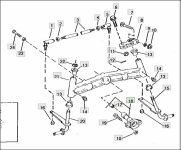
Am I correct that by front axle "outriggers" you are referring to items 24 & 23 (M16 x 40 mm bolt & nut)?

It was easy to adjust the excess "slack" on the right hand side on my JD430, but the left side bolt is seized tight and looks like the easiest way of deal with it is when I will take the front PTO apart for inspection in couple of weeks.

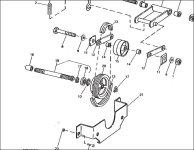
It should be pretty easy to remove the front axle and deal with the seized bolt at the same time when inspecting the PTO belts etc., shaft bearings & front axle pivot bushings.


Front axle:
Snap 2025-01-22 at 09.59.56.jpg

Front PTO:
PTO.jpg


It's noticeable that the muffler setup in this JD430 has been worked on at some point in time, and it is all intact now.
We will see how well it holds up in future...

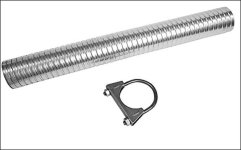
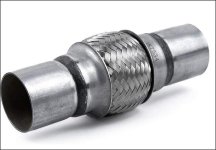
Perhaps one of these would help if needed later?
Snap 2025-01-22 at 10.29.45.jpg Snap 2025-01-22 at 10.30.15.jpg
 
   / John Deere 430 I just bought #55  
Thank you for a very informative reply!

Am I correct that by front axle "outriggers" you are referring to items 24 & 23 (M16 x 40 mm bolt & nut)?
Yes, 23 & 24 look like outriggers that rub the axle saddle in the frame... adjust out the slack and you'll be good!
 
   / John Deere 430 I just bought #56  
Yes, 23 & 24 look like outriggers that rub the axle saddle in the frame... adjust out the slack and you'll be good!
I always thought that was a pretty poor way to keep the front axle in position. The areas the bolt heads rub against wear more in the normal position, but less at the limits of travel, so you have to adjust them so they aren't too tight at the travel limits, but then they still have play in the resting position. That was one of the only nits I could pick with my 430, it has never had good tight steering, it's always like steering a bucket of water. I also have replaced the steering cylinder, which helped a little bit.
 
   / John Deere 430 I just bought #57  
It was designed to be a 1500 hr tractor (equivalent to 100k miles on a car). We all know they can live  well beyond that though.

The 455 used 'snubbed bolts' for outriggers. The axle had machined pads that contact the axle saddle reducing wear. The snubbers have large heads that engage the frame maintaining support against the saddle. It was an improvement.
 
   / John Deere 430 I just bought
  • Thread Starter
#58  
I think they put in engine (small Yanmar industrial Diesel) that was designed for lot more hours, maybe 5000 - 7500 hours depending on how many cold starts, oil change interval etc.?

I will take later a close look at those "outrigger" bolts and see how much work it would take to replace them with larger & smooth head custom made bolts?
 
Last edited:
   / John Deere 430 I just bought #59  
I will take later a close look at those "outrigger" bolts and see how much work it would take to replace them with larger & smooth head custom made bolts?
Or get a strong cross linked piece of plastic that you've trimmed to the right width and hold it on place with a counter sunk bolt. You would need to check where steel is worn and remove any ridges if there are some, but the larger area and hard plastic would virtually eliminate all wear in that area. If it does wear you could periodically shim out the plastic pieces.
 
   / John Deere 430 I just bought #60  
I think they put in engine (small Yanmar industrial Diesel) that was designed for lot more hours, maybe 5000 - 7500 hours depending on how many cold starts, oil change interval etc.?

I will take later a close look at those "outrigger" bolts and see how much work it would take to replace them with larger & smooth head custom made bolts?
Yes, HST is the weak link in almost every tractor design life. Transaxle oil changes are the single most important service your machine gets.

it was mentioned the center region of the outrigger's path is where the wear is. Without seeing pictures, another strategy could be to weld up the wear grooves in the axle saddle and grind flat again.
 

Marketplace Items

2019 KUBOTA U35-4 EXCAVATOR (A52706)
2019 KUBOTA U35-4...
2007 CHEVROLET 3500 DUALLY 4X4 DIESEL TRUCK (A59575)
2007 CHEVROLET...
2017 BOBCAT E85 EXCAVATOR (A60429)
2017 BOBCAT E85...
2016 KOMATSU D65EX-18 CRAWLER DOZER (A60429)
2016 KOMATSU...
1997 DORSEY AIDT-LSCG 53 FT DRY VAN TRAILER (A59905)
1997 DORSEY...
2015 AMERITRAIL MANIFOLD TRAILER (A58214)
2015 AMERITRAIL...
 
Top