2 in receiver shackle/ clevis for tow straps and chains

   / 2 in receiver shackle/ clevis for tow straps and chains
  • Thread Starter
#21  
If you need a strap/rope, it's because a tug on a chain won't do the task at hand. So,, what becomes necessary is to multiply the weight of the tow vehicle by stretching a strap/rope. That is done by backing up until you have slack and hitting the end of it as fast as you can. If that does not work, back up a little farther, if that does not work, back up a little farther...... With a 30' rope hooked to a 5Klb vehicle how much force can be generated when you take a 30' running start???? Evidently enough to exert more than 52,000lbs of pulling force. Pretty simple actually. That's why I'm suggesting to you that a 2" strap needs to stay in the Grocery Getter.
Yeah I definitely understand how much more multiplication a stretchable strap or rope makes compared to a normal pull with a chain. That being said I found out most people in Indiana think a chain will multiply more force. I grew up using stretchable straps. I yank pretty hard on them really.

I see people around here yank on chains gives me a headache!!! Ouch!!!
 
   / 2 in receiver shackle/ clevis for tow straps and chains #22  
Regarding chains, make sure they are in good shape. I've seen chains wore down from trying to tow vehicles. The chains used in towing vehicles down the road often drag on the roadway wearing them down quickly.
 
   / 2 in receiver shackle/ clevis for tow straps and chains #23  
Not tryin to pick a fight. Just need to clarify this.

A chain is the safest of three, chain, cable, stretch strap/rope. Chain will drop to the ground if broken.

Cable will recoil enough to make it dangerous. Safe way is to throw a coat or blanket over the cable somewhere in the middle. The weight of it will cause the cable to fall to the ground rather than swing in the air.

Stretch strap/rope is the most dangerous to use. If the ends stay fastened and it simply fails in the middle, it'll recoil but will do little damage because there's no weight.

Also, never use a chain with a rope. Never use a strap/rope with hooks on the end. Never use a steel clevis to fasten two straps/ropes together. All of those things become missiles if things go bad. Never stand in the recoil path of anything. Never allow spectators to be any closer than the length of the tow device.

Use a strap/rope enough times and you will see things go bad. Winch/Pull safely Gentleman, someone's life depends on it!!!!

So with all that said, cobble up a receiver shackle/clevis or buy a cheap one and you just increased your chances of failure and possibly injury.

This is my understanding as well, at least chain vs the nylon straps. It's due to the stretch. Add a piece of metal to the end like a ratchet strap's hook end and you have an even more dangerous flying object.

That being said, I have a big strap I use for recovery on the skid loader/tractor/truck, I think it's a 3" or 4" rated for 30k and quite heavy duty. To get the same length and weight rating in chain would be expensive, heavy and a complete pain to store.

Ive always been a big fan of ratchet straps and nylon, though with a tractor, skid loader and a bunch of stuff to play with, I'm finding chain more and more useful. I have four 14' chains, two of which I have joined to make one 28' chain primarily use them for rigging things like attachments to pick up. I took a 1/2" steel cable I had laying around with two loop ends and picked up my KK 6' tiller, and as I went to put it down on the running gear I saw the eye had pulled loose and it was barely held on by anything never messed around after that!
 
   / 2 in receiver shackle/ clevis for tow straps and chains #24  
Regarding chains, make sure they are in good shape. I've seen chains wore down from trying to tow vehicles. The chains used in towing vehicles down the road often drag on the roadway wearing them down quickly.

I've got two 16' x 3/8" grade 70 chains that have been pulled on so hard they won't lay in a pile anymore. They are laying in the scrap iron pile. :)
 
   / 2 in receiver shackle/ clevis for tow straps and chains #25  
Ive always been a big fan of ratchet straps and nylon, though with a tractor, skid loader and a bunch of stuff to play with, I'm finding chain more and more useful.

Rachets straps are not designed to stretch. I never use a rachet strap to tow or pull something. I don't like the idea of the 5lb rachet flying around.

I've also got two nylon rigging ropes. I use them to secure snatch blocks when trying to winch my Buggy out of a bad situation. They have no stretch either. Sometimes when a group is around I have to use my rigging ropes to get length. I always tell everyone several times that they do not stretch. Can't tell by looking at them. Don't want someone to think they are using a stretch rope and back up and hit it!!! :)
 
   / 2 in receiver shackle/ clevis for tow straps and chains #26  
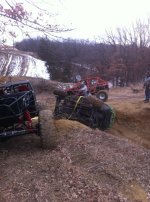
In a situation like this everyone needs to know what kind of pulling device is being used!!!! :)


IMG_8539.jpg
 
   / 2 in receiver shackle/ clevis for tow straps and chains #27  
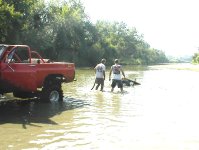
Or this.


DSC04549.JPG
 
   / 2 in receiver shackle/ clevis for tow straps and chains #28  
Or this.

DSC000021.JPG
 
   / 2 in receiver shackle/ clevis for tow straps and chains #29  
ovrszd, I think your nuts using a chain to pull with but please be careful.


With that being said, we have a company policy that your fired on the spot for using a chain to tow with except for making a connection at the vehicle. If you happen to be in a situation where you have more than enough traction to pull the vehicle/object out with, I don't see a problem with a chain because a slow steady pull can be applied. If you have to tug on anything, a chain would be a terrible idea. A strap may break and recoil, but I'll tell you what, I'd rather be hit with a strap than a chain anyday. The clevis/shackle that you make the connection with should be stronger than the strap/rope you are pulling with to prevent the slingshot effect with a heavy metal obkect. If you have doubts about the strength of the strap, tie a jacket or zip tie a floor mat around it.


I have a 2" 30klb tow strap that I pull vehicles out with. Anything bigger than a pickup and the Amsteel Blue comes out. Its 1 1/8" synthetic rope. Breaking strength is somewhere over 100k lbs. We used to use it underground as a safer option to wire ropes and man is it impressive. You can throw 50' of it over your shoulder and prolly break into a run if you wanted. I have seen it break as well. It DROPS TO THE GROUND. Absolutely 0 recoil.
 
   / 2 in receiver shackle/ clevis for tow straps and chains #30  
ovrszd, I think your nuts using a chain to pull with but please be careful.


With that being said, we have a company policy that your fired on the spot for using a chain to tow with except for making a connection at the vehicle. If you happen to be in a situation where you have more than enough traction to pull the vehicle/object out with, I don't see a problem with a chain because a slow steady pull can be applied. If you have to tug on anything, a chain would be a terrible idea. A strap may break and recoil, but I'll tell you what, I'd rather be hit with a strap than a chain anyday. The clevis/shackle that you make the connection with should be stronger than the strap/rope you are pulling with to prevent the slingshot effect with a heavy metal obkect. If you have doubts about the strength of the strap, tie a jacket or zip tie a floor mat around it.


I have a 2" 30klb tow strap that I pull vehicles out with. Anything bigger than a pickup and the Amsteel Blue comes out. Its 1 1/8" synthetic rope. Breaking strength is somewhere over 100k lbs. We used to use it underground as a safer option to wire ropes and man is it impressive. You can throw 50' of it over your shoulder and prolly break into a run if you wanted. I have seen it break as well. It DROPS TO THE GROUND. Absolutely 0 recoil.

I'm not sure what I said that would make you think a chain is what I primarily use to pull with?? I carry chains on my tractor. But we don't use them for wheeling. We use winch cable or stretch strap/rope or rigging rope.
 
   / 2 in receiver shackle/ clevis for tow straps and chains
  • Thread Starter
#31  
ovrszd, I think your nuts using a chain to pull with but please be careful. With that being said, we have a company policy that your fired on the spot for using a chain to tow with except for making a connection at the vehicle. If you happen to be in a situation where you have more than enough traction to pull the vehicle/object out with, I don't see a problem with a chain because a slow steady pull can be applied. If you have to tug on anything, a chain would be a terrible idea. A strap may break and recoil, but I'll tell you what, I'd rather be hit with a strap than a chain anyday. The clevis/shackle that you make the connection with should be stronger than the strap/rope you are pulling with to prevent the slingshot effect with a heavy metal obkect. If you have doubts about the strength of the strap, tie a jacket or zip tie a floor mat around it. I have a 2" 30klb tow strap that I pull vehicles out with. Anything bigger than a pickup and the Amsteel Blue comes out. Its 1 1/8" synthetic rope. Breaking strength is somewhere over 100k lbs. We used to use it underground as a safer option to wire ropes and man is it impressive. You can throw 50' of it over your shoulder and prolly break into a run if you wanted. I have seen it break as well. It DROPS TO THE GROUND. Absolutely 0 recoil.
What kind of company do you work at that you are required to pull out vehicles and what kind of vehicle are they ? I pulled out several semi trucks, a pickup truck, and both of our highway plow trucks at my old job. It was pretty nasty. I was told to yank on the chain and get the trucks out instead of them giving me a 6 or 8 inch strap!!!! My company kept telling me yanking on a chain will apply more force than any tow strap. Wrong so wrong! I have used elastic looped tow straps for years and always use them if I have shackles, round tubing, or large eyelets to go through. I carry a 15 foot hooked tow straps for quick hooks on cars etc that don't have a hitch. It's perfect to fit in the frame, or unibody slots
 
   / 2 in receiver shackle/ clevis for tow straps and chains #32  
interesting on the thoughts of what is safer,

If it was me and I saw some jerking some thing, they would be fired, rope strap or chain,

if you need to jerk then you need a winch and proper anchoring methods, to pull it out, not this careless wind up and jerk method, yes I know it works but that is what hurts or kills some one,

yes I like a tow strap for it stretch and (FOR TOWING) not vehicle recovery,

the military has a hand book FM 20-22 https://archive.org/details/Fm20-22VehicleRecoveryOperations, some good tips,
pdf of it https://ia700300.us.archive.org/30/...erations/Fm20-22VehicleRecoveryOperations.pdf

many times some one looks at the rating of some device and say wow 10,000 pounds that is a lot, in reality 10,000 pounds is not that much, really a loaded one tone work truck is many times close to 10,000 pounds, and when you have a truck stuck that 6 to 8000 pound truck in the mud or sand up to it axels can have a resistance of more than double of it weight, and if there is an incline involved it could easily need three times the trucks weigh to move it out,
 
   / 2 in receiver shackle/ clevis for tow straps and chains #33  
Chains absolutely will recoil, don't think because you do not see the stretch the tensile stress is not there. Here's a worst case scenerio...

oil rig anchor chain snaps near death - YouTube

And results of strap vs. chain breaking...(warning, some language in this one!)

http://www.youtube.com/watch?v=iKXwrOKRK1k

And some good reading on the topic...

http://www.asa4wdc.org/content/safety/recovery.html

http://www.fourwheeler.com/how-to/154-0907-rolled-jeep-recovery-tips/ (pay attention to pic #7)

http://www.pirate4x4.com/tech/billavista/Recovery/
My rule of thumb is chains for static loads/pulls, straps for dynamic/tugging jobs. All my winches have synthetic line too, stuff is great! In any case, you must keep clear of whatever you are using and plan for the worst, that's what REALLY matters.
 
Last edited:
   / 2 in receiver shackle/ clevis for tow straps and chains #34  
ovrszd
I'm not sure what I said that would make you think a chain is what I primarily use to pull with?? I carry chains on my tractor. But we don't use them for wheeling. We use winch cable or stretch strap/rope or rigging rope.

Sorry ovrszd, I think I misread part of your post there!

diesel lover

What kind of company do you work at that you are required to pull out vehicles and what kind of vehicle are they ? I pulled out several semi trucks, a pickup truck, and both of our highway plow trucks at my old job. It was pretty nasty. I was told to yank on the chain and get the trucks out instead of them giving me a 6 or 8 inch strap!!!! My company kept telling me yanking on a chain will apply more force than any tow strap. Wrong so wrong! I have used elastic looped tow straps for years and always use them if I have shackles, round tubing, or large eyelets to go through. I carry a 15 foot hooked tow straps for quick hooks on cars etc that don't have a hitch. It's perfect to fit in the frame, or unibody slots .

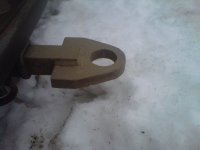
Diesel-I work for a natural gas company. We at times have to pull 200klb tractor trailer loads when completing rig moves. They put well locations in the darndest places. I also used to work in an underground coal mine and the only way to move heavy stuff around was by winching/sheaving it. To actually contribute something useful to this. I went and took a picture of my towing connection on my truck. 2" solid steel shank that fills the whole hitch and solid plate. It does wonders when a hammer is not handy and I have no idea what it will hold but the welder who made it for me made me promise to show him a picture of the truck if I ever broke it.
 

Attachments

  • IMG-20140220-00286.jpg
    IMG-20140220-00286.jpg
    280.8 KB · Views: 189
   / 2 in receiver shackle/ clevis for tow straps and chains #35  
Sorry ovrszd, I think I misread part of your post there!

No worries. My Son built a hitch similar to yours but I don't have any pics of it. I think you'd destroy the hitch frame before you broke or bent that!!!!

I'm like you,,, always want the hitch to be many times stronger than the chain/strap/rope that's being used. I once saw a clevis go thru the rear window of a pickup and right on out the front windshield and land on the ground in front of the truck. Luckily the driver was laying in the seat. He was using a pin with clip type clevis rather than a screw-in type. He didn't do that again.
 
   / 2 in receiver shackle/ clevis for tow straps and chains #36  
Oh,, I also want to talk about how to fasten two straps/ropes together. Assuming both have loops sewn in the ends. Grab a loop from each rope in each hand with each rope stretched out away from you on each side. Push the loop in your left hand thru the loop in your right hand. Then get the other looped end of the rope on your right and push it thru the loop of the left rope that you just pushed thru. Now stretch it back to your right. Now you have doubled the length of your ropes without adding any metal missiles. You can yank the snot out of it and when you are done, it comes right apart without any hassles. Give it a try. Works very slick. We'll sometimes have 4 or 5 ropes fastened together to retrieve someone at a distance.
 
   / 2 in receiver shackle/ clevis for tow straps and chains
  • Thread Starter
#37  
What is the max a frame mounted 2 inch receiver hitch will handle? 10k? 12k? I know there is a reason they went to 2.5 inch receiver hitches all together on some 1 ton plus trucks
 
   / 2 in receiver shackle/ clevis for tow straps and chains
  • Thread Starter
#38  
Anyone use the large eyelets or big hooks? New class 8 trucks use remove able tow hooks for aerodynamic reasons.

http://www.etrailer.com/comparison.aspx?pc=TR63045&pc2=SW2546

This large eye hook is very close to what Volvo uses. You won't break it!! Quite strong

http://www.etrailer.com/Off-Road-Accessories/Tow-Ready/TR63044.html these large hooks are very similar to what freight liner uses. Very strong as well. I have added side load on them to move trucks off glazed ice. Both are strong and would work well on a 2 inch or 2.5 rec hitch
 
   / 2 in receiver shackle/ clevis for tow straps and chains #39  
Btw not recommended to use chain. If it breaks the free end can whip and kill someone. Better to use recovery strap.

Ever seen a recovery strap break? Whips just like a cables. Take precautions with both.
Cam. ( hammered the hood sort of strait, replaced the grill and a head light)
 
   / 2 in receiver shackle/ clevis for tow straps and chains
  • Thread Starter
#40  
Here is a 16k pound rated hitch!http://www.etrailer.com/Ball-Mounts/Draw-Tite/40330.html it's a solid shank just like the freight liner and Volvo truck hooks! A solid hitch would sure be very strong. Amazing what a 5/8 receiver hitch pin can handle really.

What is the highest a frame mounted two inch hitch is good for vs a 2.5.

Also what is a 3/4 inch clevis good for as compared to a 1 inch? Thanks
 

Tractor & Equipment Auctions

(APPROX. 20) 4' X 8' X 3/8" SHEETING (A52706)
(APPROX. 20) 4' X...
PT 1000 Gallon Supply Tank (A57149)
PT 1000 Gallon...
Hyster 60 6,000lb Diesel Forklift (A59228)
Hyster 60 6,000lb...
2010 Turfco Mete-R-Matic III Pull-Behind Top Dresser (A59228)
2010 Turfco...
Bobcat 435 FastTrack (A60462)
Bobcat 435...
2022 FREIGHTLINER M2 BOX TRUCK (A59905)
2022 FREIGHTLINER...
 
Top