Hill High Guy,
You're going to get considerable differences of opinion on any tractor need with TBN contributors. . . and when you add in slope and sidehill issues, it gets even more "spread" on opinions. Some will say heavier/bigger & wider is the way to go while others will say "lower to the ground and wider" is the key.
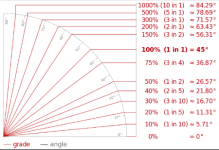
But there are some priorities to consider and some concessions to any perfect choice. If you truly have steeper sidehills for mowing, you don't want a front end loader or backhoes attached. . . . Slopes can accept such units when you're careful but honest-to-goodness steeper sidehills don't give much slack for them Imo. But also in this mix is the fact that people refer to slope angles in different ways not to mention how deep (or wide) those sidehill slopes are makes a difference.
Also ground clearance is an issue because that isn't adjustable and while more clearance is good in woods or rough pasture - I believe less ground clearance is better on sidehills. (regardless of tractor frame size)
But the real "get to it" issue to me is what do you need to "do" to make the steep parts what you eventually want? To me the questions get answered when you understand you have possibly 2 needs - and not one :
1. What needs to be done to get those sidehills to the desired look and feel? (leveling the eveness of the surface, brush hogging and stump removal, tilling to smooth the surface for planting/seeding, rock removal, landscaping with trees or garden juts or landscape blocks or rock walls or ????)
2. What do you need to maintain it to have your "decent lawn"? Just the term "decent lawn" could describe farm lawn or city lawn or estate lawn or merely "green growth" - all of which means many different things. As just a simple example - lets say you want a thick lawn that stands up to weeds better and is durable without steady irrigation - that would mean something like Kentucky Blue Grass - which is dense (dense). This makes a beautiful and practical lawn - but not a lawn you want to cut at 7 or 8 inches high once every few weeks. Also - with a Kentucky Bluegrass - on sidehills - you don't want to cut it damp or wet - because what ever your tractor choice - it will slip. Last issue is tire choice. You can use use any kind of tire you want on a decent lawn - but the wrong choices will quickly change a decent lawn into "not a decent" lawn - and its never more true than on sidehills. My neighbor has similar slops as mine but not the sidehill issues the same way. They got a demo unit dropped off by a dealer - but it had ag tire treading (this was a nice large heavy duty 4 wd lawn tractor). 5 minutes on the demo and they already had several lawn repair needs. They ended up with the same model of unit they demo-ed with turf tires and they don't have such needs since.
Maybe these 2 issues can be answered with 1 tractor or maybe it's a tractor and a rental/hire of a
track drive skid steer pulling implements. (track drive skidsteers not only have great traction, heavy weight and virtually no ground clearance - but their actual impact to the ground is stunningly small on a per square inch basis).
But if you think you can get consensus agreement of opinions (or you feel you need consensus) . . . I think that is exceedingly difficult.
In my case when I'm cutting lawn in the front with my bigger sidehill angles and considerable slope angles, dog walkers just stare when they see me on my GC1715 with belly mower.

If your dealer was really wanting to be accurate. . they'd stand and walk on the land because grass hides land smoothness and land issues as well as what the true slant and inclines are. But walking it really impacts decisions just as actual test drives on the land will.
Jmho