Auto vs shift

   / Auto vs shift #61  
in the case of a hydro shuttle vs shuttle shift on a geared tractor, the former is clearly superior. re: gear vs hst wars, it's meaningless to attribute a better or worse scenario,
this is a compact/sub forum, of course hst prevails among members

there is a very good reason why larger utility M series tractors are gear. the hyd shuttle gear is icing on the cake. to say one system is better than the other is naive & meaningless
Actually, most modern large farm tractors are now CVT’s.
Powershifts are declining with each passing year.
 
   / Auto vs shift
  • Thread Starter
#62  
Actually, most modern large farm tractors are now CVT’s.
Powershifts are declining with each passing year.
How does the cvt work in a farm tractor?
Is it seamless like in a car and is in chain driven or planetary?
 
   / Auto vs shift #63  
C.u.t.s started with less hp than that.
They sold and are successful because of their “compact” size.
I’d rather have a 14 hp tractor that weighs 4000 lbs than a 38 hp tractor that weighs 2500 for anything other than pto work.
This right here is largely said on TBN, but weight and traction alone don't replace Power. There is a bit of a myth that every thing can just be done slower with less power, or go to Low on LMH transmission, and that's just not true. Ground engaging, almost everything has an ideal speed to run, and even just loader work, sometimes medium, with some wheel speed is what you need to get out of a situation.

So, 100%, a 6,000# 50hp might out work a 5,000# 75 hp, but not in all things; and they both will work circles around a 6000# 30 hp.
 
Last edited:
   / Auto vs shift #64  
One of the issues with power shuttles, and Shuttles in general is the lack of clarity. What the hell is a GST, a power shift, a hydro shuttle, a power shift.

I have ran many hydralic shuttle shifts on construction equipment, and it's fantastic, and virtually idiot proof. However, not all tractor power shuttles are the same. Some allow changing of gears but not ranges on the fly, others don't. Some are jerky, some aren't.

What I like on a power shuttle for loader work, you are working at half throttle, then you dig into the pile and hammer down on the "gas".
 
   / Auto vs shift #65  
One of the issues with power shuttles, and Shuttles in general is the lack of clarity. What the hell is a GST, a power shift, a hydro shuttle, a power shift.

I have ran many hydralic shuttle shifts on construction equipment, and it's fantastic, and virtually idiot proof. However, not all tractor power shuttles are the same. Some allow changing of gears but not ranges on the fly, others don't. Some are jerky, some aren't.

What I like on a power shuttle for loader work, you are working at half throttle, then you dig into the pile and hammer down on the "gas".
I haven't run much industrial equipment in several years but at that time most of those had torque converters with reverseres.
 
   / Auto vs shift
  • Thread Starter
#66  
One of the issues with power shuttles, and Shuttles in general is the lack of clarity. What the hell is a GST, a power shift, a hydro shuttle, a power shift.

I have ran many hydralic shuttle shifts on construction equipment, and it's fantastic, and virtually idiot proof. However, not all tractor power shuttles are the same. Some allow changing of gears but not ranges on the fly, others don't. Some are jerky, some aren't.

What I like on a power shuttle for loader work, you are working at half throttle, then you dig into the pile and hammer down on the "gas".
My assertion of weight to power has to do with the industry race to exclaim hp differentials only.
Initially cuts were around 2000 lbs and had less than 25 hp.
Shortly after that like mid to late 80’s, tractors exclaimed more hp but the rest of the tractor didn’t come along.

10 hp advantage for a 6000 lb tractor comes to bear at pto output especially and most definitely includes a speed of work advantage in size of implement. Also, some manufacturers place a larger tire on the same chassis as the lesser hp model giving a distinct advantage in traction and thus workability.

GST is a glide shift transmission which is just another name for a power shuttle.
 
Last edited:
   / Auto vs shift #67  
Another note; construction equipment, RPM only matters in regard to power, there is 'generally' no need to maintain a constant RPM for a PTO, with varying speeds.

A power shuttle really is fantastic for loader work, as well as ground engaging, but in some ways, a Hydro can be awesome with PTO impliment, where you need consistent RPM, will you vary ground speed to match conditions (think bush hogging a field, with a boarder line machine, 4mph is fine in the lighter stuff, but we still need 2500 rpm regardless, then we get in some heavier material, and we can feather that Go pedal back to 2 mph, will maintaining RPMs). Loader work, HST is kinda not the ticket; we are running max RPMs, and right when we want the most, digging into the pile, we got nothing left; and we are running 2500 rpms all the time, rather than a higher range at 2000, and just 2500 as we stab into the pile.
 
   / Auto vs shift
  • Thread Starter
#68  
In reality, I am running no faster ground speed on the lesser hp model with 8’ cutter deck as I am with the higher hp model with the 10’ . I’m just getting done faster as a result of the cutter swath difference .
 
   / Auto vs shift #69  
Not all shuttles allow in motion shifting of gears, some do, within the range.

I've ran TBLs that were true hydralic reversers, but no shift on the fly for gears. I've also used ones that had a roller "knob", 1-3, 1-4, or 1-5, that could be rolled through on the go. I'm not aware of a Cut/utility that allows say, 1-4, and L-M-H on the fly. Another difference; AG; there is often a tight speed range that works best; construction/industrial; we deal with power, and a max speed of maybe 18 mph (maybe 30 on a grader). So, 1, 2, 3 gears can be fine. On a loader, the ability to roll to N, and mash the throttle for higher flow to load a truck is nice.

Another thing; Compacts, nobody really cares about "mileage", where a 10% fuel savings is a Big deal when burning 250 gal per day.

HST is widely understood; clutch maybe but only for PTO/start; no ability to change range on the go, but infinity speed within the range. PST, each make has its own function, and name; which i think causes confusion.

Dry clutch shuttle; i just don't see the point for most people. Straight line work, sure, but its naturally limiting. Also, yes, you can feather a clutch, but at the cost of shorter life, and this isn't a 1985 ranger with a $300 clutch that takes an afternoon to replace; it's a full split, and probably 20+ hours for a pro; and a pretty over whelming task for a DIYer. Just gaskets, O-rings, wiring harness connections, it's a ton to split a machine, and that's if you have the equipment and knowledge
 
   / Auto vs shift #70  
Construction, we don't need 16 or 32 speeds; running a bailer, maybe the difference between 3.2mph and 3.6 mph, at PTO rpm is the difference between clogging and smooth bailing.

Same time, take the Jd-110, micro TLB, in a construction setting, it lacked the mobility of a true TLB, with a really low road speed with its HST. Tractor data says it could get to 16.2 mph in high; more like 10-12 in real life, too slow for a municipality to "road" it 5 miles between sewer services.
 
   / Auto vs shift #71  
So, if all I was doing, was dirt, I would be 100% after a power shuttle.

If all I was doing was forward mowing, I wouldn't mind a hunt and peek, old school

If I was doing a lot of back and forward, PTO work, HST

If I was doing a mix of everything, HST does it fine, but I really want a MF 2860M PST, open station.

If I was milking a too small machine, to its limits, doing dirt work, HST

If I was milking a too small machine, to its limit, mowing, again, straight line, I'd be fine with a dry clutch

If I was working in small areas, and doing some dirt and some PTO, but varying PTO work, HST, but get higher HP than typically needed.
 
   / Auto vs shift #72  
On clutches, even a $8,000 tractor, a split and clutch is approaching a end of life repair.

We take a DK4510, i believe book hours are 16 for a split and clutch. Thats labor of $2000, $400 for the clutch, filters, seals, fluids, we are probably approaching $3500.
 
   / Auto vs shift #73  
If we look at the hourly cost of a dry clutch, doing a Lot of loader work, we are budgetting $4,000 every 2000 hours, and that's with competent worker, or an extra $2/hr. I could see a new worker, or a guy who doesn't care at all reducing that life span to 1000 hours. We add to that, a week of down time (getting parts, shop time, ect), every year....

We pay for our PST upgrade pretty fast.
 
   / Auto vs shift #74  
For a home owner type, about the time that clutch needs replaced is also about the time it's going to be hard to find parts...

We aren't dealing with cars, where 400,000 are made every year, of each make and model. I'm guessing a 25 year old Hinomoto clutch, or Kubota, Kioti, JD, Massey, Yanmar, whatever, is likely not longer 3 days away. Add to that, now, your new Mahindra, dry clutch, maybe only 4000 are made, and then they switch models again; how many replacement parts are made?
 
   / Auto vs shift #75  
Construction, we don't need 16 or 32 speeds; running a bailer, maybe the difference between 3.2mph and 3.6 mph, at PTO rpm is the difference between clogging and smooth bailing.

Same time, take the Jd-110, micro TLB, in a construction setting, it lacked the mobility of a true TLB, with a really low road speed with its HST. Tractor data says it could get to 16.2 mph in high; more like 10-12 in real life, too slow for a municipality to "road" it 5 miles between sewer services.
True on transport speed on the 110 when I road it but it is possible for me to trailer without commercial license and the creeper is great for positioning…

For Dozer work in the hills I like low gear grunt and my reverser…

For parades I like the over /under on my 1953 Jubilee.
 
   / Auto vs shift
  • Thread Starter
#76  
For a home owner type, about the time that clutch needs replaced is also about the time it's going to be hard to find parts...

We aren't dealing with cars, where 400,000 are made every year, of each make and model. I'm guessing a 25 year old Hinomoto clutch, or Kubota, Kioti, JD, Massey, Yanmar, whatever, is likely not longer 3 days away. Add to that, now, your new Mahindra, dry clutch, maybe only 4000 are made, and then they switch models again; how many replacement parts are made?
Since you brought it up,
Mahindras are now made in one factory and they have developed a new line that should be good for at least the next 15 years.
I feel you are right about clutch life but the homeowner, unless they ride the thing may never have to incorporate a clutch replacement as just not enough hrs are put on.
Average is 35 to 50 hrs per year.
That would make that 30 yr old tractor probably devoid of parts availability any way.
Many of us here will be dead before a clutch replacement is needed.
The only “clutching” we’ll be doing is probably at the chest.
 
   / Auto vs shift #77  
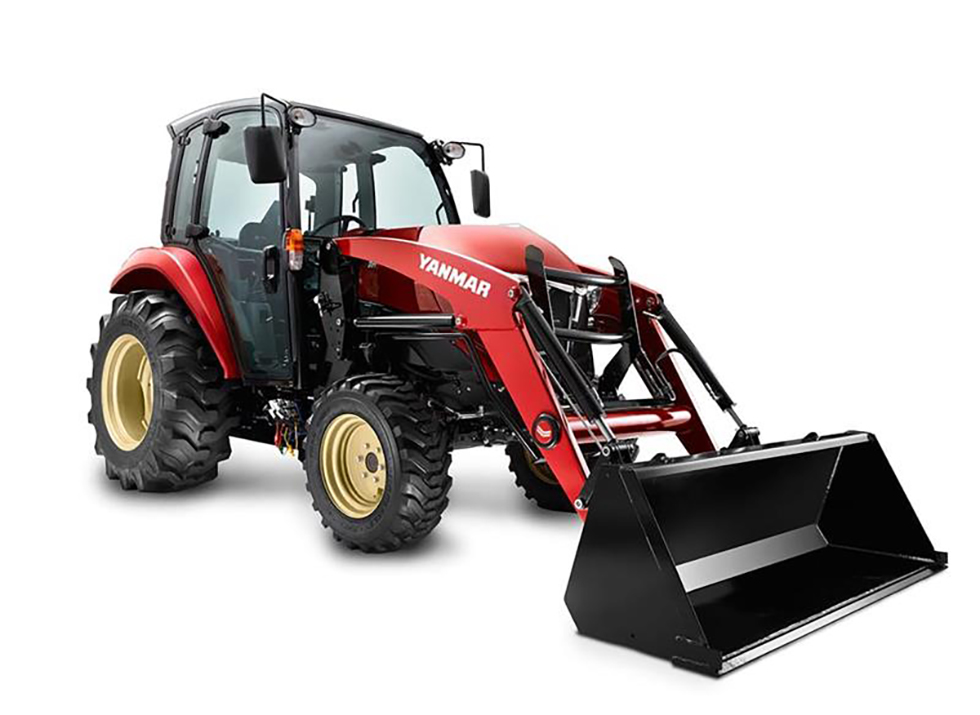
The Yanmar YT 359C has the best transmission!


willy
 

Tractor & Equipment Auctions

2022 FORD E350 BOX TRUCK (A58018)
2022 FORD E350 BOX...
2010 KMC 3376 Peanut Combine (A56438)
2010 KMC 3376...
Bobcat A770 (A60462)
2004 MACK CV713 MIXER TRUCK (A55745)
2004 MACK CV713...
DEUTZ MARATHON 60KW GENERATOR (A55745)
DEUTZ MARATHON...
2014 Ford Fusion Passenger Car, 2.5L Engine - Only 90,875 Miles (A56438)
2014 Ford Fusion...
 
Top