Glulam Beam - Checking Problem

   / Glulam Beam - Checking Problem #21  
Besides, I don't like that anatomy figure. They act like a gluelam has seperate areas of function. It's one big beam that is all glued under pressure. It acts like one piece of wood. There are no slipper plates to divide the beam into different areas of forces.

I get over-simplication for comprehension, but that is bad.
 
   / Glulam Beam - Checking Problem #22  
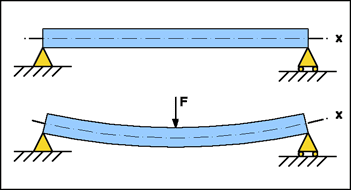
Its a simple beam. Bottom in tension, top in compression. No if's ands or but's about it.

I would defer to what an engineer says. I am no that familiar with glue-lams
 
   / Glulam Beam - Checking Problem #23  
i wouldn’t let it go. That beam should not have left the manufacturing plant. By your picture, it appears you have separation in more than a few joints. I would contact the material supplier. Your building inspector will have comments. Removal looks to be a real *****. Possibly add plate steel on each side and bolt thru. A structural eng. would confirm.
Interested in the outcome.
Yes to contacting the material supplier,
Hell no to talking to the building inspector untill a very last resort.

I second the opinion to check in with building inspector. A structural engineer could offer thoughts as well. Better to check before you modify anything, then you'll own the issues.
Engineer yep, inspector why ask for troubles from a bureaucratic idiot.

He showed what the depth was. It's way more than an inch and on both sides. In my world that called a split. It's almost all the way through.
:)

It looks to me like you have the situation in picture labeled OK, but I would be worried that it was heading towards the NOT Ok.
I would definitely be getting the manufactures rep involved even if it required threating to hire a lawyer and structual engineer at your cost and back billing them the cost.
If it could be epoxy injected, compressed back together, cured then be placed back in service while in place would seem like the best way to go.
 
   / Glulam Beam - Checking Problem #24  
@Pettrix sorry to see that you are having an issue. I would try to get the glulam engineer out. S/he will have the best insights, and I would follow up with a letter of your understanding of what they said.

I have done a fair amount of epoxy work over the years, and I suspect (from the couch here) that the beam could be glued on site, especially if it can be lifted from below during the glue hardening time. I also suspect that something like a Simpson Strong-Tie plate might work as well, but that's a guess.

I'm all for building inspectors, but I think that this is first and foremost an engineering call, not a code call.

All the best,

Peter
 
   / Glulam Beam - Checking Problem
  • Thread Starter
#25  
@Pettrix sorry to see that you are having an issue. I would try to get the glulam engineer out. S/he will have the best insights, and I would follow up with a letter of your understanding of what they said.

I have done a fair amount of epoxy work over the years, and I suspect (from the couch here) that the beam could be glued on site, especially if it can be lifted from below during the glue hardening time. I also suspect that something like a Simpson Strong-Tie plate might work as well, but that's a guess.

I'm all for building inspectors, but I think that this is first and foremost an engineering call, not a code call.

All the best,

Peter

Looks like they will get a speciality company with an engineer to come out and do the repairs. Initially it looks like they are recommending a high-grade epoxy and 10"+ Timber screws from the bottom. Might run screw jacks from concrete pad to beams while epoxy is curing to use as a clamping force.
 
   / Glulam Beam - Checking Problem #26  
A contractor friend had a similar issue about a year ago, the homeowner found two cracked rafters after the contractor finished a reroofing job. My friend took ownership of the issue, even though it could have predated the reroofing job. The fix was glued and screwed sister rafters on both sides of the cracked rafters, approved by homeowner who was an engineer. They put a 6' level/straight edge on the cracked rafters, there was no sag.
 
   / Glulam Beam - Checking Problem #28  
My steel I beam has never delaminated.... Wasn't that much either. Bought it from a local scrap yard but I did have to shorten it a bit. I used the excess for an anvil in the shop.
 
   / Glulam Beam - Checking Problem #29  
The beam would only be in tension if the load was directly in the center of the beam. Since the load is more on the outside of the building, the beam stays in compression.

unnamed.png
No, LD1 is correct. Any beam simply supported like this is ALWAYS in tension on the bottom and compression on the top, even just from its own weight. Of course the applied load will be far greater than the weight, but it does not matter if the load is directly in the center as you noted, or distributed (which is most common).

I have a giant glulam in my great room that spans like 30' and it has never cracked the slightest bit. It sounds like from the OPs last post that they are beyond investigating and actually planning to make repairs which is good. This does not look like anything I would let go, IMO.

Here is my glulam beam. Before finishing and after
Great_room-Kitchen_9-15-14 (2).JPG
Big Beam and crown molding finished (Medium).JPG
 
   / Glulam Beam - Checking Problem #32  
I would have put a rusty I beam up there. The rust adds character.
And that's why there is more than one option in this world. That works for you, but would not fit in this house style. It turned out perfect - for us and the house.
 
   / Glulam Beam - Checking Problem #33  
As the ex owner of a gluelam factory I am pretty sure the timber used in that that beam was not at the correct moisture content for use in that application either a mistake at the factory or not correctly specified when ordered My guess the remedy is steel plates to reinforce and a large hollow dummy beam custom made to wrap around to restore the Timber gluelam "look"
 
   / Glulam Beam - Checking Problem #34  
I think you're doing the right thing, getting the manufacturer involved. Besides the bottom being in tension, there is shear in play with higher shear stress near the ends. Those cracks could impair the beams ability to withstand the shear.
 
   / Glulam Beam - Checking Problem #35  
Distributed load, point loaded, unequal distributed load… a beam supported at both ends with the load in between the points always has the bottom chord in tension - top chord in compression.

Get into cantilevers and things change.
 
   / Glulam Beam - Checking Problem #36  
I wouldn't worry about it. If you haven't coated the end grain of the gluelam best do so. In dry climates it is good building practice to coat exposed end grain with a penetrating wax like "Anchorseal". That will slow down the moisture loss enough to prevent most splitting. Do it now.

As for tension vs compression it's like Snobbs says, "... depends on the rest of the structure". The moment you attach anything that is not parallel to a beam the stress analysis becomes overconstrained and somewhere between difficult and impossible. Throw in unavoidable buildng settlement, natural materials, and low humidity and most engineers are going to vastly overdesign that beam. And gluelams are spec'd conservatively in the first place.

For the new engineers and self-taught desgners on the forum, it helps when doing analysis on an indeterminate beam to assume the original calculations were done correctly for a static structure and then take a look at the worst case:
So ask yourself, "Suppose that it is in fact a total delamination, and it takes place for the entire length of the beam. Now you have two beams aligned parallel and replacing the orignal beam. What does that change?

rScotty
 
   / Glulam Beam - Checking Problem #37  
For the new engineers and self-taught desgners on the forum, it helps when doing analysis on an indeterminate beam to assume the original calculations were done correctly for a static structure and then take a look at the worst case:
So ask yourself, "Suppose that it is in fact a total delamination, and it takes place for the entire length of the beam. Now you have two beams aligned parallel and replacing the orignal beam. What does that change?

rScotty
I take it that it's been a while since you did any vector analysis?
 
   / Glulam Beam - Checking Problem #38  
Wrote: "Suppose that it is in fact a total delamination, and it takes place for the entire length of the beam. Now you have two beams aligned parallel and replacing the orignal beam. What does that change?

rScotty
I take it that it's been a while since you did any vector analysis?
It that your attempt at answering the beam question? If so, I don't understand it.
Can you elaborate?
rScotty
 
   / Glulam Beam - Checking Problem #39  
Two smaller beams are weaker than one large beam. The bending strength of a beam depends on the depth of the beam, and slicing it lengthwise only weakens it. Look at an extreme case where you slice the beam into 3/8" lath thicknesses. It would hold up very little.

 
   / Glulam Beam - Checking Problem
  • Thread Starter
#40  
The design engineer said that the beams were "oversized" by about 70%. The glulams sit inside concrete beam pockets on the concrete wall.

The glulam engineer said the repair might include 10" + timber bolts run through the bottom of the beam, possibly an epoxy being injected. More info coming this week. They also said the checking typically is not a structural issue unless it goes ½ to full way through the width of the beam. The rest appears to be standard checking. Seasonal checking in the wood fiber is a release of internal stresses caused by the drying process.

Supposedly deeper beams check more than shallow beams due to the higher grade material which is more dense and could hold onto moisture longer than the less dense material at the center. As the higher grade dries, especially if it is rapid, the tighter wood grain will pull away from the cores wider wood grains. There is more wood and more prone for checking in deeper beams.
 

Tractor & Equipment Auctions

iDrive TDS-2010H ProJack M2 Electric Trailer Dolly (A59228)
iDrive TDS-2010H...
296385 (A57192)
296385 (A57192)
1999 CATERPILLAR 312B EXCAVATOR (A52709)
1999 CATERPILLAR...
John Deere 50 (A60462)
DEUTZ MARATHON 60KW GENERATOR (A58214)
DEUTZ MARATHON...
2013 KOMATSU HM400-3 OFF ROAD DUMP TRUCK (A60429)
2013 KOMATSU...
 
Top